
Key takeaways
What's inside
Best yoga mat cork options flip the usual rule: instead of losing grip when you sweat, a cork surface gets grippier the wetter it gets, which makes it a favourite for hot and sweaty flows. The trade-off is weight, so grip, the rubber base, thickness and heft are what this guide weighs first, before price and looks.
As an Amazon Associate we earn from qualifying purchases at no extra cost to you. Product prices and availability are accurate as of the date shown and are subject to change.
By Chris Parker
🛒 Best Price Today on Amazon
Prime members get fast, free shipping on everything above, plus member-only deals. New members get a 30-day free trial — cancel anytime.
Start 30-Day Prime Free Trial →See Today’s Amazon DealsHow to Choose the Right Best Yoga Mat Cork
Cork behaves differently from foam or rubber, so it is judged on its own terms: how it grips when wet, what backs it, how thick it is and how much it weighs. The best yoga mat cork balances that natural wet grip against the extra heft cork and rubber bring.
Grip When Wet and Dry
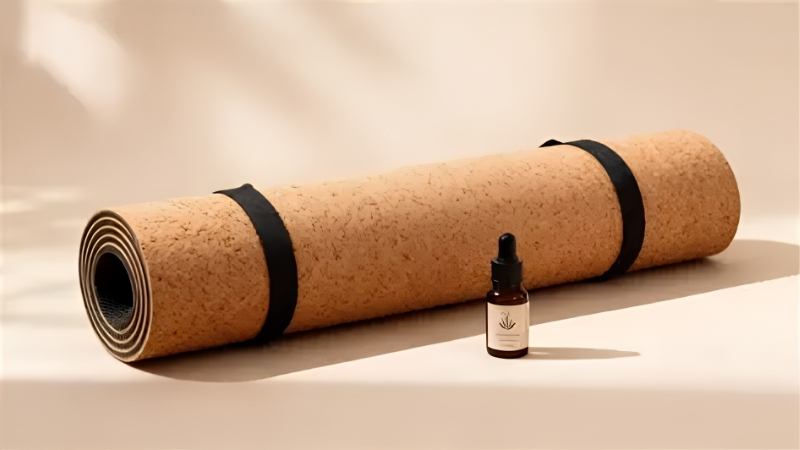
Cork’s signature is moisture-activated traction. It is moderately grippy dry and excellent when a little damp, so many yogis spritz the surface with water before practice to build grip, and hot-yoga sweat works in their favour rather than against them.
This is the opposite of a smooth PVC mat, which turns slick within minutes in a heated room. If you sweat heavily or practise Bikram-style classes, cork lets you flow towel-free, which is the main reason to choose it over a standard mat.
Grip still depends on a clean surface, since cork’s fine pores can hold dust and skin oils over time and dull traction. A periodic wipe-down keeps the wet-grip effect working, and a quick mist with a soft cloth before class is usually enough to reactivate it.
The Rubber Base Underneath
Cork alone slides, so every good cork mat is bonded to a rubber base for floor grip. Natural tree-rubber backing is the cleaner choice, since it is not petroleum-derived, while some cheaper mats use synthetic rubber that can carry a stronger smell and less eco-friendly chemistry.
Check the listing for a natural-rubber base if that matters to you, and note that natural rubber can contain trace latex, so those with a latex sensitivity should be cautious. The base also adds most of the mat’s weight, which is the trade-off for cork’s stability.
Thickness, Length and Footprint
Cork mats commonly run 4 to 6 mm (0.16 to 0.24 in) thick, enough to cushion joints while staying stable for balance poses. A 4 mm mat feels firmer and more grounded; a 6 mm mat pads knees and wrists more but is heavier and slightly wobblier in standing balances.
Length matters as much as thickness. Standard mats run 68 to 72 in (173 to 183 cm), with extra-long 80 in (203 cm) options for taller yogis, so measure your height against the mat length and confirm your floor space before ordering. A rolled cork mat also stores bulkier than a thin travel mat.
If you split time between a hard floor and carpet, size for the hard floor, where a 5 to 6 mm mat protects the knees best, since on carpet the same mat simply feels a touch softer. Whatever thickness you choose, measure your actual space before ordering so the unrolled mat and your full arm span both fit the room.
Weight, Durability and Care
Weight is cork’s honest downside. A cork-and-rubber mat can weigh around 7 lb (3.2 kg), noticeably more than a foam mat, so studio commuters feel it on the walk while home practitioners can ignore it. Cork is naturally antimicrobial and resists odour, which offsets the heft for many.
Cork is durable but needs the right care: wipe with a damp cloth and mild soap, air-dry fully, roll it cork-side out and keep it out of direct sun so the rubber base does not degrade. Cushioning is comfort, not treatment, so if you have a joint condition or are pregnant, check your setup with a doctor or physical therapist.
Top Picks for the Best Yoga Mat Cork
These six cover the best yoga mat cork range, from extra-firm performance mats to alignment-lined and travel options. Match the thickness and base to your practice and how far you carry it. All are widely available on Amazon.
| Mat | Base | Thickness | Best for |
|---|---|---|---|
| Yoloha Original Cork | Plant foam | ~6 mm | Sweaty, towel-free flows |
| Yoloha Unity Cork Pro | Rubber | Firm | Most stable base |
| Scoria Cork | Natural rubber | ~4.5 mm | Cleanest materials |
| Gayo Premium Cork | Natural rubber | 5 mm | Alignment lines |
| 42 Birds Cork | Natural rubber | ~4 mm | Value cork |
| Dazan Cork XL | Natural rubber | 4-6 mm | Taller yogis |
Yoloha Original Cork Yoga Mat
A thick cork surface bonded to Yoloha’s plant foam, made from 51 percent USDA-certified bio-based materials with no PVC, latex or rubber smell. It grips better the wetter it gets, so you can practise towel-free through the sweatiest classes, and owners praise its quiet, cushioned feel.
It sits at the premium end on price, and the natural cork carries a distinct corky scent some notice at first. It is also on the heavier side once the plant-foam base is factored in, so frequent commuters should weigh that. As the pick for sweaty, towel-free flows, it leads. Best for hot-yoga devotees who practise mostly at home.
Yoloha Unity Cork Pro
The Unity Cork Pro is extra-firm and among the most stable cork mats available, since a mat that is too soft lets the foot roll and unsettles your base. Its traction optimises when a little moisture is present, making it a strong choice for grounded, balance-heavy practice.
The firm surface offers less plush cushion than a softer mat, and the tread can slide slightly on very smooth hardwood. As the most stable base here, it stands out. Best for balance-focused and outdoor practice.
Scoria Cork Yoga Mat
Scoria pairs a cork top with a genuine natural-rubber backing rather than synthetic rubber, which makes it one of the cleaner-material cork mats, offering the cushioning and wet grip of cork without a petroleum-derived base.
Natural rubber can carry a mild smell when new and adds weight, and it is a mid-to-premium price. The cork surface is firm rather than plush, so add a folded blanket under the knees for long kneeling work. As the pick for the cleanest materials, it delivers. Best for eco-minded yogis who read the label.
Gayo Premium Cork Yoga Mat
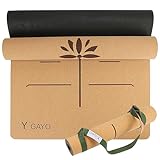
A 5 mm cork mat on a natural tree-rubber base with built-in alignment lines to guide posture, giving a non-slip surface for hot yoga plus the extra structure that alignment markers add for newer practitioners still learning positions.
At around 7 lb (3.2 kg) it is heavy to carry, and the alignment lines are a matter of taste. As the pick with alignment guidance, it works well. Best for practitioners who like posture cues.
42 Birds Cork Yoga Mat
A well-regarded value cork mat on a natural-rubber base at roughly 4 mm, offering genuine cork wet grip and clean materials at a friendlier price than the premium performance mats, a sensible first cork mat.
The thinner profile cushions less than a 6 mm mat, and like all cork it is heavier than foam. As the value cork pick, it stands out. Best for a first cork mat on a budget.
Dazan Cork Yoga Mat (XL)
Dazan offers cork on a natural tree-rubber base in a standard 72 x 26 in (183 x 66 cm), 4 mm size and an XL 80 x 26 in (203 x 66 cm), 6 mm option, making it a strong pick for taller yogis who run off the end of a standard mat.
The XL size and rubber base make it one of the heavier mats to carry, and cork needs the usual out-of-sun care. As the pick for taller practitioners, it delivers. Best for tall yogis who want extra length.
Frequently Asked Questions
Common questions when choosing the best yoga mat cork for a sweaty practice.
Does a cork mat get slippery when I sweat?
The opposite. Cork is moderately grippy dry and grips better when damp, so sweat improves traction rather than ruining it. Many yogis spritz the mat with water before a hot class to build grip, which is why cork suits Bikram and heated flows.
Why are cork yoga mats so heavy?
The weight comes from the rubber base bonded under the cork, which is what stops the mat sliding on the floor. A cork-and-rubber mat can weigh around 7 lb (3.2 kg), so it is better suited to home practice than a long commute to the studio.
Is the rubber base safe if I have a latex allergy?
Natural rubber can contain trace latex, so anyone with a latex sensitivity should be cautious and check the listing. Some cork mats use synthetic rubber instead, which avoids latex but is petroleum-derived and less eco-friendly.
How do I clean and store a cork mat?
Wipe it with a damp cloth and mild soap, then air-dry fully before rolling it cork-side out. Keep it out of direct sunlight, which degrades the rubber base over time, and store it rolled rather than folded to protect the cork surface.
See More:
- Best flooring for home gym over concrete
- Best collapsible exercise bike
- Best fold away exercise bike
- Best exercise bike folding
- Best home upright exercise bike
Final Thoughts
The best yoga mat cork is the pick when you sweat, because its grip climbs as the surface gets damp and its natural cork resists odour without a towel. Weigh the extra heft of the rubber base against that stability, size the length to your height, and the best yoga mat cork rewards a sweaty practice with a surface that only grips harder.
As an Amazon Associate we earn from qualifying purchases at no extra cost to you. Product prices and availability are accurate as of the date shown and are subject to change.



Write Your Review
No reviews yet. Be the first to share your experience!