
Key takeaways
What's inside
Best barbell for deadlifts comes down to how the bar behaves off the floor: a thinner shaft you can actually grip, some whip so the plates load before the bar breaks the ground, and a knurl aggressive enough to hold at max effort. Get those right and the bar helps you pull more weight, and do it more safely.
As an Amazon Associate we earn from qualifying purchases at no extra cost to you. Product prices and availability are accurate as of the date shown and are subject to change.
By Chris Parker
🛒 Best Price Today on Amazon
Prime members get fast, free shipping on everything above, plus member-only deals. New members get a 30-day free trial — cancel anytime.
Start 30-Day Prime Free Trial →See Today’s Amazon DealsHow to Choose the Right Best Barbell for Deadlifts
Deadlift performance is a grip-and-whip story, so shaft diameter, flex and knurl lead the decision, with tensile strength and capacity setting the safety ceiling. The best barbell for deadlifts balances a bar that pulls well with steel that will not take a permanent bend.
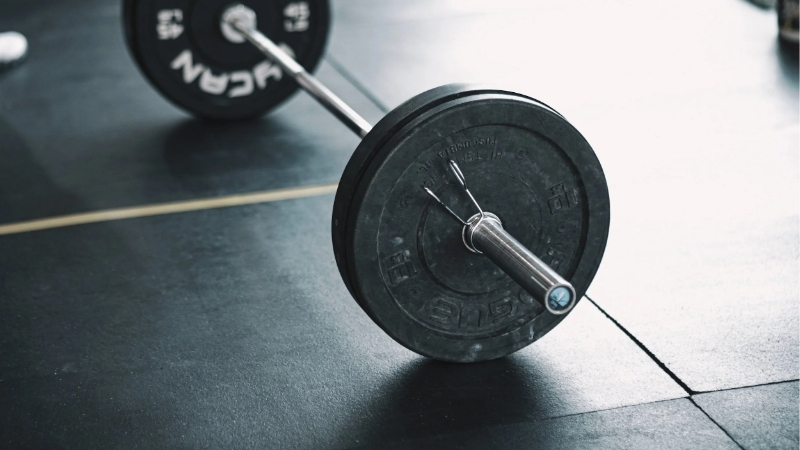
Shaft Diameter and Whip
Diameter is the primary lever. Dedicated deadlift bars use a 27 mm shaft, thinner than a 28 mm weightlifting bar or a 29 mm power bar, so your fingers wrap more securely and grip fails later. All-round bars at 28 to 28.5 mm sit in the flexible range and still deadlift well.
A thinner, longer shaft also whips. That flex lets the plates begin loading before the center of the bar lifts, turning the start into something closer to a slow rack pull. You only feel real whip at heavier loads, so it matters most to strong pullers, not beginners.
Knurl Aggression and the Center Knurl
Deadlift knurling is sharp and grippy on purpose — it fights gravity when your grip is the weak link. True deadlift bars run an aggressive, deep knurl; some, like the Okie, are near razor-sharp, while others tune it to bite without shredding your hands.
Just as important is what is missing: a good deadlift bar has no center knurl, because the bar drags up the shins and thighs. A smooth center prevents painful abrasion. If a bar has a center knurl, it is a squat or power bar first, and a compromise for pulling.
Tensile Strength and Weight Capacity
Tensile strength governs whether whip returns to straight or becomes a permanent bend. Look for 190,000 PSI or higher on a bar you intend to load heavy; budget bars at 130,000 to 150,000 PSI are fine for lighter pulls but can take a set over time.
Capacity is the headline safety number, from about 700 lb (318 kg) on value bars to 1,500 lb (680 kg) or 2,000 lb (907 kg) on stout power bars. Buy well above your working load, and remember whip and capacity are different things — a whippy bar can still be rated for very heavy weight.
Sleeves, Finish and Footprint
Sleeves rotate on bushings or bearings; for deadlifts, quality bronze or brass bushings are plenty, and snap-ring sleeve construction outlasts cheaper bolt-and-pin designs. A 16 to 17 in (41 to 43 cm) loadable sleeve holds the plates you need.
Finish affects grip and upkeep: bare steel and black oxide grip best but need oiling to resist rust, while chrome and Cerakote trade a little bite for low maintenance. A 7 ft (213 cm) bar needs rack width and clear end space to load, so measure your actual space before ordering.
Top Picks for the Best Barbell for Deadlifts
These seven cover the best barbell for deadlifts across budgets, from whippy training bars to stout power bars, all commonly available on Amazon. For reference, true 27 mm specialty bars (such as the Rogue Ohio Deadlift Bar and Texas Deadlift Bar) remain the benchmark for pure whip, usually bought direct.
| Bar | Shaft | Capacity | Best for |
|---|---|---|---|
| Synergee Games | 28.5 mm | 1,000 lb (454 kg) | Whip + all-round |
| XMARK Lumberjack | 28 mm | 1,000 lb (454 kg) | Value pulling bar |
| Synergee Rhino Power | 29 mm | 1,500 lb (680 kg) | Heavy, stiff pulls |
| Titan Elite Power | 29 mm | 2,000 lb (907 kg) | Max capacity |
| Valor Fitness Chrome | 30 / 28 mm | 1,000 / 700 lb | Simple, stiff |
| JELENS 7 ft | 28 mm | 1,000 lb (454 kg) | Budget starter |
| HANDBODE Olympic | 28 mm | Standard | Beginner all-rounder |
Synergee Games Olympic Barbell
At 28.5 mm the Synergee sits at the flexible end of the training-bar range, giving moderate whip you can actually use on heavy pulls, plus a published 190,000 PSI tensile strength, needle bearings and a 1,000 lb (454 kg) capacity. It deadlifts noticeably better than a stiff 29 mm power bar.
It carries a center knurl for squats, which can lightly catch on the pull, and the whip is milder than a true 27 mm deadlift bar. As the best Amazon all-rounder that still pulls well, it is the pick for most. Best for whip plus everyday versatility.
XMARK Lumberjack Olympic Barbell
A 7 ft (213 cm), 20 kg (44 lb) bar with a 28 mm shaft, 190,000 PSI steel and a 1,000 lb (454 kg) capacity, the Lumberjack offers a medium-depth knurl that is comfortable for all lifts and enough flex to pull well below 600 lb (272 kg).
Its bushing sleeves spin slowly, which Olympic lifters dislike but deadlifters barely notice, and the 1,000 lb rating is the lowest of the heavy bars here. As a value pulling bar, it delivers. Best for lifters who want a dependable deadlift-capable bar at a fair price.
Synergee Rhino Power Bar (Cerakote)
The Rhino is a stiff 29 mm power bar with a Cerakote finish and a 1,500 lb (680 kg) rating, built for heavy, controlled pulls where stability matters more than whip. The coating resists rust with little upkeep while keeping a usable grip.
The stiffness means little flex to help the plates load, so max-effort pullers who want whip will prefer a thinner bar, and Cerakote wears at metal-to-metal contact points over time. Best for heavy lifters who value a rigid, low-maintenance bar.
Titan Fitness Elite Series Power Barbell
Titan’s Elite pairs a 29 mm shaft with a 2,000 lb (907 kg) capacity, hard chrome finish, brass bushings and aggressive mountain knurling — a lot of grip and steel for slow squats, bench and deadlifts. The high rating leaves enormous safety margin.
Like all stiff power bars it offers minimal whip for the pull, and the aggressive knurl can be harsh on higher-rep sets. As the maximum-capacity pick, it is hard to fault on strength. Best for lifters who want the biggest rating and grippiest knurl.
Valor Fitness Chrome Olympic Bar
Valor’s chrome bar comes in a 30 mm version rated 1,000 lb (454 kg) at 150,000 PSI or a 28 mm version rated 700 lb (318 kg) at 130,000 PSI, both with brass bushings and full chrome plating for easy upkeep and a clean look.
It carries a center knurl and, in the stiffer 30 mm form, offers little whip, so it is a general strength bar that happens to deadlift rather than a dedicated puller. Best for a simple, corrosion-resistant bar for mixed training.
JELENS 7 ft Olympic Barbell
A budget 7 ft (213 cm) bar with a 28 mm shaft, a knurled grip and a 1,000 lb (454 kg) listed capacity, the JELENS is an easy entry point for a first home-gym bar that can handle moderate deadlifts.
Steel quality and knurl consistency sit below the name brands, so inspect it on arrival and avoid treating the capacity as a max-effort license. Best for beginners building a first setup on a tight budget.
HANDBODE Olympic Barbell
The HANDBODE offers 4 ft to 7 ft options with a 28 mm shaft, hard chrome coating and hybrid needle-bearing-plus-brass-bushing sleeves for smoother spin than a pure bushing bar at this price — a flexible starter across lift types.
It is not built for extreme loads and the finish is basic, so keep it to beginner-to-intermediate pulling. Best for a versatile, affordable first bar for someone still finding their lifts.
Frequently Asked Questions
The questions people ask most when picking the best barbell for deadlifts for a home gym.
Do I need a dedicated deadlift bar?
Only if you pull heavy and chase whip. A true 27 mm deadlift bar flexes more and grips better at max effort, but a 28 to 28.5 mm all-round bar deadlifts well for most lifters and also squats and benches. Match the bar to how heavy you actually pull.
Why does whip help a deadlift?
Whip lets the plates start loading before the bar’s center lifts, so the weight leaves the floor more gradually rather than all at once. Strong pullers build tension against that flex to break a heavy bar off the ground more smoothly. Beginners rarely feel it.
Why no center knurl on a deadlift bar?
Because the bar slides up your shins and thighs on the pull, a center knurl abrades skin. Dedicated deadlift bars leave the center smooth. If a bar has center knurling, it is really a squat or power bar used for deadlifts.
How much capacity do I need?
Buy well above your working load. A 700 to 1,000 lb (318 to 454 kg) bar suits most home lifters; go to 1,500 lb (680 kg) or higher only if you pull very heavy. If you have back concerns, check with a doctor or a certified coach on form before loading up.
See More:
- Best flooring for home gym over concrete
- Best collapsible exercise bike
- Best fold away exercise bike
- Best exercise bike folding
- Best home upright exercise bike
Final Thoughts
The best barbell for deadlifts is the one that pulls the way you lift: a thinner 27 to 28.5 mm shaft for grip and whip, an aggressive knurl with no center knurl, and tensile strength high enough to snap back straight. Match the whip to your loads and the capacity to your goals, and the best barbell for deadlifts will help you move more weight for years.
As an Amazon Associate we earn from qualifying purchases at no extra cost to you. Product prices and availability are accurate as of the date shown and are subject to change.


![Trap Bar [Bells of Steel] Hex Bar Deadlift, Open-Ended Frame Trap Bars for Weight Lifting, Gym Equipment for Home and Commercial, Built-in Deadlift Jack & Rotating Sleeves, 700 lb Capacity](https://m.media-amazon.com/images/I/41g6CJO75eL._SL160_.jpg)


Write Your Review
No reviews yet. Be the first to share your experience!