
Key takeaways
What's inside
Best barbell collars keep your plates locked in place so they never slide mid-lift, and the right pick depends on your bar, your lifts, and how secure you need them. This best barbell collars guide compares spring clips, lock-jaw clamps, and competition collars by fit, security, and build so your plates stay put on every rep.
As an Amazon Associate we earn from qualifying purchases at no extra cost to you. Product prices and availability are accurate as of the date shown and are subject to change.
By Chris Parker
🛒 Best Price Today on Amazon
Prime members get fast, free shipping on everything above, plus member-only deals. New members get a 30-day free trial — cancel anytime.
Start 30-Day Prime Free Trial →See Today’s Amazon DealsHow to Choose the Best Barbell Collars
Choosing the best barbell collars comes down to matching them to your bar’s sleeve, picking a type that suits your lifts, prioritizing security for heavy or dynamic work, and checking the build. Get the fit right first, since a collar that does not match your bar simply will not work.
Fit Your Bar’s Sleeve
Fit is the single most important factor and the top reason collars get returned. Olympic bars have 2 in (50 mm) sleeves, while standard bars use 1 in (25 mm) sleeves, and a collar built for one will not fit the other.
Most home and commercial bars are Olympic, but budget and older standard bars are not, so confirm your sleeve diameter before anything else. Always measure your bar’s sleeve, or check its spec, before ordering, since a mismatched collar is useless. This one check saves the most returns of any decision here.
Collar Types
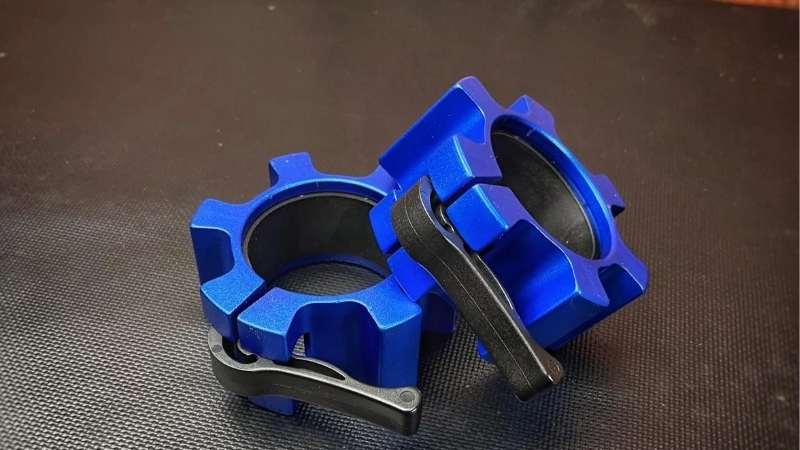
Three main types cover most needs. Spring clips are cheap, quick, and come with many bars, pinching on and off in a second, while lock-jaw style clamps use a lever and lining to grip the sleeve far more securely for home training.
Competition collars are precise steel units, often 2.5 kg (5.5 lb) each, that lock tightly for powerlifting and weightlifting meets. Choose spring clips for light convenience, clamps for secure everyday training, or competition collars for heavy and meet-legal work. Most home lifters land on a lock-jaw style clamp as the practical middle ground.
Security for Your Lifts
How you lift decides how secure your collars must be. Light, static training tolerates simple spring clips, but heavy lifts, dropped weights, and dynamic Olympic movements demand a clamp or competition collar that will not creep or fly off.
A collar that slips lets plates slide unevenly, which is dangerous under load. If you deadlift heavy, do cleans and snatches, or drop the bar, prioritize a secure locking clamp over a basic clip every time. The small extra cost of a good clamp is cheap insurance against a slipping plate.
Durability and Material
Material sets how long collars last. Cheap all-plastic clamps can crack under repeated use, while collars with steel or aluminum components and a quality lever mechanism, like Rogue’s aluminum collars, endure years of heavy training.
The clamping lining also matters, since a grippy, replaceable lining holds better and lasts longer. Spend a little more on durable materials if you train hard, since a failed collar mid-lift is worse than its low price suggests. Grippy linings and metal levers are what separate collars that last from ones that crack.
Top Picks for the Best Barbell Collars
These picks span budget spring clips to precise competition collars. Whichever best barbell collars you choose, confirm your bar’s sleeve diameter first.
| Collar | Type | Sleeve Fit | Security | Best For | Tier |
|---|---|---|---|---|---|
| Lock-Jaw Pro | Clamp | 2 in Olympic | High | Overall | Mid |
| Rogue Aluminum Collars | Clamp | 2 in Olympic | Very high | Premium durability | Premium |
| Competition Collars | Steel comp | 2 in Olympic | Very high | Powerlifting/Oly | Premium |
| OSO Barbell Collars | Clamp | 2 in Olympic | High | Design and grip | Mid |
| Spring Clips | Spring clip | 2 in Olympic | Basic | Budget convenience | Budget |
| Standard-Bar Collars | Clip/clamp | 1 in standard | Basic | Standard bars | Budget |
Lock-Jaw Pro – Best Overall
The Lock-Jaw Pro is the do-everything home-gym collar, using a quick-release lever and a grippy lining to clamp Olympic 2 in (50 mm) sleeves far more securely than spring clips. It goes on and off in a second and holds through heavy training.
Lower-end plastic clamps can wear over time, so buy a quality version. As a secure, fast, affordable everyday collar, though, it is the best all-round pick. It is the collar most home gyms should reach for first.
Rogue Aluminum Collars – Best Premium Durability
Rogue’s aluminum collars are the durable premium choice, with CNC-machined bodies, a strong cam lever, and a grippy lining that lock Olympic sleeves tightly and survive years of heavy use. They feel solid and reliable rep after rep.
They cost more than plastic clamps. For lifters who want collars that will outlast their bar, though, they are worth every cent. The machined build feels reassuringly solid on every set.
Competition Collars – Best for Powerlifting and Oly
Competition collars are precise steel units, typically 2.5 kg (5.5 lb) each, that lock down tightly and meet powerlifting and weightlifting meet standards. They are the most secure option for maximal and dynamic lifts.
They add 5 kg (11 lb) total to your loaded weight, which you must account for, and they are expensive. For serious powerlifters and Olympic lifters, though, they are the gold standard. Their precise weight is exactly why sanctioned meets require them.
OSO Barbell Collars – Best Design and Grip
OSO barbell collars pair a secure clamp mechanism with a strong grip and a range of colors and designs, locking Olympic sleeves reliably for everyday training. They add personality without sacrificing security.
They sit at a mid-tier price above basic clips. For a secure, good-looking collar for home training, though, they are a fun, solid choice. The color options make it easy to tell training partners’ bars apart.
Spring Clips – Best Budget Convenience
Spring clips are the cheap, ubiquitous option, pinching onto Olympic sleeves in a second and coming free with many bars. They are perfectly fine for light, static training and quick plate changes.
They can slip under heavy loads, drops, or dynamic lifts and offer the least security. For light training and convenience on a budget, though, they do the basic job. Keep a pair around for quick plate swaps even if you own better collars.
Standard-Bar Collars – Best for Standard Bars
Standard-bar collars fit the 1 in (25 mm) sleeves of budget and older standard bars, in clip or clamp form, keeping plates in place on gear that Olympic collars cannot fit. They solve a real compatibility problem.
Standard bars are less common and generally lower-capacity than Olympic ones. For anyone with a standard bar, though, these are the collars you need.
Frequently Asked Questions
People choosing the best barbell collars usually ask about fit, security, and types.
How do I know which collars fit my bar?
Check your bar’s sleeve diameter. Olympic bars use 2 in (50 mm) sleeves and standard bars use 1 in (25 mm) sleeves, and collars are made for one or the other. Measure the sleeve or check the bar’s spec before ordering to avoid a mismatch.
Are spring clips secure enough?
For light, static training, yes, but they can slip under heavy loads, drops, or dynamic lifts. If you lift heavy, drop the bar, or do Olympic movements, a locking clamp or competition collar is far safer and worth the small extra cost.
Do competition collars add weight?
Yes. Competition collars typically weigh 2.5 kg (5.5 lb) each, adding 5 kg (11 lb) to your total loaded weight, which you must count in your working sets. This precise weight is part of why they are used in sanctioned meets.
Which collars are best for a home gym?
A quality lock-jaw style clamp is the best all-round home-gym choice, balancing strong security, fast use, and affordability. Upgrade to aluminum or competition collars if you train very heavy or do Olympic lifts, and keep spring clips for light convenience.
See More:
- best barbell
- best barbell in the world
- best rowing machine for home
- best buy for treadmill
- treadmill at best buy
Final Thoughts
The best barbell collars match your bar’s sleeve and your lifts, whether that is a secure Lock-Jaw clamp for everyday training, durable Rogue aluminum collars, or precise competition collars for heavy work. Confirm your sleeve diameter first, prioritize security for heavy and dynamic lifts, and choose durable materials that will last.
As an Amazon Associate we earn from qualifying purchases at no extra cost to you. Product prices and availability are accurate as of the date shown and are subject to change.



Write Your Review
No reviews yet. Be the first to share your experience!