
What's inside
Best grip yoga mat searches almost always start after a hand slides forward in downward dog. Traction is not a marketing adjective – it comes from a specific surface material, a specific cell structure, and how the mat behaves once sweat arrives. This roundup compares six mats on those terms, plus thickness and storage space.
As an Amazon Associate we earn from qualifying purchases at no extra cost to you. Product prices and availability are accurate as of the date shown and are subject to change.


As an Amazon Associate we earn from qualifying purchases at no extra cost to you. Product prices and availability are accurate as of the date shown and are subject to change.
By Chris Parker
🛒 Best Price Today on Amazon
Prime members get fast, free shipping on everything above, plus member-only deals. New members get a 30-day free trial — cancel anytime.
How to Choose the Best Grip Yoga Mat for Your Practice
Grip is decided by two things a product page rarely states plainly: whether the top surface is open-cell or closed-cell, and what polymer it is made from. Thickness, weight and rolled diameter then decide whether the mat suits your joints and your storage. Those four filters narrow the field very fast.
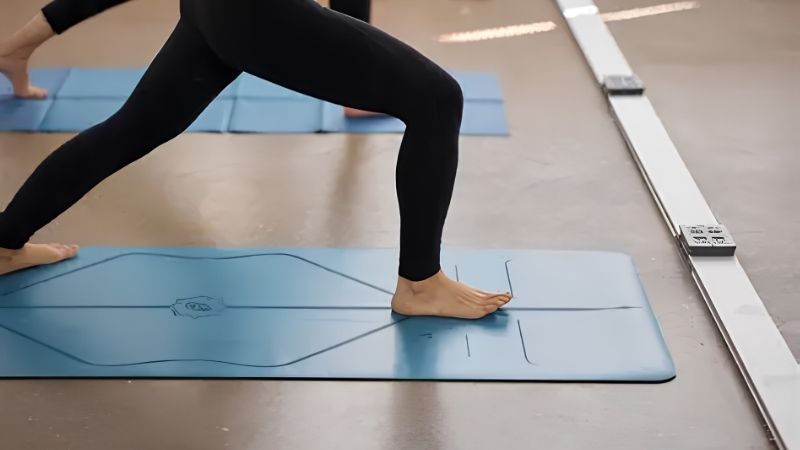
Surface Material and Cell Structure
Open-cell surfaces – natural rubber and polyurethane – have microscopic pores that absorb moisture, so grip improves slightly as you sweat. Closed-cell surfaces such as PVC and TPE seal moisture out, which keeps the mat hygienic and easy to wipe but means sweat pools on top and traction drops off during hot classes.
Polyurethane tops, bonded over a rubber base, currently give the most reliable damp grip and are what most of the best grip yoga mat options use at the premium tier. Natural rubber comes close and costs less, but it carries a distinct smell for the first few weeks and is off the table for anyone with a latex sensitivity.
Thickness, Cushioning and Joint Comfort
Standard yoga thickness runs 4-6 mm. At 4 mm you feel the floor, which helps balance poses and keeps the mat stable underfoot. At 6 mm the padding protects knees and elbows but introduces a small amount of sink that makes standing balances wobblier. Very thick 8-12 mm mats belong to general fitness, not yoga.
Weight tracks thickness and material. A 6 mm PVC mat runs around 7 lb (3.2 kg), while a 4 mm rubber-and-PU mat lands near 5.5 lb (2.5 kg) and travel mats drop under 2.5 lb (1.1 kg). If the mat has to be carried to a studio, that difference is the one you end up noticing every single week you carry it.
Footprint: Length, Rolled Size and Storage
Standard mats measure 68 x 24 in (173 x 61 cm); longer options run 71-74 in (180-188 cm) and wider ones reach 26-27 in (66-68 cm). Anyone over about 5 ft 8 in should size up, because hands or heels landing on bare floor destroys the entire point of buying the best grip yoga mat in the first place at all.
Rolled, a 6 mm mat is roughly 5-6 in (13-15 cm) in diameter and stands about 26 in tall, which fits behind a door or under a bed. The bigger constraint is unrolled practice space: allow roughly 7 x 4 ft (2.1 x 1.2 m) of clear floor. Measure the actual area you have before ordering an extra-long mat.
Top Picks: The Best Grip Yoga Mat Options Right Now
These six cover the realistic range, from a premium polyurethane surface to a budget TPE mat with alignment lines. Each entry lists what the surface does when damp and where it disappoints, because every grip technology trades something away, usually weight, price, initial smell or ongoing cleaning effort.
| Mat | Surface | Thickness | Size | Best for |
|---|---|---|---|---|
| Liforme Original | Polyurethane over rubber | 4.2 mm | 72.8 x 26.8 in | Hot yoga, alignment |
| Manduka PRO | Closed-cell PVC | 6 mm | 71 x 26 in | Cushioning, longevity |
| Jade Harmony | Open-cell natural rubber | 4.8 mm | 68 or 74 x 24 in | Immediate dry grip |
| Manduka eKO | Natural rubber | 5 mm | 71 x 26 in | Rubber grip, closed surface |
| Yoga Design Lab Combo | Microfiber over rubber | 1.5-5.5 mm | 70 x 24 in | Very sweaty practice |
| Heathyoga Eco Friendly | Textured TPE | 6 mm | 72 x 26 in | Budget, beginners |
Liforme Original Yoga Mat
The polyurethane top layer over a natural rubber base is the current benchmark for damp traction, and the etched alignment system gives beginners a reference for foot and hand placement. At 4.2 mm and 72.8 x 26.8 in (185 x 68 cm) it is longer and wider than standard, which suits taller practitioners.
Two honest drawbacks: it sits at the top of the price range, and the PU surface is softer than PVC, so dragging the mat or practicing in shoes marks it permanently. At roughly 5.5 lb (2.5 kg) it is also heavy for daily studio commuting. This is a home-practice mat that only occasionally travels to a studio.
Manduka PRO
A 6 mm closed-cell PVC mat, 71 x 26 in (180 x 66 cm) and around 7.5 lb (3.4 kg), built to outlast almost anything else on this list. The dense foam does not compress permanently under knees and elbows, which is why it remains the default recommendation for anyone with joint sensitivity in the knees or wrists.
Grip is its weak point out of the box – the surface is genuinely slick for the first several sessions and needs a break-in period of salt scrubbing or repeated use before traction arrives. It is also heavy and expensive. Buy it for cushioning and lifespan, and accept a few weeks of sliding before it settles.
Jade Harmony Professional
Open-cell natural rubber with a 4.8 mm profile in 68 or 74 in (173 or 188 cm) lengths, weighing around 5 lb (2.3 kg). Grip is immediate with no break-in, and the slightly tacky surface holds hands in place during long holds far better than most textured synthetic surfaces ever manage in a warm room.
Open-cell means it absorbs sweat, so it needs regular cleaning and will not tolerate being left rolled while damp. The rubber smell is strong for the first few weeks, it is unsuitable for latex allergies, and the surface wears faster than PVC. Expect a shorter service life in exchange for day-one traction.
Manduka eKO
Natural rubber at 5 mm, 71 x 26 in (180 x 66 cm), with a closed-cell top that resists sweat absorption better than fully open-cell rubber. It splits the difference between the PRO and the Jade: usable grip from the first session, plus a surface you can genuinely wipe clean rather than simply blot dry.
It is heavy at roughly 7 lb (3.2 kg), carries the usual new-rubber odour, and the surface picks up scuffing from grippy socks and shoes. Latex sensitivity rules it out entirely. For a home practitioner who wants rubber traction without a daily deep-cleaning routine, this is the sensible middle path.
Yoga Design Lab Combo Mat
A bonded microfiber towel top over a natural rubber base, available from 1.5 mm travel thickness up to 5.5 mm. The design inverts the usual problem: the surface is only moderately grippy dry and becomes markedly more secure once damp, which makes it a genuine hot-yoga solution rather than a compromise.
If you practice in a cool room with dry hands, it slides – a light spritz of water before class is effectively part of the instructions. The towel layer also needs machine washing rather than wiping, and colours fade over repeated cycles. Choose it only if your practice reliably produces real sweat.
Heathyoga Eco Friendly TPE Mat
Textured TPE at 6 mm in 72 x 26 in (183 x 66 cm), with printed alignment lines and a weight near 2.5 lb (1.1 kg). It is the budget entry that behaves reasonably: closed-cell, wipes clean in seconds, no rubber smell, and light enough that carrying it to a class is genuinely effortless every single week.
Traction comes from the embossed pattern rather than the material, so performance drops noticeably once palms sweat, and the texture smooths out over months of regular use. TPE also dents under sustained knee pressure. For a beginner testing whether the habit sticks, that remains an acceptable trade.
Frequently Asked Questions
Most grip problems trace back to material choice or cleaning habits rather than the mat being defective. These four cover what people ask about the best grip yoga mat after a first slippery session, including whether a mat towel is a valid fix and how quickly surface traction tends to fade over time.
Why does my new yoga mat feel slippery?
Closed-cell PVC mats ship with a manufacturing residue and a dense, sealed surface that needs a break-in period – several sessions, or a scrub with coarse salt, before traction develops. Open-cell rubber and polyurethane mats do not have this problem at all and grip properly from the first practice onward.
Does a yoga towel replace the best grip yoga mat?
A microfiber towel over a slick mat works well once it is damp and poorly when it is dry, and it shifts underfoot during standing sequences unless it has silicone nubs. A mat towel is a reasonable rescue for an existing mat, though it does add another laundry cycle after every single session you practise.
How thick should a grip-focused mat be?
Between 4 and 6 mm. Thinner mats feel more stable in balance poses because you are closer to the floor; thicker mats protect knees but let the surface sink slightly under load. Above 6 mm, standing poses become genuinely less steady regardless of how good the surface material above it happens to be.
How long does grip last?
Polyurethane and rubber surfaces hold traction for years with regular cleaning, but they show wear where hands and feet land most. Embossed TPE and PVC textures smooth out faster – often noticeably within a year of frequent practice. Cleaning residue buildup is the most common cause of premature grip loss.
See More:
Final Thoughts
The best grip yoga mat for you depends on how much you sweat: polyurethane and open-cell rubber for hot practice, closed-cell PVC if you want cushioning and lifespan and will tolerate a break-in period. Check mat length against your height, confirm around 7 x 4 ft of clear floor, and clean the surface regularly.
Write Your Review
No reviews yet. Be the first to share your experience!