
Key takeaways
What's inside
- Understanding Sponge Hardness and Degrees
- Topsheet Composition: Sticky Versus Mechanical Grip
- Pimple Geometry: Inverted, Short, and Long Pips
- Sponge Thickness Options and How They Affect Play
- Blade Compatibility: Matching Rubber to Your Wood
- Common Buying Mistakes to Avoid
- When to Invest in Premium Sheets
- Related Guides
- FAQ
- Related Guides
Finding the right table tennis rubber sheet can fundamentally transform your playing style, yet many players struggle to look past flashy marketing terms. Whether you are building your first custom racket or replacing a worn-out sheet, understanding the core mechanical properties of rubber is essential. The interaction between the outer topsheet and the underlying sponge dictates everything from your maximum loop speed to your short-game control on gentle pushes and drops.
- Understanding Sponge Hardness and Degrees
- Topsheet Composition: Sticky Versus Mechanical Grip
- Pimple Geometry: Inverted, Short, and Long Pips
- Sponge Thickness Options and How They Affect Play
- Blade Compatibility: Matching Rubber to Your Wood
- Common Buying Mistakes to Avoid
- When to Invest in Premium Sheets
- Related Guides
- FAQ
- Related Guides
Navigating the vast market of table tennis accessories requires cutting through confusing jargon and focusing on measurable specifications. Instead of buying a sheet simply because a professional uses it, you should evaluate your current skill level, physical stroke mechanics, and tactical preferences. This guide breaks down the critical factors you need to consider before investing in your next upgrade to ensure your paddle complements your natural strengths.
As an Amazon Associate we earn from qualifying purchases at no extra cost to you. Product prices and availability are accurate as of the date shown and are subject to change.
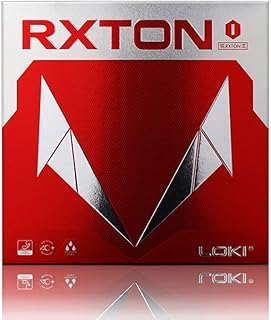
Understanding Sponge Hardness and Degrees
Sponge hardness is measured in degrees, though different manufacturers use slightly different scales to rate density. Harder sponges—typically ranging from 47 to 55 degrees—store immense energy when compressed by a fast, aggressive swing, rewarding powerful loopers with a flat, penetrating trajectory. However, they demand precise technique and exceptional bat speed to activate properly. Softer sponges, sitting around 35 to 42 degrees, offer a higher-pitched sound, a more forgiving feel, and a springier catapult effect that helps generate effortless depth during passive blocks and mid-distance rallies.
Topsheet Composition: Sticky Versus Mechanical Grip
The surface of the rubber falls into two broad categories: tacky and mechanical. Tacky topsheets, predominantly found on Chinese-manufactured sheets, allow the ball to grip the surface through friction and molecular adhesion, producing low, heavy spin on pushes and serves. They excel in close-to-the-table looping games but require a robust, muscular stroke to drive the ball forward. Mechanical grip topsheets rely purely on rubber elasticity and microscopic friction to grab the ball, offering a livelier bounce that suits dynamic European-style counter-looping away from the table.
Pimple Geometry: Inverted, Short, and Long Pips
The internal structure of the rubber dictates its baseline utility on the table. Inverted rubbers, where the smooth side faces outward and the pimples point inward toward the sponge, represent the gold standard for offensive and all-around play because they maximize contact area with the ball. Short pips feature outward-facing pimples that deaden incoming spin, making them ideal for quick hitting, blocking, and flat-out attacks near the net. Long pips invert the spin of incoming balls unpredictably, creating awkward, wobbling trajectories that frustrate spin-dependent opponents.
Sponge Thickness Options and How They Affect Play
Table tennis rubber sheets generally come in varying sponge thicknesses, ranging from thin defensive variants around 1.0mm to 1.5mm up to maximum offensive thicknesses of 2.0mm to MAX. Thicker sponges absorb more energy during fast impacts, creating a trampoline effect that maximizes speed and topspin potential. Thinner sponges reduce weight and trampoline elasticity, giving defensive choppers and all-around control players the precision needed to place the ball accurately on the table without overhitting.
Blade Compatibility: Matching Rubber to Your Wood
Your rubber sheet cannot perform at its peak if it is poorly matched to your blade. Offensive carbon blades amplify the speed and rigidity of hard rubber sheets, which can quickly become uncontrollable for developing players. Conversely, flexible all-wood blades pair wonderfully with medium-hard offensive rubbers, providing a harmonious balance of dwell time and crisp feedback. Always consider the stiffness and vibration profile of your blade before pairing it with an extreme rubber specification.
Common Buying Mistakes to Avoid
One of the most frequent mistakes players make is overestimating their physical capabilities by purchasing the hardest, fastest rubber available on the market. This usually results in a dramatic loss of short-game touch, leading to popped-up pushes and unforced errors on service returns. Another common pitfall is neglecting to check the compatibility of booster or tuning oils, which can prematurely ruin non-factory-tuned sheets or violate tournament regulations. Buy according to your current match reality rather than your aspirational fantasies.
When to Invest in Premium Sheets
Entry-level and recreational rubber sheets are fantastic for learning fundamental mechanics, but they eventually hit a performance ceiling. You should consider upgrading to premium, tournament-grade sheets when you notice your current rubber losing its tackiness or elasticity despite rigorous cleaning, or when your technique has evolved to the point where you can consistently compress the sponge on every loop. Premium sheets offer superior durability, better energy transfer, and more consistent manufacturing tolerances.
Related Guides
To see how specific models stack up against one another in real-world testing, take a look at our Best Table Tennis Rubber Sheets in 2026: Tested and Ranked roundup.
FAQ
How often should I replace my table tennis rubber sheets?
Recreational players generally replace their rubber sheets once a year, while competitive tournament players may swap them out every few months. If the surface looks faded, feels completely slick, or fails to grip the ball during a standard service toss, it is time for a fresh sheet.
Can I clean my rubber sheets with regular soap and water?
Avoid household soaps and dish detergents, as they can dry out the natural rubber compounds and strip away vital friction. Instead, use specialized table tennis rubber cleaner or lukewarm water applied with a clean sponge, followed by a protective plastic film sheet.
Are pre-assembled rackets better than buying separate sheets and blades?
Pre-assembled rackets are ideal for casual basement players and absolute beginners due to their low cost and predictable playability. However, custom setups allow you to choose specific rubber sheets and blades tailored precisely to your evolving tactical preferences.
Does rubber color affect performance?
International rules traditionally required one red side and one black side, though brightly colored variants are now permitted in official competition. Aside from microscopic differences in chemical dyes, the color itself has a negligible impact on actual spin or speed performance.


Write Your Review
No reviews yet. Be the first to share your experience!