
Key takeaways
What's inside
Buying a floor bike pump seems straightforward until you are standing in a gear shop or scrolling online, staring at dozens of tall cylinders with gauges that all claim to make inflation effortless. Choosing the right floor pump is foundational to your cycling routine in 2026, directly impacting your ride quality, rolling resistance, and the longevity of your inner tubes or tubeless setups. Settling for a cheap, generic pump often leads to broken thumb-locks, inaccurate pressure readings, and immense frustration right before a weekend group ride.
To cut through the marketing noise, you need to understand which mechanical components actually dictate performance and durability. Whether you are maintaining high-pressure road tires, voluminous gravel tires, or wide mountain bike rubber, the right investment will last for decades. This guide breaks down the core specifications, design choices, and practical considerations that matter most when selecting a floor bike pump.
As an Amazon Associate we earn from qualifying purchases at no extra cost to you. Product prices and availability are accurate as of the date shown and are subject to change.
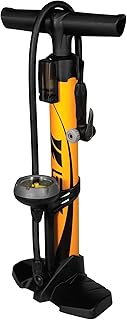
Prioritize Gauge Accuracy Over High Max Pressure
Many beginner pumps boast massive maximum pressure numbers, such as 220 PSI, printed boldly on the barrel. In reality, very few cyclists ever exceed 100 PSI, and road tires commonly max out around 80 to 90 PSI due to modern wider rim standards and tubeless setups. Instead of chasing high maximum pressure capabilities, prioritize gauge accuracy. A gauge that reads 90 PSI when your tires are actually at 75 PSI can drastically alter your bike’s handling, grip, and comfort. Look for pumps with large, easily readable gauge faces positioned at the top of the barrel rather than the base, as top-mounted dials allow you to monitor inflation progress without straining your neck.
Evaluate Valve Head Design and Adaptability
The valve head is the interface that connects your pump to the inner tube, and it is historically the first part of a pump to fail. You will generally encounter two styles: dual-head designs with separate holes for Presta and Schrader valves, and universal smart-heads that automatically adjust to whatever valve you push them onto. Dual-head designs are mechanically simpler and tend to wear out less frequently, whereas smart-heads offer convenience if you maintain a mixed fleet of bikes. Avoid flimsy plastic thumb-levers that snap under pressure; cast metal levers with replaceable rubber internal gaskets provide a secure, airtight seal that withstands years of repetitive clamping.
Barrel Material: Steel, Aluminum, or Composite
The material of the main barrel dictates both the weight of the pump and its structural resilience. Steel barrels are heavy, incredibly durable, and resist flexing when you lean your body weight into a high-pressure stroke. Aluminum barrels offer a great middle ground, providing a lightweight yet rigid structure that resists corrosion well if your pump lives in a damp garage. Composite or heavy-duty plastic barrels are often found on budget-friendly models, but they are prone to warping and cracking over time if the pump is accidentally knocked over on hard concrete floors.
Base Design and Footprint Stability
A pump is only as good as its foundation. If the base is too narrow, the entire unit will rock sideways when you reach the top and bottom of your pumping stroke, wasting energy and threatening to scratch your bicycle frame if it falls. Wide steel or cast-iron bases offer the best stability, anchoring the pump firmly to the floor. Pay close attention to the feet of the base as well; wide outriggers or folding metal footprints distribute your body weight evenly and prevent the pump from shifting during aggressive inflation sessions.
Hose Length and Storage Convenience
Hose length is an overlooked feature that dramatically improves user experience. Short hoses force you to park your bicycle directly against the pump, which often results in the valve stem sitting at an awkward angle or forcing you to carefully maneuver the bike to avoid scratching the spokes with the pump handle. A hose measuring at least four feet long gives you ample slack to position your bike naturally, regardless of where the wheels happen to stop. Additionally, look for integrated hose clips or wrap-around channels that keep the hose secured when the pump is stored away, preventing it from tangling in your gear closet.
Understanding Handle Ergonomics and Leverage
When you are pumping a high-volume mountain bike tire or topping off road tires before a race, your hands bear the brunt of the resistance. Ergonomic handles made of wood, rubberized composite, or textured plastic prevent your palms from blistering and distribute downward pressure evenly. Wide handles provide better leverage, allowing you to use your core and upper body weight rather than just arm strength. Avoid narrow, hard plastic T-handles that dig uncomfortably into your palms during the final strokes of high-pressure inflation.
Related Guides
If you are looking to upgrade your entire inflation setup this year, be sure to read through our comprehensive review of the Best Floor Bike Pumps in 2026: Tested and Ranked to see which models excel under heavy shop use and daily commuting demands. For roadside emergencies, touring, and packing light on weekend adventures, check out our expert breakdown of the Best Mini Bike Pumps in 2026: Tested and Ranked.
FAQ
Do I need a digital gauge or is an analog gauge better?
Analog gauges are mechanically simpler, highly durable, and rarely fail over years of use in varied garage temperatures. Digital gauges offer superior precision at low pressures, which is a massive benefit for gravel and mountain bike riders, though they do require occasional battery replacements.
Can I use one pump head for both Presta and Schrader valves?
Most modern floor pumps feature either a smart-head that automatically adjusts to the valve or a dual-port head with separate slots. Smart heads are convenient, but dual-port heads generally experience less internal wear and tear over thousands of inflation cycles.
Why does my pump feel extremely hard to push near the top of the stroke?
As pressure inside the tire increases, the resistance against the piston grows significantly, requiring more body weight and leverage to complete the stroke. High-volume barrels make it easier to push at high pressures, but require more total strokes to fill a tire compared to narrow high-pressure barrels.
How often should I service or replace my floor pump?
A quality floor pump can last ten years or more with basic maintenance and clean storage. If the pump struggles to build pressure, replacing the internal rubber piston gasket—often called a leather or rubber plunger seal—with a cheap service kit will usually restore it to factory performance.


Write Your Review
No reviews yet. Be the first to share your experience!