
Key takeaways
What's inside
- The Critical Importance of Non-Marking Gum Rubber Outsoles
- Lateral Support and Outrigger Design
- Cushioning Technology Versus Court Feel
- Understanding Upper Materials and Toe Drag Protection
- Sizing, Fit, and Foot Shape Compatibility
- When to Spend More on Premium Models
- Common Mistakes to Avoid When Buying Court Shoes
- Related Guides
- FAQ
- Related Guides
Stepping onto a badminton court with running shoes or generic cross-trainers is one of the fastest ways to compromise your performance and risk an ankle injury. Badminton requires explosive multi-directional movements, rapid lunges, sharp stops, and immediate vertical propulsion. Standard running shoes are engineered strictly for forward linear motion, featuring high heels and soft, unstable cushioning that can easily buckle during lateral cuts. Choosing proper court footwear is not just about comfort; it is an essential piece of athletic equipment designed to protect your joints while maximizing your speed on the court.
- The Critical Importance of Non-Marking Gum Rubber Outsoles
- Lateral Support and Outrigger Design
- Cushioning Technology Versus Court Feel
- Understanding Upper Materials and Toe Drag Protection
- Sizing, Fit, and Foot Shape Compatibility
- When to Spend More on Premium Models
- Common Mistakes to Avoid When Buying Court Shoes
- Related Guides
- FAQ
- Related Guides
As we navigate the equipment landscape in 2026, manufacturers continue to refine court shoe engineering by blending lightweight responsiveness with heavy-duty stability features. However, marketing buzzwords can often obscure the actual performance metrics that matter most. Whether you are playing recreationally at the local community center or competing in weekend tournaments, understanding how to evaluate outsole grip, lateral reinforcement, cushioning profiles, and upper durability will ensure you invest in a pair that elevates your footwork rather than holding it back.
As an Amazon Associate we earn from qualifying purchases at no extra cost to you. Product prices and availability are accurate as of the date shown and are subject to change.
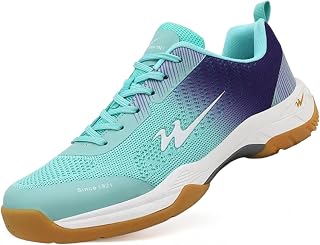
The Critical Importance of Non-Marking Gum Rubber Outsoles
The single most non-negotiable feature of any legitimate badminton shoe is its outsole. Indoor wooden and synthetic gym floors demand specialized rubber compounds that maximize traction without leaving scuff marks behind. Look for outsoles constructed from raw gum rubber or specialized high-grip synthetic rubber with intricate, multi-directional tread patterns. These patterns typically feature herringbone or suction-cup geometries designed to bite into the floor during sudden braking motions.
Never wear outdoor court shoes or running shoes with thick, grooved tread designed to trap gravel. Those treads collect dust rapidly on indoor courts, turning your shoes into miniature ice skates. A quality badminton outsole should feel slightly tacky to the touch and offer an audible squeak when you test a sharp lateral plant on a clean indoor surface. This immediate friction is what allows you to push off aggressively toward the four corners of the court without slipping.
Lateral Support and Outrigger Design
Badminton places immense stress on the outer edges of your feet due to constant lunging and sliding recoveries. When you lunge out to the side to retrieve a tight net shot, your body weight rolls violently toward the lateral edge of the shoe. If the shoe lacks adequate lateral reinforcement, your foot can spill over the midsole platform, leading to severe ankle sprains.
To prevent this, prioritize shoes that feature built-in lateral stability systems, often called outriggers. An outrigger is a slightly wider flare on the outer forefoot sole that broadens your base of support. Additionally, check the upper construction for synthetic overlays or rigid TPU shanks running along the midfoot and lateral side. These structural elements act as a structural cage, locking your foot securely over the footbed and preventing dangerous rollover during aggressive directional changes.
Cushioning Technology Versus Court Feel
Finding the right balance between impact protection and court feel is a classic dilemma in badminton shoe selection. Distance runners want maximum foam thickness, but badminton players need a low-to-the-ground profile to maintain agility and proprioception. If your shoes are too plush or high-stacked, your reaction time slows down because your brain loses its immediate connection to the floor.
Modern court shoes utilize advanced, low-profile cushioning materials—often categorized as specialized high-rebound foams or embedded gel and carbon plates—that absorb the shock of hard landing lunges without sacrificing responsiveness. The ideal setup provides targeted impact absorption primarily in the heel and forefoot (the high-impact zones), while keeping the midfoot firm and flat for explosive power transfer when you push off toward the rear court.
Understanding Upper Materials and Toe Drag Protection
The upper of a badminton shoe takes a surprising amount of abuse, particularly around the toe box and medial side. If you use a traditional sliding footwork technique, your trailing foot will drag its toe or inner edge across the court surface during deep lunges. Without reinforced materials, this friction will wear through standard mesh in a matter of weeks.
When evaluating uppers, look for durable synthetic leather panels or reinforced mesh layered with TPU or rubberized toe guards (often marketed as toe-wrap technologies). These protective shields absorb the abrasion of court drag. At the same time, ensure the upper incorporates breathable mesh panels across the vamp and tongue to maintain adequate airflow, keeping your feet cool and preventing excessive slippage caused by sweat accumulation inside the shoe.
Sizing, Fit, and Foot Shape Compatibility
Even the most technologically advanced shoe will fail to perform if it does not match your specific foot anatomy. Badminton shoes generally feature a snugger, more athletic fit than running shoes to prevent your foot from sliding forward when you stop abruptly. However, brands vary wildly in their default width profiles.
If you have wide feet, look for brands known for a more accommodating forefoot box, or seek out specific wide-width configurations. Conversely, narrow feet require a snug heel counter and secure lace-locking system to prevent heel slippage, which causes blisters. When trying on court shoes, ensure there is roughly a thumb-width of space between your longest toe and the front of the shoe, as your feet will expand and slide slightly forward during intense rallies.
When to Spend More on Premium Models
Entry-level badminton shoes generally suffice for casual players who step on the court once a week. However, stepping up to mid-tier or flagship models offers tangible benefits for frequent players. Premium models typically feature superior energy return systems, more durable carbon fiber or resin midfoot shanks for torsional stability, and higher-grade rubber compounds that retain their grip significantly longer.
If you play multiple times a week, invest in a higher-tier shoe because the upgraded structural materials degrade much slower under heavy loads. A cheaper shoe might save you money upfront, but if its midsole packs out and loses its support after a few months, you will find yourself replacing them twice as often while risking joint fatigue.
Common Mistakes to Avoid When Buying Court Shoes
One of the most frequent mistakes players make is purchasing tennis shoes and assuming they work equally well for badminton. While both are court shoes, tennis shoes are heavier and designed primarily for lateral dragging on abrasive outdoor or clay surfaces, making them overly clunky and stiff for the quick, springy footwork required in badminton.
Another common pitfall is ignoring the replacement timeline. Outsoles may look fine on the bottom, but once the internal midsole foam compresses and loses its rebound elasticity—usually after 6 to 12 months of regular play depending on your frequency—the shoe can no longer protect your knees and lower back from impact shock. Do not wait for the upper to tear before swapping out your worn-out court footwear.
Related Guides
To round out your court sports setup, explore our expert recommendations and equipment roundups. Read our Best Badminton Shoes for Court Play in 2026: Tested and Ranked to see our top-performing footwear picks. If you also enjoy quick indoor reaction games off the court, check out our Best Table Tennis Paddle Sets for Recreational Play in 2026: Tested and Ranked for quality gear recommendations.
FAQ
Can I use running shoes for playing badminton?
No, running shoes are strictly designed for forward linear motion and feature soft soles that lack lateral stability. Wearing them for badminton significantly increases your risk of rolling an ankle during sharp side-to-side movements.
How often should I replace my badminton shoes?
If you play two to three times a week, you should generally replace your badminton shoes every six to twelve months. Over time, the internal cushioning compresses and the outsole loses its tackiness, compromising both shock absorption and court traction.
Why do badminton shoes have gum rubber soles?
Gum rubber provides superior, non-marking friction on indoor wooden and synthetic court surfaces. This high-tack grip allows players to brake instantly and change directions rapidly without slipping or leaving scuff marks behind.
Should I buy court shoes in my exact running shoe size?
Not necessarily, as badminton shoes usually have a more secure, snug athletic fit to prevent foot sliding during aggressive lunges. It is often wise to consult specific brand sizing charts, as some models run narrower or require minor size adjustments.


Write Your Review
No reviews yet. Be the first to share your experience!