
Key takeaways
-
Best Overall: Schwinn 290 Recumbent Bike
-
Best Value: Schwinn 230 Recumbent Bike
-
Best Budget Choice: Marcy ME-709 Recumbent Exercise Bike
-
Best Connected Budget Alternative: Sunny Health & Fitness SF-RB4616SMART
-
Best for Combined Arm and Leg Exercise: Sunny Health & Fitness SF-RB420031
-
Best for Programmable Workouts: Sunny Health & Fitness SF-RB4850SMART
Find the best recumbent exercise bike for home workouts. Compare six models for back support, resistance, seat adjustment, accessibility, and value.
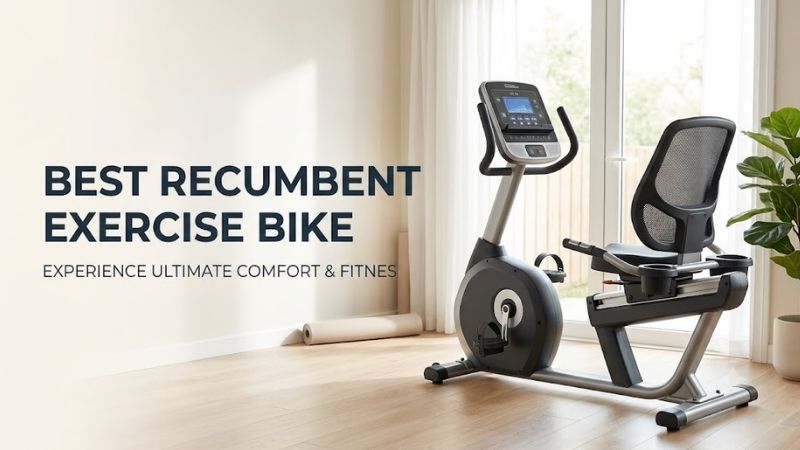
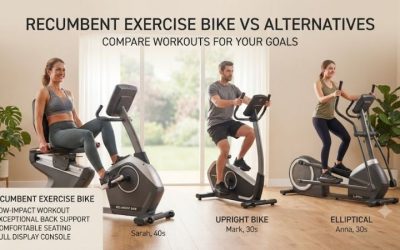
The best recumbent exercise bike combines a supportive backrest, comfortable pedaling position, adjustable resistance, and easy entry and exit. Unlike traditional upright bikes, recumbent models position the pedals in front of the rider and support the back with a larger seat. These six machines offer practical options for beginners, regular home exercisers, and buyers who prioritize comfort or connected workouts.
Quick Verdict: Best Recumbent Exercise Bikes
The Schwinn 290 is our best overall recommendation for buyers who want a balanced combination of comfort, resistance adjustability, and workout programming. It offers 25 magnetic resistance levels, 13 built-in workout programs, a ventilated backrest, and Bluetooth connectivity.
The Schwinn 230 is a more affordable alternative with many of the same fundamental ergonomic advantages. For buyers who prefer simpler controls, the Marcy ME-709 provides basic magnetic resistance without a complicated electronic training platform.
Our six picks are:
-
Best Overall: Schwinn 290 Recumbent Bike
-
Best Value: Schwinn 230 Recumbent Bike
-
Best Budget Choice: Marcy ME-709 Recumbent Exercise Bike
-
Best Connected Budget Alternative: Sunny Health & Fitness SF-RB4616SMART
-
Best for Combined Arm and Leg Exercise: Sunny Health & Fitness SF-RB420031
-
Best for Programmable Workouts: Sunny Health & Fitness SF-RB4850SMART
These models differ in their seat designs, resistance controls, training programs, and connected features. The best choice depends on how comfortably the machine accommodates your body and how you intend to exercise.
Quick Comparison Table
| Product | Best For | Key Specifications | Main Advantage | Trade-Off |
|---|---|---|---|---|
| Schwinn 290 | Overall home training | 25 magnetic levels; 330-lb capacity; 7-inch LCD | Advanced programming and supportive seating | Higher purchase cost |
| Schwinn 230 | Everyday value | 16 magnetic levels; 300-lb capacity | Adjustable ventilated seat and 13 programs | Fewer resistance settings than 290 |
| Marcy ME-709 | Budget beginners | 8 magnetic levels; 300-lb capacity | Simple controls and step-through frame | Basic monitor |
| Sunny SF-RB4616SMART | Connected home workouts | 8 magnetic levels; 300-lb capacity | SunnyFit compatibility and adjustable seat | Limited resistance increments |
| Sunny SF-RB420031 | Arm and leg conditioning | 8 magnetic levels; 265-lb capacity | Integrated resistance bands | Smaller adjustment range |
| Sunny SF-RB4850SMART | Programmable workouts | 16 electromagnetic levels | Electronic resistance and workout programs | Greater electronic complexity |
How We Selected These Recumbent Bikes
These recommendations are based on manufacturer-published specifications, ergonomic features, resistance systems, console functionality, and practical home-gym requirements. They do not imply that the specific units were personally tested.
Seat construction received particular attention. A recumbent bike can provide a larger seating surface than an upright bike, but comfort still depends on backrest shape, cushion firmness, seat position, and the relationship between the rider and pedals.
We also evaluated entry and exit clearance, supported user weight, adjustment range, and resistance-control methods. These factors are especially important when several household members share one bike or when a user prefers a stable seated exercise position.
Finally, we considered how much buyers gain from electronic programming. A machine with more resistance settings and connected features is not automatically a better purchase if the rider simply wants basic, comfortable pedaling.
Detailed Product Recommendations
1. Schwinn 290 Recumbent Bike — Best Overall
Best For: Home users who want supportive seating, a broad resistance range, and structured workout programming.
Why We Picked It: The Schwinn 290 brings together 25 levels of magnetic resistance, 13 built-in programs, and a padded, ventilated seat with lumbar support. Its combination of adjustability and onboard workout functionality makes it a strong general-purpose recumbent bike.
Key Specifications:
-
Resistance: 25 magnetic levels
-
Workout programs: 13 built-in
-
Display: 7-inch LCD
-
Maximum user weight: 330 lb
-
Dimensions: 66.4 × 28 × 47 inches
-
Machine weight: 107.6 lb
-
Seat: Adjustable, padded, ventilated backrest
-
Connectivity: Bluetooth with compatible JRNY and Zwift functions
-
Power: Standard 110–120V wall outlet
Features & Benefits
The large ventilated backrest is a central advantage. It provides a substantial support surface while allowing some airflow behind the rider, which can improve comfort during longer sessions.
The adjustable seat helps users establish an appropriate distance from the pedals. This is important because the rider’s knees should retain a comfortable degree of flexion at the farthest pedal position rather than becoming fully locked.
The Schwinn 290 also offers more resistance settings than many entry-level models. Twenty-five adjustment positions can support finer changes when alternating between easier pedaling and more demanding efforts.
Performance & Practical Use
For steady cardio, the machine provides enough resistance adjustments and workout information to organize sessions around time, cadence, or selected difficulty.
The 13 built-in programs are particularly useful for riders who want a structured session without manually changing every setting.
Bluetooth connectivity adds further training possibilities through compatible applications. However, the bike does not include a large built-in entertainment screen, and some connected services require separate subscriptions.
The 330-lb user-weight capacity accommodates a broader range of riders than many basic recumbent bikes. Nevertheless, buyers must still verify that the seat adjustment and pedal reach fit their body proportions.
What Makes It Different: It combines a substantial backrest, 25 resistance settings, and built-in programming without requiring a premium touchscreen.
Pros:
-
Broad 25-level resistance selection
-
Comfortable padded and ventilated backrest
-
Built-in programs and Bluetooth functionality
Cons:
-
Larger and heavier than basic recumbent bikes
-
Requires an electrical outlet
Buy If: You want a versatile recumbent bike for regular home workouts with useful programming and supportive seating.
Skip If: You primarily want an inexpensive machine with simple manual resistance.
2. Schwinn 230 Recumbent Bike — Best Value
Best For: Buyers who want a comfortable recumbent bike with connected training features but do not need the Schwinn 290’s full resistance range.
Why We Picked It: The Schwinn 230 provides 16 magnetic resistance settings, 13 workout programs, and a ventilated seat with an adjustable sliding mechanism.
Key Specifications:
-
Resistance: 16 magnetic levels
-
Workout programs: 13
-
Maximum user weight: 300 lb
-
Dimensions: 64 × 27.7 × 44 inches
-
Machine weight: 81.6 lb
-
Seat: Sliding adjustment with ventilated backrest
-
Display: LCD
-
Connectivity: Bluetooth with compatible cycling applications
-
Power: Standard 110–120V outlet
Features & Benefits
The Schwinn 230 shares several practical characteristics with the more expensive 290.
Its seat incorporates a large ventilated backrest, while the sliding adjustment allows users to modify the distance between the seat and pedals. A simple adjustment lever helps when different household members need to change the setup.
The 13 built-in programs are a significant benefit at this equipment level. They allow riders to follow preset exercise patterns rather than relying entirely on manual adjustments.
Stationary side handlebars provide accessible gripping positions near the seat.
Performance & Practical Use
Sixteen resistance levels are sufficient for a variety of recreational workouts, although the bike offers fewer adjustment increments than the Schwinn 290.
The 230 also weighs considerably less, making occasional repositioning more manageable when using its transport wheels.
However, the bike is still over five feet long. Households with limited exercise space should measure the operating footprint carefully.
What Makes It Different: It offers many of the practical features of the 290 at a more accessible equipment tier.
Pros:
-
Ventilated backrest with sliding seat
-
13 built-in workout programs
-
Bluetooth connectivity
Cons:
-
Fewer resistance settings than the 290
-
Requires external power
Buy If: You want a comfortable recumbent bike with structured workouts and good everyday value.
Skip If: You need the higher weight capacity and broader resistance adjustment of the 290.
3. Marcy ME-709 Recumbent Exercise Bike — Best Budget Choice
Best For: Beginners and budget-conscious users who want simple magnetic resistance and easy entry.
Why We Picked It: The Marcy ME-709 uses eight manual magnetic resistance settings, a padded seat with backrest, and a step-through frame.
Key Specifications:
-
Resistance: 8 magnetic levels
-
Maximum user weight: 300 lb
-
Dimensions: 58 × 20 × 38 inches
-
Frame: Powder-coated steel
-
Seat: Adjustable padded seat with backrest
-
Pedals: Counterbalanced with adjustable straps
-
Monitor: Time, speed, distance, and estimated calories
-
Transport: Built-in wheels
Features & Benefits
The step-through frame is one of the ME-709’s strongest practical features. It eliminates the need to climb over a high central frame section when mounting the bike.
The large seat and backrest support a reclined cycling posture, while the adjustable frame position helps accommodate different leg lengths.
Its eight resistance levels are controlled manually, allowing users to adjust pedaling difficulty without complicated menus.
Performance & Practical Use
The ME-709 is best suited to straightforward recreational cycling. It can support sessions based on elapsed time or comfortable effort without requiring connected training software.
However, its simple monitor provides less detailed workout data than the Schwinn models.
The eight resistance settings may also offer less adjustment flexibility for people who want finely controlled changes during structured intervals.
What Makes It Different: It prioritizes accessible entry, comfortable basic seating, and straightforward operation.
Pros:
-
Step-through design
-
300-lb rated user capacity
-
Simple manual controls
Cons:
-
Basic display
-
Limited programmable workouts
Buy If: You want a comfortable, inexpensive recumbent bike without app requirements.
Skip If: Advanced workout programming or Bluetooth tracking is important.
4. Sunny Health & Fitness SF-RB4616SMART — Best Connected Budget Alternative
Best For: Buyers who want a relatively affordable recumbent bike with Bluetooth workout tracking.
Why We Picked It: The SF-RB4616SMART combines eight magnetic resistance settings, SunnyFit compatibility, and a seat that adjusts forward and backward.
Key Specifications:
-
Resistance: 8 magnetic levels
-
Maximum user weight: 300 lb
-
Dimensions: 56.3 × 26.3 × 42.9 inches
-
Machine weight: 59 lb
-
Supported inseam adjustment: 30.7–40.2 inches
-
Seat dimensions: 16.9 × 11.8 inches
-
Connectivity: Bluetooth and SunnyFit
-
Monitor: Time, speed, distance, RPM, pulse, odometer, and estimated calories
Features & Benefits
The adjustable seat is especially useful for riders who need to refine pedal reach. Its published inseam range gives prospective buyers a more concrete starting point for assessing fit.
The LCD shows useful exercise information, while Bluetooth functionality allows compatible workout data to connect with SunnyFit.
Pulse sensors provide additional feedback during exercise, although contact-based pulse measurements should not be treated as medical-grade monitoring.
Performance & Practical Use
Eight magnetic settings can provide enough variation for gentle and moderate recreational sessions.
The relatively light construction also makes the machine more manageable to reposition than heavier recumbent bikes.
However, connected features should be considered optional additions rather than the primary reason to buy the machine. Comfortable pedal reach and stable seating remain more important.
What Makes It Different: It combines entry-level magnetic resistance with documented fit measurements and app connectivity.
Pros:
-
Bluetooth workout tracking
-
Adjustable seat with published inseam range
-
Relatively manageable machine weight
Cons:
-
Eight resistance settings
-
Limited built-in advanced programming
Buy If: You want an affordable recumbent bike with smartphone-based workout tracking.
Skip If: You need extensive onboard programs or premium console functions.
5. Sunny Health & Fitness SF-RB420031 — Best for Combined Arm and Leg Exercise
Best For: Buyers who want a seated cycling machine with additional light upper-body exercise options.
Why We Picked It: The SF-RB420031 combines conventional recumbent cycling with integrated resistance bands.
Key Specifications:
-
Resistance: 8 magnetic levels
-
Maximum user weight: 265 lb
-
Dimensions: 57.1 × 26.6 × 42.9 inches
-
Machine weight: 64.3 lb
-
Supported inseam: 26–35 inches
-
Seat: Adjustable forward and backward
-
Connectivity: Bluetooth and SunnyFit
-
Additional equipment: Resistance bands
Features & Benefits
The built-in resistance bands distinguish this model from conventional recumbent bikes.
They provide an option for light arm exercises while seated, although their resistance and exercise purpose differ from dedicated strength-training equipment.
The bike also includes pulse sensors and basic workout monitoring.
The seat can move forward and backward to accommodate different pedaling positions.
Performance & Practical Use
For someone who wants convenient seated exercise, combining pedaling with optional resistance-band movements may be appealing.
However, the resistance bands should not be interpreted as a substitute for a comprehensive upper-body strength program.
Users must also avoid allowing band movements to interfere with stable posture or pedal control.
What Makes It Different: It offers both recumbent pedaling and light arm-exercise functionality in a single home-fitness machine.
Pros:
-
Integrated resistance bands
-
Bluetooth compatibility
-
Adjustable seating position
Cons:
-
265-lb weight limit
-
Less suitable for users needing a long inseam range
Buy If: You want basic recumbent cycling with optional light upper-body exercises.
Skip If: You prefer a dedicated cycling machine without additional attachments.
6. Sunny Health & Fitness SF-RB4850SMART — Best for Programmable Workouts
Best For: Users who prefer electronically controlled resistance and preset cycling programs.
Why We Picked It: The SF-RB4850SMART provides 16 electromagnetic resistance levels and connected training functionality.
Key Specifications:
-
Resistance: Electronically controlled magnetic
-
Resistance levels: 16
-
Model: SF-RB4850SMART
-
Equipment category: Programmable recumbent bike
-
Connectivity: SunnyFit-compatible functions
-
Riding position: Reclined seat with back support
Features & Benefits
Electronically controlled resistance is useful for workouts that involve planned intensity changes.
Rather than relying exclusively on a manual tension dial, users can select programmed training functions through the console.
The recumbent frame provides a supported seated position while the electronic system manages workout resistance.
Performance & Practical Use
This model is suitable for buyers who want more workout variety than a basic eight-level bike provides.
However, electronically controlled resistance also introduces additional components and power requirements.
Buyers should confirm the current model’s program selection, seat-adjustment limits, and electrical requirements before ordering.
What Makes It Different: It emphasizes programmable resistance rather than basic manual operation.
Pros:
-
16 electromagnetic resistance levels
-
Structured workout capabilities
-
Connected training support
Cons:
-
More complex electronics
-
Higher equipment cost than basic manual models
Buy If: You want programmed resistance changes and connected home training.
Skip If: You prefer the mechanical simplicity of a budget manual-resistance bike.
Buying Guide: How to Choose the Best Recumbent Exercise Bike
Backrest Shape and Seat Support
The seat is one of the most important differences between recumbent exercise bikes.
A larger padded seat distributes body weight over a wider area than a narrow upright cycling saddle. However, cushioning alone does not guarantee comfort.
Backrest angle, lumbar support, seat firmness, and ventilation all influence the riding experience.
A person who enjoys the ventilated backrest on the Schwinn 290 may prefer it to the simpler foam padding of a budget model. Another rider may prioritize cushioning instead.
The best approach is to compare the seating dimensions and adjustment range with your body proportions.
Step-Through Frame Accessibility
A step-through frame provides a lower opening for entering the seating area.
This can make mounting and dismounting more convenient than climbing over a traditional bicycle-style frame.
However, low entry does not automatically make a bike appropriate for every mobility limitation.
Seat height, handlebar placement, foot access, and the user’s ability to transfer into the seat also matter.
Seat Adjustment and Pedal Reach
Recumbent bikes need enough adjustment to place the rider at a comfortable distance from the pedals.
At the farthest point of the pedal stroke, the knee should retain some bend without forcing the hips to shift across the seat.
A position that is too close can create excessive knee flexion, while a position that is too far can lead to overreaching.
Manufacturers use different measurement methods for inseam accommodation, so compare the published guidance carefully.
Magnetic Resistance Levels
Magnetic systems are common because they offer relatively quiet operation and repeatable adjustment.
Eight resistance settings may be sufficient for beginners, while 16 or 25 levels provide additional adjustment positions.
However, resistance counts are not standardized between brands.
A higher number of levels does not necessarily indicate a greater maximum workload.
Manual Versus Electronic Resistance
Manual resistance systems generally use a knob or dial.
They can be attractive because basic cycling does not depend on a sophisticated console.
Electronic systems support programmed changes and more integrated workouts but may require a wall outlet.
Choose according to whether automated workout control is genuinely useful to you.
User-Weight Capacity and Stability
The manufacturer-stated weight limit is a purchasing constraint, not a performance rating.
A bike should accommodate the intended user’s weight within its published capacity.
Frame construction, floor leveling, seat support, and assembly quality also affect stability.
Do not exceed the maximum user-weight rating or assume that a heavier frame automatically provides additional permissible capacity.
Training Programs and Connectivity
Built-in programs can add structure to regular workouts.
For example, a programmed session may alternate between easier and harder resistance levels instead of requiring the rider to make every adjustment manually.
Bluetooth connectivity can provide additional tracking or entertainment.
However, subscription costs should be evaluated separately from the equipment price.
Floor Space and Transportation
Recumbent bikes generally occupy more floor length than compact upright bikes.
Measure the full assembled dimensions and leave clearance for entering the seat, extending the legs, and reaching the controls.
Transportation wheels simplify repositioning, but large machines can still be heavy.
Frequently Asked Questions
Are Recumbent Exercise Bikes Better Than Upright Bikes?
Recumbent bikes provide a supported seating position with a backrest, while upright bikes more closely resemble conventional bicycle geometry.
Neither is universally better. Comfort, fit, accessibility, training preferences, and the user’s needs should guide the decision.
Are Recumbent Bikes Good for Beginners?
Yes. They allow users to begin with low resistance and control their pace while seated.
Beginners should start gradually and avoid forcing uncomfortable joint positions.
Can You Get a Challenging Workout on a Recumbent Bike?
Yes. Models with suitable resistance ranges can support steady cycling and more demanding intervals.
The actual workload depends on resistance, cadence, and the rider’s effort.
Do Recumbent Bikes Take Up More Space?
Many recumbent models are longer than upright bikes because the pedals extend in front of the seat.
Compact models exist, but buyers should measure the full footprint rather than assuming all recumbent bikes require the same amount of space.
Is a Ventilated Backrest Better Than a Padded Backrest?
A ventilated design can improve airflow, while padding may provide a softer contact surface.
Comfort depends on the entire seating structure and individual preference.
Do I Need Connected Fitness Apps?
No. Basic recumbent cycling does not require connected software.
Apps can provide additional workout tracking and instruction, but they are optional for many users.
Conclusion
The Schwinn 290 is the best recumbent exercise bike for most home users who want supportive seating, 25 magnetic resistance levels, and structured workouts. Choose the Schwinn 230 for better everyday value, the Marcy ME-709 for straightforward budget cycling, or the Sunny SF-RB4850SMART for programmable resistance.
Write Your Review
No reviews yet. Be the first to share your experience!