
Key takeaways
What's inside
Best power rack with pulley system turns a squat cage into a near-complete gym, adding lat pulldowns, low rows and cable work to your barbell lifts in one footprint. This guide compares steel gauge, cable setup, footprint and capacity so you build strength and pull without owning two separate machines.
As an Amazon Associate we earn from qualifying purchases at no extra cost to you. Product prices and availability are accurate as of the date shown and are subject to change.
By Chris Parker
🛒 Best Price Today on Amazon
Prime members get fast, free shipping on everything above, plus member-only deals. New members get a 30-day free trial — cancel anytime.
Start 30-Day Prime Free Trial →See Today’s Amazon DealsHow to Choose the Right Best Power Rack With Pulley System
A rack with a pulley must be a safe cage first and a cable machine second, so judge the steel and safeties before the cables. The best power rack with pulley system pairs a sturdy frame with a smooth cable setup and the footprint your room allows.
Steel Gauge and Upright Size
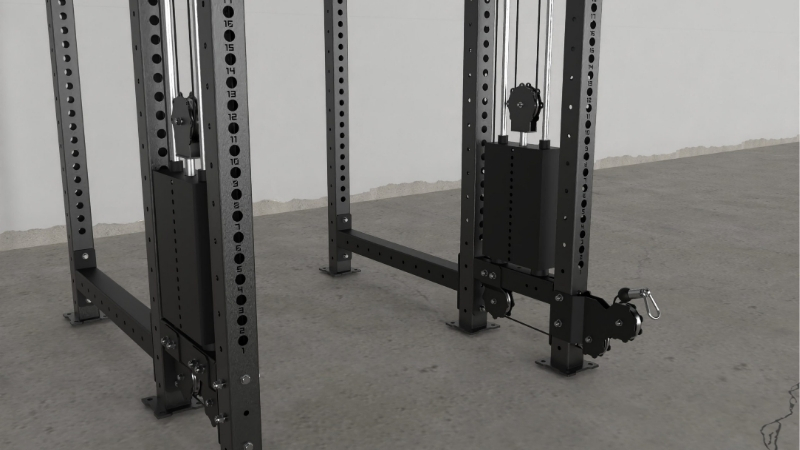
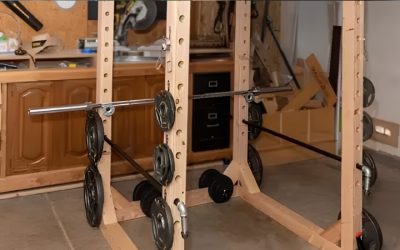
Frame strength comes from steel thickness and tube size. Serious racks use 11-gauge steel with 3 by 3 in (76 by 76 mm) uprights for rock-solid heavy lifting, while value racks use 2 by 3 in (51 by 76 mm) or 2 by 2 in (51 by 51 mm) tubing that is plenty for most home lifters but marginally less rigid.
Rated capacity follows from that steel. Sturdy racks list 700 to 1,000 lb (318 to 454 kg) or more, far beyond what almost any home lifter loads, so even a value cage is safe for heavy squats. The number matters most as a sign of overall build quality and rigidity.
Upright size also decides your future. A 3 by 3 in (76 by 76 mm) rack opens a huge attachment ecosystem, while smaller tubing limits third-party add-ons to the maker’s own line. If you plan to grow the rack over years, buy into a size and brand with the attachments you will want.
Built-In Cables or Add-On Attachment
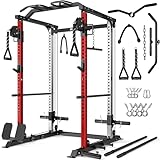
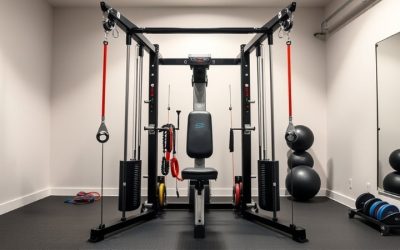
There are two routes to cables. Some racks build the pulley in, like the Sportsroyals and Mikolo cages, giving lat pulldowns and rows out of the box. Others start as a bare cage and take a bolt-on lat and low-row attachment later, as on the Titan T-3, REP PR-1100 and Fitness Reality 810XLT.
Decide up front, since retrofitting only works if the rack has matching attachment points. Built-in systems are simpler and often plate-loaded on a 1:1 or 2:1 ratio, while premium racks use weight stacks. Confirm whether the cable is plate-loaded or stack-driven and what resistance ratio it runs, as a 2:1 stack halves the felt weight.
Cable smoothness varies more than the spec sheet shows. Better racks use sealed pulleys and coated cables that glide, while budget systems can feel notchy under load and wear faster near their rated max. Where you can, read reviews on cable feel, since a rough pulley sours otherwise good lat and row work.
Footprint, Ceiling and Value
A cable rack needs floor and height. Plan roughly 4 by 4 ft (1.2 by 1.2 m) for the cage, plus clearance behind or above for the cable weight to travel, and confirm your ceiling clears the rack, which often stands 83 to 91 in (2108 to 2311 mm) tall, with room to stand and press overhead. Measure your actual space and ceiling before ordering.
On value, one cable rack replaces a squat stand, a lat machine and a row station, so the best power rack with pulley system is among the most space- and cost-efficient anchors for a home gym. Bolting a tall rack to the floor or wall adds stability for heavy or explosive work. For context, the WHO physical activity guidelines suggest about two muscle-strengthening sessions a week, and heavy barbell work is safest with the safeties set and, if new, guidance from a coach or doctor.
Top Picks for the Best Power Rack With Pulley System
These seven are the best power rack with pulley system options, from bolt-on-cable value cages to built-in functional trainers. Match the steel and cable setup to your lifts and space. All are widely available on Amazon.
| Rack | Uprights | Pulley | Best for |
|---|---|---|---|
| Titan T-3 + Lat | 2×3 in, 11-ga | Add-on lat/row | Best value |
| Fitness Reality 810XLT | 2×2 in | Add-on 710 lat | Best for beginners |
| REP PR-1100 + Lat | 2×2 in | Add-on high/low | Low ceilings |
| Sportsroyals Power Cage | Commercial steel | Built-in | Built-in value |
| Mikolo K6 2.0 | Heavy tubing | Built-in | All-in-one |
| Force USA MyRack | Modular | Built-in dual | Most versatile |
| Major Fitness All-in-One | Heavy tubing | Built-in | Value all-in-one |
Titan T-3 Power Rack With Lat Attachment
The value champion: a heavy 2 by 3 in (51 by 76 mm), 11-gauge frame rated to around 1,000 lb (454 kg), with a bolt-on lat tower whose pulley slides up for pulldowns or down for rows and curls, plus a straight pull-up bar and a huge Titan attachment ecosystem.
The lat attachment tops out near 410 lb (186 kg) of plates and assembly runs two to three hours. As roughly 80 percent of a premium cable rack for well under half the cost, it leads. Best value.
Fitness Reality 810XLT With 710 Lat Attachment
A beginner-friendly cage paired with the 710 high-and-low pulley attachment, using a nylon-coated cable and a smooth 2 in (51 mm) guide rail, supporting up to 265 lb (120 kg) of plates and including a long pulldown bar and a short row bar to start.
The 2 by 2 in (51 by 51 mm) tubing is less rigid than heavier racks and limits third-party add-ons. As the easiest entry into a cable rack, it works well. Best for beginners.
REP PR-1100 Power Rack With Lat Attachment
A solid, no-frills 2 by 2 in (51 by 51 mm) cage with an official high-and-low pulley attachment for lat pulldowns, pushdowns, low rows and cable curls, ideal for beginners, budget builds and rooms with low ceilings thanks to its compact frame.
The 2 by 2 in (51 by 51 mm) build limits attachments and the included bars are basic. As the best value cable rack for tight ceilings, it stands out. Best for low ceilings.
Sportsroyals Power Cage
A commercial-leaning cage with a built-in pulley system out of the box, aimed at lifters chasing real numbers like 400 lb (181 kg) squats and weighted dips, offering smooth cable movement and a frame that stays planted when loaded heavy.
The larger built-in setup takes more space and longer to assemble than a bare cage. As a sturdy built-in cable rack at a fair price, it delivers. Best built-in value.
Mikolo K6 2.0 Power Cage
An all-in-one cage with an integrated pulley system, multi-grip pull-up bar and a long attachment list, giving barbell lifts plus lat pulldowns, rows and cable work in a single sturdy frame at a mid-range price.
Assembly is long at four to six hours and the many parts need laying out carefully. As a complete built-in cable station, it stands out. Best all-in-one cage.
Force USA MyRack Modular Power Rack
The most versatile pick, a modular rack with a built-in dual cable system and a deep menu of attachments including a lat pulldown seat, jammer arms and dip handles, letting you configure it toward a near-complete functional trainer.
The full attachment set adds cost and it is a large, premium footprint. As the most expandable cable rack here, it excels. Best for versatility.
Major Fitness All-in-One Power Rack
A value all-in-one cage with a built-in pulley system that replaces several machines, offering lat pulldowns, rows and cable work alongside barbell lifting at a price well under the premium modular racks.
The integrated build is bulky and third-party attachment options are limited. As a budget-friendly built-in cable rack, it delivers. Best value all-in-one.
Frequently Asked Questions
Common questions about the best power rack with pulley system.
Can I add a pulley system to a basic power rack later?
Only if the rack has matching attachment points. Racks like the Titan T-3, REP PR-1100 and Fitness Reality 810XLT have official lat and low-row add-ons. If you want cables guaranteed, either buy one of those or choose a rack with a built-in pulley from the start.
Are plate-loaded or weight-stack pulleys better?
Plate-loaded cables are cheaper and use plates you already own, while weight stacks are faster to change and feel smoother. Many built-in home systems are plate-loaded, sometimes on a 2:1 ratio that halves the felt weight, so check the ratio before buying.
How much space does a cable rack need?
Plan about 4 by 4 ft (1.2 by 1.2 m) of floor plus clearance for the cable weight to travel and room to press overhead. Most racks stand 83 to 91 in (2108 to 2311 mm) tall, so measure floor and ceiling before ordering.
Do I need to bolt the rack down?
Not always, but it helps. A tall, loaded rack is more stable bolted to the floor or braced to a wall, especially for heavy pulldowns that lift the frame or explosive work. Freestanding is fine for many lifters if the rack is heavy and the base is wide.
See More:
- Best flooring for home gym over concrete
- Best collapsible exercise bike
- Best fold away exercise bike
- Best exercise bike folding
- Best home upright exercise bike
Final Thoughts
The best power rack with pulley system replaces a squat stand, a lat machine and a row station with one cage, so prioritise a sturdy frame and safeties, then decide between a built-in pulley or a bolt-on attachment you add later. Match the upright size to how far you want to expand, and always check floor and ceiling space. Get it right and the best power rack with pulley system becomes the anchor of a complete home gym.
As an Amazon Associate we earn from qualifying purchases at no extra cost to you. Product prices and availability are accurate as of the date shown and are subject to change.






Write Your Review
No reviews yet. Be the first to share your experience!