
Key takeaways
What's inside
Best kettlebell workout for fat loss starts with buying the right bell rather than with the programme. Handle width, finish and the size of the jump between weights decide whether swings and cleans feel controlled or punishing, and the floor space you need is larger than most people assume. Handle quality decides everything else.
As an Amazon Associate we earn from qualifying purchases at no extra cost to you. Product prices and availability are accurate as of the date shown and are subject to change.
As an Amazon Associate we earn from qualifying purchases at no extra cost to you. Product prices and availability are accurate as of the date shown and are subject to change.


By Chris Parker
🛒 Best Price Today on Amazon
Prime members get fast, free shipping on everything above, plus member-only deals. New members get a 30-day free trial — cancel anytime.
Start 30-Day Prime Free Trial →See Today’s Amazon DealsHow to Choose a Bell for the Best Kettlebell Workout for Fat Loss
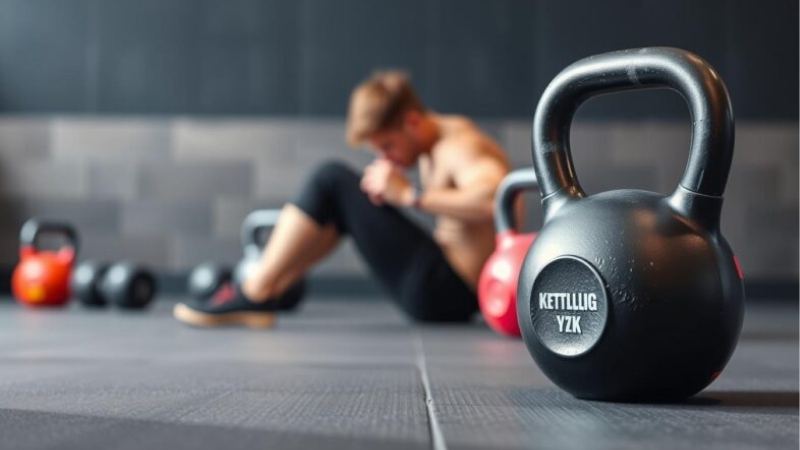
The best kettlebell workout for fat loss uses swings, cleans, snatches and carries, which means the handle matters as much as the weight does. A rough finish tears skin on high-repetition sets, and a jump that is too large stops progress dead. Both problems are avoidable if you buy carefully the first time. Finish matters as much as weight.
Weight Jumps and Where to Start
Cast iron kettlebells usually step in 4 kg (roughly 9 lb) increments, which is a large jump when you are working in the 12 to 20 kg range. Beginners commonly start between 8 and 12 kg (18 to 26 lb) for swings, with lighter bells for pressing and heavier ones for carries. Two bells cover far more than one does.
That 4 kg gap is why adjustable kettlebells exist. They let you fill the space between bells and cover several exercises with one unit, though they are bulkier and cost more than two fixed bells. Buy fixed if you know your weights, adjustable if you are still finding them. Adjustable units fill the 4 kg gaps neatly.
Handle Width, Finish and Casting
Handle diameter around 33 to 35 mm suits most hands, and the window needs to be wide enough for two hands on a swing without pinching. Competition bells keep the same handle across every weight, while cast iron bells get thicker handles as the weight increases, which changes the grip. Window width decides two-handed comfort.
Powder coat gives grip without shredding skin and is the sensible default for high-repetition work. Vinyl coating protects floors but feels slippery when sweaty, and chrome or gloss paint becomes hard to hold quickly. Check for a smooth casting seam, since a rough one is felt on the first set of cleans.
Footprint, Ceiling Height and Floor Protection
Space is what catches people out with the best kettlebell workout for fat loss. Swings need a clear area of about 6 x 6 ft (1.8 x 1.8 m), and overhead work needs roughly 12 in (30 cm) above your raised hand, so an 8 ft (2.4 m) ceiling is workable but not generous. Light fittings are the usual obstruction.
Floor protection is not optional. A dropped 16 kg bell will crack tile and dent laminate, so rubber matting of 3/4 in (19 mm) belongs in the budget from the start. Measure the area and the ceiling above where you will swing before ordering, particularly in a room with light fittings. Matting belongs in the first order.
Top Picks: Kettlebells for Conditioning Work
The best kettlebell workout for fat loss needs one good bell, so the picks below cover cast iron, powder coat, competition steel and an adjustable unit. Fewer than one in four US adults meets both the aerobic and muscle-strengthening guidelines (CDC, 2020), and one bell in a spare room removes the trip to a gym entirely.
| Product | Type | Finish | Best for |
|---|---|---|---|
| Yes4All Cast Iron | Fixed bell | Painted cast iron | Budget start |
| Amazon Basics Cast Iron | Fixed bell | Vinyl or iron | First bell |
| Kettlebell Kings Powder Coat | Fixed bell | Powder coat | High repetitions |
| CAP Competition Bell | Fixed bell | Steel | Consistent handle |
| Bowflex SelectTech 840 | Adjustable | Coated | Filling weight gaps |
| Rubber gym matting | Flooring | 3/4 in thick | Floors and noise |
Yes4All Cast Iron Kettlebell
Yes4All is the budget entry that covers every common weight, so you can buy the exact bell your training needs rather than the one that happens to be on offer. For swings and carries it does the job, and it costs little enough that a second bell is not a large decision. Every common weight is available.
The painted finish is slippery once your hands are damp, and casting seams vary between units. Check the handle before your first high-repetition session and file any rough spot. Treat it as a working tool rather than a bell you will still be cleaning with for the next decade. Check the seam before the first session.
Amazon Basics Cast Iron Kettlebell
Amazon Basics bells are the straightforward first purchase: standard weights, a reasonable handle and vinyl or bare iron finishes depending on the version. The vinyl base protects flooring, which is genuinely useful in a room where matting is not going to happen for a while. Standard weights and a reasonable handle throughout.
Vinyl gets slippery with sweat and the coating scuffs, while the plain versions need the handle checking for casting roughness. Neither issue is serious for swings and goblet squats. For heavy snatch work, a powder-coated bell is the better long-term buy than either finish here. Vinyl protects floors in the meantime.
Kettlebell Kings Powder Coat Kettlebell
Powder coat is what high-repetition work needs: enough texture to hold without chalk, and not so rough that the skin on your palms gives up first. Kettlebell Kings bells are consistently finished, with smooth handles and no seam to catch on the down phase of a clean. It suits the best kettlebell workout for fat loss at high repetitions.
They cost noticeably more than budget cast iron, which is hard to justify if you only swing occasionally. The coating also wears at the contact points over years of use. Buy it if kettlebell work is the centre of your training rather than an occasional addition to it. The coating wears at contact points.
CAP Competition Kettlebell
Competition bells keep the same dimensions at every weight, so the handle and the body feel identical whether you are holding 12 kg or 24 kg. That consistency is worth a lot once you own several bells, because the technique does not change as the load goes up. Consistency is worth paying for in a set.
Steel competition bells cost more per unit and the handles are narrower than cast iron, which some people with larger hands dislike for two-handed swings. They also mark floors more readily. Buy them if you plan a matching set rather than one or two bells in isolation. Handles run narrower than cast iron.
Bowflex SelectTech 840 Adjustable Kettlebell
An adjustable bell fills the 4 kg gaps that fixed kettlebells leave, covering a range from roughly 8 to 40 lb (3.5 to 18 kg) in a single unit. For a small room where three separate bells will not fit, it solves the storage problem and the progression problem at once. One unit replaces two or three bells.
The body is bulkier than a fixed bell, which is noticeable in the rack position, and it must not be dropped. The adjustment mechanism is also another part that can fail. Use it for swings, goblet squats and presses rather than for snatches where the bell flips over the wrist. Never drop an adjustable bell on any surface.
Rubber Gym Matting
Matting is the purchase that quietly protects everything else in the room. A 3/4 in (19 mm) rubber mat under the swing area absorbs the occasional dropped bell, stops the base marking laminate and takes a useful amount of noise out of the floor below in a flat. It absorbs the occasional dropped bell.
Mats are heavy to move alone and often smell strongly for the first couple of weeks after unwrapping. Air them outside first, and measure the area properly, because trimming thick rubber flooring with a knife at home is slow, awkward work that is easy to get wrong. Measure the swing area before you order.
Frequently Asked Questions
These questions come up whenever someone buys a first kettlebell with conditioning in mind. They cover weight selection, finish and space rather than programming, because those decisions are the ones that are expensive to reverse once the bell has arrived at the door. Weight and finish answer most of them.
What weight kettlebell should I start with?
Most beginners start swings between 8 and 12 kg (18 to 26 lb) and use something lighter for overhead pressing. Strength and training history matter more than any general rule, so if you are between two weights, take the lighter one and add repetitions instead. Technique comes before load on every swing.
How many kettlebells do I actually need?
Two covers most training: a lighter bell for pressing and technique work, a heavier one for swings and carries. A third fills the gap as you progress. An adjustable unit replaces the first two if storage space is tight, at the cost of bulk in the rack position. Most people settle on two or three bells.
Which finish is best for high-repetition work?
Powder coat, by a clear margin. It grips when your hands are damp without stripping skin, which painted and vinyl finishes both struggle with. Chrome and gloss paint become slippery fastest, and they are the finishes most likely to end a set early on a hot day. Chalk helps, but a good coating helps more.
How often should I do the best kettlebell workout for fat loss?
Public guidance is 150 to 300 minutes of moderate activity per week plus two muscle-strengthening days (WHO, 2020), and kettlebell work can contribute to both. Speak to a doctor before starting a new programme, particularly with existing back, shoulder or heart concerns, and learn the swing before loading it.
See More:
Final Thoughts
The best kettlebell workout for fat loss is built on a bell you can hold for a full set, a weight jump you can actually make, and a floor that survives it. Buy powder coat if you swing often, two bells rather than one, and matting before the first session. Then learn the swing properly with a light bell.



Write Your Review
No reviews yet. Be the first to share your experience!