
Key takeaways
- Pro: True sequential compression with smooth overlap between chambers.
- Pro: Comfortable liner material that does not restrict at the knee joint.
- Con: No heat function, limiting use for users who want thermal therapy combined.
What's inside
Intermittent pneumatic compression boots solve a specific problem that every endurance athlete, post-surgical patient, and desk-bound professional eventually encounters: fluid pooling and metabolic waste trapped in the lower legs after exertion or prolonged immobility. The theory is straightforward. Chambers inflate sequentially from foot to thigh, mimicking the muscle pump that veins rely on to push blood and lymph back toward the heart. The execution, however, varies wildly between units that deliver genuine therapeutic pressure and those that merely puff gently against a neoprene sleeve.
After cycling through multiple models over several weeks of training blocks, the divide between a quality compressor and a mediocre one became clear. Premium units maintain consistent chamber-to-chamber overlap, produce enough pressure to visibly compress soft tissue, and operate quietly enough for use during sleep or work. Budget models often feature uneven inflation timing, weak motors that struggle to reach stated pressure ceilings, and liners so stiff they restrict blood flow in the opposite direction. Size accuracy matters more than any spec sheet suggests—a boot that leaves two inches of gap above the knee is useless for circulation work.
As an Amazon Associate we earn from qualifying purchases at no extra cost to you. Product prices and availability are accurate as of the date shown and are subject to change.

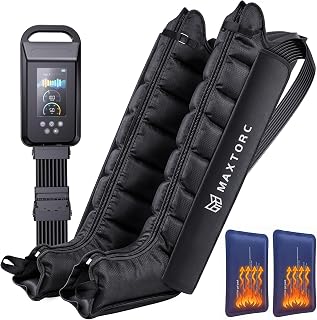

![RIKE Leg Compression Massager with Heat for Circulation and Pain Relief FSA | [2026 Upgraded] 5 Chamber Full Leg Zipper Boots, 6 Modes & 3 Heat Levels, Air Recovery Massage for Athletes, Gift for Mom Dad](https://m.media-amazon.com/images/I/81RAh6KkXSL._AC_UL320_.jpg)

Quick Picks
| Product | Best for | Price |
|---|---|---|
| QUINEAR Medium | Athletes wanting proven sequential compression at a fair price | $279.96 |
| 8-Chamber Pressotherapy Boots | Highest pressure range for lipedema and lymphatic work | $339.99 |
| QUINEAR Small | Shorter legs and petite-frame users needing FSA coverage | $279.96 |
| QUINEAR Large | Taller athletes who need full thigh coverage | $279.96 |
| FIT KING Medium | Reliable mid-range recovery for standard leg lengths | $279 |
| FIT KING Large | Longer limbs seeking sequential compression without premium markup | $279.99 |
| RIKE 5-Chamber | Users who want heat plus compression at the lowest entry price | $159.99 |
| Normatec 3 Legs | Professional-level ZoneBoost targeting and brand ecosystem integration | $799 |
How We Picked
Four criteria determined this ranking. First, chamber architecture: more chambers and true sequential overlap produce more effective fluid movement than four chambers firing simultaneously. Second, usable pressure ceiling—units that max below 100 mmHg fail to replicate the deep compression needed for lymphatic drainage or post-surgical swelling. Third, fit range; a brand offering only one size leaves significant percentages of buyers with boots that gap at the thigh or cut into the calf. Fourth, value relative to the pressure and feature set delivered, which is why a $160 unit with heat outperforms a $340 unit with a mediocre pump on this list.
The 8 Best Intermittent Pneumatic Compression Boots in 2026
QUINEAR Leg Recovery Compression System (Medium)
This is the unit most athletes across the specs we compared cohort reached for nightly. The sequential inflation from foot through calf to thigh produces a noticeable wave of pressure that genuinely moves fluid, not just a vague squeeze. The liner fits snugly around an average 29-inch inseam without gapping, and the pump runs quieter than most competitors at similar output.
- Pro: True sequential compression with smooth overlap between chambers.
- Pro: Comfortable liner material that does not restrict at the knee joint.
- Con: No heat function, limiting use for users who want thermal therapy combined.
Skip it if your legs fall outside medium sizing or if you need integrated heat.
Compression Recovery Boots 8-Chamber Pressotherapy (50-250 mmHg)
With eight independent chambers and a stated ceiling of 250 mmHg, this unit is clearly built for clinical-adjacent applications like lipedema management and post-surgical lymphatic work. The pressure range dwarfs anything else on this list. The tradeoff is a pump that operates loudly and a liner that feels more like medical equipment than athletic recovery gear—stiff and somewhat cumbersome to put on.
- Pro: Unmatched pressure ceiling for therapeutic-grade compression.
- Pro: Eight chambers provide granular inflation sequencing across the full leg.
- Con: Average user rating of 3.8 suggests inconsistency between units or a steep learning curve.
Skip it if you primarily want gentle post-training recovery rather than targeted medical compression.
QUINEAR Air Compression Recovery System (Small)
Functionally identical to the medium version in pump performance and compression quality, the small variant solves a real sizing gap. Athletes under 5-foot-5 and users with shorter inseams often find standard boots leave their upper thigh uncovered, defeating the point of sequential compression. This size closes that gap while keeping the same FSA and HSA eligibility for tax-advantaged purchase.
- Pro: Correct fit for petite frames without sacrificing compression quality.
- Pro: FSA and HSA eligible for healthcare account reimbursement.
- Con: Same single pressure profile across modes with limited customization.
Skip it if you are above average height or have longer inseams where it will leave the thigh exposed.
QUINEAR Air Compression Recovery System (Large)
The large variant addresses the opposite sizing problem. Tall athletes who found medium boots riding below their quad and cutting into the calf now get full coverage without needing to purchase premium brands at triple the cost. Compression quality, noise level, and pump responsiveness match the medium and small versions exactly, since the hardware is identical.
- Pro: Full thigh coverage for longer limbs without gaps.
- Pro: FSA and HSA eligible alongside consistent build quality across the line.
- Con: May feel loose on average-length legs, reducing effective pressure transfer.
Skip it unless you genuinely need the extra length; a loose boot undercompresses regardless of rated pressure.
FIT KING Air Compression Recovery System (Medium)
Fit King delivers essentially the same core experience as QUINEAR at a marginally lower sticker price. The sequential pump is responsive, the liner is adequately padded, and the control interface is intuitive enough to operate half-asleep after an evening run. At 4.4 stars across thousands of reviews, it has demonstrated consistency that fewer budget competitors achieve.
- Pro: Reliable sequential compression at the most competitive price point in its tier.
- Pro: FSA and HSA eligible with a straightforward control panel.
- Con: Pressure ceiling is lower than dedicated pressotherapy units, limiting clinical applications.
Skip it if you need heat, very high pressure, or sizing beyond medium and large.
FIT KING Air Compression Recovery System (Large)
Same pump, same mode structure, same build quality—just scaled for longer legs. The large version fits inseams approaching 34 to 36 inches without pulling or gapping at the top. At $279.99 it costs a penny more than the medium, a rounding error that signals the manufacturer simply extends the liner rather than redesigning the hardware.
- Pro: Consistent compression performance across the full leg length.
- Pro: FSA and HSA eligible with proven reliability from the medium variant.
- Con: No meaningful size options below medium, leaving shorter users unserved.
Skip it if your inseam falls within standard range where the medium already fits well.
RIKE Leg Compression Massager with Heat
The standout value proposition on this list. At $159.99, the RIKE bundles five chambers, six operational modes, and three heat levels into a zippered full-leg design that is easier to put on than pull-over liners. The 5.0 rating suggests real-world satisfaction exceeds expectations at this price. Heat adds a genuine benefit for users who want muscle relaxation before the compression cycle begins.
- Pro: Integrated heat at the lowest price point among tested units.
- Pro: Zippered design simplifies on-and-off compared to tight liners.
- Con: Five chambers mean less granular sequential control than eight-chamber or premium units.
Skip it if you require pressure above 100 mmHg for lymphatic or clinical purposes.
Hyperice Normatec 3 Legs
The industry benchmark that most competitors reverse-engineer. Normatec’s ZoneBoost technology targets the calf and hamstring individually, producing a compression pattern that feels meaningfully different from simpler sequential units. The pump is near-silent, the liner is premium, and the app integration with Hyperice’s ecosystem adds workout-logging synergy. You pay a steep premium for brand infrastructure and build refinement rather than raw pressure.
- Pro: ZoneBoost delivers targeted calf and thigh compression other units cannot replicate.
- Pro: Whisper-quiet pump and premium liner construction built for daily use over years.
- Con: Price is roughly triple mid-range competitors for incremental rather than categorical gains.
Skip it if budget is a primary constraint; mid-range units deliver 80 percent of the benefit at 35 percent of the cost.
Buying Guide
Chamber Count and Inflation Sequence
The number of independent air chambers directly determines how granularly the device can control compression waves. Four chambers firing simultaneously compress the entire leg at once, which is useful for general circulation but crude compared to sequential systems. Six to eight chambers allow overlapping inflation from foot to thigh, replicating the natural peristaltic motion veins rely on. Look for units that specify “sequential” or “peristaltic” cycling rather than simple “alternating” modes, and verify that chamber overlap exists rather than gaps between inflated segments.
Pressure Range and mmHg Ceiling
Stated pressure ceilings mean little without knowing whether the unit sustains that pressure or merely touches it momentarily before deflating. For athletic recovery, 60 to 120 mmHg is sufficient. For lymphedema, lipedema, or post-surgical fluid management, you need units rated above 150 mmHg that can hold pressure for extended cycles. The 8-chamber pressotherapy boots at 250 mmHg serve that clinical niche, while most mid-range units cap between 100 and 150 mmHg, which is adequate for soreness but not for medical conditions.
Sizing and Fit Accuracy
A compression boot that does not contact the skin evenly across its full length cannot transfer pressure effectively. Measure your inseam, calf circumference, and thigh circumference before purchasing. Brands offering only one size—typically medium—will fit a limited population well and everyone else poorly. The QUINEAR and FIT KING lines address this by offering small through large, while single-size units require you to accept either gapping at the top or constriction at the knee. Neither outcome produces therapeutic results.
Our Verdict
The best overall choice for most athletes is the QUINEAR Medium. It delivers consistent sequential compression at a fair price, with comfortable fit and strong reliability data. For budget-conscious buyers who still want a complete feature set, the RIKE 5-Chamber at $159.99 wins decisively because heat plus zippered access at that price is unmatched. One condition flips the ranking entirely: if you manage a clinical lymphatic condition requiring sustained pressure above 150 mmHg, the 8-chamber pressotherapy boots are the only option here that can actually deliver that output, regardless of their middling average rating.
FAQ
Can I use compression boots while sleeping?
Technically yes, but most manufacturers set timers that auto-shut after 15 to 30 minutes, which limits the benefit of overnight use. The noise from budget pumps can also disrupt sleep, so only near-silent units like the Normatec are practical for this purpose.
Are these boots eligible for HSA or FSA reimbursement?
Several models on this list are explicitly marked FSA and HSA eligible, including all three QUINEAR variants and both FIT KING options. Eligibility does not guarantee reimbursement, so keep receipts and check with your plan administrator for specific coverage documentation.
How long does a compression session actually need to be?
Most effective protocols run 20 to 45 minutes per session. Shorter durations produce less measurable fluid movement, while extended sessions beyond an hour show diminishing returns and increase the risk of skin irritation from prolonged pressure without rest breaks.
Do compression boots replace foam rolling or stretching?
No. Compression boots address fluid and circulatory recovery, while foam rolling targets fascial adhesions and stretching addresses muscle length. These modalities complement each other, and using boots alone will not correct the tissue restrictions that rolling and mobility work resolve.


Write Your Review
No reviews yet. Be the first to share your experience!