
Key takeaways
-
Best Overall: Horizon Fitness 7.0 AT — A 20 × 60-inch running surface, 12 mph maximum speed, 15% incline, and quick-adjust controls make it a strong choice for regular home running.
-
Best Budget: Horizon Fitness T101 Connect — A folding treadmill with a 20 × 55-inch deck and 10 mph speed range for walking and recreational jogging.
-
Best for Regular Running: SOLE F80 — Offers a 20 × 60-inch belt, a 350 lb user capacity, and a substantial folding frame.
-
Best for Small Spaces: Echelon Stride-6 — Combines a full-length running deck with an automatic folding mechanism designed for convenient storage.
-
Best for Guided Workouts: ProForm Carbon TLX — Provides a 20 × 60-inch running area, 12% incline, and integration with iFIT training features.
-
Best Traditional Console: XTERRA TRX3500 — A folding treadmill with a 20 × 60-inch deck, 30 preset programs, and straightforward physical controls.
The best folding treadmill combines a comfortable running surface with practical storage, reliable speed controls, and enough incline adjustment for your workouts. Whether you need an affordable treadmill for walking, a full-size machine for regular running, or a fold-flat option for an apartment, these six models offer different advantages worth comparing.
Quick Verdict: Which Folding Treadmill Is Best?
The Horizon Fitness 7.0 AT is our best overall choice for buyers who want a full-size running surface, responsive physical controls, and a hydraulic folding frame without making a built-in touchscreen the center of the experience.
However, other models are better suited to specific priorities.
-
Best Overall: Horizon Fitness 7.0 AT — A 20 × 60-inch running surface, 12 mph maximum speed, 15% incline, and quick-adjust controls make it a strong choice for regular home running.
-
Best Budget: Horizon Fitness T101 Connect — A folding treadmill with a 20 × 55-inch deck and 10 mph speed range for walking and recreational jogging.
-
Best for Regular Running: SOLE F80 — Offers a 20 × 60-inch belt, a 350 lb user capacity, and a substantial folding frame.
-
Best for Small Spaces: Echelon Stride-6 — Combines a full-length running deck with an automatic folding mechanism designed for convenient storage.
-
Best for Guided Workouts: ProForm Carbon TLX — Provides a 20 × 60-inch running area, 12% incline, and integration with iFIT training features.
-
Best Traditional Console: XTERRA TRX3500 — A folding treadmill with a 20 × 60-inch deck, 30 preset programs, and straightforward physical controls.
These recommendations are based on published manufacturer specifications, equipment design, and intended uses rather than firsthand testing. Specifications can vary between model revisions and regional configurations.
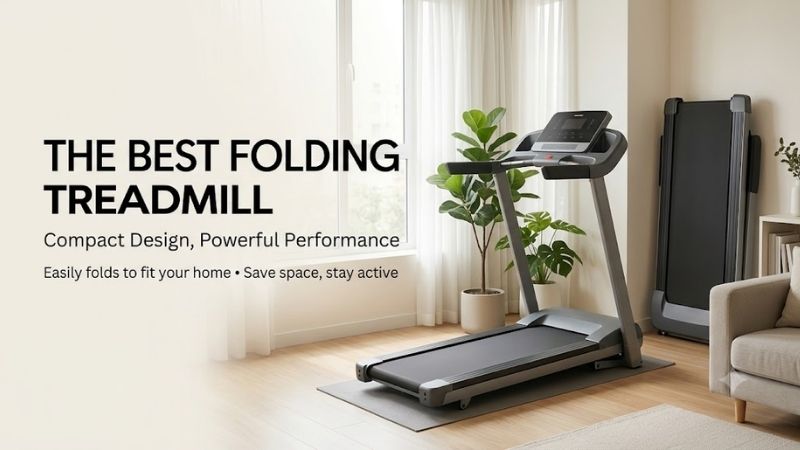
Best Folding Treadmill Comparison Table
| Product | Best For | Running Surface | Top Speed | Incline | Max User Weight |
|---|---|---|---|---|---|
| Horizon 7.0 AT | Overall versatility | 20 × 60 in | 12 mph | 15% | 325 lb |
| Horizon T101 Connect | Budget buyers | 20 × 55 in | 10 mph | 10% | 300 lb |
| SOLE F80 | Regular running | 20 × 60 in | 12 mph | 15 levels | 350 lb |
| Echelon Stride-6 | Space-saving storage | 20.5 × 60 in | 12.5 mph | Up to 12.5% | 300 lb |
| ProForm Carbon TLX | Guided training | 20 × 60 in | 12 mph | 12% | 300 lb |
| XTERRA TRX3500 | Traditional workouts | 20 × 60 in | 12 mph | 12 levels | 350 lb |
Important: Incline percentages and numbered incline levels are not necessarily equivalent. A manufacturer’s maximum speed or weight rating does not independently establish running stability, durability, or suitability for a particular individual.
How We Selected the Best Folding Treadmills
Our evaluation focuses on the features that directly affect treadmill suitability, storage, and ownership.
Running Deck Size and Usable Space
A folding treadmill must provide enough usable belt length and width for its intended activity.
A 20 × 60-inch deck generally offers more room for longer running strides than a 20 × 55-inch deck. However, the ideal size depends on the user’s gait, height, pace, and comfort with the available running space.
We distinguish the size of the running belt from the overall footprint of the treadmill.
Folding Mechanism and Storage Requirements
Folding mechanisms vary considerably.
Some treadmills use hydraulic assistance to raise the running deck into a vertical storage position. Others offer automatic folding systems that reduce the machine’s stored profile.
Neither design guarantees that a treadmill can fit beneath furniture or be stored safely against a wall.
We considered the practical effect of each folding mechanism, not simply whether the product is described as foldable.
Speed, Incline, and Controls
A treadmill designed for recreational walking does not need the same specifications as one intended for regular running.
We compared maximum belt speed, incline capability, and the accessibility of speed and incline controls.
Physical adjustment buttons and dials may be more convenient for some users than touchscreen navigation, especially during faster workouts.
Weight Capacity and Equipment Construction
Manufacturer-stated weight limits must be respected.
However, weight capacity alone is not a complete measure of treadmill stability or durability.
Frame construction, deck dimensions, overall equipment weight, correct assembly, and floor conditions also affect practical use.
Software, Maintenance, and Ownership
We considered whether a treadmill requires subscriptions for particular features, whether it supports workouts without advanced software, and what its design implies for maintenance and storage.
We did not treat motor horsepower figures as directly comparable durability measurements because manufacturers may use different reporting conventions.
Detailed Reviews: The 6 Best Folding Treadmills
1. Horizon Fitness 7.0 AT — Best Folding Treadmill Overall
Best For: Home runners who want a full-size running deck, incline flexibility, and convenient controls without depending on a large integrated touchscreen.
Why We Picked It: The Horizon Fitness 7.0 AT provides a 20 × 60-inch running surface, speeds up to 12 mph, a 15% maximum incline, and hydraulic folding. Its quick-adjust control system is especially relevant for workouts involving frequent pace changes.
Key Specifications
| Specification | Horizon Fitness 7.0 AT |
|---|---|
| Running surface | 20 × 60 in |
| Speed range | 0.5–12 mph |
| Incline range | 0–15% |
| Maximum user weight | 325 lb |
| Equipment weight | 277 lb |
| Assembled dimensions | 76 × 35 × 67 in |
| Folded dimensions | 44 × 35 × 68 in |
| Folding mechanism | FeatherLight folding |
| Display | 7.25-inch LCD and LED windows |
| Cushioning | 3-Zone Variable Response |
Features & Benefits
The 60-inch running deck is one of the 7.0 AT’s most important advantages. It provides space for longer strides and makes the treadmill more appropriate for regular running than compact models with shorter belts.
The treadmill uses Horizon’s 3-Zone Variable Response Cushioning system, designed with different support characteristics across the deck.
This is a design feature rather than independently verified evidence of a specific reduction in impact forces.
Horizon also includes handlebar-mounted QuickDial controls for speed and incline. These allow users to adjust workout intensity without repeatedly navigating a touchscreen.
Bluetooth FTMS connectivity supports integration with compatible fitness applications.
Performance & Practical Use
The 7.0 AT accommodates walking, jogging, and faster running within its rated speed range.
Its 15% incline capability offers additional workout variety, including hill-style sessions.
The full-size deck and approximately 277 lb equipment weight make it a substantial machine. It is better suited to a dedicated exercise location than a room where the treadmill must be moved across the floor every day.
Its hydraulic folding mechanism reduces stored floor length from approximately 76 inches to 44 inches, but the folded unit remains tall and relatively wide.
What Makes It Different
Compared with the Horizon T101 Connect, the 7.0 AT offers a longer belt, higher maximum speed, and greater incline range.
Compared with the ProForm Carbon TLX, it emphasizes conventional workout controls and broad fitness-app compatibility rather than a training ecosystem centered on iFIT.
Pros
-
Full-length 20 × 60-inch running deck.
-
12 mph speed and up to 15% incline.
-
Accessible QuickDial controls and hydraulic folding.
Cons
-
Heavy machine with a substantial stored footprint.
-
Basic display compared with touchscreen-oriented alternatives.
Buy If: You want a versatile folding treadmill for consistent walking and running, and prefer practical controls over integrated entertainment.
Skip If: You need a lightweight treadmill, automatic fold-flat storage, or a large built-in touchscreen.
2. Horizon Fitness T101 Connect — Best Budget Folding Treadmill
Best For: Beginners, walkers, and recreational joggers who want a conventional folding treadmill without paying for premium running features.
Why We Picked It: The T101 Connect combines a 20 × 55-inch running deck, 10 mph maximum speed, 10% incline, and hydraulic folding. It covers the essential functions needed for walking and general home exercise.
Key Specifications
| Specification | Horizon Fitness T101 Connect |
|---|---|
| Running surface | 20 × 55 in |
| Speed range | 0.5–10 mph |
| Incline range | 0–10% |
| Maximum user weight | 300 lb |
| Equipment weight | 180 lb |
| Assembled dimensions | 70.5 × 33.5 × 59 in |
| Folded dimensions | 46 × 34 × 61 in |
| Step-up height | Approximately 7.1 in |
| Folding mechanism | FeatherLight hydraulic folding |
| Cushioning | 3-Zone Variable Response |
Features & Benefits
The T101 Connect provides a conventional treadmill experience with a smaller footprint than many full-size running models.
The 20-inch-wide belt offers more lateral walking space than most slim walking pads.
Its 55-inch belt length makes it suitable for many walking and jogging routines, although taller users or those with particularly long running strides may prefer a 60-inch deck.
The treadmill includes Bluetooth connectivity for compatible workout applications, physical speed and incline controls, and an adjustable device holder.
Its hydraulic folding design raises the deck when the treadmill is not in use.
Performance & Practical Use
A 10 mph maximum speed provides more than enough range for typical walking and jogging workouts.
However, buyers who plan frequent fast running may benefit from the longer decks and higher speed capabilities of the other models reviewed.
The 10% incline allows users to vary workout intensity without manually changing the treadmill’s position.
At approximately 180 lb, it is substantially lighter than the Horizon 7.0 AT, although it remains heavy enough to require careful assembly and movement.
What Makes It Different
The T101 Connect is the most approachable option in this roundup for buyers who do not need a premium display or an extended running deck.
Compared with the 7.0 AT, it sacrifices some belt length, speed, and incline capability in exchange for a smaller, lighter design.
Pros
-
Practical features for walking and recreational jogging.
-
20-inch-wide belt and hydraulic folding.
-
Lighter and smaller than most full-size options here.
Cons
-
Shorter 55-inch running deck.
-
Less speed and incline capability than higher-end alternatives.
Buy If: Your main activities are walking, jogging, and occasional running, and you want to control equipment costs.
Skip If: You have a long running stride, regularly perform fast intervals, or need a 60-inch running deck.
3. SOLE F80 — Best Folding Treadmill for Regular Running
Best For: Buyers who want a substantial folding treadmill with a full-length running surface, high stated weight capacity, and conventional workout capability.
Why We Picked It: The current US-market SOLE F80 configuration combines a 20 × 60-inch running surface, 12 mph maximum speed, 15 incline levels, and a 350 lb manufacturer-stated user capacity.
Key Specifications
| Specification | SOLE F80 |
|---|---|
| Running surface | 20 × 60 in |
| Speed range | 0.5–12 mph |
| Incline | 0–15 levels |
| Maximum user weight | 350 lb |
| Motor | Manufacturer-listed 3.25 HP |
| Equipment weight | 218 lb |
| Assembled dimensions | 75 × 34 × 52 in |
| Folded dimensions | 48 × 36 × 66 in |
| Display | 10.1-inch touchscreen |
| Folding mechanism | Kick-release assisted folding |
Features & Benefits
The SOLE F80 has a full-length running belt suitable for a broad range of walking and running activities.
Its 20-inch width provides a conventional running area, and the 60-inch length offers more room for longer strides than shorter compact treadmills.
The treadmill features an assisted folding mechanism that allows the deck to be raised for storage.
A 10.1-inch touchscreen provides workout information and compatible connected features, including wireless connectivity and entertainment functions.
SOLE also includes quick-adjust controls for changing speed and incline.
Performance & Practical Use
The 12 mph maximum speed makes the F80 suitable for a range of running paces within the manufacturer’s intended use.
Its incline system provides additional workout variety.
The manufacturer’s 350 lb capacity is higher than that of the Horizon 7.0 AT, ProForm Carbon TLX, and Echelon Stride-6.
However, a higher weight rating does not necessarily establish better stability or a longer service life.
The F80 remains a large piece of equipment, even when folded. At approximately 218 lb, it should be positioned on a suitable floor with adequate operating clearance.
What Makes It Different
The F80 combines a full-size running deck with touchscreen functionality and a relatively high weight capacity.
Unlike the Echelon Stride-6, it is not designed primarily around a fold-flat storage mechanism.
Its appeal lies in being a conventional treadmill that can reduce its floor footprint when stored.
Pros
-
Full 20 × 60-inch running surface.
-
350 lb manufacturer-stated capacity.
-
Touchscreen, incline adjustment, and assisted folding.
Cons
-
Large and heavy compared with compact folding machines.
-
Touchscreen features add complexity that some buyers may not need.
Buy If: You expect to run regularly and want a substantial treadmill with a full-size deck and a higher stated user capacity.
Skip If: You need the smallest possible stored footprint or prefer a lightweight machine that is frequently moved.
4. Echelon Stride-6 — Best Foldable Treadmill for Small Spaces
Best For: Apartment residents and home users who want a full-size running surface combined with convenient automatic folding.
Why We Picked It: The Echelon Stride-6 uses an automatic folding system and provides a 20.5 × 60-inch running surface in a comparatively short frame.
Key Specifications
| Specification | Echelon Stride-6 |
|---|---|
| Running surface | 20.5 × 60 in |
| Maximum speed | 12.5 mph |
| Incline | 12 powered levels, up to 12.5% |
| Maximum user weight | 300 lb |
| Motor | Manufacturer-listed 2.5 HP brushless motor |
| Equipment weight | Approximately 182.35 lb |
| Assembled dimensions | 64.25 × 32 × 57 in |
| Step-up height | 7 in |
| Folding mechanism | Automatic folding |
| Display | LED console |
| Connectivity | Bluetooth and Echelon Fit app |
Features & Benefits
The Echelon Stride-6 stands out for its automatic folding design.
Instead of requiring the user to lift a full running deck into a vertical position manually, the treadmill incorporates a powered folding mechanism intended to simplify storage.
Its relatively short exterior length is particularly notable because the machine still includes a 60-inch running surface.
The 20.5-inch belt width is also slightly wider than the 20-inch belts on the Horizon, SOLE, ProForm, and XTERRA models reviewed here.
The treadmill includes physical speed and incline adjustment controls, along with Bluetooth connectivity for compatible fitness applications.
Performance & Practical Use
The Stride-6 supports speeds up to 12.5 mph and offers powered incline adjustment.
These specifications make it more versatile than a walking-only fold-flat treadmill.
Its 300 lb weight capacity is comparable to several other models in this category.
Although the treadmill has an automatic folding mechanism, buyers should not assume it fits beneath any particular bed or sofa.
The manufacturer’s folded dimensions and required storage clearances must be checked before purchase.
The folding process also requires an unobstructed area and proper positioning on a suitable floor.
What Makes It Different
The Stride-6 offers a combination that many folding treadmills do not: a long running surface, shorter overall frame, and automatic storage mechanism.
It is especially attractive when available space is limited but a short walking-pad-style belt would be inadequate.
Pros
-
Automatic folding mechanism.
-
20.5 × 60-inch running surface.
-
High maximum speed and powered incline adjustment.
Cons
-
Still weighs more than 180 lb.
-
Automatic folding introduces additional mechanical components and potential service considerations.
Buy If: You want a full-size running experience but need convenient storage in a multipurpose room or apartment.
Skip If: You prefer a mechanically simpler treadmill or do not need automatic folding.
5. ProForm Carbon TLX — Best Folding Treadmill for Guided Workouts
Best For: Buyers who want a conventional full-size treadmill with connected workout features and guided training options.
Why We Picked It: The ProForm Carbon TLX combines a 20 × 60-inch running deck, 12 mph maximum speed, 12% incline, and folding design with iFIT integration.
Key Specifications
| Specification | ProForm Carbon TLX |
|---|---|
| Running surface | 20 × 60 in |
| Maximum speed | 12 mph |
| Incline range | 0–12% |
| Maximum user weight | 300 lb |
| Motor | Manufacturer-listed 3.0 CHP |
| Assembled dimensions | 73.2 × 34.6 × 57.6 in |
| Folded dimensions | 36.7 × 34.6 × 68.5 in |
| Step-up height | 7.75 in |
| Display | 7-inch LCD |
| Folding mechanism | EasyLift |
| Connected training | iFIT |
Features & Benefits
The Carbon TLX offers a full-size running surface while retaining a space-saving folding mechanism.
Its 20 × 60-inch deck is appropriate for a broad range of running strides.
The machine includes ProShox cushioning, designed to provide support during treadmill exercise.
A 7-inch LCD displays workout information, while a device shelf accommodates a compatible phone or tablet.
The Carbon TLX also supports iFIT features, including connected workout programs and compatible automatic adjustments.
Certain connected functions require a paid membership, and the manufacturer’s setup and account requirements should be reviewed before purchasing.
Performance & Practical Use
The Carbon TLX provides enough speed range for walking, jogging, and faster running within the treadmill’s rated capabilities.
Its 12% maximum incline supports varied treadmill sessions.
The treadmill’s EasyLift mechanism reduces its stored floor length to approximately 36.7 inches, but the machine remains almost 69 inches tall when folded.
The Carbon TLX therefore works best in a room with adequate vertical storage clearance.
The manufacturer lists a 3.0 CHP motor rating, but this laboratory-based rating should not be interpreted as the machine’s constant power output during ordinary household operation.
What Makes It Different
The Carbon TLX is particularly relevant to buyers interested in guided training through iFIT.
It differs from the Horizon 7.0 AT, which places greater emphasis on straightforward physical controls and third-party app compatibility.
For buyers who primarily want manual treadmill workouts, the additional software ecosystem may offer limited practical benefit.
Pros
-
Full-length 20 × 60-inch running deck.
-
12 mph speed and 12% incline capability.
-
Space-saving folding design and guided workout compatibility.
Cons
-
Some connected features require a paid iFIT membership.
-
Folded configuration remains tall and relatively wide.
Buy If: You value connected workout programs and want a treadmill capable of both regular running and compact vertical storage.
Skip If: You prefer a treadmill without ongoing subscription considerations or do not want software features influencing your purchase.
6. XTERRA TRX3500 — Best Folding Treadmill With Traditional Controls
Best For: Buyers who want a conventional treadmill with physical workout controls, built-in programs, and a full-size running surface.
Why We Picked It: The XTERRA TRX3500 provides a 20 × 60-inch running deck, 12 mph maximum speed, 12 powered incline levels, and 30 preset programs.
Key Specifications
| Specification | XTERRA TRX3500 |
|---|---|
| Running surface | 20 × 60 in |
| Maximum speed | 12 mph |
| Incline | 12 powered levels |
| Maximum user weight | 350 lb |
| Motor | Manufacturer-listed 3.0 HP |
| Assembled dimensions | 77.2 × 35.5 × 56.1 in |
| Folded dimensions | 51.2 × 35.5 × 65.7 in |
| Equipment weight | Approximately 214 lb |
| Display | 6.5-inch LCD |
| Preset programs | 30 |
| Folding mechanism | Lift Assist with Safe Drop |
Features & Benefits
The TRX3500 emphasizes conventional treadmill functionality.
A backlit LCD provides workout information, while handlebar-mounted controls allow speed and incline adjustments.
Its 30 preset programs offer variety without requiring users to rely exclusively on subscription-based guided workouts.
The 20 × 60-inch deck is suitable for users who need a longer running surface than compact treadmills typically provide.
Its Lift Assist folding mechanism helps raise the deck into its storage position.
The Safe Drop feature is designed to control the deck’s descent when unfolding.
Performance & Practical Use
The TRX3500 supports walking and running within its stated 12 mph speed range.
Its powered incline system provides additional workout options, although the manufacturer expresses incline as numbered levels rather than a directly comparable percentage range in the specifications used here.
The treadmill’s 350 lb weight rating is relatively high for a folding home model.
Nevertheless, buyers should evaluate the full equipment design, intended running pace, and available floor space rather than relying on the weight rating alone.
At approximately 214 lb, it is a substantial treadmill and will be more practical in a relatively permanent exercise location.
What Makes It Different
The TRX3500 offers a long running deck and built-in programs without making a large touchscreen the main control interface.
Compared with the Echelon Stride-6, its folding system is more traditional and requires more stored floor length.
Compared with the Horizon T101 Connect, it offers a longer deck and higher maximum speed.
Pros
-
20 × 60-inch running surface.
-
350 lb manufacturer-stated user capacity.
-
30 preset programs and assisted folding.
Cons
-
Larger folded footprint than several competitors.
-
Basic console compared with touchscreen-equipped models.
Buy If: You want conventional treadmill controls, built-in exercise programs, and a full-length running surface.
Skip If: You need automatic folding, a modern touchscreen, or the smallest possible storage footprint.
Folding Treadmill Buying Guide: What to Consider
Choosing the best folding treadmill involves balancing running performance with equipment size, storage convenience, and ownership requirements.
A folding design is valuable only if the treadmill fits both your workout area and your intended storage location.
1. Understand the Different Folding Mechanisms
There are three common approaches to treadmill folding.
Deck-up folding treadmills raise the running deck toward the console. This reduces the length of the treadmill’s stored footprint but creates a tall vertical structure.
The Horizon T101 Connect, Horizon 7.0 AT, SOLE F80, ProForm Carbon TLX, and XTERRA TRX3500 use variations of this design.
Automatic-fold treadmills use a powered mechanism to simplify the storage process. The Echelon Stride-6 is an example.
Fold-flat treadmills are designed to reduce stored height, which may be particularly useful in small homes. However, not every treadmill advertised as foldable can lie flat or fit beneath furniture.
The best folding system depends on storage geometry rather than appearance alone.
2. Compare Folded and Unfolded Dimensions
A treadmill’s folded size may be more important than its operating size if the machine must share space with other activities.
| Model | Unfolded Footprint (L × W) | Folded Footprint (L × W) |
|---|---|---|
| Horizon 7.0 AT | 76 × 35 in | 44 × 35 in |
| Horizon T101 Connect | 70.5 × 33.5 in | 46 × 34 in |
| SOLE F80 | 75 × 34 in | 48 × 36 in |
| Echelon Stride-6 | 64.25 × 32 in | Automatic folding; verify storage dimensions |
| ProForm Carbon TLX | 73.2 × 34.6 in | 36.7 × 34.6 in |
| XTERRA TRX3500 | 77.2 × 35.5 in | 51.2 × 35.5 in |
These measurements describe equipment footprints, not the complete space required for safe operation.
Always leave the manufacturer’s required clearance around the treadmill, particularly behind the running deck.
Also check ceiling height, doorways, electrical outlets, and access for servicing the equipment.
3. Choose the Right Running Deck Size
The two most common running deck lengths in this comparison are 55 and 60 inches.
A 55-inch deck can accommodate many walking and jogging routines.
A 60-inch deck provides additional room for longer strides and faster running, making it a useful specification for regular runners.
Deck width also matters.
A 20-inch belt is common among home running treadmills, while some designs provide slightly more lateral space.
Buyers should consider their stride characteristics and the intended activity rather than assuming one size fits everyone.
Practical recommendation: For regular running, prioritize a 20 × 60-inch or similarly spacious belt unless you know a shorter deck accommodates your gait comfortably.
4. Evaluate Motor Ratings Carefully
Treadmill motor ratings are often expressed in horsepower or continuous horsepower.
These figures can provide information about the manufacturer’s design, but they do not independently establish how the treadmill performs under every real-world condition.
Motor durability depends on operating load, speed, cooling, component construction, maintenance, and duty-cycle restrictions.
A higher advertised horsepower figure does not guarantee that one treadmill will last longer than another.
For regular running, choose a model specifically intended for that use and pay attention to warranty terms, operating requirements, and manufacturer support.
5. Decide How Much Incline You Need
Incline adds workout variety by changing the angle of the running deck.
Some treadmills specify incline as a percentage, while others use numbered levels.
For example, the Horizon 7.0 AT advertises a maximum 15% incline, whereas the SOLE F80 lists 15 incline levels.
Those specifications should not be considered numerically identical.
Buyers who plan incline-focused workouts should verify the actual maximum incline percentage and available adjustment increments.
A wider incline range may be useful, but it is not essential for everyone who mainly walks or runs on level ground.
6. Consider Stability and Weight Capacity
Folding treadmills must combine a load-bearing frame with a deck that can move into a storage position.
That does not automatically make folding treadmills unstable.
However, practical stability depends on the complete design, correct assembly, floor condition, and intended use.
A 350 lb user capacity indicates the manufacturer’s stated maximum user weight. It is not proof that the machine is equally stable at every speed or under every movement pattern.
Never exceed the manufacturer’s weight limit.
Choose equipment with sufficient capacity and suitable running dimensions for all intended users.
7. Check Ceiling Height and Step-Up Height
Treadmill decks raise users above floor level.
This can create problems in basement gyms or rooms with relatively low ceilings, particularly during inclined running.
Consider the combined height of the user’s body, the treadmill deck, normal head movement, and the deck’s maximum incline position.
The necessary overhead clearance can differ significantly between walking on a flat deck and running with incline.
Do not assume a treadmill is suitable for a low-ceiling room simply because its frame fits.
8. Think About Noise and Flooring
A folding treadmill is not necessarily quieter than a nonfolding treadmill.
Sound comes from the motor, moving belt, rollers, footfalls, and vibration transmitted through the floor.
A heavier frame may behave differently from a lightweight compact treadmill, but equipment weight alone cannot predict noise levels.
Apartment users should consider floor construction, nearby rooms, and manufacturer-recommended protective mats.
Avoid promising complete noise isolation from any mat or accessory.
9. Compare Consoles and Subscription Requirements
A touchscreen can be useful for guided workouts, entertainment, and detailed workout information.
However, it may also introduce software dependencies and additional complexity.
Traditional displays with physical buttons can offer a more straightforward experience.
Before purchasing, determine whether the treadmill supports the workouts you want without an ongoing paid membership.
The ProForm Carbon TLX is particularly relevant to buyers interested in iFIT, while the Horizon and XTERRA models provide more conventional workout-control approaches.
10. Check Warranty and Service Availability
A treadmill is a substantial mechanical and electrical purchase.
Even a folding model may require maintenance, belt adjustments, lubrication, or replacement parts.
Before buying, review:
-
Frame and motor warranty coverage.
-
Parts and labor coverage.
-
Delivery and assembly arrangements.
-
Replacement belt and electronic component availability.
-
Manufacturer-authorized service options.
-
Return shipping and restocking terms.
A treadmill with a favorable purchase price may become expensive to own if servicing is difficult or replacement parts are unavailable.
Which Folding Treadmill Is Right for Your Home?
For Beginners and Walkers
The Horizon T101 Connect is a practical starting point.
It provides enough speed and incline range for general walking and jogging while avoiding the cost and size of some higher-end machines.
For Regular Home Running
The Horizon 7.0 AT and SOLE F80 are strong options.
Both provide full-length running decks and incline adjustment.
Choose the Horizon when quick physical controls and app compatibility are priorities, or consider the SOLE F80 when its higher stated weight capacity and console features are more relevant.
For Small Apartments
The Echelon Stride-6 deserves consideration because of its relatively short operating footprint and automatic folding system.
However, it remains a substantial treadmill. Check storage dimensions, access routes, and floor conditions before purchasing.
For Connected Workouts
The ProForm Carbon TLX is appropriate for buyers who actively want iFIT integration.
Its full-size running deck and incline capability make it useful independently of the appeal of guided content, but the purchase decision should account for any required membership.
For Traditional Treadmill Controls
The XTERRA TRX3500 is worth considering.
It combines a long running deck, built-in workout programs, and conventional physical controls without making a premium touchscreen necessary.
Common Mistakes When Buying a Folding Treadmill
Assuming Every Folding Treadmill Fits Under a Bed
Most full-size folding treadmills raise their decks vertically.
This reduces floor length but does not make them suitable for horizontal under-bed storage.
Always check complete folded dimensions.
Ignoring Equipment Weight
Even a treadmill with transport wheels can be difficult to move through narrow doorways or over uneven flooring.
The folding mechanism makes storage more convenient but does not necessarily make the machine lightweight.
Buying a Short Deck for Frequent Running
A compact treadmill may work for walking but feel restrictive at faster paces.
Consider natural stride length and running speed before prioritizing the smallest machine.
Comparing Incline Levels as Percentages
Fifteen incline levels do not necessarily mean a 15% maximum incline.
Verify the manufacturer’s actual incline specifications.
Overlooking Subscription Costs
Connected workout services can add ongoing expenses.
Determine which treadmill functions remain available without a paid subscription and whether the available manual controls meet your needs.
Folding the Treadmill Incorrectly
Always stop the belt, allow the deck to return to the required position, and follow the manufacturer’s instructions before folding.
Do not force a folding mechanism or allow children and pets near the machine during movement.
Ensure that any storage lock is properly engaged before leaving the treadmill folded.
Frequently Asked Questions
What Is the Best Folding Treadmill for Home Use?
The Horizon Fitness 7.0 AT is our best overall recommendation for buyers seeking a balance of running space, speed, incline, physical controls, and folding convenience.
The Horizon T101 Connect is a better fit for budget-conscious walkers and recreational joggers, while the Echelon Stride-6 is particularly interesting when storage convenience matters most.
Are Folding Treadmills Good for Running?
Yes. Many folding treadmills are designed for regular running and provide full-size running belts.
Models with a 20 × 60-inch deck, such as the Horizon 7.0 AT, SOLE F80, and ProForm Carbon TLX, offer more running room than many compact walking pads.
Suitability still depends on the user’s stride, pace, weight, and the manufacturer’s operating instructions.
What Is the Difference Between a Folding Treadmill and a Walking Pad?
A folding treadmill typically has a conventional running deck, handrails, higher maximum speeds, and adjustable incline.
A walking pad is generally shorter, lower-profile, and designed primarily for walking.
Some walking pads fold in half for storage, but this does not make them equivalent to full-size running treadmills.
Can You Leave a Folding Treadmill Folded When Not in Use?
Yes, if the manufacturer permits that storage position and the machine is properly secured.
Ensure that the deck is locked or supported as instructed, the surrounding space is clear, and the treadmill cannot be accessed or operated by children.
Do not lean objects against the folded deck or attempt to move it in a manner prohibited by the manual.
Are Folding Treadmills Stable at High Speeds?
A properly assembled folding treadmill designed for running can provide suitable stability within its rated operating conditions.
However, stability varies by design, installation, floor surface, and user movement.
The folding feature alone does not establish how stable the machine will feel during fast running.
How Much Space Do You Need for a Folding Treadmill?
You need enough room for the unfolded equipment, safe entry and exit, manufacturer-required clearance, and the movement of the folding deck.
The exact amount varies by model.
For example, a treadmill with a 76-inch operating length requires additional rear and side clearance beyond those 76 inches.
Measure the complete exercise area rather than relying only on the treadmill’s footprint.
Conclusion
The Horizon Fitness 7.0 AT is our best folding treadmill overall for its full-size running deck, 12 mph speed range, 15% incline, and accessible controls. Choose the Horizon T101 Connect for affordable walking and jogging, the SOLE F80 for regular running with a higher stated weight capacity, or the Echelon Stride-6 when automatic folding is a priority. The right choice is the treadmill that safely accommodates your stride, workout routine, available floor space, and long-term maintenance needs.
Write Your Review
No reviews yet. Be the first to share your experience!