
Key takeaways
What's inside
Best workout gym equipment for a garage or basement is a structural decision before it is a fitness one. Steel gauge, ceiling height and floor loading decide what you can install; rated capacity decides what you can lift on it. This guide covers all four, then six pieces built to last. The building decides more than the budget.
As an Amazon Associate we earn from qualifying purchases at no extra cost to you. Product prices and availability are accurate as of the date shown and are subject to change.


As an Amazon Associate we earn from qualifying purchases at no extra cost to you. Product prices and availability are accurate as of the date shown and are subject to change.
By Chris Parker
🛒 Best Price Today on Amazon
Prime members get fast, free shipping on everything above, plus member-only deals. New members get a 30-day free trial — cancel anytime.
How to Choose the Best Workout Gym Equipment
Gym-grade gear at home is a different purchase from a starter kit. Choosing the best workout gym equipment means reading tubing dimensions and steel gauge rather than marketing copy, and confirming your ceiling, floor and doorway can take the item long before the budget conversation starts.
Steel Gauge, Tubing Size and Rated Capacity
Gauge measures wall thickness and lower numbers mean thicker steel. Racks at 11-gauge with 2 x 3 in (51 x 76 mm) uprights are the durable end of the home market. At 14-gauge with 2 x 2 in (51 x 51 mm) uprights you get a lighter, cheaper rack that flexes more under load.
Rated capacity is a manufacturer figure, not an engineering guarantee, and testing methods differ between brands. Treat it as a comparative signal rather than a limit to approach. Hole spacing matters too: 2 in (51 mm) spacing through the bench press zone gives finer safety bar positioning than 3 in does.
This is also where the price floor shows itself. Below the mid tier, manufacturers substitute thinner gauge, wider hole spacing and plastic-bushed pulleys for steel and sealed bearings. Those three swaps account for most complaints about home racks feeling unstable under real load.
Ceiling Height, Floor Load and the Bolt-Down Footprint
Footprint for the best workout gym equipment is three-dimensional. Full-height racks stand roughly 80 to 92 in (203 to 234 cm) tall and need clearance above for pull-ups, meaning practical ceilings of 8 ft (244 cm) or more. Short racks exist for basements, but they cut overhead pressing and pull-up options.
Floor area runs about 4 x 4 ft (1.2 x 1.2 m) for a rack, plus a bar path of 7 ft (213 cm) width and at least 3 ft (91 cm) of walking clearance behind. A loaded rack plus plates concentrates several hundred pounds onto a small area, which matters on a suspended timber floor.
Many racks are designed to be bolted down, and some are unstable without it. In a rented property that may be prohibited, in which case a heavier flat-foot rack is the alternative. Measure the actual area, ceiling height and doorway before ordering anything of this size.
Getting It Into the House and Assembled
Boxes at this end are dense rather than bulky. Rack uprights ship in long, heavy cartons that one person should not carry up stairs alone, and plate sets arrive as multiple boxes near the courier weight limit. Plan the route, including any hallway turn, before delivery day.
Assembly typically runs two to four hours for a rack with two people and a socket set. Treadmills and cable machines add cable routing and tensioning steps that reward patience. Budget for a torque check after the first few weeks, because bolts settle once the frame has been loaded.
Wear Points, Cables and Warranty Splits
On racks the wear points are welds, pop-pin holes and the powder coat where the bar contacts steel. On anything with a weight stack, the cable is the consumable and needs inspecting for fraying at the pulley contact points, then replacing rather than being run to failure.
Read the warranty as three separate warranties. Frames are commonly covered far longer than moving parts, and plastic components shorter again. A brand that sells replacement cables, pins and bushings separately is worth more over five years than a brand quoting an impressive headline figure.
Barbell technique is worth learning properly rather than from a manual. If you are new to squatting or pressing under load, or returning after an injury, work with a certified coach and check with your doctor before starting.
Top Picks: Best Workout Gym Equipment Built to Last
Six best workout gym equipment picks below, assessed on steel specification, footprint, install requirements and honest weak points. Together they form a complete strength setup, though few people buy them all at once and the rack plus bar plus plates is the sequence that unlocks the most.
| Item | Key specification | Install note | Role |
|---|---|---|---|
| Titan T-3 Power Rack | 11-gauge, 2 x 3 in (51 x 76 mm) | Designed to bolt down | Squat, press, pull-up |
| REP PR-1100 Rack | 14-gauge, 2 x 2 in (51 x 51 mm) | Freestanding | Budget rack |
| Fitness Reality 2000 Bench | Listed to 800 lb (363 kg) | Folds partially | Pressing platform |
| CAP Olympic Barbell | 7 ft (213 cm), 45 lb (20.4 kg) | Needs bar storage | Loaded lifts |
| Sunny SF-T7643 Treadmill | Folding deck | Needs 240 V-free outlet | Cardio |
| Marcy MWM-988 Home Gym | 150 lb (68 kg) stack | Large fixed footprint | Cable work |
Titan T-3 Series Power Rack: The Durable Core
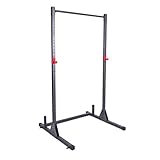
An 11-gauge rack with 2 x 3 in (51 x 76 mm) uprights and 1 in (25 mm) hardware, with tighter hole spacing through the pressing zone for precise safety bar placement. This is the specification most home lifters should aim at, and it accepts a wide range of attachments over time.
It is designed to be bolted to the floor, which rules it out in many rented properties. Assembly takes two people and several hours. Powder coat marks where the bar contacts the uprights, which is cosmetic but immediate. It needs 8 ft (244 cm) of ceiling for pull-ups. Mid tier.
REP PR-1100 Power Rack: Budget Freestanding Option
A 14-gauge rack with 2 x 2 in (51 x 51 mm) uprights that stands without bolting down, which makes it the realistic choice in a rented flat or a garage with a floor you cannot drill. It includes a pull-up bar and takes standard J-cups and safety bars.
Thinner steel means more flex under heavy load and a lower comfortable ceiling than an 11-gauge rack. Hole spacing is wider, so safety bar height is less precise. Attachment compatibility is narrower than the larger platforms. Budget to mid tier, and honest about what it is.
Fitness Reality 2000 Super Max XL Bench: The Pressing Platform
An adjustable bench listed to 800 lb (363 kg) total capacity with a long ladder of back positions from decline through to full upright, plus adjustable leg hold-downs. That range covers incline pressing angles that cheaper two-position benches simply cannot reach.
The pad is firm and narrower than a commercial bench, which is noticeable during long pressing sessions. The ladder adjustment takes longer than a pop-pin system. It only partially folds, so it still claims floor or wall space permanently. Budget to mid tier.
CAP Olympic Barbell: The Loaded-Lift Enabler
A standard 7 ft (213 cm), 45 lb (20.4 kg) Olympic bar with 2 in (51 mm) sleeves, commonly rated around 1,000 lb (454 kg). It is the piece that turns a rack from a frame into a gym, and it fits every standard plate and collar you will encounter.
Knurling is milder than a dedicated power bar, so grip on heavy deadlifts suffers. Sleeve rotation uses bushings rather than bearings, which rules it out for Olympic lifting. Finish varies by production run and can rust in a damp garage without maintenance. Budget tier.
Sunny Health SF-T7643 Folding Treadmill: The Cardio Slot
A folding motorised treadmill with a shock-absorbing deck and a hydraulic-assisted fold, aimed at garages and spare rooms where the machine cannot stay deployed. Folding drops the standing footprint substantially, which is the main reason to choose it over a fixed-deck machine.
Belt width and deck length are shorter than commercial treadmills, which taller runners notice at speed. Motor output limits sustained fast running rather than walking and jogging. Rated user weight is modest, so check it against your own. Mid tier, and heavy to relocate alone.
Marcy MWM-988 Home Gym: Cable Work Without a Trainer
A single-stack home gym with a 150 lb (68 kg) weight stack, giving lat pulldown, low row, press and leg developer stations from one frame. For pulling and isolation work without buying a full functional trainer, it covers a lot of ground in a fixed space.
The footprint is large and permanent, typically needing 5 x 7 ft (1.5 x 2.1 m) plus clearance. The stack tops out well below what a rack and barbell allow. Cables and pulleys are the wear items and need periodic inspection and eventual replacement. Mid tier.
Frequently Asked Questions
These four questions cover what people ask before committing to the best workout gym equipment at home, usually about structure and installation rather than about training. Answers stay with what the hardware requires from the building.
What ceiling height do I need for a power rack?
Full-height racks stand roughly 80 to 92 in (203 to 234 cm), and pull-ups need clearance above that, so 8 ft (244 cm) is the practical minimum. Under a lower ceiling, a short rack works for squats and bench but removes pull-ups and standing overhead pressing.
Does a rack have to be bolted down?
Some designs require it and are genuinely unstable without it, while others are engineered to stand free. Check the manual before buying, because rented properties often prohibit drilling. If bolting is not possible, choose a heavier freestanding design rather than ignoring the instruction.
What does steel gauge actually change?
Gauge is wall thickness, and lower numbers are thicker. An 11-gauge rack with 2 x 3 in uprights flexes less under load and takes more attachments than a 14-gauge, 2 x 2 in rack. For most home lifting either is safe within its rating; the difference is stiffness and longevity.
Can my floor take it?
A rack plus a full plate set concentrates several hundred pounds into a small area. On a concrete garage slab this is not a concern. On a suspended timber floor, spread the load with plywood and rubber matting, and take advice if you are placing heavy equipment above a living space.
See More:
- Best beginner jump rope
- Best boxing jump rope
- Best boxer jump rope
- Best cheapest yoga mat
- Best workout exercise equipment
Final Thoughts
Choosing the best workout gym equipment starts with the building: ceiling height, floor type and whether you can bolt down. Pick 11-gauge steel where you can, a bar and plates before accessories, and measure the room, doorway and hallway turn before anything ships.





Write Your Review
No reviews yet. Be the first to share your experience!