
Key takeaways
-
Fit securely: Remain comfortable during different exercise movements.
-
Support compatible connections: Use Bluetooth, ANT+, or another protocol supported by the receiving device.
-
Transmit reliably: Maintain a useful connection during normal indoor exercise.
-
Handle perspiration: Have an appropriate moisture-resistance design.
-
Provide accurate readings: Use a properly positioned electrical sensing system.
-
Offer manageable battery maintenance: Have a practical battery or charging arrangement.
-
Support the intended workouts: Work with equipment such as bikes, rowers, and treadmills.
-
Be easy to store: Allow proper cleaning, drying, and storage between sessions.
-
Provide clear care instructions: Help maintain electrode performance and strap condition.
Choosing a heart rate chest strap for small spaces is mainly about compatibility, comfort, and reliable monitoring during indoor exercise. The sensor itself needs almost no storage space, but its connection to fitness equipment matters. This guide explains wireless protocols, strap sizing, interference, maintenance, and practical home gym use.
Quick Verdict: What Makes a Heart Rate Chest Strap Good for Small Spaces?
A heart rate chest strap is a wearable sensor designed to measure heart activity during exercise.
Most conventional electrical chest straps use electrodes positioned against the skin to detect electrical signals associated with heartbeats.
The sensor then transmits calculated heart rate information to a compatible watch, phone, fitness machine, or other receiving device.
Unlike a treadmill, exercise bike, or rowing machine, a chest strap has virtually no independent operating footprint.
Therefore, choosing one for a small space is not primarily a question of dimensions.
The important considerations are wireless connectivity, strap comfort, exercise compatibility, signal reliability, and convenient storage.
For a compact home gym, a suitable chest strap should:
-
Fit securely: Remain comfortable during different exercise movements.
-
Support compatible connections: Use Bluetooth, ANT+, or another protocol supported by the receiving device.
-
Transmit reliably: Maintain a useful connection during normal indoor exercise.
-
Handle perspiration: Have an appropriate moisture-resistance design.
-
Provide accurate readings: Use a properly positioned electrical sensing system.
-
Offer manageable battery maintenance: Have a practical battery or charging arrangement.
-
Support the intended workouts: Work with equipment such as bikes, rowers, and treadmills.
-
Be easy to store: Allow proper cleaning, drying, and storage between sessions.
-
Provide clear care instructions: Help maintain electrode performance and strap condition.
A chest strap that connects to your existing equipment is generally more useful than a feature-rich sensor whose protocols are incompatible with your devices.
Understanding How Chest Strap Monitors Work
Chest straps and optical wrist monitors use different approaches to measuring heart rate.
Electrical Heart Rate Detection
Conventional chest straps detect electrical activity associated with the heart’s contractions.
Electrodes contact the skin and provide signals to a small electronic module.
The device processes those signals and calculates heart rate.
This approach differs from optical sensors that estimate changes in blood volume using light.
However, neither type of consumer device should automatically be treated as a medical diagnostic instrument.
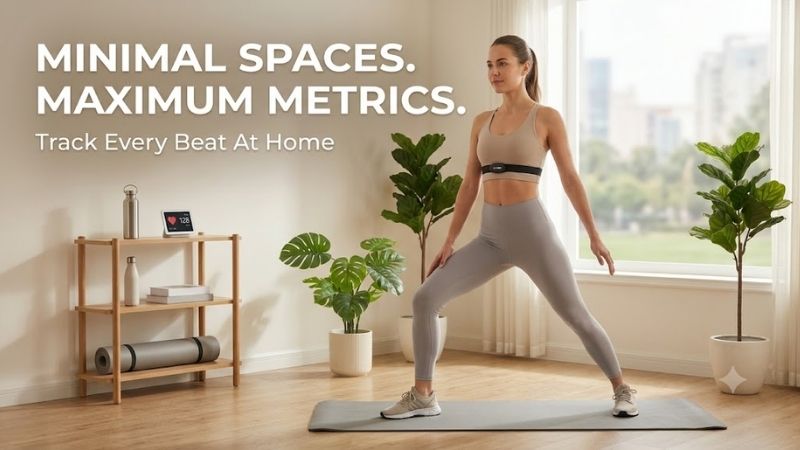
Electrodes and Skin Contact
Proper electrode contact is important for reliable measurement.
Dry electrodes, loose straps, or poor positioning may affect the signal.
Some manufacturers instruct users to moisten electrode areas before exercise.
Follow the exact product instructions.
Sensor Module
The electronic module processes and transmits the data.
Some models use detachable modules, allowing the textile strap to be cleaned separately.
Others use integrated constructions.
The physical arrangement affects cleaning and replacement options.
Wireless Data Transmission
The strap sends heart rate information to a compatible receiver.
Common wireless methods include Bluetooth Low Energy and ANT+.
However, not every strap supports both.
Why Fit Affects Measurement
A chest strap should remain positioned correctly as the user moves.
If it shifts or loses skin contact, the signal may become unreliable.
For indoor exercise, comfort and secure fit are more important than minimizing the already small size of the sensor.
Understanding Bluetooth and ANT+ Compatibility
Wireless compatibility is usually the most important technical buying factor.
Bluetooth Low Energy
Bluetooth Low Energy is commonly used for connections with phones, watches, and compatible exercise equipment.
However, a device supporting Bluetooth does not necessarily support every Bluetooth heart rate sensor.
The receiver must implement a compatible heart rate service or another supported connection method.
ANT+
ANT+ is a wireless communication system used by some sports watches, cycling computers, and fitness equipment.
It can allow compatible receivers to obtain heart rate broadcasts.
However, ANT+ is not universally available on phones or exercise machines.
Dual-Protocol Chest Straps
Some chest straps support both Bluetooth and ANT+.
This can improve flexibility when using several devices.
For example, the Polar H10 supports both protocols, along with an additional 5 kHz transmission method for certain compatible equipment.
These capabilities demonstrate why reviewing the actual radio specifications matters.
Multiple Simultaneous Connections
Some straps can connect to more than one receiver.
However, connection limits vary by model and protocol.
Do not assume every Bluetooth chest strap can maintain several simultaneous Bluetooth connections.
A dual-protocol sensor may support certain connection combinations, but the exact limits must be verified.
Connection Compatibility Table
| Connection type | Common use | Main advantage | Important limitation |
|---|---|---|---|
| Bluetooth Low Energy | Phones, watches, compatible machines | Broad consumer-device support | Device-specific pairing limits |
| ANT+ | Sports watches and fitness equipment | Compatible broadcast reception | Not supported by every receiver |
| Dual Bluetooth and ANT+ | Multiple device environments | Connection flexibility | Actual simultaneous limits vary |
| Proprietary or legacy radio | Selected older equipment | May support existing machines | Restricted compatibility |
| Onboard recording | Supported standalone sessions | Can save data without continuous receiver connection | Available only on some models |
Compatibility With Small Home Gym Equipment
A chest strap should work with the exercise machines you already own or plan to purchase.
Compact Exercise Bikes
Some exercise bikes support external heart rate sensors.
However, built-in pulse handles do not guarantee Bluetooth or ANT+ chest strap compatibility.
Review the console specifications.
Recumbent Exercise Bikes
Certain recumbent bikes can display external heart rate information.
Others rely only on integrated handle sensors.
A chest strap may still connect to a separate compatible watch or phone even when the bike itself cannot receive the signal.
Rowing Machines
Some rowing machine monitors support external heart rate accessories.
The required protocol depends on the exact console.
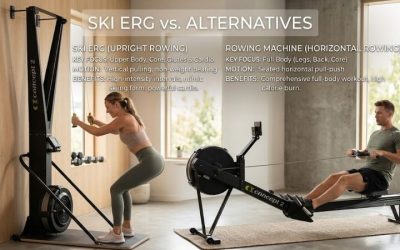
Ski Erg Machines
Certain ski erg performance monitors support compatible heart rate transmission.
Check the machine’s console generation and supported connection types.
Treadmills and Walking Pads
Some treadmills support wireless chest straps.
Others may have no compatible heart rate receiver.
When a machine lacks support, the sensor may still function with a separate receiving device.
Strength Training
A chest strap may be useful during resistance training if the wearer finds it comfortable.
However, certain exercises and body positions can place pressure on the strap or cause movement.
Comfort should be evaluated for the intended activities.
Choosing the Right Strap Size and Fit
A sensor with excellent connectivity is of limited use if the strap does not fit properly.
Measuring Chest Circumference
Manufacturers may specify supported chest circumferences or strap lengths.
These are not always the same measurement.
Follow the sizing instructions provided for the exact model.
Elastic Strap Adjustment
Most textile chest straps use an adjustable elastic band.
The strap should fit securely without uncomfortable compression.
Excessively loose straps may shift.
Overly tight straps can cause discomfort during breathing and movement.
Strap Width
Strap width influences contact area and comfort.
However, a wider strap is not automatically better.
Material, elasticity, seam placement, and the user’s body shape also matter.
Sensor Position
The sensor should sit in the position specified by the manufacturer.
Incorrect placement can reduce signal quality.
Comfort During Different Exercises
A strap that feels comfortable while cycling may behave differently during bending, twisting, or overhead movements.
Consider your intended activities before buying.
Signal Reliability in Small Indoor Spaces
Indoor exercise environments contain computers, phones, wireless devices, and sometimes metal equipment.
These may influence how convenient wireless monitoring feels.
Receiver Placement
Signal quality can depend on distance, orientation, and obstacles.
Keeping the receiver within the manufacturer’s recommended range is important.
Wireless Interference
Bluetooth and ANT+ operate in radio environments that may contain other devices.
Interference is possible, although not every nearby wireless device creates a noticeable problem.
Multiple Fitness Devices
A user may want the strap to communicate with a watch and exercise machine simultaneously.
Compatibility depends on supported protocols and connection limits.
Pairing Problems
A sensor may fail to appear because the electrodes are dry, the sensor is inactive, or the receiver is searching through an incompatible connection method.
Follow the pairing instructions.
Signal Dropouts
Temporary dropouts can result from contact problems, battery issues, radio conditions, or device compatibility.
Troubleshooting should address these possibilities systematically.
Battery Life and Power Requirements
Replaceable Coin-Cell Batteries
Many chest straps use replaceable batteries.
The battery type varies.
Follow the correct replacement procedure to preserve the housing and seals.
Rechargeable Sensors
Some models use rechargeable batteries.
These can reduce the need for battery replacement but introduce charging requirements.
Battery-Life Estimates
Manufacturer estimates depend on usage conditions.
For example, Garmin specifies up to 12 months for the HRM 200 under its stated use assumption of one hour per day.
Actual battery life may differ.
Storage and Battery Conservation
Some sensors activate through skin contact or electrode moisture.
Others have buttons or specific activation methods.
Follow the instructions for conserving battery life.
Battery Replacement Safety
Use the specified battery type.
Keep loose coin-cell batteries away from children and follow relevant disposal guidance.
Water Resistance and Sweat Management
Sweat Resistance
A chest strap should tolerate the perspiration associated with its intended exercise use.
Check the manufacturer’s stated rating.
Water Resistance Ratings
Water-resistance ratings differ and do not all imply suitability for swimming.
For example, a 3 ATM rating and a stated 30-meter water-resistance specification must be interpreted according to the manufacturer’s usage guidance.
Swimming Compatibility
Bluetooth and ANT+ radio transmission may not work reliably through water.
Some sensors support alternative recording or transmission methods for specific water activities.
Do not assume that a waterproof chest strap can broadcast live data underwater to any watch.
Cleaning After Exercise
Sweat residue can affect comfort and sensor performance.
Follow the care instructions after each workout.
Drying and Storage
Allow the textile strap to dry in an appropriate location.
Avoid storage conditions that trap moisture against the electrodes.
Durability and Maintenance
Electrode Wear
Textile electrodes can degrade through use and cleaning.
Inspect the strap according to the manufacturer’s guidance.
Detachable Modules
A detachable module can make textile cleaning easier.
However, removal and reattachment should follow the instructions.
Replacement Straps
Some manufacturers sell replacement straps separately.
This may allow the sensor module to remain in service when the textile portion wears.
Connector Maintenance
Snap connections and other attachment points should be kept clean.
Avoid damaging them during removal.
Warranty and Service
Review the warranty for the sensor module and textile components.
Coverage may differ.
Choosing a Chest Strap for Your Budget
Basic Bluetooth Chest Straps
Basic models may be sufficient when only a single compatible receiving device is required.
Focus on reliable fit and connectivity.
Dual-Protocol Chest Straps
Models supporting Bluetooth and ANT+ can provide greater flexibility across exercise equipment.
This may justify additional cost for users with several devices.
Premium Chest Straps
Advanced models may support onboard recording, additional motion metrics, or specialized training features.
These are useful only when compatible with the intended receiving equipment.
Long-Term Ownership Costs
Consider batteries, replacement straps, and proprietary accessories.
A lower initial price does not always provide better value.
Buying for Different Small-Space Situations
Studio Apartments
The strap itself requires negligible storage space.
Compatibility with compact exercise equipment is the main priority.
Home Offices
A chest strap can support workouts using a nearby bike, treadmill, or seated elliptical when compatible.
Small Home Gyms
Dual-protocol connectivity may be useful when multiple machines and watches are involved.
Bedrooms
For bedroom exercise setups, convenient storage and moisture management matter more than sensor dimensions.
Shared Household Use
A washable, adjustable strap may be convenient, but hygiene and sizing should be considered.
Frequent Indoor Cyclists
Check compatibility with the bike’s display or the preferred training application.
Heart Rate Chest Strap vs. Other Monitoring Devices
| Monitor | Measurement method | Main advantage | Main consideration |
|---|---|---|---|
| Electrical chest strap | Heart electrical signals | Direct electrical sensing | Contact and fit |
| Optical wrist watch | Optical blood-volume changes | Convenient daily wear | Motion and positioning |
| Optical armband | Optical sensing on arm | Alternative wearing position | Fit and compatibility |
| Exercise machine grips | Contact sensors built into equipment | No separate accessory | Requires holding sensors |
| Smart ring | Optical sensing on finger | Compact wearable form | Exercise compatibility varies |
Chest Strap vs. Smartwatch
A smartwatch is convenient for continuous everyday wear.
A chest strap may be preferable for dedicated exercise monitoring when compatible electrical sensing is desired.
Chest Strap vs. Optical Armband
Optical armbands avoid a chest-mounted strap.
However, their measurement and fit characteristics differ.
Chest Strap vs. Exercise Machine Sensors
Integrated hand sensors can be convenient, but they may require the user to maintain contact with designated grips.
A compatible chest strap can provide heart rate information without requiring those hand positions.
Setting Up a Heart Rate Chest Strap Correctly
Check Device Compatibility
Confirm the receiving device supports the strap’s protocol.
Adjust the Strap
Fit the band according to the manufacturer’s instructions.
Prepare the Electrodes
Moisten contact areas if instructed.
Position the Sensor
Place the module correctly against the chest.
Pair the Receiver
Follow the appropriate Bluetooth, ANT+, or other pairing procedure.
Verify the Reading
Confirm that the receiving device displays a plausible heart rate before beginning exercise.
Clean and Store After Use
Follow the recommended cleaning and drying procedure.
Common Mistakes When Buying a Chest Strap
Assuming Every Bluetooth Device Is Compatible
Bluetooth capability alone is insufficient.
Ignoring Chest Circumference
Improper fit can cause discomfort and poor readings.
Failing to Prepare Electrodes
Some straps require moisture for reliable initial contact.
Expecting Unlimited Simultaneous Connections
Connection limits vary.
Misunderstanding Water Resistance
Water resistance does not guarantee live underwater radio transmission.
Neglecting Cleaning
Sweat residue and poor care can affect the textile strap.
Frequently Asked Questions
Does a Heart Rate Chest Strap Need Much Space?
No. The sensor and strap occupy very little storage space. Compatibility and comfort are more important than physical size.
Can a Chest Strap Connect to a Compact Exercise Bike?
Yes, if the bike or another receiving device supports the strap’s transmission protocol.
Is Bluetooth or ANT+ Better for Indoor Exercise?
Neither is universally better. Choose according to the equipment you own and the required connection arrangement.
Can You Use a Chest Strap Without a Smartwatch?
Yes, if a compatible phone, exercise machine, or another supported receiver can display the data. Some sensors also provide standalone recording capabilities.
Are Chest Straps Accurate for Indoor Workouts?
A properly fitted electrical chest strap can provide useful exercise heart rate measurements. Accuracy depends on sensor quality, electrode contact, and operating conditions.
How Often Should You Clean a Chest Strap?
Follow the manufacturer’s care schedule. Many textile straps require regular cleaning after sweaty workouts, with instructions varying by product.
Conclusion
The best heart rate chest strap for small spaces is one that connects reliably to your existing devices, fits comfortably, and provides consistent monitoring during indoor exercise. Prioritize Bluetooth and ANT+ compatibility, electrode contact, strap sizing, battery maintenance, and appropriate care. Storage dimensions are rarely a deciding factor; device interoperability and fit matter far more.


Write Your Review
No reviews yet. Be the first to share your experience!