
A weighted jump rope buying guide should help you compare how rope mass, cable construction, and handle design influence the skipping experience. Not all weighted ropes distribute their mass the same way, and heavier equipment is not automatically better. This guide explains weight selection, adjustment, durability, and practical buying trade-offs.
Quick Verdict: What Should You Look for in a Weighted Jump Rope?
A weighted jump rope increases the load involved in skipping by incorporating additional mass into the cable, handles, or both.
Its main distinction from a standard jump rope is not simply total weight but how that weight is distributed.
A rope with a heavy cable generates different rotational forces from a rope with lightweight cable and weighted handles.
This distinction affects control, movement speed, grip demands, and how the equipment feels during use.
For most buyers, the right weighted rope is one that can be rotated consistently with good control, fits the user’s height, and suits the intended workout.
The essential considerations include:
-
Actual weight: Identify whether published values describe the cable, handles, or complete product.
-
Weight distribution: Understand how mass is positioned.
-
Rope material: Check flexibility, abrasion resistance, and handling.
-
Rope diameter: Consider how thickness changes rotation and control.
-
Handle construction: Evaluate grip dimensions and attachment quality.
-
Rotation system: Look for reliable bearings or swivels where appropriate.
-
Adjustability: Choose a length suitable for the user’s height.
-
Interchangeable components: Consider whether multiple weights are necessary.
-
Surface compatibility: Match the cable to the intended exercise floor.
-
Durability: Prioritize secure connections and accessible replacement parts.
For beginners, a lighter weighted configuration may be easier to control.
Experienced users may prefer heavier cables or interchangeable weights when they serve a specific training purpose.
Understanding How Weighted Jump Ropes Work
A weighted rope rotates around the body as the user turns the handles.
The mass of the cable and its distance from the axis of rotation influence the effort required to accelerate and control it.
Rotational Inertia
Rotational inertia describes how mass distribution affects resistance to changes in rotational speed.
A rope with more mass distributed along its cable generally behaves differently from one with the same additional mass concentrated in its handles.
This is why total product weight does not fully describe the exercise experience.
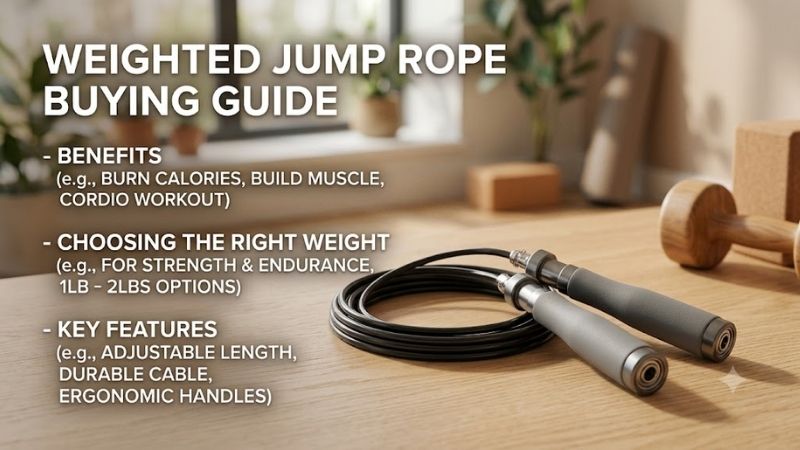
Cable Weight vs. Handle Weight
Cable weight contributes to the mass moving around the body.
Handle weight remains primarily in the user’s hands.
Although both can increase the overall load, they do not produce identical mechanical demands.
Buyers should identify where the added weight is located.
Rope Speed
Heavier cables often require more deliberate acceleration and control.
However, the actual rotation speed depends on length, material, geometry, and technique.
A heavier rope can still rotate quickly in experienced hands, but it should not automatically be selected for speed-focused skipping.
Cable Feedback
A heavier cable may provide a more noticeable sense of its position during rotation.
This can be useful for some users.
However, it may also make missed rotations more uncomfortable.
Technique and Control
Weight should not force exaggerated shoulder movement or uncomfortable wrist positions.
The appropriate rope permits consistent rotation with manageable effort.
Types of Weighted Jump Ropes
Heavy-Cable Ropes
These place much of the additional mass in the cable.
They are suitable for users specifically seeking a heavier rotating rope.
Weighted-Handle Ropes
These add mass to the handles while potentially retaining a relatively light cable.
They provide a different loading experience.
Adjustable-Weight Ropes
Some models allow changing handle weights or switching cables.
These can offer flexibility for different preferences.
Cordless Weighted Ropes
Cordless designs use short attachments or weighted handles without a full-length rotating cable.
They require less cable clearance but change traditional skipping mechanics.
Convertible Weighted Ropes
Convertible systems support multiple configurations.
Their practical value depends on attachment security and how frequently the user changes modes.
Choosing the Right Rope Weight
Understanding Published Weight Specifications
Manufacturers may use different conventions when advertising rope weight.
A product labeled as a one-pound rope may refer to the cable, total rope assembly, or another configuration.
Without clarification, direct comparisons can be misleading.
Always determine what is being weighed.
Lighter Weighted Configurations
A relatively light weighted rope can introduce additional rotational load without requiring a very heavy cable.
It may be suitable for someone developing control.
Moderate Weight Configurations
A moderately heavy cable requires more deliberate movement.
The ideal mass depends on technique and experience.
Heavy Rope Configurations
Very heavy ropes can create substantial rotational forces.
These may be inappropriate for users who cannot control the cable consistently.
Heavier should not be interpreted as automatically more effective.
Interchangeable Weight Systems
Interchangeable cables allow different rotating loads.
However, compatibility and attachment quality matter.
Only use approved combinations.
Selecting Weight for Your Goals
Choose based on the desired movement rather than an arbitrary weight target.
For fast, technical skipping, a lighter rope may be more appropriate.
For deliberate weighted rotation, a heavier cable may better match the intended exercise.
Cable Materials and Construction
PVC Cables
PVC is used in many general-purpose ropes.
Its flexibility and weight vary according to formulation and diameter.
Check the intended usage surface.
Braided Heavy Ropes
Some weighted ropes use braided synthetic fibers.
These can provide a different feel from solid cables.
Durability depends on fiber construction and contact conditions.
Rubber-Like Cables
Some heavy ropes incorporate flexible rubber-like materials.
These may differ in surface grip, stiffness, and wear behavior.
Coated Metal Cables
Certain rope systems use coated metal cables.
The coating helps protect the metal and surrounding surfaces, but wear remains possible.
Cable Diameter
A thicker cable may have greater mass, depending on material and construction.
However, thickness alone does not determine weight.
Surface Abrasion
Concrete and other abrasive surfaces can accelerate rope wear.
Use the manufacturer-recommended surface and inspect the cable regularly.
Rope Length and Sizing
Why Length Influences Rotation
A long rope sweeps a larger path.
This can change the effort required to control the cable.
A short rope demands more precise timing.
Manufacturer Sizing Guidance
Use the manufacturer’s height recommendations as the starting point.
Adjust according to the approved method.
Adjustable Rope Length
Some models include clamps or connectors.
Ensure they remain secure.
Fixed-Length Ropes
Fixed-length ropes can work well for a specific user but may not suit households with varying heights.
Trimming Heavy Cables
Do not cut or modify cables unless the manufacturer permits it.
Some weighted cables contain structural components that can be damaged by improper trimming.
Handle Design and Ergonomics
Handle Diameter
Handle thickness should suit the user’s hand size.
Excessively large handles may make grip control difficult for some users.
Handle Length
Longer handles may allow different positions.
However, added length is not automatically beneficial.
Handle Weight
Additional handle mass changes the loading felt in the hands.
Understand whether it is removable.
Grip Materials
Rubberized, textured, or molded surfaces may provide different levels of comfort.
Maintenance and moisture can influence grip.
Handle Shape
Contoured handles may support certain hand positions.
Choose a design that permits natural control.
Bearings, Swivels, and Cable Connections
Bearings
Some weighted ropes incorporate bearings to support cable rotation.
Their usefulness depends on quality and compatibility with the cable mass.
Swivel Mechanisms
Swivels can reduce unwanted twisting.
Inspect these joints regularly.
Attachment Strength
The cable connection experiences repeated forces during rotation.
Loose attachments are unacceptable.
Replaceable Connectors
Serviceable connections may extend the useful life of the rope.
Maintenance
Follow instructions for cleaning and inspecting the rotation system.
Do not use unapproved lubricants.
Weighted Rope Performance and Practical Use
Rotation Control
A well-matched weighted rope should permit consistent cable movement.
Control matters more than maximum weight.
Movement Consistency
The rope’s length, stiffness, and mass distribution influence rotation.
Changes to one component may affect the entire movement.
Exercise Intensity
Workload varies according to rope mass, rotation speed, jumping pattern, and individual fitness.
No single rope weight guarantees a particular calorie expenditure or outcome.
Grip Fatigue
Heavier equipment may demand more from the gripping muscles.
If fatigue causes loss of control, stop or reduce the load.
Coordination
Traditional weighted skipping requires timing the jump with cable movement.
Cordless options do not reproduce this requirement completely.
Durability and Long-Term Ownership
Cable Wear
Inspect the cable for cracking, fraying, exposed metal, or other damage.
Handle Damage
Check the handle housing and grip condition.
Bearing Wear
Abnormal grinding, looseness, or inconsistent rotation may indicate problems.
Replaceable Parts
Interchangeable cables and supported replacement components can improve serviceability.
Storage
Avoid sharp bends that could permanently deform the cable.
Cleaning
Use the manufacturer’s recommended cleaning methods.
Choosing a Weighted Rope for Your Budget
Entry-Level Weighted Ropes
Basic models may offer fixed cable mass and simple handles.
These can be sufficient for straightforward use.
Midrange Weighted Ropes
Midrange equipment may include improved grips, bearings, or replaceable cables.
Evaluate whether these features improve usability.
Premium Weighted Rope Systems
Premium systems may provide multiple cable weights and specialized handles.
They are more appealing when different configurations are genuinely needed.
Long-Term Value
Consider component durability and replacement costs.
A more expensive system is not automatically more economical.
Buying for Different Users
Beginners
Start with a manageable configuration and prioritize movement control.
Experienced Skippers
Choose weight and cable behavior according to established technique and preferences.
Home Gym Users
Consider surface compatibility and storage.
Apartment Residents
Evaluate noise, landing impact, and cable clearance.
Multiple Household Users
Adjustable length and interchangeable configurations may be useful.
Users Seeking Greater Resistance
A heavier cable may increase rotational demand, but appropriate control remains essential.
Weighted Jump Rope vs. Other Rope Types
| Rope type | Main characteristic | Primary advantage | Important limitation |
|---|---|---|---|
| Standard jump rope | Relatively light cable | General skipping | Lower rotating mass |
| Heavy-cable rope | Weighted rotating cable | Deliberate weighted rotation | Greater control demands |
| Weighted-handle rope | Added handle mass | Different grip loading | Not equivalent to heavy cable |
| Speed rope | Fast cable rotation | Speed-oriented skipping | Different loading characteristics |
| Cordless weighted rope | Short weighted attachments | Reduced cable clearance | Different coordination |
| Interchangeable-weight rope | Multiple configurations | Greater flexibility | More components |
Weighted Rope vs. Speed Rope
Weighted ropes emphasize additional rotational mass.
Speed ropes typically emphasize efficient fast rotation.
Neither is universally better.
Weighted Rope vs. Standard Rope
A weighted rope changes the force required to move and control the cable.
A standard rope may be easier for general skipping.
Weighted Rope vs. Weighted Handles
These terms describe different mass distributions.
Check component specifications rather than comparing total weights alone.
How to Set Up a Weighted Jump Rope
Select a Suitable Surface
Use an unobstructed, stable exercise area.
Confirm Rope Length
Follow the manufacturer’s sizing instructions.
Inspect the Cable
Check for wear and damage.
Secure Attachments
Ensure handles, weights, and cable connections are correctly installed.
Begin With Controlled Rotation
Start at a manageable pace.
Monitor Grip and Technique
Stop if the rope becomes difficult to control.
Store the Rope Properly
Avoid sharp bends and unsuitable storage conditions.
Common Buying Mistakes
Buying Based on Total Weight Alone
Mass distribution is essential.
Choosing an Excessively Heavy Rope
More weight can increase control demands beyond the user’s capability.
Ignoring Cable Length
Incorrect length affects timing and comfort.
Overlooking Floor Compatibility
Abrasive surfaces can accelerate wear.
Assuming Weighted Handles Equal Heavy Cables
They produce different mechanical loading.
Buying Incompatible Accessories
Only use approved weight and cable combinations.
Frequently Asked Questions
What Is the Best Weight for a Weighted Jump Rope?
There is no universal ideal. The appropriate weight depends on experience, desired rotational feel, and the ability to maintain controlled movement.
Are Weighted Jump Ropes Better Than Regular Jump Ropes?
They are different rather than universally better. Weighted ropes add rotational load, while lighter ropes may be better suited to faster or simpler skipping.
Do Weighted Handles Provide the Same Resistance as a Heavy Rope?
No. Mass concentrated in the handles behaves differently from mass distributed along the rotating cable.
Can Beginners Use a Weighted Rope?
Some beginners may use relatively manageable weighted configurations. Proper fit and control should come before increasing load.
How Long Do Weighted Jump Ropes Last?
Durability depends on materials, frequency of use, exercise surfaces, and maintenance. There is no single reliable lifespan for every model.
Are Interchangeable-Weight Ropes Worth Buying?
They can be useful when multiple loads are needed. A fixed-weight rope may be sufficient for users with consistent preferences.
Conclusion
A good weighted jump rope buying decision depends on understanding cable mass, handle weight, rope length, and rotational control. Choose equipment that fits your body and preferred skipping style without creating excessive handling demands. Reliable cable connections, comfortable grips, suitable materials, and replaceable components are more valuable than choosing the heaviest or most expensive rope available.









Write Your Review
No reviews yet. Be the first to share your experience!