
Key takeaways
-
Rope configuration: Traditional, cordless, or convertible.
-
Counter mechanism: What the device actually measures.
-
Tracking accuracy: How consistently the counter recognizes movement.
-
Rope length: Proper adjustment for the user’s height and technique.
-
Handle comfort: Secure grip and suitable weight.
-
Rotation mechanism: Smooth movement without unnecessary friction.
-
Space requirements: Adequate floor and overhead clearance.
-
Display readability: Convenient access to useful workout data.
-
Battery or charging requirements: Practical power management.
-
Durability: Replaceable components and appropriate construction.
-
Storage: Easy handling without damaging the rope or sensors.
Finding a jump rope with counter for small spaces requires balancing accurate jump tracking with available floor and overhead clearance. Traditional ropes need enough room to rotate freely, while cordless designs offer a different exercise experience. This guide explains how to compare counters, rope mechanisms, comfort, and storage before buying.
Quick Verdict: What Makes a Counting Jump Rope Good for Small Spaces?
A jump rope with a counter is an exercise accessory designed to record jumps, rope rotations, or another movement metric while the user skips.
Some models include simple mechanical counters, while others use electronic sensors and digital displays.
For small spaces, the most important distinction is whether the rope uses a traditional full-length cable or a cordless configuration.
A traditional rope requires clearance around the user’s body so the cable can rotate without striking furniture, walls, or overhead objects.
A cordless jump rope eliminates the long rotating cable but changes the exercise experience.
Both designs can be useful, depending on the available space and intended training.
The main buying considerations include:
-
Rope configuration: Traditional, cordless, or convertible.
-
Counter mechanism: What the device actually measures.
-
Tracking accuracy: How consistently the counter recognizes movement.
-
Rope length: Proper adjustment for the user’s height and technique.
-
Handle comfort: Secure grip and suitable weight.
-
Rotation mechanism: Smooth movement without unnecessary friction.
-
Space requirements: Adequate floor and overhead clearance.
-
Display readability: Convenient access to useful workout data.
-
Battery or charging requirements: Practical power management.
-
Durability: Replaceable components and appropriate construction.
-
Storage: Easy handling without damaging the rope or sensors.
For a room with insufficient clearance for a conventional rope, a cordless counting rope may be the more practical option.
For users with enough room who want the feel and timing demands of traditional rope skipping, an adjustable full-length rope with a counter may be preferable.
Understanding Different Jump Rope With Counter Designs
Counting jump ropes use different mechanisms and tracking methods.
The type of counter can be just as important as the rope itself.

Traditional Jump Ropes With Digital Counters
A traditional counting jump rope uses a full-length cable or rope connected to handles.
An electronic counter, often located in a handle, tracks movement.
Depending on the design, the sensor may detect rotations of the rope mechanism rather than the user’s actual airborne jumps.
This distinction matters.
A rope can complete an attempted rotation without a successful jump, and a counter may still register activity.
Before buying, check how the manufacturer defines a counted repetition.
A conventional counting rope is suitable for users who want traditional skipping mechanics and have sufficient operating space.
Cordless Jump Ropes With Counters
Cordless ropes generally replace the full-length cable with short attachments, sometimes fitted with weighted balls or similar components.
The user performs a skipping-like arm movement while jumping or stepping.
Because there is no full-length rope passing beneath the feet, cordless equipment can be practical in rooms where traditional rope rotation is impossible.
However, this configuration changes the coordination requirements.
A cordless rope does not require the user to time each jump with the passage of a cable under the feet.
That makes it a different exercise experience, not an identical substitute.
Convertible Counting Jump Ropes
Some products allow users to switch between a conventional rope and a cordless setup.
This can be attractive when training occurs in different locations.
For example, the cordless configuration may be convenient indoors, while the full-length rope can be used in an appropriately sized outdoor area.
The benefit depends on how securely the attachments connect and whether the counter works as intended in both configurations.
Do not assume that every convertible model provides identical tracking behavior across modes.
Mechanical Counting Jump Ropes
Some jump ropes use mechanical counting mechanisms rather than electronic sensors.
These may record rotations through a mechanical connection.
The advantage can be straightforward operation without batteries.
However, the available features may be limited.
Mechanical counters can also be affected by wear, movement characteristics, and the way the rope mechanism engages the counter.
Smart Jump Ropes
Smart jump ropes may include Bluetooth connectivity, companion applications, and workout tracking.
Some provide detailed session records, exercise targets, or other digital features.
However, connected functionality does not automatically guarantee better measurement accuracy.
Check whether the device tracks rope rotations, jumps, or another motion-derived estimate.
Also verify app compatibility and whether core counting functions work independently of the connected service.
How Much Space Does a Jump Rope With Counter Need?
A jump rope occupies very little storage space, but its operating area may be larger than expected.
Traditional Jump Rope Space Requirements
A conventional rope rotates around the user’s body.
The cable passes overhead, in front of the feet, underneath the body, and behind the user.
This movement requires clearance in several directions.
The necessary area depends on the user’s height, rope length, arm position, and jumping technique.
A long rope may sweep a larger path than a correctly adjusted shorter rope.
For initial planning, a clear floor area of approximately 6 × 8 feet may be a useful starting point for some users, but this is not a universal safe minimum.
The actual clearance requirement should be determined by the complete rope path and the manufacturer’s instructions.
Overhead Clearance
Ceiling clearance is especially important.
The rotating rope can extend above the user’s head.
A user may have sufficient room to stand and jump but not enough clearance for the rope to pass overhead.
Ceiling fans, hanging lights, beams, and other fixtures can create hazards.
Do not use a full-length rope when the cable could strike an overhead object.
The correct approach is to evaluate the highest point of the rope’s rotation, not merely the user’s standing height.
Cordless Jump Rope Space Requirements
A cordless jump rope does not require the long cable arc associated with traditional skipping.
This can substantially reduce the clearance needed for rope rotation.
However, the user still needs space to jump, move the arms, and maintain balance.
Short weighted attachments also rotate near the hands and body.
They should not contact nearby furniture, people, or other objects.
Cordless equipment reduces certain space requirements but does not eliminate the need for a clear exercise area.
Comparing Space Requirements
| Rope configuration | Floor space consideration | Overhead requirement | Main trade-off |
|---|---|---|---|
| Traditional full-length rope | Must accommodate complete rope arc | Clearance for overhead rotation | Requires more open space |
| Cordless jump rope | Primarily body movement and short attachments | No full-length overhead cable | Different skipping mechanics |
| Convertible counting rope | Depends on selected mode | Full clearance in rope mode | More components |
| Mechanical counting rope | Depends on rope length | Full clearance if corded | Usually simpler tracking |
| Smart counting rope | Depends on rope configuration | Model-dependent | Electronic features and power needs |
The actual requirements depend on the user’s body dimensions and the exact equipment.
Measuring Your Available Workout Area
Start by identifying a clear floor area.
Remove loose objects and check nearby furniture.
Measure the available width and length.
Then assess ceiling height and any overhead fixtures.
If using a full-length rope, slowly examine the complete rotation path in an appropriate open area before beginning jumping.
Do not attempt to solve insufficient clearance by forcing a long rope to rotate closer to walls or furniture.
If the space cannot accommodate the rope safely, consider a cordless configuration or another exercise activity.
Choosing the Right Counter Technology
A jump counter should provide useful information without creating unnecessary complications.
However, different products measure movement differently.
Rotation-Based Counters
Some counters detect rope or handle rotation.
This method may provide a practical record of attempted rope cycles.
However, a completed rope rotation is not always equivalent to a successful jump.
For example, a user may miss the rope or interrupt the movement while the counter still detects a rotation.
Therefore, rotation count should not automatically be interpreted as exact jump count.
Motion Sensor Counters
Some digital ropes use motion sensors to estimate repetitions.
The accuracy depends on sensor design and the recognition algorithm.
Irregular movements, changes in technique, or handling the device outside normal use may affect tracking.
A counter that works well during steady skipping may behave differently during intervals or unusual arm movements.
Cordless Counter Accuracy
Cordless counting devices may estimate jumps using handle motion or other sensor information.
Without a full-length rope passing beneath the feet, counting can be affected by the relationship between arm movement and actual jumping.
Some devices may register repetitions when the user rotates the handles without leaving the floor.
Buyers should understand these limitations.
Mechanical Counter Accuracy
Mechanical counters depend on the engagement of their counting mechanism.
Wear, incomplete rotations, and mechanical design can influence results.
These systems may be adequate for basic tracking, but they should not be assumed more accurate than electronic alternatives.
Evaluating Counter Reliability
A useful counter should record the intended movement consistently.
Check the manufacturer’s definition of a repetition and any available credible measurement evaluations.
Do not assume that the presence of a digital display establishes scientific-grade accuracy.
For many users, consistent counting is more useful than numerous features with unclear measurement methods.
Rope Length and Height Compatibility
For traditional skipping, rope length is one of the most important buying factors.
A poorly sized rope can interfere with timing and create unnecessary contact with the floor.
Why Rope Length Matters
A rope that is too long may strike the floor excessively or require wider arm movements.
A rope that is too short may catch the user’s feet or force uncomfortable hand positioning.
The appropriate length depends on user height, technique, handle position, and experience.
Manufacturer sizing guidance should be the starting point.
Adjustable Rope Designs
Many counting ropes use adjustable cables.
Adjustment mechanisms may include screws, clamps, or other fittings.
These should secure the rope properly during use.
Do not leave sharp wire ends exposed after adjustment.
Follow the manufacturer’s instructions for trimming or retaining excess cable.
Rope Length for Beginners
Beginners may prefer a rope length that allows comfortable timing without forcing a very compact rotation path.
However, excessively long ropes can create their own difficulties.
Rather than applying one universal formula, start with the manufacturer’s height guidance and refine the fit according to the approved adjustment procedure.
Rope Length for Experienced Users
Experienced users may prefer different rope lengths depending on technique.
A shorter rope can reduce unnecessary cable movement but requires more precise timing.
The appropriate setting should not force awkward shoulder or wrist positioning.
Shared Household Use
If multiple people will share one rope, easy adjustment is valuable.
Some systems are more convenient to resize than others.
A rope that requires cutting the cable may be less practical for a household with users of different heights.
Handle Design and Grip Comfort
The handles influence comfort, control, and counter usability.
Handle Shape
Handles may be cylindrical, contoured, or ergonomically shaped.
The best design depends on hand size and personal preference.
A comfortable handle should allow secure control without excessive gripping force.
Handle Diameter
Thicker handles may feel comfortable for some users but awkward for smaller hands.
Thin handles can offer a different sense of control.
There is no universally ideal diameter.
Check product dimensions when available.
Grip Texture
Textured or rubberized surfaces can improve grip.
However, moisture and wear can change the way a handle feels.
Clean the handles according to the manufacturer’s instructions.
Handle Weight
Some counting ropes include weighted handles.
Additional weight changes how the equipment feels during rotation.
However, a heavier handle does not automatically produce better exercise results.
Beginners may find lighter handles easier to control.
Buyers should distinguish handle weight from the weight of the rope or complete product.
Counter Display Placement
A counter built into the handle may be convenient between sets.
However, a display that is difficult to read or reset can become frustrating.
Check the button layout and whether the controls can be operated without accidentally changing settings during exercise.
Rope Materials and Rotation Mechanisms
PVC Ropes
PVC cables are common in general-purpose jump ropes.
They can provide flexible rotation and may be available in adjustable designs.
However, durability depends on cable construction and the surfaces used for skipping.
Steel-Cable Speed Ropes
Some speed ropes use coated steel cables.
These may provide fast rotation characteristics.
However, they can be less forgiving when they strike the body and may wear on abrasive surfaces.
Check whether the product is intended for indoor use.
Beaded Ropes
Beaded ropes use segments fitted around a cord.
They can provide a different movement feel and may produce more noticeable contact with the floor.
However, their operation still requires appropriate clearance.
Bearing Mechanisms
Some rope handles use bearings to support rotation.
The quality of the mechanism influences movement smoothness.
However, a bearing count or promotional description alone does not establish superior performance.
Swivel Connections
A swivel or rotating joint may help the cable move without twisting excessively.
The effectiveness depends on the design.
Check that the connection remains secure during normal use.
Counter Features and Workout Tracking
Basic Jump Counting
A basic counter records repetitions or rotations according to its sensing mechanism.
For many users, this is the primary feature.
Workout Timers
A timer can help organize intervals.
This can be useful when counting alone does not capture the intended workout structure.
Calorie Estimates
Some digital ropes estimate calorie expenditure.
These estimates may rely on generalized calculations rather than direct physiological measurements.
They should not be treated as exact results.
Weight and Height Inputs
Certain counters allow users to enter body measurements.
This may influence calculated metrics.
However, personalized inputs do not automatically make estimated calories accurate.
Memory and Session Tracking
Some devices store previous sessions.
This can be useful for comparing activity over time.
Check whether data remains available when the device is powered off or the battery is replaced.
Bluetooth and Fitness Apps
Connected ropes may synchronize information with compatible applications.
Verify compatibility with your phone and preferred software.
Also check whether core counting continues to work without an active app connection.
Battery Life and Power Requirements
Electronic counters require power, but the exact arrangement varies.
Replaceable Batteries
Some digital ropes use replaceable batteries.
These can be convenient when charging access is limited.
Check the specified battery type.
Rechargeable Batteries
Rechargeable models may use built-in batteries and a charging port.
Consider charging frequency, connector type, and battery-service limitations.
Display Power Consumption
Screens, wireless connectivity, and additional features may influence power consumption.
However, specific battery-life claims should be verified for the exact model.
What Happens When the Battery Runs Out?
A conventional rope may still function mechanically when the electronic counter loses power.
However, counting and connected features will no longer operate.
Some smart designs may have additional limitations.
Check the manufacturer’s instructions.
Floor Protection and Apartment-Friendly Jumping
For apartment users, floor impact may matter more than rope storage.
Repeated Landing Forces
Jumping repeatedly transfers impact forces through the feet into the floor.
The amount depends on body weight, technique, footwear, surface characteristics, and other factors.
A compact jump rope does not eliminate those forces.
Choosing a Suitable Surface
Use a level, stable surface appropriate for the activity.
Avoid slippery flooring, loose rugs, or uneven ground.
The surface should permit safe foot contact.
Exercise Mats
A suitable exercise mat may help protect the floor and provide an appropriate contact surface.
However, excessively soft or unstable mats may interfere with balance.
A mat cannot guarantee elimination of impact noise.
Cordless Ropes and Floor Noise
Cordless ropes remove the repeated impact of a long cable striking the floor.
However, jumping still creates landing forces.
Therefore, cordless operation does not automatically make the exercise silent.
Shared Housing Considerations
In apartments, consider neighboring rooms and the building’s floor construction.
A short exercise session can still transmit noticeable impact noise through certain floors.
Choose an appropriate location and avoid making unsupported assumptions about soundproofing.
Choosing a Jump Rope With Counter for Your Budget
Budget Counting Ropes
Entry-level models may provide basic rotation counting and simple displays.
They can be sufficient for users who want straightforward activity tracking.
However, check the rope adjustment mechanism and handle quality.
Midrange Counting Ropes
Midrange equipment may include improved bearings, multiple tracking functions, or convertible rope configurations.
These features can be useful when they address practical needs.
Premium Smart Jump Ropes
Premium products may include app connectivity and detailed workout tracking.
They can appeal to users who want structured digital records.
However, accuracy, compatibility, and long-term software support deserve attention.
Total Ownership Cost
Consider replacement cables, batteries, charging accessories, and app-related costs where applicable.
Do not assume every connected feature remains available without a subscription.
Warranty and Replacement Parts
Review coverage for the handles, counter, cable connections, and electronics.
A rope with replaceable cables may offer more flexibility when the cable wears.
Buying for Specific Small-Space Situations
Studio Apartments
A cordless design may be practical when full-length rope clearance is unavailable.
However, jumping noise and landing space must still be considered.
Bedrooms
Check ceiling height and nearby furniture.
Avoid traditional skipping when the rope could contact fixtures.
Home Offices
A compact counting rope is easy to store.
However, the exercise area must still accommodate movement safely.
Garage Gyms
A garage may provide useful open space, but floor suitability and overhead obstructions still matter.
Beginners
Beginners may benefit from comfortable handles and straightforward tracking.
A convertible rope can offer flexibility, although cordless and corded modes involve different timing demands.
Experienced Jump Rope Users
Experienced users may prioritize smooth bearings, accurate rotation tracking, and appropriate cable construction.
Counter features should not interfere with the desired rope performance.
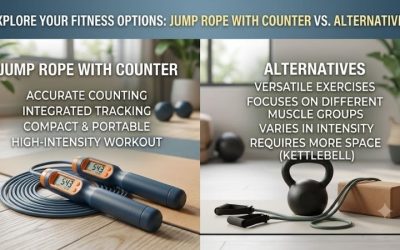
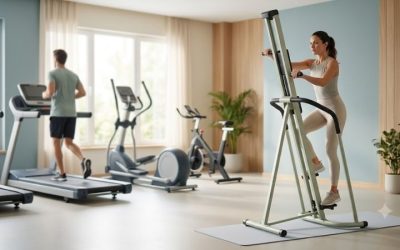
Jump Rope With Counter vs. Other Compact Cardio Equipment
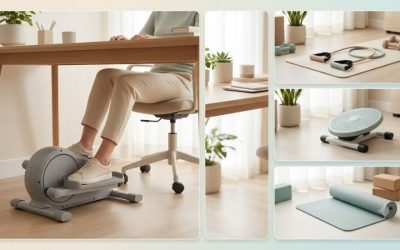
| Equipment | Main advantage | Space requirement | Main limitation |
|---|---|---|---|
| Counting jump rope | Tracks skipping activity | Full rope rotation area | Requires clearance |
| Cordless counting rope | Reduced rope-swing space | Space for body and short attachments | Different coordination |
| Traditional jump rope | Simple skipping equipment | Full rope arc | No integrated tracking |
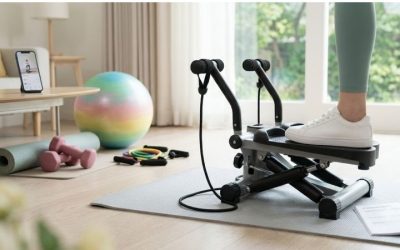
| Mini stair stepper | Compact standing exercise | Small floor area | Mechanical operating limits |
| Under-desk elliptical | Seated movement | Compact floor area | Requires a suitable chair |
| Walking pad | Walking exercise | Longer floor area | Greater storage needs |
Counting Rope vs. Traditional Jump Rope
A counting rope adds activity tracking.
A basic rope can provide the same general skipping movement without electronics.
The additional value depends on whether tracking supports the user’s routine.
Cordless vs. Corded Counting Ropes
Cordless ropes reduce the need for a full-length rotation area.
However, they do not reproduce every timing demand of traditional skipping.
Choose based on available space and preferred movement.
Counting Jump Rope vs. Mini Stair Stepper
A jump rope emphasizes repeated jumping or skipping.
A mini stepper provides guided stepping movement.
These activities differ in impact characteristics, coordination, and equipment requirements.
Setting Up a Counting Jump Rope Correctly
Select a Suitable Exercise Area
Choose a clear, stable surface.
Check overhead and surrounding clearance.
Adjust the Rope Length
For corded models, follow the manufacturer’s sizing and adjustment instructions.
Secure all cable fittings properly.
Inspect the Handles
Check grip surfaces, bearing movement, and cable connections.
Set Up the Counter
Confirm battery power and any required settings.
Reset the session count if appropriate.
Test the Counting Function
Perform a short sequence of controlled movements.
Compare the displayed count with the movement the device is intended to measure.
Begin With Controlled Skipping
Start at a manageable pace.
Avoid unnecessary high jumps or uncontrolled arm movement.
Store the Rope Properly
Follow the manufacturer’s storage guidance.
Avoid sharp bends or excessive tension on cables.
Common Mistakes When Buying a Counting Jump Rope
Choosing Based on Counter Features Alone
The rope still needs suitable handles, proper length, and appropriate movement characteristics.
Ignoring Ceiling Clearance
A full-length rope requires overhead space.
Assuming Cordless Tracking Counts Actual Jumps
Some counters may primarily detect handle movement.
Buying a Rope That Cannot Be Adjusted Properly
Incorrect length can make traditional skipping difficult.
Treating Calorie Estimates as Exact Measurements
Consumer counters generally provide approximations.
Overlooking Floor Impact Noise
Even cordless jumping can transmit noticeable vibration.
Ignoring App Compatibility
Connected features may require specific devices or supported software.
Frequently Asked Questions
Are Jump Ropes With Counters Good for Small Spaces?
They can be practical because they are easy to store. However, traditional ropes require sufficient rotation clearance, while cordless designs reduce that requirement.
Do Jump Rope Counters Measure Every Jump Accurately?
Accuracy depends on the sensing method and movement. Some devices count rope rotations or handle motion rather than every successful jump.
Are Cordless Jump Ropes Better for Apartments?
They can be more suitable when a full-length rope cannot rotate safely. However, jumping still creates floor impact and requires a clear area.
Do Counting Jump Ropes Need Batteries?
Electronic models generally require a power source. Some use replaceable batteries, while others are rechargeable. Mechanical counters may operate without electricity.
Can You Adjust the Length of a Counting Jump Rope?
Many corded models allow adjustment, but the mechanism varies. Follow the manufacturer’s instructions to maintain secure cable connections.
Is a Smart Jump Rope Worth Buying?
It may be worthwhile if workout tracking and connected features are important. A basic counting rope can be sufficient for users who simply want to monitor repetitions.
Conclusion
The right jump rope with counter for small spaces should match your available clearance, preferred skipping style, and tracking needs. Choose an adjustable full-length rope when there is enough room for traditional rotation, or consider a cordless model when space is restricted. Prioritize reliable counting, comfortable handles, suitable construction, and safe floor conditions over unnecessary electronic features.





Write Your Review
No reviews yet. Be the first to share your experience!