
A vertical climber machine buying guide should help you evaluate the equipment beyond its appearance or advertised workout benefits. Frame geometry, climbing mechanics, resistance, stability, and user fit determine practical suitability. This guide explains the important specifications, design trade-offs, and ownership considerations before you invest in a climbing machine.
Quick Verdict: What Should You Look for in a Vertical Climber?
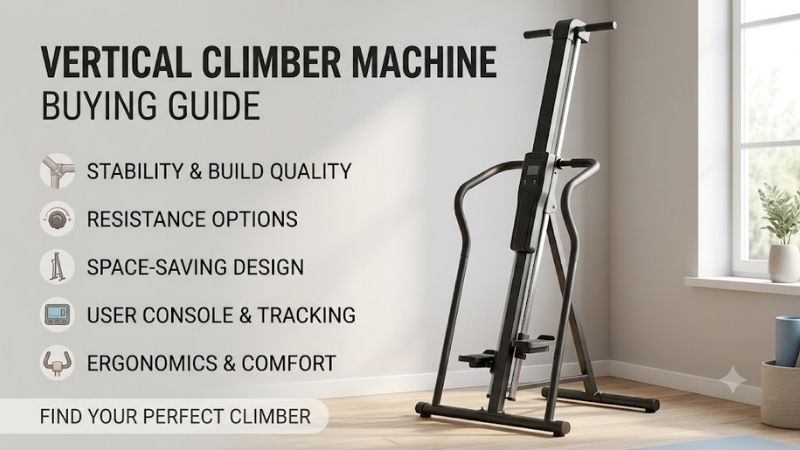
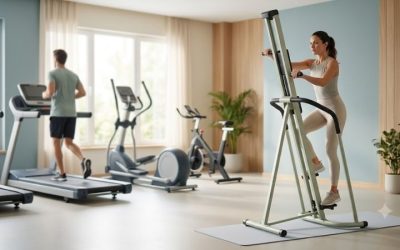
A vertical climber machine simulates a climbing-like movement by coordinating the arms and legs through a guided mechanical system.
Some machines use bodyweight-driven movement, while others offer adjustable resistance or more elaborate training controls.
The best option depends on the rider’s proportions, intended exercise intensity, available room, and preferred movement pattern.
For straightforward home workouts, a mechanically simple climber with a stable base and appropriate handle adjustments may be sufficient.
For users who want more specific resistance control, models with documented adjustable systems deserve closer attention.
The main buying priorities are:
-
Climbing mechanism: Smooth, coordinated movement without uncomfortable reaching.
-
Handle adjustment: Suitable positions for the user’s height and arm length.
-
Pedal design: Secure foot support and comfortable movement.
-
Resistance: Appropriate workload characteristics and adjustment options.
-
Frame stability: Reliable support under repeated weight shifts.
-
Maximum user weight: A published rating appropriate for the intended rider.
-
Operating dimensions: Enough floor and ceiling clearance.
-
Storage: Convenient handling if the equipment must be moved.
-
Durability: Clear maintenance requirements and reliable component support.
-
Warranty: Coverage for structural and mechanical components.
Do not choose a machine solely because it promises a full-body workout or features a large number of settings.
The most important consideration is whether its movement and construction suit the intended user.
Understanding How Vertical Climber Machines Work
Vertical climbers are designed around a repeated climbing movement, but their mechanisms differ.
Understanding these differences helps explain why machines with similar appearances may deliver different experiences.
Coordinated Arm-and-Leg Mechanisms
Many traditional climbers connect the handles and pedals through mechanical linkages.
Moving one component affects another according to the geometry of the system.
This creates a coordinated climbing motion involving the upper and lower body.
However, not every machine uses the same relationship between handles and pedals.
Some offer alternate grip positions or different operating modes.
The exact design influences coordination requirements, movement smoothness, and user comfort.
Bodyweight-Driven Movement
Certain climbers rely heavily on bodyweight and mechanical leverage.
These machines may not have a conventional resistance dial.
Exercise effort can vary with movement speed, body positioning, and the linkage design.
However, bodyweight-driven operation does not provide a standardized resistance measurement.
It is important to distinguish perceived effort from actual adjustable mechanical resistance.
Assisted or Linked Movement
Some climbing mechanisms use strongly coordinated linkages that guide the limbs through predetermined paths.
This may make the movement more predictable, but it can also limit individual freedom of motion.
Users with unusual body proportions should pay attention to whether the guided path feels comfortable.
A machine that requires awkward shoulder movement or excessive leg reaching may not be suitable even if its dimensions appear appropriate.
Climbing Motion Compared With Other Cardio Equipment
Vertical climbing differs from cycling, rowing, and elliptical stepping.
A climber generally emphasizes repeated vertical movements involving both the arms and legs.
An elliptical trainer guides the feet through an oval path, while a rower uses a seated pulling movement.
None of these machines is universally superior.
The appropriate choice depends on preferred movement, exercise goals, available space, and user comfort.
Types of Vertical Climber Machines
The term vertical climber covers several designs.
Basic Mechanical Vertical Climbers
Basic machines commonly emphasize straightforward climbing movement with limited electronic features.
They may be attractive to users who want simple equipment.
However, quality varies.
Frame rigidity, linkage design, and handle comfort remain important.
Adjustable-Resistance Climbers
Some machines include controls that modify the workout effort.
The specific mechanism must be identified.
Resistance levels are not standardized across products.
A machine advertising many settings may not necessarily offer a wider useful workload range than another.
Folding Vertical Climbers
Folding models prioritize storage convenience.
They may be appropriate when the equipment cannot remain assembled permanently.
However, locks, pivots, and folding joints require inspection.
A folding design should not compromise safe operation.
Commercial-Style Climbing Trainers
Larger climbing trainers may provide more substantial frames, advanced resistance systems, and detailed workout monitoring.
They can be suitable for dedicated training spaces.
However, their size, weight, and installation requirements may exceed what is practical for a typical apartment.
Multifunctional Climbing Machines
Some climbers offer multiple grip positions or accessory-based exercise options.
These features may add variety.
However, they should not distract from evaluating the primary climbing movement.
Handle Design and User Fit
A vertical climber’s handles are central to its operation.
Poor handle geometry can make the machine uncomfortable or awkward.
Adjustable Handle Height
Handle adjustment should accommodate the intended user’s reach.
A comfortable position allows controlled arm movement without excessive stretching.
Some machines provide telescoping handles or several locking positions.
Check the exact adjustment method and range.
A broad adjustment range can be valuable when multiple household members use the same machine.
Fixed vs. Moving Handles
Moving handles coordinate with the climbing mechanism.
Fixed handles, when included, may support alternate operating positions.
These are not interchangeable functions.
Check which grips are approved for each exercise mode.
Do not assume a fixed handle is rated to support the user’s entire body weight.
Grip Diameter and Surface
Grip comfort depends partly on handle shape, diameter, and texture.
A secure surface can help maintain hand contact.
However, thick padding alone does not guarantee comfort.
Hand size, grip pressure, and movement direction all influence the experience.
Shoulder Position and Reach
An appropriate climbing movement should not require repeated awkward shoulder positioning.
If the handles are too far away or too high, the rider may compensate by leaning excessively.
If the handles are too close, the movement can feel cramped.
Evaluate the machine’s fit against your body proportions rather than relying only on recommended height ranges.
Handle Locking Mechanisms
Adjustable handles often rely on pins, knobs, or other locking components.
These must be engaged correctly before use.
A loose or damaged handle mechanism presents an avoidable safety risk.
Inspect the components according to the manufacturer’s instructions.
Pedal Design and Climbing Stride
The pedals influence how the feet move and how securely the user remains supported.
Pedal Dimensions
A pedal should accommodate the rider’s foot securely.
Users with larger shoes should examine the available platform size.
A narrow pedal may be uncomfortable even when the machine’s weight capacity is adequate.
Pedal Surface Grip
Textured surfaces can improve contact between footwear and the pedal.
However, traction depends on cleanliness, footwear, and surface condition.
Follow manufacturer recommendations for suitable footwear.
Climbing Stride Length
Stride or pedal travel refers to the movement completed during a climbing cycle.
Some machines offer adjustments.
A longer travel range is not automatically better.
The movement should remain comfortable and controllable throughout.
Pedal Coordination
Linked pedal mechanisms can influence how movement transfers between the user’s legs.
The exact interaction varies by design.
A predictable mechanism may be easier for some users to learn, but individual preference matters.
Foot Position Throughout the Movement
Feet should remain positioned as intended by the manufacturer.
Avoid standing on unsupported pedal edges or attempting to alter the machine’s movement geometry.
If maintaining foot contact feels difficult, stop and reassess the fit and operating technique.
Understanding Vertical Climber Resistance
Resistance systems are among the most frequently misunderstood features.
Bodyweight-Based Resistance
Many simple climbers rely primarily on the mechanical loading created by the user’s movement.
This does not necessarily mean the machine has no resistance.
However, it may lack a separately adjustable resistance mechanism.
Buyers seeking precise workload control should understand this distinction.
Mechanical Resistance Controls
Some climbers use mechanical adjustments to influence movement effort.
These may affect friction, linkage geometry, or other characteristics depending on the design.
Review the manufacturer’s explanation.
Do not assume that an adjustment knob directly changes resistance without confirming its function.
Magnetic Resistance
Certain climbing trainers use magnetic resistance.
This can provide controlled effort through a rotating resistance assembly.
The total workout experience still depends on drivetrain design and the climbing mechanism.
Magnetic resistance alone does not establish quietness or durability.
Electronic Resistance
Electronically controlled machines may offer preset programs and resistance adjustments through a console.
These features can be useful for structured training.
However, electronic complexity may increase power requirements and service considerations.
Resistance Range vs. Resistance Levels
The number of available settings is not a standardized indicator of maximum resistance.
A machine with fewer, well-distributed settings may be more useful than one with many closely spaced levels.
Evaluate the actual resistance characteristics whenever credible information is available.
Frame Construction and Stability
Because vertical climbers support repeated standing movement, frame construction deserves careful attention.
Frame Geometry
The arrangement of vertical supports, stabilizers, and moving components affects stability.
A narrow footprint can save space, but the base must still accommodate the intended movement forces.
Do not choose equipment purely for its compact appearance.
Steel vs. Aluminum Frames
Some climbers use steel, aluminum, or combinations of materials.
Material selection influences weight and structural design.
However, neither material automatically guarantees superior durability.
Construction quality and design are more important than marketing labels.
Maximum User Weight
Choose a model whose published user weight rating accommodates the intended rider.
The rating should not be treated as proof of superior product quality.
Never exceed the manufacturer’s specified limit.
Stability During Exercise
A climber should remain secure on a suitable surface during normal operation.
If it rocks excessively or moves across the floor, stop.
Review assembly, floor conditions, and maintenance requirements.
Assembly Requirements
Correct assembly is essential.
Follow the manufacturer’s instructions and use the specified hardware.
Avoid substituting parts or modifying the frame.
Size, Ceiling Height, and Room Compatibility
A vertical climber may occupy relatively little floor area but require substantial vertical clearance.
Measuring the Base Footprint
Measure the assembled width and depth.
Do not rely on storage dimensions when planning the exercise area.
Also consider the space needed around the rider.
Measuring Ceiling Clearance
The machine’s height is not necessarily the highest point reached by the user.
Account for body height, pedal elevation, and handle movement.
Nearby ceiling fans or hanging fixtures may create additional restrictions.
Space for Mounting and Dismounting
The user needs room to approach the equipment and exit safely.
Avoid positioning the climber between closely spaced furniture.
Fixed vs. Folding Frames
A fixed frame can be convenient for frequent exercise.
A folding frame may be more practical in a multipurpose room.
The correct choice depends on storage needs and setup convenience.
Moving the Machine
Check equipment weight, transport features, and safe lifting instructions.
Tall frames can be awkward to move even when relatively lightweight.
Noise and Mechanical Reliability
Noise and maintenance influence the long-term ownership experience.
Linkage Noise
Moving joints may generate sound during climbing.
Persistent knocking or grinding can indicate a problem requiring inspection.
Resistance-System Noise
Noise depends on the resistance mechanism.
Magnetic, friction-based, and other systems may have different characteristics.
However, the complete machine determines total sound output.
Floor Vibration
Climbing movement can transmit forces into the floor.
A compatible mat may offer some protection and vibration reduction.
It cannot correct an unstable frame.
Routine Mechanical Checks
Inspect hardware, handles, pedals, and linkages according to the manual.
Follow approved cleaning and lubrication procedures.
Replacement-Part Availability
Before buying, check whether the manufacturer supports replacement components.
This can matter for equipment with several moving joints.
Console Features and Workout Monitoring
A vertical climber does not need sophisticated electronics to function, but tracking features may improve convenience.
Workout Timers
Time tracking can help organize exercise sessions.
A simple display may be sufficient.
Climb Counts
Some consoles track steps or climbing cycles.
Verify what constitutes one recorded repetition.
Calorie Estimates
Calorie displays are approximate unless supported by more comprehensive measurement methods.
Avoid treating them as exact expenditure values.
Heart Rate Monitoring
Heart rate features may be useful if compatible with the user’s preferred monitoring method.
Sensor accuracy and compatibility vary.
Connected Workout Programs
Some premium machines offer apps or guided sessions.
Check the actual supported functions rather than assuming that connectivity includes advanced training features.
Choosing a Vertical Climber for Your Budget
Budget Models
Basic climbers may provide straightforward movement with limited adjustments.
They can be suitable if the frame, fit, and stability are appropriate.
Midrange Models
Midrange equipment may offer improved adjustability, resistance controls, or storage convenience.
Evaluate whether these features solve practical problems.
Premium Models
Premium climbing trainers may provide more elaborate resistance and monitoring.
They can be useful for specific training needs but may require additional space and maintenance.
Value Beyond Purchase Price
Consider durability evidence, warranty, service availability, and replacement parts.
The most expensive machine is not necessarily the best match.
Choosing a Vertical Climber for Different Users
Beginners
Beginners benefit from controlled movement, comfortable grips, and straightforward setup.
A simple mechanism can be easier to learn.
Experienced Exercisers
Experienced users should evaluate resistance capability and movement limitations.
A compact basic climber may not support every advanced training requirement.
Taller Users
Handle reach, stride travel, and ceiling clearance deserve careful attention.
Shorter Users
A machine with fixed long travel may be difficult to use comfortably.
Check the manufacturer’s fit guidance.
Shared Household Use
Adjustability is important when several people have different body dimensions.
Users With Balance Limitations
Vertical climbing requires standing balance and coordination.
A machine should not be assumed suitable for every user.
Professional guidance may be appropriate when significant mobility concerns exist.
Vertical Climber vs. Other Exercise Machines
| Equipment | Primary movement | Main advantage | Key consideration |
|---|---|---|---|
| Vertical climber | Coordinated climbing | Upright full-body movement | Fit and stability |
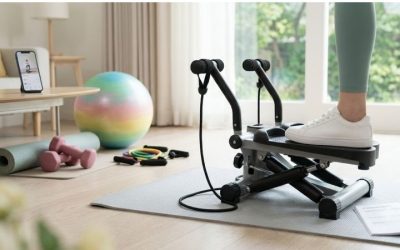
| Mini stair stepper | Stepping | Very compact | Limited integrated upper-body movement |
| Elliptical | Elliptical stepping | Guided repetitive motion | Larger footprint |
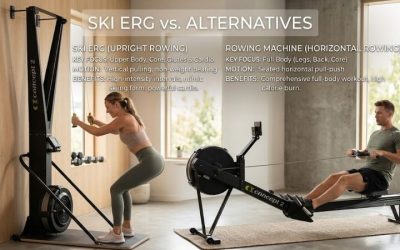
| Ski erg | Repeated pulling | Standing upper-body and core involvement | Mounting and clearance |
| Rowing machine | Seated rowing | Pulling and leg-drive movement | Greater floor length |
Vertical Climber vs. Stair Stepper
A stair stepper primarily focuses on stepping movement.
A vertical climber coordinates the arms and legs through a climbing pattern.
Choose based on the desired movement and balance requirements.
Vertical Climber vs. Elliptical
An elliptical uses a guided oval foot path.
A climber emphasizes a more vertical movement pattern.
Comfort and available space should guide the comparison.
Vertical Climber vs. Ski Erg
A ski erg uses pulling handles to drive a resistance mechanism.
A vertical climber guides coordinated arm-and-leg movement.
These machines suit different exercise preferences.
Setting Up a Vertical Climber
Select a Suitable Floor
Use a level surface that meets the manufacturer’s requirements.
Confirm Room Clearance
Check both operating floor space and ceiling clearance.
Assemble the Frame
Follow the specified assembly procedure.
Adjust the Handles
Use the approved handle positions and secure every lock.
Inspect the Pedals
Verify that pedal surfaces and connections are secure.
Begin With Controlled Movement
Start slowly and confirm that the machine remains stable.
Maintain the Equipment
Perform routine inspections and follow the manufacturer’s maintenance schedule.
Common Buying Mistakes
Comparing Resistance Settings Without Understanding the Mechanism
Resistance labels are not directly comparable across models.
Ignoring Handle Fit
Poor reach can make a climber uncomfortable.
Buying Based on Weight Capacity Alone
A published capacity does not establish overall quality.
Forgetting Ceiling Clearance
A narrow footprint cannot compensate for inadequate height.
Choosing a Folding Model Without Checking Locks
Folding mechanisms require secure operating positions.
Overlooking Maintenance
Mechanical linkages and adjustable components may require regular inspection.
Frequently Asked Questions
What Is the Most Important Feature in a Vertical Climber?
A stable frame and comfortable climbing geometry are essential. Resistance and electronics matter only after the machine fits the rider and available space.
Are Vertical Climbers Better Than Ellipticals?
Neither is universally better. They provide different movements and require different amounts of space and coordination.
Can You Adjust Resistance on Every Vertical Climber?
No. Some models rely primarily on bodyweight-driven movement and do not have conventional adjustable resistance.
Are Vertical Climber Machines Suitable for Tall Users?
Some are, but fit depends on handle adjustment, climbing travel, and ceiling clearance.
How Long Should a Vertical Climber Last?
Service life depends on construction, usage, maintenance, and component support. There is no reliable universal lifespan for every model.
Are Expensive Vertical Climbers Worth Buying?
They may be worthwhile when their resistance systems, adjustability, construction, or tracking features serve a specific need. Price alone does not guarantee better suitability.
Conclusion
Choosing a vertical climber machine starts with fit, stability, and an appropriate climbing mechanism. Evaluate handle adjustment, pedal travel, resistance characteristics, user weight capacity, and operating space before considering optional electronics. A basic mechanical climber may meet straightforward home exercise needs, while adjustable or premium designs become worthwhile when their additional capabilities directly support your intended workouts.



Write Your Review
No reviews yet. Be the first to share your experience!