
An under desk elliptical buying guide should help you understand what makes a seated elliptical comfortable, reliable, and worth purchasing. Resistance systems, pedal geometry, frame stability, and chair compatibility matter more than marketing claims. This guide explains the essential features, practical trade-offs, and buying decisions that deserve attention.
Quick Verdict: What Should You Look for in an Under-Desk Elliptical?
An under-desk elliptical is designed to provide seated lower-body movement without the size and setup requirements of a full-sized elliptical trainer.
Unlike standing elliptical machines, these devices are intended to be used with a separate chair. The rider places their feet on the pedals and moves them through an oval or elliptical path.
The best under-desk elliptical for a particular buyer depends on the intended usage, resistance requirements, body dimensions, and working environment.
For someone who wants light seated movement while using a computer, compact dimensions and smooth pedal motion may be the highest priorities.
For someone who wants more demanding seated workouts, resistance capability and stable construction become more important.
The essential buying criteria include:
-
Pedal motion: A comfortable path that accommodates natural leg movement.
-
Resistance system: Appropriate adjustment and workload range.
-
Frame stability: Secure operation without excessive sliding.
-
Chair compatibility: Support for a controlled seated position.
-
Desk clearance: Enough room for the complete knee movement.
-
Portability: Manageable weight and convenient storage.
-
Build quality: Reliable mechanical components and accessible maintenance information.
-
Controls: Simple adjustments and useful workout information.
-
Warranty support: Clear coverage and access to replacement components.
A well-matched basic elliptical can be a better purchase than a more expensive model whose additional features are irrelevant to the user.
Understanding How Under-Desk Ellipticals Work
Before comparing models, it helps to understand the mechanical arrangement.
Under-desk ellipticals typically use pedals connected to a rotating or guided mechanism that produces a repeating foot movement.
The details of this mechanism determine pedal travel, resistance behavior, noise, and maintenance requirements.
The Elliptical Pedaling Mechanism
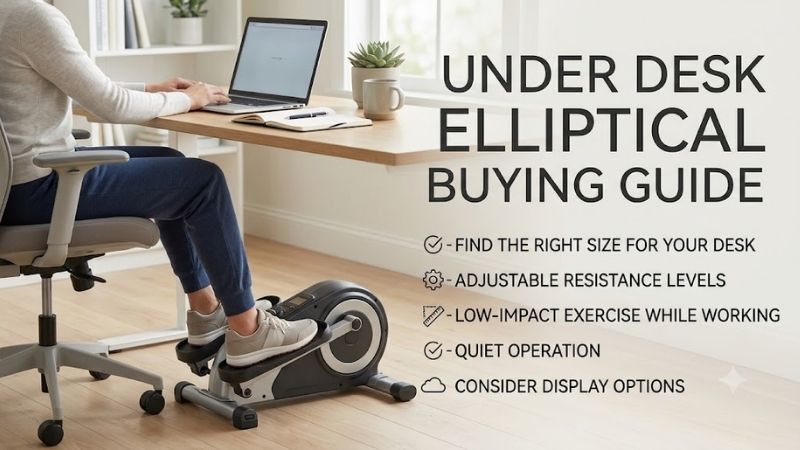
The defining feature of an elliptical exerciser is its pedal path.
Instead of traveling around a simple bicycle-style crank circle, the foot generally follows an elongated path.
In a compact seated machine, that motion is adapted for use from a chair.
The rider’s position, foot placement, and seat height all influence how the movement feels.
Different manufacturers may use different linkages, rotating assemblies, and pedal supports.
For that reason, two machines advertised as under-desk ellipticals can provide noticeably different movement patterns.
Look for detailed product information about pedal travel and operating positions.
Flywheel and Drivetrain Design
Many seated ellipticals use a flywheel or related rotating mechanism to help provide resistance and a consistent pedaling feel.
The drivetrain connects pedal movement to this resistance assembly.
Depending on the design, components may include belts, bearings, crank mechanisms, and other moving parts.
The presence of a heavy flywheel does not automatically establish superior performance.
Smoothness depends on the complete mechanical system, including tolerances, resistance design, assembly quality, and wear.
When comparing products, prioritize useful engineering information and credible evidence over isolated claims about flywheel weight.
Manual Pedaling Compared With Powered Movement
Manual models require the user to move the pedals.
Motorized models may move the pedals through powered operation.
This is a fundamental difference rather than a minor convenience feature.
A powered machine may provide assisted movement, but it does not necessarily require the same effort as actively overcoming mechanical resistance.
Buyers should determine whether they want active seated exercise, assisted leg movement, or equipment with both capabilities.
The manufacturer’s instructions should clearly identify which modes are available.
Seated Ellipticals Compared With Traditional Ellipticals
Traditional elliptical trainers are generally used while standing and may involve coordinated upper- and lower-body movement.
Under-desk ellipticals normally focus on seated lower-body movement.
They offer a different exercise configuration, range of motion, and potential intensity.
The compact design is valuable for convenience, but it should not be assumed to reproduce the workout demands of a full-sized elliptical.
Choosing the Right Resistance System
Resistance is one of the most important features because it influences workout intensity and perceived effort.
Different mechanisms can produce resistance in different ways.
Manual Magnetic Resistance
Magnetic resistance uses magnetic forces to influence resistance within a rotating mechanism.
In manually adjusted systems, the rider typically changes resistance with a dial or similar control.
This arrangement can offer straightforward operation without requiring an electrical outlet for the resistance adjustment.
It also avoids the direct contact between a friction pad and rotating surface found in some alternative mechanisms.
However, performance still depends on the full drivetrain.
Magnetic resistance should not be treated as proof of silent operation or guaranteed durability.
Electronically Controlled Magnetic Resistance
Electronic magnetic systems allow adjustments through buttons, displays, or programmed controls.
These designs may support preset sessions and more convenient resistance changes.
Some machines also offer connectivity features.
Electronic control can be useful for people who want structured workouts, but it introduces additional components and potential power requirements.
A buyer who prefers basic manual pedaling may not need these features.
Compare the actual adjustment range and functionality rather than assuming electronic control is superior.
Friction-Based Resistance
Some compact exercise devices use friction mechanisms to create pedaling resistance.
In these designs, mechanical contact contributes to the workload.
Friction systems can be straightforward, but their operating characteristics depend on the materials and construction.
Contact surfaces may require inspection or replacement according to the manufacturer’s maintenance schedule.
Noise and resistance consistency can also vary.
Before selecting this type, confirm the specific resistance mechanism and maintenance requirements.
Motorized Pedal Systems
Motorized systems use electrical power to drive movement.
Certain models offer adjustable speed, directional controls, or assisted movement settings.
However, the presence of powered motion should not be confused with active resistance training.
For a buyer intending to perform conventional seated exercise, the most relevant question is whether the machine supports the desired active pedaling mode.
Comparing Resistance Types
| Resistance type | Main characteristic | Potential advantage | Important limitation |
|---|---|---|---|
| Manual magnetic | Mechanically adjusted magnetic resistance | Simple operation | Range varies by model |
| Electronic magnetic | Console-controlled resistance | Programmed adjustment | May require power |
| Friction-based | Resistance through mechanical contact | Straightforward mechanism | Wear and noise considerations |
| Motorized | Powered pedal movement | Assisted operation on supported models | Different exercise workload |
No resistance mechanism is universally best. The correct choice depends on the intended riding experience.
Pedal Geometry, Stride Length, and Comfort
Comfort begins with the movement of the pedals.
A model with sophisticated electronics may still be unsuitable if its pedal path does not accommodate the rider.
Understanding Pedal Travel
Pedal travel describes the movement completed during each pedaling cycle.
Compact ellipticals generally use shorter pedal paths than large standing machines.
The exact path depends on the linkage mechanism and pedal configuration.
A short path can be useful when desk clearance is limited.
However, excessively restricted movement may feel unnatural for some users.
The best option provides comfortable movement without requiring awkward changes to hip, knee, or ankle position.
Why Stride Length Can Be Misleading
Manufacturers may report stride length using different measurement conventions.
A stated stride measurement may not communicate the full pedal path, its vertical component, or the movement experienced by the rider.
Therefore, avoid comparing isolated stride figures without understanding their definitions.
If product documentation includes pedal trajectory illustrations, these may help explain the movement.
When available, credible demonstrations of the exact model can also provide useful context.
Pedal Size and Foot Support
Pedal platforms should provide sufficient space for the intended user’s feet.
A textured surface may help maintain grip.
The shape of the pedal also influences how comfortably the foot remains positioned throughout the cycle.
Some users may prefer a large flat platform, while others may be comfortable with smaller pedals.
The pedal arrangement should not force the feet into an uncomfortable angle.
Check any manufacturer guidance regarding footwear and foot positioning.
Forward and Reverse Movement
Certain models permit pedaling in both directions.
This feature can provide variety, but it is not essential for every buyer.
If reverse operation is important, confirm that the manufacturer supports it.
Do not force a machine to operate backward when that function is not documented.
Desk Clearance and Seated Ergonomics
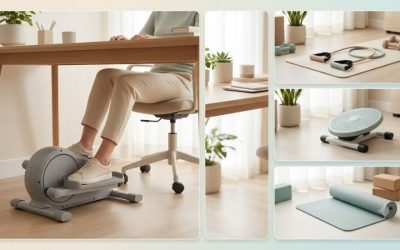
An under-desk elliptical must work with the entire workstation.
This includes the chair, desktop, desk supports, and the rider’s seated posture.
Measuring Knee Clearance
Measure the distance between the floor and the underside of the desk.
Then consider the highest position the knees reach during a complete pedal stroke.
Desk drawers, crossbars, and cable trays can reduce available clearance.
If the rider’s knees contact the desk during operation, the equipment is not properly matched to the workstation.
Choosing a Suitable Chair
A stable chair is essential.
An office chair with freely rolling wheels may move away from the pedals during use.
If the manufacturer provides compatible chair stabilizers, use them according to the instructions.
A stable, nonrolling chair may be more convenient in some situations.
The chair must also support a comfortable sitting position throughout the workout.
Seat Height and Knee Position
Chair height changes the relationship between the hips, knees, and pedals.
An excessively low chair can create cramped movement.
An excessively high chair may require reaching downward or extending the legs awkwardly.
Adjust the chair and equipment so that the pedaling motion remains controlled and comfortable.
Do not compromise everyday workstation ergonomics to accommodate poorly fitting equipment.
Back Support and Posture
A supported seated position may help users avoid unnecessary leaning during exercise.
The rider should be able to remain comfortably seated rather than repeatedly shifting forward or rocking.
A separate chair provides the back support, so chair quality and adjustment are part of the overall setup.
If the exercise device causes the user to slide forward or lose a stable position, reassess placement and compatibility.
Frame Stability and Construction Quality
A stationary exercise device should remain stable during normal use.
Under-desk machines may be relatively small, but their bases must still manage the forces generated during pedaling.
Frame Materials and Structural Design
Frames may incorporate steel, other metals, and molded structural components.
Material descriptions alone do not establish strength or durability.
Connection design, manufacturing quality, component dimensions, and intended load conditions all matter.
Examine the manufacturer’s construction information and assembly requirements.
Avoid assuming that a heavier product is automatically more durable.
Base Width and Floor Contact
The position and shape of the equipment’s floor supports influence stability.
A wider stance may help distribute forces, but overall stability depends on more than width.
Non-slip contact surfaces and proper leveling are important.
Verify that the machine is suitable for the intended flooring.
Preventing Movement During Pedaling
An elliptical that moves across the floor can be frustrating and potentially unsafe.
Check whether the device has non-slip feet or other manufacturer-approved stabilization features.
A suitable equipment mat may help in some situations.
However, the machine should not require unsafe improvisations to remain in place.
Weight and Portability Trade-Offs
A lightweight machine may be convenient to carry.
A heavier unit may require more effort to relocate.
Neither characteristic guarantees a particular stability level.
Consider the machine’s actual intended use.
If it will remain beneath a desk, weight may be less important.
If it must be stored daily, portability becomes a major buying factor.
Noise, Maintenance, and Long-Term Reliability
Mechanical noise and maintenance requirements influence whether an under-desk elliptical remains convenient over time.
Common Sources of Noise
Potential sources include rotating bearings, pedal joints, belt systems, loose components, and contact with the floor.
Noise can also change as parts wear.
Magnetic resistance may reduce some contact-related sounds, but other mechanical components remain active.
Maintenance Requirements
Maintenance schedules vary by manufacturer.
Common tasks can include checking hardware, cleaning surfaces, inspecting moving components, and following lubrication guidance where applicable.
Do not apply lubricants unless the manufacturer recommends them.
Using the wrong product or accessing sealed components unnecessarily can cause damage.
Replacement Parts and Service
Before purchasing, consider whether the manufacturer provides customer support and replacement components.
A low purchase price may be less attractive if a minor component failure makes the machine unusable.
Review available service documentation and warranty terms.
Durability Claims
Marketing terms such as commercial-grade, heavy-duty, and maintenance-free should be interpreted carefully.
They do not establish measurable durability without supporting information.
Credible product specifications and transparent support policies are more useful than broad promotional statements.
Console Features and Workout Tracking
A console can provide information about exercise duration and pedal activity.
However, the usefulness of these features depends on their accuracy and how the owner intends to use them.
Basic Display Functions
Common functions include time, estimated distance, stride count, and calories.
For everyday exercise, time and movement counts may be enough to monitor consistency.
The display should be easy to operate and read.
Understanding Calorie Estimates
Calorie estimates may be based on generalized formulas.
Unless a machine measures relevant physiological and mechanical inputs accurately, its displayed figure should not be treated as an exact measurement of energy expenditure.
Use these values cautiously.
Bluetooth Connectivity
Connected devices may support workout records or compatible fitness applications.
However, Bluetooth capability does not guarantee compatibility with every smartphone, watch, or app.
Check the exact supported features and protocols before buying.
Remote Controls
Certain electronically controlled or motorized models include remote controls.
These may be useful for changing settings without bending toward the equipment.
However, remotes introduce additional components and should not be the primary deciding factor unless they address a specific accessibility or convenience need.
Choosing an Under-Desk Elliptical for Your Budget
A buying decision should consider both initial price and long-term usefulness.
Entry-Level Equipment
Basic models may offer manual resistance and simple tracking.
They can be appropriate when the intended use is straightforward seated movement.
Prioritize correct fit and stability.
Midrange Equipment
Midrange devices may offer more refined controls, additional resistance options, or convenience features.
Evaluate whether these upgrades improve the actual experience.
Premium Equipment
Premium models may provide connected tracking, advanced controls, and specialized features.
These additions may be worthwhile for regular users, but they cannot compensate for poor mechanical fit.
Total Ownership Cost
Consider possible replacement parts, batteries, power requirements, warranty coverage, and maintenance.
Also account for any accessories needed for safe chair or floor compatibility.
Selecting an Under-Desk Elliptical for Different Users
Office Workers
Office workers should focus on knee clearance, chair stability, and ease of use during desk-based activities.
Smooth operation and uncomplicated controls can be more valuable than advanced workout programming.
Beginners
Beginners may prefer straightforward resistance adjustment and clear instructions.
The equipment should allow a manageable starting workload.
Older Adults
Stable seated positioning and convenient controls may be important.
Suitability depends on individual ability and any relevant health considerations.
Experienced Exercisers
Experienced users seeking more demanding workouts should investigate resistance range and actual workload capability.
A compact seated elliptical may not provide the intensity required for every training goal.
Multiple Household Users
Shared equipment benefits from clear controls and broad compatibility with different body dimensions and seating arrangements.
Each user should confirm a comfortable pedaling position.
Under-Desk Elliptical vs. Other Exercise Machines
| Equipment | Exercise position | Main advantage | Main limitation |
|---|---|---|---|
| Under-desk elliptical | Seated | Compact controlled leg movement | Limited by chair and desk geometry |
| Under-desk bike | Seated | Cycling-style motion | Circular pedal path may require clearance |
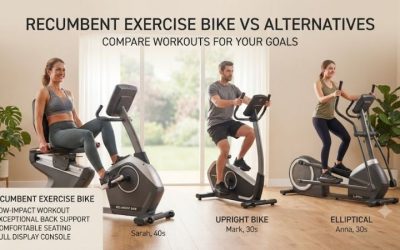
| Recumbent exercise bike | Supported seated position | Integrated seat and backrest | Larger footprint |
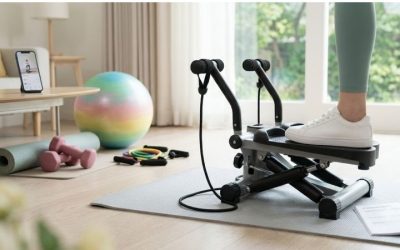
| Mini stair stepper | Standing | Compact stepping exercise | Requires balance |
| Full-size elliptical | Standing | Longer elliptical movement | Larger equipment size |
Under-Desk Elliptical vs. Under-Desk Bike
The main difference is pedal geometry.
A bike uses a circular crank path, while an elliptical uses an elliptical movement.
Personal comfort and available clearance should guide the choice.
Under-Desk Elliptical vs. Recumbent Bike
A recumbent bike includes its own frame and seat.
An under-desk elliptical relies on a separate chair and is generally much smaller.
Choose the recumbent bike if integrated seating and a dedicated riding position matter most.
Under-Desk Elliptical vs. Mini Stair Stepper
A mini stepper requires standing exercise.
An under-desk elliptical supports seated pedaling.
The decision depends primarily on the intended posture and available exercise space.
How to Set Up an Under-Desk Elliptical
Position the Machine
Place it on a level, suitable floor surface with adequate room for the pedals and your legs.
Secure the Chair
Ensure the chair remains stable and does not roll unexpectedly.
Check Knee and Desk Clearance
Complete several slow pedal cycles and verify that your knees do not contact the desk.
Establish a Comfortable Position
Keep your feet secure on the pedals and maintain a supported seated posture.
Start With Low Resistance
Begin with manageable effort and increase resistance only as appropriate.
Inspect the Equipment
Check that the pedals, frame, and adjustment mechanisms are secure according to the manufacturer’s instructions.
Common Buying Mistakes
Choosing Based on Resistance Levels Alone
A large number of levels does not guarantee a wide useful resistance range.
Ignoring Chair Compatibility
A stable machine can still be inconvenient when used with an unsuitable chair.
Overlooking Pedal Height
A machine that fits physically beneath the desk may not provide sufficient knee clearance.
Assuming Motorized Exercise Equals Active Pedaling
Powered movement may require less user effort than manual operation.
Buying Unnecessary Technology
Connected features should support a real need rather than become the main reason for purchase.
Ignoring Warranty and Maintenance
Long-term support matters for equipment containing moving parts.
Frequently Asked Questions
What Is the Most Important Feature in an Under-Desk Elliptical?
The most important feature is a comfortable, stable pedal movement that fits the intended workstation.
Resistance, portability, and electronics are secondary to proper fit and safe operation.
Is Magnetic Resistance Better for an Under-Desk Elliptical?
Magnetic resistance can be practical because it allows controlled adjustment without direct friction-pad contact.
However, the complete drivetrain determines overall performance.
Can You Use an Under-Desk Elliptical Without a Desk?
Yes. Many seated ellipticals can be used while sitting in a suitable chair outside a workstation.
Follow the manufacturer’s positioning and operating instructions.
Are Motorized Under-Desk Ellipticals Worth Buying?
They may be useful when powered pedal movement is specifically desired.
For conventional active seated exercise, a manual resistance model may be sufficient.
How Long Should an Under-Desk Elliptical Last?
Service life depends on design, usage, maintenance, and component quality.
There is no reliable universal lifespan that applies to every model.
Should You Buy an Under-Desk Elliptical With Bluetooth?
Bluetooth can be useful if you want compatible workout tracking.
It is unnecessary for buyers who prefer simple manual exercise without app integration.
Conclusion
This under desk elliptical buying guide comes down to matching the equipment to your body, chair, workspace, and intended effort level. Prioritize stable construction, comfortable pedal geometry, appropriate resistance, and sufficient clearance before paying for advanced technology. A simple manual magnetic elliptical can meet many everyday needs, while electronic or motorized models make sense when their additional functions serve a specific purpose.




Write Your Review
No reviews yet. Be the first to share your experience!