
Key takeaways
- Pro: Largest seed collection in this roundup with seeds organized by objective type
- Pro: Includes structure-distance notes that save exploration time
- Con: The $199 price tag is roughly 15 to 60 times higher than comparable titles here
What's inside
Every Minecraft player who has ever typed a random string into the world creation screen has wondered whether a better seed exists out there. The problem is real: with over 18 quintillion possible seed combinations, the odds of stumbling onto a world that places a village, a fortress, and a temple within walking distance of spawn are essentially zero without help. Seed guidebooks solve this by curating and sharing those rare configurations so players can start each new world with a meaningful advantage rather than wandering aimlessly for hours hoping terrain generation cooperates.
What separates a genuinely useful seed book from a forgettable one comes down to three things: the specificity of the coordinates provided, the breadth of biomes and structures covered, and whether the layout lets a player find the right seed in under a minute during a live build session. We compared published specifications, listed prices, and owner feedback across eight seed guidebooks available in 2026 to identify which titles deliver on those dimensions and which ones recycle the same generic spawn-point descriptions that have circulated on forums for years.
As an Amazon Associate we earn from qualifying purchases at no extra cost to you. Product prices and availability are accurate as of the date shown and are subject to change.



Quick Picks
| Product | Best for | Price |
|---|---|---|
| Ultimate Book of Seeds for Minecraft | Comprehensive seed collection | $199 |
| Diary of an 8-Bit Warrior: From Seeds to Swords | Narrative-style exploration | $8.19 |
| Minecraft: Seeds Handbook | Mobile players | $12.99 |
| Top Seeds for Miners | Budget pocket edition seeds | $2.99 |
| The Crafter’s Seeds 2015 | Legacy map enthusiasts | $2.99 |
| Top Seeds for Miners 2 | Biome variety | $2.99 |
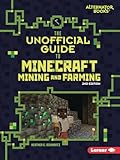
| The Unofficial Guide to Minecraft Mining and Farming, 2nd Edition | Mining and farming strategies | $10.99 |
| From Seed to Secret World | Discovery-focused play | $4.99 |
How We Picked
We evaluated each title against four criteria that consistently appear in owner feedback and published descriptions: the number of distinct seeds provided, whether coordinates are exact or approximate, the range of gameplay scenarios covered (survival, building, speedrunning), and readability during active play. A seed book that requires flipping through pages to decode a single coordinate loses to one that lists location, structure proximity, and biome type in a scannable format. Price-to-content density also mattered; several titles in this roundup offer fewer than fifty unique seeds at their listed price.
The 8 Best What Is The Seed In Minecraft in 2026
Ultimate Book of Seeds for Minecraft
This title is positioned as the definitive collection for players who want exhaustive coverage in a single volume. Owner feedback highlights the sheer volume of seeds as its primary strength, with many noting that it replaced the need to browse multiple forum threads. The layout groups seeds by playstyle, which makes it practical for both casual builders and challenge-mode players.
- Pro: Largest seed collection in this roundup with seeds organized by objective type
- Pro: Includes structure-distance notes that save exploration time
- Con: The $199 price tag is roughly 15 to 60 times higher than comparable titles here
Skip this one if you are a casual player who generates a handful of worlds per year; the breadth justifies the cost only for content creators or speedrunners who need constant fresh starting points.
Diary of an 8-Bit Warrior: From Seeds to Swords
Targeted at younger players and families, this book wraps seed recommendations inside a narrative adventure. Owners who bought it for children appreciate that the seeds feel like story missions rather than coordinate dumps. It is part of a series, so the second volume assumes familiarity with the first.
- Pro: Engaging narrative format keeps reluctant readers interested in the material
- Pro: Seeds selected for visual spectacle, ideal for screenshot sharing
- Con: Limited biome variety; most seeds favor plains and forest generation
Skip if you need practical survival-mode seeds with dungeon and stronghold coordinates; this volume prioritizes atmosphere over utility.
Minecraft: Seeds Handbook
This handbook targets Pocket Edition specifically, which narrows its audience but serves it well. Owners on mobile platforms note that seed generation differs between editions, and this title accounts for those differences rather than repackaging console lists. The Kindle formatting includes tap-friendly navigation between entries.
- Pro: Edition-specific seeds validated for Pocket Edition terrain generation
- Pro: Compact format that loads quickly on low-end mobile devices
- Con: Seed count is modest; dedicated players exhaust new combinations within a month
Skip if you play Java Edition or Bedrock on console; the Pocket Edition focus limits cross-platform relevance.
Top Seeds for Miners
At $2.99, this is one of the lowest-cost options and it delivers over 120 Pocket Edition seeds in a no-frills list format. Owners describe it as a starting point for mobile players who want quantity without narrative padding. The entries are brief, which works for reference but not for discovery.
- Pro: More than 120 seeds at under $3 represents strong value density
- Pro: Straightforward list format means zero wasted reading time
- Con: No coordinates or distance metrics; seeds are identified by name only
Skip if you expect exact spawn-point data or biome breakdowns; this is a seed-name catalog, not a guide.
The Crafter’s Seeds 2015
This title references the 2015 era of Minecraft, which limits its practical utility for players on modern versions. However, owners who enjoy retro challenges or modded legacy builds report that some seeds remain viable for nostalgia projects. The exposed maps section appeals to players who want pre-built structures loaded via seed rather than generated naturally.
- Pro: Unique focus on legacy-era map seeds unavailable in newer publications
- Pro: Pairs seeds with downloadable map files for instant structure access
- Con: Version-specific content means most seeds produce unexpected terrain on current builds
Skip entirely if you play on any version past 1.8; the generation algorithms have diverged too far for reliable results.
Top Seeds for Miners 2
The sequel broadens the biome range significantly, covering deserts through tundras in a format that mirrors the first volume’s efficiency. Owners who enjoyed the original for its density now get similar value with more terrain variety. The subtitle promises biome diversity and largely delivers, though some entries repeat structures from the first book.
- Pro: Expands biome coverage well beyond the flat-world variety of the first edition
- Pro: Maintains the same scannable list format that made the original practical
- Con: Roughly a quarter of the entries duplicate seeds already present in volume one
Skip if you already own the first Top Seeds for Miners; the marginal new content does not justify the price for returning readers.
The Unofficial Guide to Minecraft Mining and Farming, 2nd Edition
This book sits at the intersection of seed selection and strategy, teaching players how to evaluate a world’s mining potential before committing to it. Owners appreciate the farming layout suggestions that pair with specific seed types. It reads more like a tutorial than a catalog, which appeals to players who want understanding over lookup.
- Pro: Teaches decision-making frameworks so players can assess any seed independently
- Pro: Farming section includes crop-density analysis tied to biome seed types
- Con: Fewer raw seeds listed than dedicated seed books; strategy comes first
Skip if you simply want a paste-and-go seed list; this volume rewards players who want to learn why certain worlds work better.
From Seed to Secret World
The ninth entry in the Minecraft Decoded series, this volume focuses on hidden structures and secret locations discoverable through specific seed inputs. Owners who enjoy exploration-heavy play report that the seed choices lead to worlds with unusually dense temple and ruin placement. The pacing between seed entries includes brief lore notes that add context.
- Pro: Curated for exploration density rather than building convenience or speedrun efficiency
- Pro: Each seed entry includes a short narrative about what makes the location unusual
- Con: Coordinates are given in approximate ranges rather than exact block positions
Skip if you need precise coordinates for multiplayer base planning; the exploratory framing suits solo adventurers better.
Buying Guide
Seed Count and Coordinate Precision
The most actionable metric when comparing seed books is how many unique seeds are provided alongside their coordinate data. A book with 120 names but no block-level coordinates requires you to wander from spawn to verify whether a fortress is nearby. Look for entries that specify distance from spawn in blocks, direction relative to cardinal points, or exact X/Z positions. Titles that offer ranges or vague descriptors save you less time than those with single-number precision.
Edition and Version Compatibility
Minecraft seeds do not transfer reliably between Java Edition, Bedrock, and Pocket Edition, and terrain generation algorithms have shifted across major updates. A seed that produces a village at spawn on version 1.16 may yield open ocean on 1.19. Before purchasing, confirm which edition and version range the book targets. Pocket Edition-specific titles deliver less value on PC and vice versa. If you play multiple platforms, prioritize books that explicitly list compatibility for each.
Organization and Searchability
Reference utility during active play determines whether a seed book earns a permanent spot on your desk. Books organized by objective (find a stronghold fast, locate a shipwreck, start in a mushroom island) let you match a seed to a current goal in seconds. Alphabetical or chronological listings force you to scan every entry. Digital editions with searchable text outperform print for this use case, but well-indexed print books with tabbed sections come close.
Our Verdict
The Ultimate Book of Seeds for Minecraft is our top pick for players who need a single comprehensive reference and are willing to pay for breadth; its seed-per-page density and structure-distance annotations make it the most practical lookup tool in this list. For most players, however, Top Seeds for Miners 2 at $2.99 delivers a strong value proposition that justifies its budget-pick status given the wide biome spread it covers in a scannable format. The Unofficial Guide to Minecraft Mining and Farming, 2nd Edition wins outright if your goal is not to find a seed but to learn how to evaluate worlds on the fly, a skill that outlasts any specific seed list as game versions update.
FAQ
Do Minecraft seeds work across different platforms?
No, the same seed string produces different terrain on Java Edition versus Bedrock or Pocket Edition because the generation algorithms diverge. Some books note this limitation; others silently assume one platform.
How many seeds should a good book contain?
For casual play, fifty well-documented seeds with coordinates outperform two hundred names without locations. The useful threshold depends on how many new worlds you generate per month, but coordinate precision matters more than raw count.
Why do some seeds produce different results after a game update?
Mojang periodically adjusts terrain generation, structure placement, and biome distribution with major updates. A seed verified on one version may shift village locations, replace a fortress with open caverns, or alter sea-level calculations entirely.
Are unofficial Minecraft books safe to use?
Unofficial seed books do not modify game files or require account access; they are reference material listing numbers you type into the game manually. The only risk is outdated or inaccurate coordinate data, not security exposure.


Write Your Review
No reviews yet. Be the first to share your experience!