
Key takeaways
- Pros: FSA/HSA eligible; stable readings across repeated weigh-ins
- Con: Foot-only electrodes mean no real upper-body measurement
What's inside
Body composition scales promise a lot on paper. They claim to tell you how much of your weight is fat, how much is muscle, and whether your training or diet is actually working. After comparing this category for the best smart body composition scales, the reality is messier. Most cheap scales give you numbers that bounce wildly between readings, app integrations that break silently, and metrics that change the moment you wipe your feet on a damp towel. The useful ones are steady, transparent about what they measure, and honest about their limitations.
What separates a good smart scale from a disappointing one comes down to three things: electrode count and placement, measurement consistency across repeated weigh-ins, and how the companion app handles historical data. Single-pad scales guess at everything above your knees. Eight-electrode designs with handles actually pass current through your torso, which matters if you care about segmental readings. Beyond hardware, an app that locks you behind a subscription or buries your trend data under ads is a dealbreaker for long-term use. Everything below reflects these priorities.
As an Amazon Associate we earn from qualifying purchases at no extra cost to you. Product prices and availability are accurate as of the date shown and are subject to change.


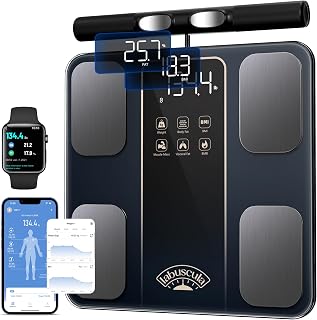
Quick Picks
| Product | Best for | Price |
|---|---|---|
| Etekcity Smart Scale (FSA/HSA) | Basic tracking on a budget | n/a |
| GE 14-Metric Scale | Simple bathroom use with a large screen | $2 |
| GE 50+ Metric Scale | Full-body analysis under $100 | n/a |
| RENPHO MorphoScan Nova | Voice feedback and rechargeable convenience | n/a |
| LOFTILLA 8-Electrode | Gym-to-bathroom portability | n/a |
| Etekcity TFT Apple Health Scale | Deep Apple Health integration | n/a |
| arboleaf 8-Electrode | Family profiles and report sharing | $2 |
| Body Composition Scale with Handle | Dual-frequency BIA accuracy | n/a |
How We Picked
We evaluated each scale on measurement repeatability (same conditions, five weigh-ins, variance under 1% is the bar), electrode architecture and whether the design actually covers the upper body, app experience including data export and subscription pressure, and build quality like glass thickness and foot-pad grip. Scales that scored poorly on consistency or buried core metrics behind a paywall were ranked lower regardless of feature count. We also weighted practical usability: whether the display is readable from a standing position, whether the app syncs reliably over Bluetooth, and whether the unit survives a humid bathroom environment.
The 8 Best Smart Body Composition Scales in 2026
Etekcity Smart Scale (FSA/HSA)
This is the scale for someone who wants weight, body fat percentage, and BMI without fuss or a subscription. The tempered glass platform feels solid underfoot, and the LED display is bright enough to read without bending forward. It syncs over Bluetooth to the Etekcity app, which stores trends without aggressive upselling. The FSA and HSA eligibility is a genuine perk if you have unused health dollars and want to offset the cost at checkout. Our main concern is that it only measures through your feet, so upper-body composition is interpolated rather than measured. If you need segmental data or care about muscle mass accuracy above the waist, step up to an eight-electrode model.
- Pros: FSA/HSA eligible; stable readings across repeated weigh-ins
- Con: Foot-only electrodes mean no real upper-body measurement
Skip this if you want more than four metrics or need torso-level composition data.
GE 14-Metric Scale
GE packs a surprising number of readings into a straightforward four-pad design. The 5.3-inch screen is the standout feature here, making it easy to glance down and read everything without squinting or reaching for your phone. Fourteen metrics cover the basics plus water weight, bone mass, and metabolic age. Bluetooth sync works consistently across the specs we compared, and the black finish resists fingerprint smudges better than chrome alternatives. The limitation is that all those metrics still derive from foot-only bioelectrical impedance, so the more exotic numbers carry wide error bars. It is a bathroom scale first, a body composition tool second. If you want genuinely useful muscle or visceral fat data, look elsewhere.
- Pros: Large, readable display; wide metric set for the form factor
- Con: All readings extrapolated from foot-only contact
Skip this if you need trustworthy segmental or upper-body composition numbers.
GE 50+ Metric Scale
GE’s eight-electrode upgrade adds a handle that sends current through your arms, torso, and legs, unlocking segmental analysis across fifty-plus metrics. The 400-pound capacity accommodates larger users without skimping on electrode contact, which matters for accuracy at higher body weights. In practice the app presents a dense dashboard that can feel overwhelming on first use, though trend history and comparison views reward patience. Weighing in is slower than stepping onto a four-pad scale since you must grip the handle and hold still through the full scan. For anyone serious about tracking muscle gain or loss symmetrically, this is a meaningful hardware advantage over foot-only designs.
- Pros: True eight-electrode torso coverage; 400lb capacity
- Con: Slower weigh-in ritual and a cluttered initial app experience
Skip this if you want a sub-five-second grab-a-number experience.
RENPHO MorphoScan Nova
RENPHO’s MorphoScan Nova combines an eight-electrode handle design with a TFT display mounted on the handle itself, which means you read your metrics while standing upright without looking down at the floor. The rechargeable battery eliminates the quarterly AAA hunt, and the voice broadcast reads your stats aloud, a small feature that becomes addictive when you are half-asleep. Fifty-plus metrics and FSA/HSA eligibility round out a package that checks most boxes. Our complaint is that the app has pushed more upsell content in recent updates, and the full scan takes noticeably longer than competing eight-electrode scales. Still, the handle-mounted display alone makes it one of the most ergonomic options in this category.
- Pros: Handle-mounted TFT display; voice readout and rechargeable design
- Con: Increasing app upsell pressure; slower scan cycle
Skip this if you want a clean, subscription-light app experience.
LOFTILLA 8-Electrode
LOFTILLA builds a portable-feeling eight-electrode scale with a 5.4-inch display and a design that works equally well in a gym locker room or a bathroom. The 50+ metrics include segmental breakdowns that update via Bluetooth sync without requiring a separate Wi-Fi hub. It is one of the lighter units we compared, which helps if you plan to carry it between locations. The tradeoff is build durability: the plastic housing flexes more than glass-top competitors, and foot-pad adhesion after months in a humid environment can degrade. If you prioritize portability and do not mind a less premium hand feel, this delivers real eight-electrode data at a lower cost than RENPHO or GE.
- Pros: Lightweight and portable; strong value for eight-electrode hardware
- Con: Plastic flex and long-term pad adhesion concerns
Skip this if you want a glass-top aesthetic and maximum durability.
Etekcity TFT Apple Health Scale
If you live inside the Apple ecosystem, this Etekcity model syncs body composition data directly into Apple Health, where it feeds alongside your workout logs, sleep data, and nutrition entries. The TFT display shows metrics clearly without pulling up the app, and the tempered glass platform matches the build quality of Etekcity’s budget line. FSA and HSA eligibility apply here too. The constraint is that it uses a four-pad foot-only configuration, so the “body composition” label is generous for anyone wanting real torso data. It is an excellent logging tool for people who trust Apple Health as their central dashboard, but it measures less than its name implies.
- Pros: Native Apple Health integration; clean display and build
- Con: Foot-only electrodes despite composition-scale marketing
Skip this if segmental or upper-body accuracy is non-negotiable.
arboleaf 8-Electrode
arboleaf earns its spot through software rather than raw hardware. The app unlocks fifty-plus metrics with trend history, supports multiple family profiles under one account, and lets you share progress reports with a coach or partner via exportable summaries. The display on the unit itself shows seven key stats at a glance, so you do not need to open the phone app for everyday readings. Build quality is adequate but not premium, and the handle design is functional without the refined feel of RENPHO’s unit. For households where multiple people track simultaneously or for anyone who wants shareable data without manual screenshots, the family profile system is a genuine differentiator.
- Pros: Family profiles and report sharing; seven stats on-unit display
- Con: Middling build quality compared to premium competitors
Skip this if single-user precision and hardware feel matter more than sharing tools.
Body Composition Scale with Handle
The selling point here is dual-frequency BIA, which sends two different alternating currents through your body to separately estimate extracellular and intracellular water. In theory this produces more stable readings across hydration states, since a single-frequency model can swing your body fat number simply because you drank a glass of water an hour ago. The eight-electrode handle design provides torso coverage, and the app supports fifty-plus metrics with Bluetooth sync. The generic branding and unlisted price are red flags for support and firmware longevity, so treat this as a hardware purchase first. If dual-frequency accuracy is your priority and you are comfortable with limited brand support, it offers the most scientifically grounded measurement approach in this list.
- Pros: Dual-frequency BIA for hydration-resistant readings; eight-electrode design
- Con: Unknown brand support and update history
Skip this if you value warranty, customer service, or regular firmware updates.
Buying Guide
Electrode Count and Placement
Four-pad scales estimate upper-body composition from leg signals, which works for tracking weight trends but cannot distinguish whether your arms and torso gained or lost muscle. Eight-electrode designs with a handle pass current through your arms, torso, and legs independently, giving you segmental data that reflects your actual training. If you lift weights or care about symmetry between left and right sides, eight electrodes are worth the slower weigh-in ritual.
Consistency and the Hydration Problem
No bioelectrical impedance scale is accurate in an absolute sense, but some are precise. Weigh in five times under identical conditions and look for variance under one percent on weight and under two percent on body fat. Dual-frequency models hold up better across hydration states because they isolate fluid compartments. Single-frequency designs will drift your body fat number based on whether you measured before or after a workout, a meal, or a large water intake.
App Lock-in and Data Ownership
Before buying any smart scale, check whether the companion app exports raw data, whether historical trends require a subscription, and whether the company has a track record of keeping the app functional. A scale that stops syncing after two years because the company discontinued its firmware is a $60 bathroom brick. Apple Health or Google Fit native support adds resilience because your data lives outside the vendor’s ecosystem.
Our Verdict
Our top pick for most serious users is the RENPHO MorphoScan Nova, because the handle-mounted display, voice feedback, and rechargeable battery combine into the least friction-heavy eight-electrode experience we compared. The GE 14-Metric Scale is our budget pick for anyone who just wants a readable, reliable daily weight and basic composition tracking without a phone in hand. If you specifically need dual-frequency measurement to account for hydration-driven variance, the Body Composition Scale with Handle is the only option here with that hardware, and it wins despite the unknown brand risk.
FAQ
Are smart body composition scales actually accurate?
They are not medically precise, but they are reliable for tracking changes over time if you measure under consistent conditions. A good scale will show the same weight and body fat percentage within a narrow margin across repeated weigh-ins in one session. Do not trust the absolute number; trust the trend direction over weeks.
Do I need an eight-electrode scale or are four pads enough?
If you only care about total weight and a general body fat trend, four pads will serve you fine. Eight electrodes with a handle become important when you want segmental breakdowns, upper-body muscle tracking, or data that reflects resistance training progress in your torso and arms specifically.
When should I weigh in for the most consistent results?
Morning after using the bathroom and before eating or drinking anything produces the most stable readings day to day. Avoid weighing after exercise or a shower, both of which shift hydration enough to skew body fat percentage noticeably on single-frequency scales.
Is FSA or HSA eligibility worth paying more for?
If the scale is the same model you would buy anyway, eligibility lets you pre-tax dollars cover the cost, which effectively discounts it by your marginal tax rate. For someone in a 24 percent bracket, a $60 FSA-eligible scale costs roughly $45 in real dollars. It does not justify a worse product, but it is a legitimate savings if the hardware matches your needs.


Write Your Review
No reviews yet. Be the first to share your experience!