
Key takeaways
What's inside
7 best forearm workout with dumbbells movements share one requirement most people get wrong: they need very light loads and long sets, not heavy weight. This guide covers all seven exercises, the load band each one sits in, the space the sequence needs, and the equipment that makes it work in a home gym.
As an Amazon Associate we earn from qualifying purchases at no extra cost to you. Product prices and availability are accurate as of the date shown and are subject to change.
As an Amazon Associate we earn from qualifying purchases at no extra cost to you. Product prices and availability are accurate as of the date shown and are subject to change.




By Chris Parker
🛒 Best Price Today on Amazon
Prime members get fast, free shipping on everything above, plus member-only deals. New members get a 30-day free trial — cancel anytime.
Start 30-Day Prime Free Trial →See Today’s Amazon DealsHow to Choose Gear for Forearm Training
The 7 best forearm workout with dumbbells sequence sits at the opposite end of the load spectrum from everything else in a home gym. The weights are small, the sets are long, and handle thickness matters more than plate weight. The four criteria below explain what these six movements actually require from your equipment.
Load Bands: Why Forearms Need Light Dumbbells
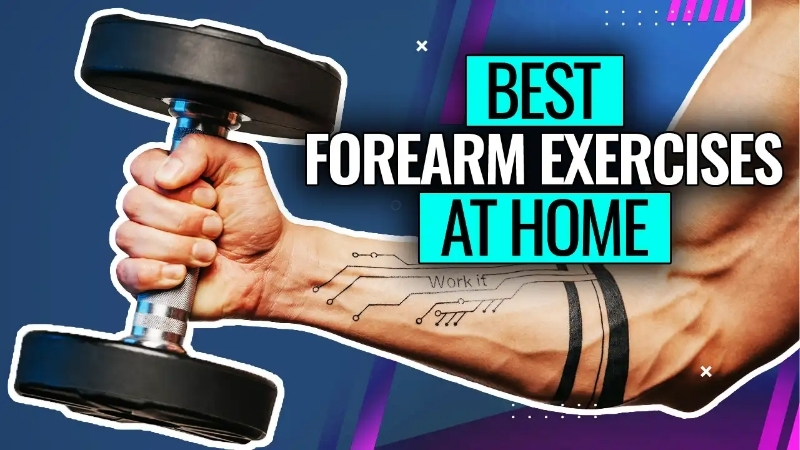
Wrist curls, reverse curls and radial deviation work sit between 5 and 25 lb (2.3-11 kg) for almost everyone, and the higher end of that range only applies to seated wrist curls. Reverse wrist curls in particular rarely exceed 10 lb (4.5 kg) even for strong lifters.
That means a set starting at 5 lb with 2.5 lb (1.1 kg) increments is far more useful here than any heavy dumbbell. Most adjustable sets start at 5 lb, but check the bottom of the range carefully, because some heavy sets begin at 10 lb and skip the useful band entirely.
Handle Thickness and Grip Diameter
A standard dumbbell handle is around 30-35 mm across. Increasing that to 50-55 mm with a thick-grip sleeve changes the demand substantially, shifting work toward the finger flexors and the crush grip rather than the wrist flexors that the seated curl variations target first.
Thick grips are a supplement rather than a replacement. Use standard handles for wrist curls and reverse curls where range of motion matters, and add thickness on farmer carries and holds where grip endurance is the point rather than wrist movement.
Rotation, Wrist Rollers and What Dumbbells Cannot Do
The 7 best forearm workout with dumbbells movements cover flexion, extension, pronation, supination and ulnar deviation well. What they do not cover is sustained rolling under continuous tension, which is where a wrist roller adds something genuinely different for the extensors and the whole forearm sheath.
A roller costs very little and takes minutes to use, so it is a reasonable addition once the dumbbell work is established. It is not a starting point, though — the basic wrist curl patterns build the base that makes roller work productive rather than just uncomfortable.
Footprint: The Smallest Setup in Any Home Gym
This is the least demanding training in the entire gym. A seated wrist curl needs a bench and about 4 x 4 ft (1.2 x 1.2 m), and light dumbbells occupy roughly 18 x 8 in (46 x 20 cm) of floor or a single shelf. Nothing here requires ceiling height at all.
Farmer carries are the exception and need a clear path of about 20 ft (6 m), or a corridor you can walk back and forth. Measure that path before planning carries into your programme, because a cramped turn every four steps defeats the purpose of the movement.
Top Picks: Gear for the 7 Best Forearm Workout With Dumbbells
The six items below cover the whole sequence, from light adjustable dumbbells for wrist curls through thick grips and a wrist roller for grip endurance work. The table shows the role each fills so you can buy the two that matter and skip the rest for now.
| Item | Role | Key spec | Price tier |
|---|---|---|---|
| Bowflex SelectTech 552 | Wrist curls, reverse curls | 5-52.5 lb, 2.5 lb steps | Mid |
| Amazon Basics Neoprene Set | Very light wrist work | 2-12 lb pairs | Budget |
| Amazon Basics Rubber Hex | Carries and holds | Fixed, instant setdown | Budget |
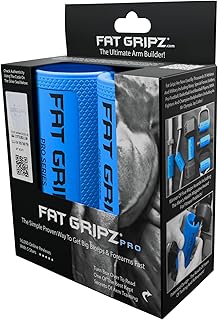
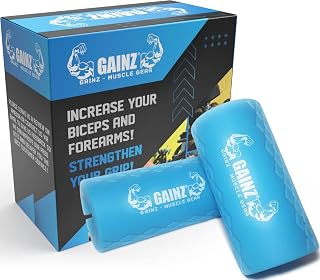
| Fat Gripz | Thick-handle grip work | Around 2.25 in diameter | Budget |
| Yes4All Wrist Roller | Extensor endurance | Rope and loadable pin | Budget |
| FLYBIRD Adjustable Bench | Seated and supported work | Folding, multi-angle | Budget |
Bowflex SelectTech 552
The 2.5 lb increments below 25 lb make this the most useful adjustable set for forearm training, because that is precisely the band where the whole sequence lives. Moving from 12.5 lb to 15 lb on a wrist curl is a step you can actually take week to week.
The dumbbells are physically bulky at light settings, which makes some seated wrist positions awkward compared with a small fixed dumbbell of the same weight. They also have to go back in the cradle to change weight, which slows down the drop sets that suit forearm work particularly well.
Amazon Basics Neoprene Dumbbell Set
Small, cheap fixed dumbbells in the 2-12 lb band are genuinely the right tool for reverse wrist curls and radial deviation, where an adjustable set is oversized and clumsy. The neoprene coating also stops them rolling away when you set them down mid-set.
They are single-purpose and will never do anything else in your gym, so they are only worth buying if forearm and rehabilitation-style work is a real part of your routine. Storage is trivial, but they still occupy a shelf you may want for something else.
Amazon Basics Rubber Encased Hex Dumbbells
One heavy fixed pair is what farmer carries and timed holds need, because you set them down repeatedly and no adjustable mechanism enjoys that treatment. The rubber encasing keeps the noise down and protects the floor when a hold fails unexpectedly.
You are buying one weight for one purpose, at roughly 30 x 10 in (76 x 25 cm) of permanent floor space. Choose the load by what you can hold for 45 seconds rather than what looks impressive, because grip endurance is the target here.
Fat Gripz
Two moulded rubber sleeves that clamp around any handle and take the diameter to roughly 2.25 in (57 mm). For carries, holds and rows they change the demand completely, shifting the limiting factor from your back to your fingers within a few reps.
They are the wrong tool for wrist curls, where the increased diameter shortens your range of motion and makes the movement harder to control. They also slip if the underlying handle is smooth chrome rather than knurled, so check what your dumbbells use before relying on them for heavy holds.
Yes4All Wrist Roller
A rope, a bar and a loadable pin, which is all a wrist roller needs to be. Rolling a light plate up and down under continuous tension targets the extensors in a way no dumbbell movement replicates, and it costs less than almost anything else in a home gym.
Loads stay very small — 5-10 lb (2.3-4.5 kg) is genuinely hard — and the rope can twist or fray where it meets the bar over time. It is also awkward to use without something to stand on or a rack to lean against while your arms stay extended.
FLYBIRD Adjustable Weight Bench
Seated wrist curls need somewhere to rest your forearms, and a bench at a low incline gives a stable surface at the right height. The folding design means it stores upright between sessions rather than occupying floor space permanently in a shared room.
It is a general-purpose bench rather than a forearm tool, so buying one purely for this would be overkill. The narrow pad also gives less forearm support than a wide flat bench, which matters slightly during long wrist curl sets.
Frequently Asked Questions
These four questions cover the practical side of the routine — which seven movements to run, how often to train them, what loads to use, and whether dedicated forearm work is necessary at all if you already lift.
Which seven exercises should the workout contain?
Seated wrist curls, reverse wrist curls, hammer curls, reverse curls, pronation and supination with a single dumbbell, farmer carries and dead hangs or timed holds. That sequence covers flexion, extension, rotation and grip endurance without any redundancy between movements.
How often should I train forearms?
Two to three times a week works well, since forearms recover quickly and tolerate frequency better than larger muscles. Place the work at the end of a session rather than the start, because fatigued grip will limit every pulling movement that follows it.
What loads should the 7 best forearm workout with dumbbells use?
Between 5 and 25 lb for wrist curls, and 5 to 10 lb for reverse wrist curls, with sets of 12 to 20 repetitions. If you can exceed 25 reps with clean form, add one increment rather than continuing to accumulate reps at a weight that no longer challenges you.
Do I need dedicated forearm work if I already lift?
Heavy rows and deadlifts build grip, but they do very little for wrist extension, which is where most imbalances show up. Ten minutes twice a week covers the gap. If you have any wrist pain, speak to a doctor or physiotherapist rather than training through it.
See More:
- Ankle weights best
- Best rated ankle weights
- Best home workout equipment budget
- Best resistance bands for men
Final Thoughts
The 7 best forearm workout with dumbbells sequence needs light loads, long sets and one adjustable pair with 2.5 lb steps at the bottom of its range. Add thick grips for carries and a wrist roller once the basics are established. Measure your carry path before programming farmer walks, and stop if any movement produces wrist pain.


Write Your Review
No reviews yet. Be the first to share your experience!