
Key takeaways
What's inside
Best chest workout with dumbbells at home is decided by the kit around the dumbbells rather than the dumbbells themselves. A stable bench, a safe way to get heavy weights into position and enough clear floor matter more than any programme you copy from a training article. Setup decides how heavy you can go.
As an Amazon Associate we earn from qualifying purchases at no extra cost to you. Product prices and availability are accurate as of the date shown and are subject to change.
As an Amazon Associate we earn from qualifying purchases at no extra cost to you. Product prices and availability are accurate as of the date shown and are subject to change.





By Chris Parker
🛒 Best Price Today on Amazon
Prime members get fast, free shipping on everything above, plus member-only deals. New members get a 30-day free trial — cancel anytime.
Start 30-Day Prime Free Trial →See Today’s Amazon DealsHow to Set Up the Best Chest Workout With Dumbbells at Home
Three decisions shape a home pressing setup: whether you press from a bench or the floor, how heavy you can safely get into position without a spotter, and how the room handles dumbbells being set down at the end of a hard set. The rest is preference. Get those three right and the training looks after itself.
Floor Pressing Versus Bench Pressing
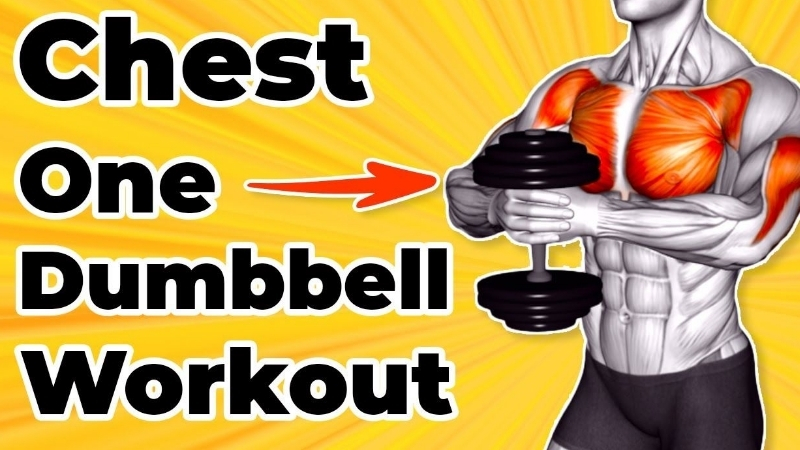
Floor presses are the safest way to press alone, because the elbows stop on the ground before anything goes wrong. They shorten the range of motion, which reduces the stretch at the bottom, and they suit anyone whose shoulders dislike a deep dumbbell press on a bench. They are the safest option when training alone.
A bench restores the full range and adds incline work, which is the reason most people buy one within a month. The trade is safety: there is nothing to catch a failed repetition. Stopping a rep or two short on the heaviest sets is the standard way to handle that. Plan the set-down before the set starts.
Bench Adjustment, Capacity and Pad Support
Look for a backrest with several stops covering flat, roughly 30 degrees and roughly 45 degrees, plus a seat that adjusts so you are not sliding down on an incline. Two-position benches force you into whichever angle they happen to offer, which is rarely the one your shoulders prefer. Several stops beat two every time.
Capacity figures cover the lifter plus everything in your hands, so subtract your body weight before deciding whether a bench suits your pressing. Pads around 10 to 12 in (25 to 30 cm) wide suit most people; broader lifters should look for the wider option rather than the lighter one. Comfort decides how long a session lasts.
Footprint, Clearance and Floor Protection
Space is the quiet limit on the best chest workout with dumbbells at home. A bench takes roughly 4 x 2 ft (1.2 x 0.6 m), and flyes need about 2 ft (60 cm) clear either side. Measure the area and the storage spot for the dumbbells before ordering anything. Clearance either side is what people forget.
Floor protection matters because dumbbells are set down heavily when a set ends. Rubber matting of 1/2 in (12 mm) or thicker protects laminate and joists and cuts the noise reaching the room below, which is the difference between training early and having a conversation with your neighbours. Matting belongs in the first order.
Top Picks: Benches and Dumbbells for Pressing
These six cover a folding bench, a sturdier stowable bench, adjustable pairs at two price points, fixed dumbbells for set-down safety and matting. The bench and one pair are the core; the rest can wait. Every entry names a genuine drawback rather than pretending the category has none. Buy the bench before anything else.
| Product | Type | Key spec | Best for |
|---|---|---|---|
| Flybird FB149 Bench | Folding bench | Multi-angle | Tight rooms |
| Bowflex 5.1S Bench | Stowable bench | Six positions | Heavier work |
| PowerBlock Elite EXP | Pin adjustable | 5 to 50 lb | Compact storage |
| Bowflex SelectTech 552 | Dial adjustable | 2.5 lb steps | Steady progress |
| CAP Rubber Hex Pair | Fixed dumbbells | One weight | Failing safely |
| Rubber gym matting | Flooring | 1/2 in or more | Floors and noise |
Flybird FB149 Adjustable Bench
This is the bench most home setups start with: several backrest stops, an adjustable seat and a frame that folds flat for storage behind a door. For a spare room that has to look like a spare room during the week, the fold is worth more than a few extra pounds of capacity. It sets up in under a minute.
The frame flexes under heavier dumbbells, and the pad is narrow if you have broad shoulders. Check the capacity against your body weight plus your pressing load, not the load alone, and tighten the hinge bolts periodically because that joint loosens gradually with regular folding. Capacity includes your own body weight.
Bowflex 5.1S Stowable Bench
The 5.1S is what to buy when the dumbbells get heavy: a wider pad, a stiffer frame and six positions from decline to steep incline. Pressing feels noticeably more solid on it, which matters more than any feature list once you are handling 50 lb (23 kg) in each hand. Six positions cover everything most people press.
It stores upright rather than folding flat, so it needs a wall and a measured corner. It is heavier to shift and costs more than the folding benches. Treat it as a fixture in the room rather than something you move in and out of storage between sessions. Stability is exactly what you are paying for.
PowerBlock Elite EXP
PowerBlock’s square block design stores in less space than any other adjustable pair, which is why it suits rooms where the dumbbells live in a cupboard. The Elite EXP covers 5 to 50 lb (2.5 to 23 kg) per hand and takes expansion kits when your pressing outgrows it. It is the compact answer for the best chest workout with dumbbells at home.
The block shape presses against the forearm on some movements and feels unfamiliar for the first few sessions. Pin changes are slower than a dial, which interrupts drop sets. Buy it for the storage advantage, and accept that the handling is the price you pay for it. Pin changes slow drop sets down noticeably.
Bowflex SelectTech 552
The 552 offers 2.5 lb (1.25 kg) steps up to 25 lb per hand, which is exactly what pressing progression needs, and the dial changes weight in seconds. For anyone building a first home setup, it removes the main reason people stall: jumps that are too large to make. Two seconds per change keeps sessions flowing.
The shell is long, so a deep flye contacts the torso sooner than it would with a fixed dumbbell. It must never be dropped, which is a real constraint at the end of a hard set. Keep the trays beside the bench so you are not carrying heavy weights across the room. Deliberate set-downs protect the mechanism.
CAP Rubber Hex Dumbbell Pair
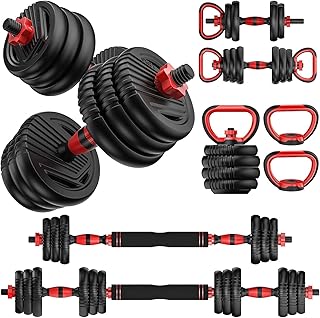
Owning one fixed pair at your main pressing weight solves the problem adjustables create: you can set rubber hex dumbbells down hard without worrying about the mechanism. They also sit closer to the hand, which makes the press feel more natural through the full range of motion. Nothing on a fixed pair can fail under load.
The obvious cost is that each weight needs its own pair and somewhere to store it. This is a supplement to an adjustable set rather than a replacement, unless you are happy buying several pairs and giving up a wall to a rack that holds them all. One pair at your main pressing weight is usually enough.
Rubber Gym Matting
Matting is the one purchase people skip and then quietly regret. A 1/2 in (12 mm) or thicker rubber mat under the bench protects the floor from dumbbells being set down, stops the frame feet marking laminate, and takes a meaningful amount of noise out of the room below. Joists and tiles both benefit.
Rubber mats are heavy to carry upstairs on your own and often smell strongly for the first couple of weeks after unwrapping. Air them before laying them down, and measure the area first, since cutting thick rubber at home is unpleasant work with a knife and a straight edge. Order the exact size you need.
Frequently Asked Questions
These four questions come up constantly when the pressing happens in a spare room at home rather than in a gym. They cover safety, angles and space, which are the three things that decide whether the weight on the dumbbells keeps climbing or quietly stops where it is. Safety decides the ceiling at home.
Is floor pressing enough on its own?
It works and it is the safest option when training alone, but it cuts the bottom of the range and rules out incline pressing. Many people start on the floor and add a bench within a month, keeping floor presses for heavy days when training without a spotter. The floor is the safety net you do not otherwise have.
How do I get heavy dumbbells into position safely?
Sit on the end of the bench with the dumbbells on your knees, then kick them up one at a time as you lie back. Reverse it to finish, rolling them to the sides rather than pressing them overhead. This is the safety routine behind every good chest workout with dumbbells at home, and it takes minutes to learn.
Do I need a decline setting?
Not really. Flat and incline cover the best chest workout with dumbbells at home fully, and decline adds little while requiring leg rollers to hold you in place. If a bench offers it, use it occasionally, but it is not a reason to choose one bench over another. Flat and incline cover the vast majority of pressing.
How often should I do the best chest workout with dumbbells at home?
Public guidance suggests at least two muscle-strengthening sessions a week across the major muscle groups (WHO, 2020), and chest work usually fits into two of those. Recovery decides the rest. Speak to a doctor before starting the best chest workout with dumbbells at home if you have shoulder, elbow or heart concerns.
See More:
Final Thoughts
The best chest workout with dumbbells at home is built on a stable bench, dumbbells you can get into position alone, and matting under the whole lot. Start with a folding bench and a 2.5 lb increment pair, then upgrade the bench when the weight genuinely demands it. Then add matting underneath the lot.


Write Your Review
No reviews yet. Be the first to share your experience!