
Key takeaways
What's inside
Best chest workouts at home with dumbbells come down to three things: the bench angles you can set, the weight steps you can add, and whether you can get heavy dumbbells into position on your own. This guide covers all three with measurements before it names any products. Kit decides the ceiling on progress.
As an Amazon Associate we earn from qualifying purchases at no extra cost to you. Product prices and availability are accurate as of the date shown and are subject to change.
As an Amazon Associate we earn from qualifying purchases at no extra cost to you. Product prices and availability are accurate as of the date shown and are subject to change.


By Chris Parker
🛒 Best Price Today on Amazon
Prime members get fast, free shipping on everything above, plus member-only deals. New members get a 30-day free trial — cancel anytime.
Start 30-Day Prime Free Trial →See Today’s Amazon DealsHow to Choose Kit for the Best Chest Workouts at Home With Dumbbells
The best chest workouts at home with dumbbells are mostly a bench problem. Flat pressing needs a stable surface and nothing else, but incline work, flyes and decline variations all depend on how the backrest adjusts and how solid it stays under load. Weight steps and getting the dumbbells up come next.
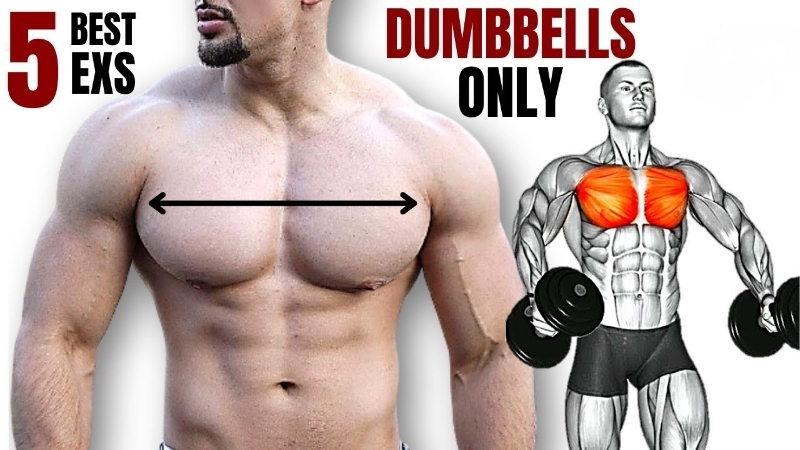
Bench Angles, Pad Width and Stability
A useful bench covers flat, roughly 30 degrees and roughly 45 degrees, since those three cover most pressing. Steeper settings shift work to the shoulders rather than the chest. Look for a ladder or pin adjustment with several stops rather than a two-position bench that forces you into the wrong angle.
Pad width sits around 10 to 12 in (25 to 30 cm) on most home benches. Narrow pads let the shoulder blades sit back but feel unstable for larger lifters, and thin foam becomes uncomfortable within a few sets. Check the stated capacity, which counts the lifter plus every pound in your hands. Subtract your body weight before deciding.
Weight Steps and Getting Heavy Dumbbells Into Position
Pressing progresses in small steps, so 2.5 lb (1.25 kg) increments per hand are worth more here than a high maximum weight. Adjustable sets that jump 5 lb (2.5 kg) above 25 lb are workable but slow progress, and repetitions become the way to bridge the gap between settings. Small steps suit the best chest workouts at home with dumbbells.
Getting heavy dumbbells to the start position is the part nobody mentions. Training alone means no spotter, so learn to kick them up from the knees and to set them down to the side rather than dropping them. That single habit decides how heavy you can safely press at home. Practise it with light weight first.
Footprint, Ceiling Height and Floor Protection
Footprint is easy to underestimate with the best chest workouts at home with dumbbells. A bench occupies roughly 4 x 2 ft (1.2 x 0.6 m), and you need about 2 ft (60 cm) of clear space either side for the arc of a flye and for stepping around the frame. Measure the area and the storage spot before ordering.
Ceiling height rarely limits pressing, but low basement pipes catch the dumbbells at lockout on an incline. Measure the area, the height above the bench and the storage space for the dumbbells before ordering. Rubber matting protects flooring, since dumbbells get set down heavily at the end of a hard set.
Top Picks: Kit for Dumbbell Chest Training
These six cover benches, adjustable pairs, fixed dumbbells and storage. The bench and one adjustable pair are the core purchase; everything else is an upgrade you can add later. Each entry lists a genuine drawback, because folding benches and adjustable dumbbells both trade something for their convenience.
| Product | Type | Key spec | Best for |
|---|---|---|---|
| Flybird FB149 Bench | Folding bench | Multi-angle | Small rooms |
| Bowflex 5.1S Bench | Stowable bench | Wider pad | Heavier pressing |
| Bowflex SelectTech 552 | Dial adjustable | 5 to 52.5 lb | 2.5 lb steps |
| NÜOBELL 80 lb | Dial adjustable | 5 to 80 lb | Top-end load |
| Amazon Basics Rubber Hex | Fixed pairs | Per pair | Set-down safety |
| Yes4All A-Frame Rack | Storage | Holds pairs | Tidy floors |
Flybird FB149 Adjustable Bench
Flybird’s folding bench is the usual starting point: several backrest angles, a seat that adjusts to stop you sliding on an incline, and a frame that folds flat against a wall. For a room that serves another purpose during the day, that fold is the reason it gets bought. Angles cover flat through steep incline.
Folding frames flex more than fixed ones once the dumbbells get heavy, and the pad is narrow for broader lifters. Check the stated capacity, which includes your own body weight. Keep an eye on the hinge bolts, since that joint is the part that develops play over a couple of years. Bolts need an occasional check.
Bowflex 5.1S Stowable Bench
The 5.1S is the step up when pressing gets heavy: a wider pad, a sturdier frame and six back positions covering decline through to a steep incline. It stows upright rather than folding flat, so it still clears the floor without giving up the stability that heavier dumbbells demand. Decline settings come as part of the range.
It is heavier to move than it looks, costs noticeably more than a basic folding bench, and the upright storage needs a wall to lean against. Measure that corner before ordering. The extra weight is exactly what makes it stable, so treat it as a fixture rather than something you shift daily. Stability is what the extra weight buys.
Bowflex SelectTech 552
For pressing, the 552 is the most useful adjustable pair on the market: 2.5 lb (1.25 kg) steps up to 25 lb per hand mean you can add weight without doubling the jump. The dial changes in about two seconds, which keeps supersets and drop sets moving rather than stalling. Progress does not stall on a 5 lb jump.
The plastic shell is long, so it touches the torso earlier on a deep flye than a fixed dumbbell would. It also cannot be dropped, which matters at the end of a hard press. Plan to set them down deliberately, and keep the trays beside the bench rather than across the room. Set-downs need planning at heavy weights.
NÜOBELL 80 lb Adjustable Dumbbells
The 80 lb pair matters if your pressing has outgrown a 52.5 lb dumbbell, which happens sooner than most people expect on flat presses. The shape is closer to a fixed dumbbell than most adjustables, and the in-handle dial changes weight quickly enough to keep a session flowing. Flat pressing outgrows 52.5 lb sooner than expected.
Steps of 5 lb (2.5 kg) are coarse for pressing progression, and the price is premium. The cradles also take up floor space beside the bench and are not optional, since the dumbbell must be seated to change weight. Factor those trays into the room before you order. Seat the bell properly before adjusting.
Amazon Basics Rubber Hex Dumbbells
A fixed pair at your main pressing weight solves the set-down problem entirely: rubber hex dumbbells can be put down hard at the end of a set without damaging anything. They also sit closer to the hand, which makes the press feel more natural than a long plastic shell does. Nothing on them can break under load.
Every weight needs its own pair, so a full range costs more and needs a rack to hold it. Most home setups end up with an adjustable set plus one or two fixed pairs at the weights used most often, which is a sensible compromise rather than an admission of defeat. Buy the pair you press with most often.
Yes4All A-Frame Dumbbell Rack
A small rack keeps fixed pairs off the floor, which matters more in a shared room than it first sounds. Dumbbells left on carpet mark it, dumbbells left in a walkway get kicked, and a rack beside the bench means the weight you want is within reach between sets. Carpet marks quickly under bare dumbbells.
Racks take floor space that a small room may not have, and cheap frames wobble with heavier pairs loaded high. Check the stated capacity and the pair sizes it fits before ordering, since rack spacing varies and larger hex dumbbells do not always sit properly on budget frames. Check the spacing against your pairs.
Frequently Asked Questions
Four questions come up whenever someone sets up chest training at home. They are about benches, safety and space rather than programming, because those three decide whether pressing at home stays productive or quietly caps out at a weight you can lift into position alone. Space and safety answer most of them.
Can I train chest without a bench?
Partly. Floor presses work and are safe to fail on, but they cut the range of motion at the bottom and rule out incline work entirely. Push-up variations fill some of the gap. For the best chest workouts at home with dumbbells, a bench is the purchase that changes most. Add one within the first month.
How do I press heavy without a spotter?
Kick the dumbbells up from your knees at the start, then roll them off to the sides rather than pressing them back over your face at the end of the set. Stop a repetition or two short of failure on your heaviest sets, since there is no safety net when training alone. Set them down to the sides, never overhead.
What bench angle suits the best chest workouts at home with dumbbells?
Flat and about 30 degrees cover most of it, with 45 degrees shifting more work to the front shoulders. Rotating between two angles across the week works better than chasing one perfect setting, and a bench with several stops is worth more than one with only two. Rotate angles across the training week.
How heavy should my dumbbells be?
Heavy enough that a set of eight to twelve repetitions is genuinely hard, with the top end sitting above your current pressing weight. A 52.5 lb (24 kg) pair suits most people for years. Speak to a doctor before starting if you have shoulder or heart concerns. Technique matters more than load early on.
See More:
Final Thoughts
The best chest workouts at home with dumbbells depend on a stable bench, small weight steps and a safe way to get the dumbbells into position. Buy the bench first, add an adjustable pair with 2.5 lb increments, and measure the space either side before you commit to anything. Then press and progress in small steps.


Write Your Review
No reviews yet. Be the first to share your experience!