
Key takeaways
What's inside
Best chest workout using dumbbells is decided by the bench more often than by the weights. Angle range, pad gap and whether the frame goes to decline change what the same pair of dumbbells can train. Six picks are compared on those terms, along with what floor pressing covers when no bench will fit.
As an Amazon Associate we earn from qualifying purchases at no extra cost to you. Product prices and availability are accurate as of the date shown and are subject to change.


#2 Pick

#3 Pick

#4 Pick
#5 Pick

#6 Pick

#7 Pick

As an Amazon Associate we earn from qualifying purchases at no extra cost to you. Product prices and availability are accurate as of the date shown and are subject to change.
By Chris Parker
🛒 Best Price Today on Amazon
Prime members get fast, free shipping on everything above, plus member-only deals. New members get a 30-day free trial — cancel anytime.
How Bench Angles Shape the Best Chest Workout Using Dumbbells
The best chest workout using dumbbells changes with the bench, because two identical pairs on two different frames produce very different training. The four criteria below cover what each angle changes, the specifications that decide whether a bench can hit it, and what you can do with no bench at all.
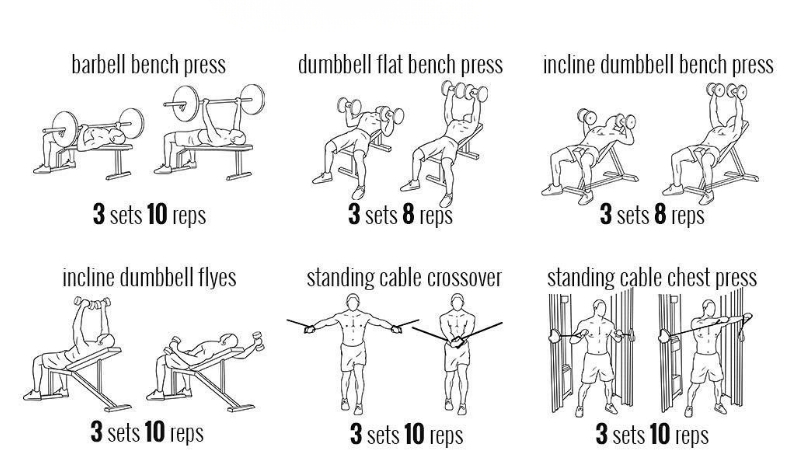
What Each Bench Angle Actually Changes
The best chest workout using dumbbells starts flat, keeping the torso level and loads the chest through the middle of its range, which is why it carries the heaviest weights. It is the default position and the one that every bench supports, adjustable or not.
Incline raises the torso so the press travels closer to shoulder height, shifting emphasis upward. Most useful work sits between roughly 15 and 45 degrees; steeper than that and the movement becomes a shoulder press with the chest assisting.
Decline lowers the head below the hips and is the angle fewest home benches actually support. It also requires a leg hold, without which you slide down the pad, which is why decline capability is worth checking rather than assuming.
Incline Range, Pad Gap and Seat Angle
For the best chest workout using dumbbells, look at the number of back positions and the angles they cover, not just the maximum. A bench offering positions at 15, 30 and 45 degrees is far more useful than one jumping straight from flat to 60 degrees, whatever the marketing copy says.
Pad gap is the space between the back pad and the seat pad on adjustable benches. A large gap sits directly under the lower back at incline and is the single most common complaint about budget benches, so check it before ordering.
The seat pad should also angle upward at incline, or you gradually slide forward under load. Benches with a fixed flat seat and an adjustable back are cheaper and noticeably less comfortable once the back pad goes past roughly 30 degrees.
Footprint of a Bench in Use Against Stored
An adjustable bench claims roughly 4 sq ft in use and stands upright in under 2 sq ft, but the working area is much larger. You need clearance on both sides for arms at full extension, which is about 7 x 5 ft (213 x 152 cm) in practice.
Ceiling height also matters at steep incline, because pressing from a near-upright position puts the dumbbells well above your seated head height. Low basements can therefore rule out the steepest positions a bench technically offers.
Measure the actual dimensions of the space you plan to use before ordering, including the clearance behind the bench head and the ceiling above the seat. Both are routinely underestimated when working from a product listing alone.
Floor Pressing and Training Without a Bench
Floor pressing removes the bottom third of the range because your upper arms stop on the floor. That makes it a shorter movement, but it also means no bench, no bail-out problem and none of the surrounding clearance a bench demands.
It is genuinely useful when a room cannot host a bench, and shorter dumbbells help because the ends have less distance to travel before contacting the floor. Rubber matting matters here more than anywhere, since your elbows land on it every rep.
Benches that fold flat and reach a true decline remain a thin part of the market compared with fixed flat benches and simple incline frames. Anyone equipping a spare bedroom will find the choice narrower than the number of benches on sale suggests.
Top Picks: 6 Choices for the Best Chest Workout Using Dumbbells
The best chest workout using dumbbells needs a bench, so three frames covering different angle ranges and three sets of dumbbells suited to pressing, so the list works whichever half you still need. The table pairs each item with what it adds to the angles available to you.
| Item | Angles or ceiling | Stored | Adds |
|---|---|---|---|
| FLYBIRD adjustable bench | Multiple back positions | Folds upright | Flat and incline range |
| Fitness Reality 1000 | Flat, incline and decline | Folds upright | Decline plus high capacity |
| Bowflex 5.1S Stowable | Six back positions | Folds and rolls | Shared-room usability |
| NUOBELL 80 lb Classic | 80 lb (36.3 kg) per hand | Cradles | Ceiling for heavy pressing |
| Bowflex SelectTech 552 | 52.5 lb (23.8 kg) per hand | Cradles | First pressing set |
| PowerBlock Elite EXP | 50 lb (22.7 kg), expandable | Shelf | Close grip and floor press |
1. FLYBIRD Adjustable Bench
The most common starting point, and a reasonable one. Multiple back positions cover flat through steep incline, the frame folds upright between sessions, and it costs a fraction of a commercial bench while handling home pressing loads comfortably.
The pad is firmer and narrower than a commercial bench pad, the pad gap is noticeable at incline for some users, and the folding frame flexes slightly more than a welded one under heavy dumbbells. All three are fair trades at the price.
2. Fitness Reality 1000 Super Max Bench
The pick to take if decline matters, since it supports the angle and includes a leg hold rather than leaving you to slide. A high rated total capacity also makes it comfortably the most stable option here for genuinely heavy pressing.
It is heavier and less convenient to move between rooms than lighter folding benches, and the upholstery is the wear part, splitting at the seams before anything else fails. Check whether replacement pads are available before committing.
3. Bowflex 5.1S Stowable Bench
Six back positions on a frame that folds down and rolls away, which makes it comfortably the best fit for a room with another job during the day. Setup takes seconds, which in practice determines whether a bench actually gets used.
It does not reach a decline angle, the rolling mechanism adds a little extra flex, and the pad is narrower than a commercial bench. As a flat-and-incline bench that disappears completely afterwards, none of that is a serious objection.
4. NUOBELL 80 lb Classic
Pressing outgrows a 50 lb per hand ceiling before any other movement, and an 80 lb (36.3 kg) top weight covers most people indefinitely. The twist handle changes weight in one motion, which suits pressing sessions with several working loads.
Increments are a flat 5 lb (2.3 kg), which is coarse for accessory work but perfectly fine for pressing, and at roughly 17.5 in (44 cm) loaded the loaded length makes the entry into a heavy set harder than the weight alone suggests.
5. Bowflex SelectTech 552
The sensible choice for a first pressing set of all. A 52.5 lb (23.8 kg) ceiling covers a good year or two of chest work, and 2.5 lb steps below 25 lb per hand suit the flyes and the accessory movements built around the main press.
The plastic housing cannot be dropped or rested on its ends, which matters more during chest work than anywhere else because sets run close to failure. Expect that ceiling to become limiting on pressing well before it does on anything else.
6. PowerBlock Elite EXP
The short block format keeps the loaded length down near 12 in (30 cm), which removes the close-grip collision on flat pressing entirely and makes floor pressing far more comfortable, because the ends have much less distance to fall.
The handle sits inside a cage, which some people never adapt to on flyes where the wrist angle changes through the movement. Base ceiling is 50 lb (22.7 kg) per hand, so continued pressing progress needs the expansion kit eventually.
Frequently Asked Questions
Questions about the best chest workout using dumbbells usually concern which bench angles are worth having and whether a bench is required at all. Each answer below works from published bench specifications and physical clearance.
How Many Bench Angles Do I Actually Need?
Flat and one incline position around 30 degrees cover the great majority of pressing work. Extra positions add variety rather than necessity, and decline is a genuine addition only if you plan to use it and the bench includes a leg hold.
What Is Pad Gap and Why Does It Matter?
It is the space between the back pad and seat pad on an adjustable bench. At incline that gap sits under the lower back, and a large one is uncomfortable under load. It is the most common complaint about budget benches and is rarely listed.
Can I Train Chest Without a Bench?
Yes, with floor presses. You lose the bottom third of the range because your upper arms stop on the floor, which shortens the movement, but you gain a setup needing no bench at all, no surrounding clearance and no way to get stuck under a weight.
Do I Need a Spotter for Heavy Dumbbell Pressing?
Dumbbells can be lowered to the sides rather than trapping you under a bar, which is one reason they suit training alone. The harder part is getting them into position, so practise the seated entry before adding weight, or ask a certified coach.
See More:
- Best changeable dumbbells
- Best rated yoga mat
- Best mat yoga
- Best home gym equipmen
- Best fitness equipment for home gym
Final Thoughts
Getting the best chest workout using dumbbells usually means spending on the bench rather than more weight. Check the angle positions, the pad gap and whether decline is genuinely supported, measure the clearance either side, and remember floor pressing needs none of it.


Write Your Review
No reviews yet. Be the first to share your experience!