
Key takeaways
What's inside
Best kettlebell workouts for men across a full week need more than one bell, because strength days, conditioning days and skill days all sit in different load bands. This guide maps out the three sessions, the weights each one needs, the floor space they occupy between sets, and how to buy them in the right order.
As an Amazon Associate we earn from qualifying purchases at no extra cost to you. Product prices and availability are accurate as of the date shown and are subject to change.
As an Amazon Associate we earn from qualifying purchases at no extra cost to you. Product prices and availability are accurate as of the date shown and are subject to change.


By Chris Parker
🛒 Best Price Today on Amazon
Prime members get fast, free shipping on everything above, plus member-only deals. New members get a 30-day free trial — cancel anytime.
Start 30-Day Prime Free Trial →See Today’s Amazon DealsHow to Equip a Full Week of Kettlebell Training
A weekly programme exposes what a single-bell setup cannot do. Heavy squats want more load, high-rep conditioning wants less, and pressing sits somewhere between the two. The four criteria below determine which bells the best kettlebell workouts for men actually require and, more usefully, which order to buy them in as budget allows.
Three Sessions, Three Load Bands
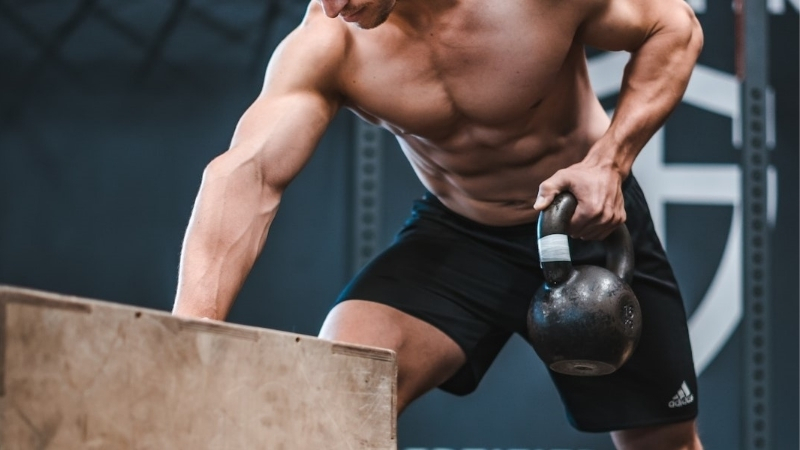
A workable week of the best kettlebell workouts for men is one strength session, one conditioning session and one skill or accessory session. Strength work — goblet squats, heavy swings, double presses — sits at 24-32 kg (53-70 lb) for most trained men and is the heaviest thing in the programme.
Conditioning sits lower, around 16-20 kg (35-44 lb), because volume rather than load is the point. Skill work with snatches and get-ups drops again to 12-16 kg (26-35 lb). The best kettlebell workouts for men respect that spread instead of forcing one bell across all three.
The Buying Ladder: Which Three Weights
Buy in the order the sessions matter to you rather than all at once. Most men start with a 20 kg because it half-covers everything, then add a 24 kg for strength work, then a 16 kg for conditioning and skill practice once the first two bells are genuinely being used every week.
Spacing bells 4 kg apart keeps every progression step manageable. Buying 16 kg and 32 kg with nothing between leaves a gap you cannot bridge, and you will end up doing endless reps at the lighter weight rather than progressing toward the heavier one.
Adjustable Bells vs Multiple Fixed Weights
An adjustable kettlebell replaces several bells in one footprint and changes weight in seconds, which suits the conditioning circuits inside the best kettlebell workouts for men where movements sit at different loads. The compromise is a top end around 40 lb and a shape that no manufacturer has made comfortable in the rack.
Fixed bells feel correct, can be dropped, and cover the heavy end that adjustables cannot reach. For the best kettlebell workouts for men across a full week, most people end up with two or three fixed bells rather than one adjustable unit.
Footprint and Storage for a Multi-Bell Setup
Three bells stood together occupy roughly 30 x 12 in (76 x 30 cm) of floor and weigh around 60 kg (132 lb) combined, which is a genuine consideration on a suspended upstairs floor. A two-tier rack cuts the floor area by about half but adds height and cost.
The training area needs about 6 x 8 ft (1.8 x 2.4 m) because three bells means bells parked outside the working zone. Measure the room, including where the unused bells will sit, so you are not stepping around them mid-set during a conditioning block.
Top Picks: Bells for the Best Kettlebell Workouts for Men
The options below cover the three load bands the best kettlebell workouts for men require across a week, from 12 kg skill bells up to 32 kg strength bells. The table gives the deciding specs, and each write-up explains where that particular bell fits into a multi-weight setup.
| Kettlebell | Type | Best session | Range available | Price tier |
|---|---|---|---|---|
| Yes4All Cast Iron | Standard cast iron | All three | 5-80 lb (2-36 kg) | Budget |
| Titan Fitness Competition | Competition steel | Strength and skill | Wide steel range | Mid |
| Kettlebell Kings Powder Coated | Standard cast iron | Strength | Wide cast range | Mid to premium |
| REP Fitness Powder Coated | Standard cast iron | Conditioning | Wide cast range | Mid |
| CAP Barbell Cast Iron | Standard cast iron | Filling gaps cheaply | Wide cast range | Budget |
| Bowflex SelectTech 840 | Adjustable | Conditioning circuits | 8-40 lb (3.6-18 kg) | Premium |
Yes4All Cast Iron Kettlebell
The practical backbone of a multi-bell setup, because one brand covers every weight you will want in close increments. Buying three bells from the same range keeps handle feel and finish consistent, which matters more than it sounds when you switch between them mid-session.
Casting quality varies from unit to unit, so expect to check the seams on arrival and occasionally spend a few minutes with sandpaper on one of them. The handle also runs thick at the heavy end, which taxes grip during conditioning work more than a competition handle at the same weight would.
Titan Fitness Competition Kettlebell
Constant dimensions across weights make this the strongest choice for a programme that switches bells often. Moving from a 16 kg skill bell to a 24 kg strength bell changes nothing about the rack position or the grip, which removes a technical variable from every session.
Paint quality is the visible compromise here, and units arriving with minor blemishes or thin coverage are common enough that you should plan for it. The 35 mm competition handle is also thinner than some men prefer for heavy two-hand swings, though it suits snatch and clean work well.
Kettlebell Kings Powder Coated Kettlebell
Worth the premium on the heaviest bell in your set, where casting quality and handle finish matter most. A 28 or 32 kg bell spends a long time in your hands during heavy swings, and a clean, well-shaped handle reduces the grip cost of that work considerably.
Paying this price across three bells is hard to justify. Most people buy one premium heavy bell and fill the lighter positions with budget iron, which is a sensible split given how much less the lighter bells are handled under fatigue.
REP Fitness Powder Coated Kettlebell
A strong middle option for the conditioning bell, where you handle the weight for high reps and grip comfort matters more than absolute load. The powder coat is even and the handle is finished cleanly enough for long swing and clean sets without tearing skin.
Availability in specific weights is the recurring frustration, particularly when you need one exact size to complete a ladder. Check stock in the exact weight you want before you settle on the brand, rather than choosing the brand first and discovering the size is unavailable.
CAP Barbell Cast Iron Kettlebell
The sensible way to fill a gap in your ladder cheaply. If you own a 16 kg and a 24 kg and want a 20 kg between them, spending premium money on that middle bell rarely makes sense, and CAP does the job at a fraction of the cost.
The enamel handle gets slick under sweat, which limits it for high-rep conditioning. Use it for the squatting and pressing positions in your ladder rather than the bell you swing for fifty reps in a conditioning block.
Bowflex SelectTech 840 Adjustable Kettlebell
The one adjustable option worth considering in a weekly programme, specifically for conditioning circuits that move between movements needing different loads. Changing weight with a dial in seconds keeps a circuit flowing where swapping fixed bells would break it.
It stops at 40 lb, sits awkwardly in the rack, and cannot be dropped or snatched. It complements a rack of fixed bells rather than replacing them, and it is an expensive complement given how narrow the range it actually covers really is.
Frequently Asked Questions
These questions come up most often from people moving beyond a single bell into a structured week of the best kettlebell workouts for men. They cover how many bells you need, session ordering, weekly volume and when to buy the next size up.
How many kettlebells do I need for a weekly programme?
Three covers a full week comfortably: a light bell for skill work, a mid bell for conditioning and a heavy bell for strength. Two works if you are pragmatic about it, and one works only if you accept that either strength or conditioning will be under-loaded.
What order should the sessions go in?
Put the strength session first in the week when you are freshest, conditioning second, and skill work last or on a separate day. Leave at least one full day between the strength and conditioning sessions, because lower back and grip fatigue accumulate quickly.
How much weekly volume is appropriate?
Three sessions of 30-40 minutes is a productive week for most men and fits within general activity recommendations. Adding a fourth session usually costs more in recovery than it returns, particularly if the extra day repeats heavy swinging.
When should I buy the next bell up?
When your current heaviest bell allows clean technique for your full prescribed sets with reps still in reserve. Moving up 4 kg at a time keeps the jump manageable, and buying the next size is usually more productive than adding endless reps at the old one.
See More:
- Ankle weights best
- Best rated ankle weights
- Best home workout equipment budget
- Best resistance bands for men
Final Thoughts
The best kettlebell workouts for men across a week need three load bands rather than one bell: roughly 12-16 kg for skill, 16-20 kg for conditioning and 24-32 kg for strength. Buy the mid bell first, then the heavy one, then fill the gap. Measure the floor area including where unused bells will sit, and consult a doctor first.



Write Your Review
No reviews yet. Be the first to share your experience!