
Key takeaways
What's inside
Best lat workouts with dumbbells depend less on exercise selection than on two pieces of hardware: a load range wide enough to keep progressing, and a bench stable enough to row from. This guide covers the weekly structure, the load band each movement sits in, and the equipment that makes it work at home.
As an Amazon Associate we earn from qualifying purchases at no extra cost to you. Product prices and availability are accurate as of the date shown and are subject to change.
As an Amazon Associate we earn from qualifying purchases at no extra cost to you. Product prices and availability are accurate as of the date shown and are subject to change.


By Chris Parker
🛒 Best Price Today on Amazon
Prime members get fast, free shipping on everything above, plus member-only deals. New members get a 30-day free trial — cancel anytime.
Start 30-Day Prime Free Trial →See Today’s Amazon DealsHow to Choose Equipment for Lat Training With Dumbbells
Lat training at home fails for predictable reasons — the load jumps are too large, the bench slides under an off-centre pull, or there is nowhere to set the dumbbell down between sides. The four criteria below address each of those directly, in the order they tend to derail the best lat workouts with dumbbells at home.
Load Range: Where Lat Work Actually Sits
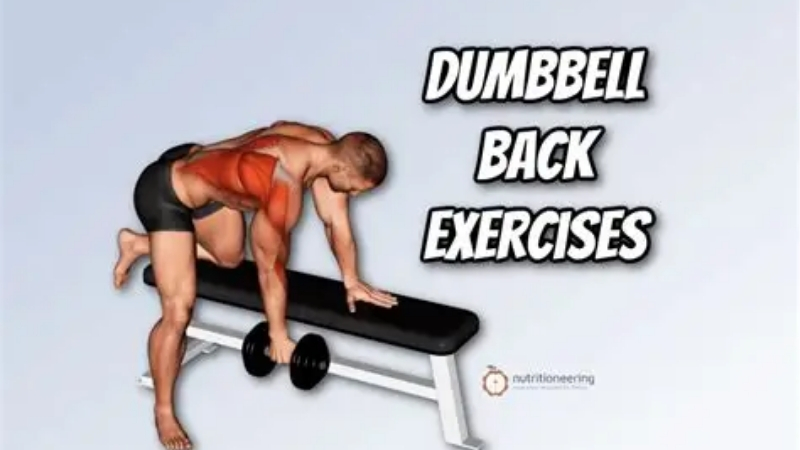
The single-arm row is the heaviest dumbbell movement most people own. A lifter pressing with 50 lb (23 kg) dumbbells will often row with 70-80 lb (32-36 kg) inside a year, which means a set stopping at 52.5 lb becomes the limiting factor on the exercise that drives most of your back development.
Pullovers and straight-arm work sit at the opposite end, typically 20-35 lb (9-16 kg). That fourfold spread is exactly why an adjustable set beats buying a handful of fixed pairs: one purchase covers the whole range that the best lat workouts with dumbbells require, without four separate pairs on the floor.
Increment Size and Weekly Progression
Lats respond to added load far more reliably than to added exercise variety. In the best lat workouts with dumbbells, 5 lb (2.3 kg) steps let you progress rows every two to three weeks without stalling. On a pullover, though, moving from 25 to 30 lb is a 20 percent increase and usually too large a jump to absorb in one session.
Systems offering 2.5 lb (1.1 kg) adder weights solve this cleanly and are worth the extra cost if you plan to train the same movements for years. If your set only manages 5 lb steps, bridge the gap by adding a rep or slowing the eccentric before you commit to the next weight up.
Bench Stability and Angle Range
A bench used for single-arm rows takes a deliberately off-centre load and will shift or tip if the frame is light. Look for a combined capacity of at least 600 lb (272 kg) and rubber feet rather than plastic caps, because plastic skates across a rubber gym mat exactly when you least want it to.
Incline positions matter just as much in the best lat workouts with dumbbells. Chest-supported rows performed at 30-45 degrees remove the lower back from the movement entirely, and that is the single most useful adjustment available for training lats hard without accumulating spinal fatigue across a week of sessions.
Footprint: What a Lat Session Actually Occupies
A folding flat-to-incline bench measures roughly 50 x 25 in (127 x 64 cm) open and about 25 x 20 in (64 x 51 cm) folded upright. Add the dumbbell cradles and the swing arc of a pullover and you need a clear working area of around 7 x 6 ft (2.1 x 1.8 m) to train without adjusting position constantly.
Ceiling height rarely matters for lat work, but overhead clearance at the stretched position of a pullover does — allow about 18 in (46 cm) above your head while lying on the bench. Measure the real floor area of the room, including the door swing, before ordering a bench you cannot return easily.
Top Picks: Gear for the Best Lat Workouts With Dumbbells
The best lat workouts with dumbbells shortlist covers the three things a session needs: an adjustable load spanning pullovers to heavy rows, a bench that stays put, and one fixed pair for the movement you repeat most. The table sorts by role so you can see what to buy first and what can wait.
| Item | Role | Key spec | Price tier |
|---|---|---|---|
| Bowflex SelectTech 1090 | Heavy rows | 10-90 lb, 5 lb steps | Premium |
| PowerBlock Elite EXP | Fine progression | 2.5 lb adders | Mid to premium |
| Bowflex SelectTech 552 | Pullovers, all-round | 5-52.5 lb, 2.5 lb steps | Mid |
| FLYBIRD Adjustable Bench | Rows and inclines | Folding, multi-angle | Budget |
| REP Fitness AB-3000 | Heavy chest-supported work | 1000 lb rated | Mid |
| Amazon Basics Rubber Hex | Fixed heavy pair | No mechanism to fail | Budget |
Bowflex SelectTech 1090
Ninety pounds per hand is the reason this set belongs in a back-focused home gym. Single-arm rows are where home lifters run out of weight first, and a 90 lb ceiling buys most people several years of uninterrupted progression on the movement that carries the largest share of their back training.
The 17.5 in handle length is the compromise you accept. On a chest-supported row against an incline bench, that length can contact the pad near the top of the rep, so the path has to angle slightly outward. Five-pound increments also mean no fine steps for lighter straight-arm work.
PowerBlock Elite EXP
The 2.5 lb adder weights inside the block make this the strongest fit when pullovers and straight-arm work form a real part of your routine, because that is precisely where 5 lb jumps stall people for months. The compact 12-13 in block also clears the bench cleanly on chest-supported rows.
The square cage around the hand is the acquired taste. During a heavy single-arm row where the wrist rotates slightly at the top, some lifters find the frame contacting the forearm. Run the movement pattern at a light setting for a session before you load it near your working weight.
Bowflex SelectTech 552
Fifty-two and a half pounds is not enough for heavy rowing, but it is exactly right for pullovers, straight-arm work and higher-rep rows. The 2.5 lb increments below 25 lb make it the most usable set here for the accessory movements that fill out the back half of a lat session.
Treat it as a complement rather than a complete answer. If heavy rows are your priority, you will outgrow it, and buying it first often means buying a heavier set within two years anyway. It also cannot be dropped safely, which rules it out for fast circuit-style back work.
FLYBIRD Adjustable Weight Bench
This is the budget bench that keeps appearing in home gyms for good reasons: it folds to a small upright footprint, adjusts through flat to steep incline, and costs a fraction of a commercial frame. For chest-supported dumbbell rows at moderate load it does everything the movement asks of it.
The limitations are pad width and frame rating. Under heavy single-arm rows with a wide brace, the narrower pad gives less to push against, and the lighter frame will creep on a slick floor. Put it on a rubber mat rather than tile and keep the heaviest sets within its comfort zone.
REP Fitness AB-3000 Adjustable Bench
If your lat work is heavy and chest-supported, this is the upgrade that removes the bench from the equation entirely. The 1000 lb rating and the wide ladder of incline positions mean the frame is never the weak link, and the pad stays genuinely flat under a heavily off-centre row.
It is heavy enough that repositioning it between sessions is a two-hand job, and it does not fold flat, so it needs a permanent parking space of roughly 55 x 26 in (140 x 66 cm). Confirm that footprint exists in your room before ordering, because returning it is not a simple exercise.
Amazon Basics Rubber Encased Hex Dumbbells
One heavy fixed pair alongside an adjustable set solves the problem adjustables cannot: you can set them down instantly between sides, there is no mechanism to jam mid-set, and they handle heavy rows without any drop-tolerance anxiety hanging over the last few reps.
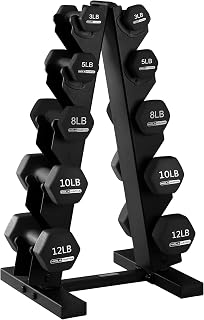
The cost is space and money per pound. A pair of 70 lb hex dumbbells claims about 30 x 10 in (76 x 25 cm) of floor and gives you exactly one weight. Buy a single pair at the load you row most often, once you know that number, rather than assembling a full rack.
Frequently Asked Questions
The questions below about the best lat workouts with dumbbells come up most often from people building back training around free weights rather than a cable stack. They cover what dumbbells can and cannot replicate, session frequency, movement choice and how to pick a starting load.
Can you build lats with dumbbells alone?
Yes. Rows, pullovers and chest-supported variations cover the lats’ primary functions of shoulder extension and adduction. What dumbbells cannot easily replicate is a straight-arm pulldown under constant tension, so most people eventually add a resistance band or a pull-up bar for that specific pattern.
How often should I train lats?
Two sessions a week is the practical sweet spot for the best lat workouts with dumbbells for most home lifters, with roughly 10-20 hard sets spread across them. Lats recover well, but grip and lower back fatigue accumulate faster than the lats themselves, which is why a chest-supported variation belongs in the second session.
Single-arm or two-arm rows?
Single-arm rows allow a longer range of motion and heavier loading per side, which is why they anchor most back programmes. Two-arm chest-supported rows are the better option when lower-back fatigue is the limiter, or when you want to add weekly volume without adding any spinal loading.
What weight should I start with?
Choose a load you can row for ten clean reps with the last two feeling genuinely hard but controlled, then build from there. If you reach fifteen reps without form changing, the weight is too light to drive lat growth and you should move up one increment at your next session.
See More:
- Ankle weights best
- Best rated ankle weights
- Best home workout equipment budget
- Best resistance bands for men
Final Thoughts
The best lat workouts with dumbbells are built on three things: a set reaching at least 70 lb per hand for rows, small increments for pullovers, and a bench that does not move under an off-centre load. Get those right and exercise selection becomes a detail. Measure your training area and check the bench rating before ordering, and speak to a certified trainer if you are unsure about your rowing position.


Write Your Review
No reviews yet. Be the first to share your experience!