
Key takeaways
What's inside
What is the best hot yoga mat has one honest answer: the one that still grips when it is soaked. Every other spec is secondary in a 40°C room. This guide explains why surface material decides wet traction more than thickness or price ever will, and compares five mats and towels that hold up through a full heated class.
As an Amazon Associate we earn from qualifying purchases at no extra cost to you. Product prices and availability are accurate as of the date shown and are subject to change.
As an Amazon Associate we earn from qualifying purchases at no extra cost to you. Product prices and availability are accurate as of the date shown and are subject to change.


By Chris Parker
🛒 Best Price Today on Amazon
Prime members get fast, free shipping on everything above, plus member-only deals. New members get a 30-day free trial — cancel anytime.
Start 30-Day Prime Free Trial →See Today’s Amazon DealsHow to Choose a Mat for Heated Classes
Hot yoga breaks mats that perform perfectly well in a normal studio. Sweat pools on the surface, the material heats past what it was designed for, and cleaning becomes a weekly job rather than an occasional one. These criteria answer what is the best hot yoga mat in practical terms.
Surface Type Decides Wet Grip
When people ask what is the best hot yoga mat, closed-cell PVC and TPE surfaces are the wrong answer: they repel moisture, which is excellent for cleaning and terrible for grip. Sweat sits on top as a film, and within twenty minutes your hands slide forward in downward dog no matter how good the dry traction was.
Polyurethane top layers absorb a thin amount of moisture and grip harder as they get damp, which is why PU-topped mats dominate heated studios. Open-cell natural rubber behaves similarly, absorbing sweat into the surface rather than letting it pool on top.
Cork sits between the two, gaining traction as it dampens while still wiping clean easily. If you are choosing purely on wet performance, the ranking is PU first, open-cell rubber and cork close behind, and closed-cell synthetics a distant last.
None of this is about price. A premium closed-cell mat costing three times a budget PU one will still slide in a heated room, which is why surface material rather than brand or spend is the first thing to check on any listing.
Thickness, Weight and Stability in Heat
Four to five millimetres is the working range for what is the best hot yoga mat thickness. Thinner than 4 mm and knees suffer during long floor sequences; thicker than 5 mm and balance poses become unstable, which matters more in a heated class where fatigue arrives sooner.
Weight is the trade-off nobody warns you about. Mats with the best wet grip tend to be rubber-based and heavy, typically 5.5-7 lb (2.5-3.2 kg). If you carry the mat to a studio several times a week, that weight is a real daily cost of better traction.
Length is worth checking too, because a sweaty slide forward in downward dog puts your hands off the end of a standard 68 in mat. Extra-long 74-78 in (188-198 cm) versions cost slightly more and remove that problem entirely for anyone over about 5 ft 9 in.
Cleaning, Odour and Bacterial Load
An absorbent surface takes on sweat, and sweat left sitting in a mat produces noticeable odour within a fortnight of heated classes. Open-cell rubber and PU mats need wiping after every heated session with mild soap, not alcohol or vinegar, both of which degrade rubber over time.
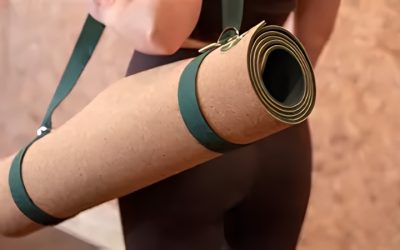
Cork’s natural antimicrobial properties reduce that maintenance noticeably, which is its strongest argument for heated practice. Whatever the surface, let the mat dry fully unrolled before storing it, because a rolled damp mat is exactly where odour problems begin. Hanging it over a door or a chair for an hour after class is usually enough.
Footprint, Towels and What You Actually Carry
A rolled 5 mm rubber mat measures roughly 5-6 in (13-15 cm) across and 26 in (66 cm) long. Most people also add a mat towel for heated classes, which means another small roll and about 1 lb (0.45 kg) on top of an already heavy carry.
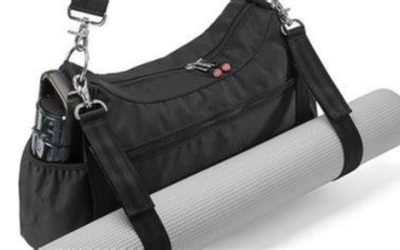
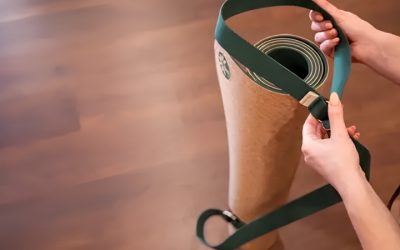
Check that your carry strap will cinch onto a thicker mat before ordering, since straps sized for a 3 mm travel mat will not close around a 5 mm rubber one. Measure the rolled diameter and the storage spot at home before committing to a heavy mat.
Top Picks: What Is the Best Hot Yoga Mat Right Now
The five options below answer what is the best hot yoga mat by wet traction rather than general performance, with one towel included because it changes the equation entirely for closed-cell mats. The table lists the deciding specs before each write-up covers the trade-offs.
| Mat | Surface | Thickness | Wet grip | Price tier |
|---|---|---|---|---|
| Liforme Yoga Mat | Eco polyurethane | Around 4.2 mm | Excellent | Premium |
| Manduka eKO | Natural rubber | 4-5 mm | Very good | Premium |
| Jade Harmony | Open-cell rubber | Around 5 mm | Very good | Mid to premium |
| Gaiam Sol Dry-Grip | PU over TPE | Around 5 mm | Good | Mid |
| Manduka Yogitoes Towel | Silicone-dotted towel | Over any mat | Excellent when damp | Mid |
Liforme Yoga Mat
The strongest single answer for heated practice. The plant-based polyurethane top layer grips harder as it gets wet, so the mat performs better at minute forty of a class than it does at minute five, which is exactly the opposite of most surfaces.
It is the most expensive mat here by a wide margin, and the PU layer scuffs permanently if dragged across rough flooring. It also needs careful cleaning after every session, since PU holds moisture rather than shedding it.
Manduka eKO
Natural tree rubber with a closed-cell surface, which is an unusual combination that trades a little wet grip for far easier cleaning. For someone who does two or three heated classes a week alongside regular practice, that balance often makes more sense than a specialist mat.
Grip does drop once real sweat arrives, so most people end up pairing it with a mat towel for genuinely hot classes. At 6-7 lb in the 5 mm version it is also heavy to carry, and new mats have a strong rubber smell for the first fortnight.
Jade Harmony Mat
Open-cell natural rubber that absorbs sweat into the surface, so traction genuinely improves during a heated class rather than degrading. It is available in a 74 in length, which matters when a sweaty slide forward puts your hands off the end of a standard mat.
Absorbency is also the weakness. The mat needs cleaning after every hot session and will develop odour if stored damp, and it wears through faster than closed-cell rubber. Budget on replacing it sooner than a premium PU mat.
Gaiam Sol Dry-Grip Yoga Mat
A PU top layer over a TPE base, which delivers most of the wet-grip benefit at a considerably lower price than the premium options. For someone trying heated classes without committing premium money, this is the sensible starting mat.
The TPE base compresses permanently at knees and elbows faster than rubber, so useful life is shorter. The PU layer is also thinner than on premium mats, which shows up as reduced grip after a year of frequent heated use.
Manduka Yogitoes Skidless Towel
Not a mat, but the accessory that makes any closed-cell mat viable in heat. Silicone dots grip the mat underneath, the towel absorbs sweat off the surface, and it goes in a washing machine, which no mat here does.
It only works properly once slightly damp, so it slides around during the first few minutes of a class until you actually start sweating. It is also an ongoing cost rather than a one-off, since towels wear out faster than mats under weekly washing.
Frequently Asked Questions
These four questions cover what people most want settled about what is the best hot yoga mat before buying for heated classes — whether a towel replaces a good mat, how thickness interacts with heat, cleaning frequency and what lifespan to expect.
Do I need a mat towel as well?
With a closed-cell mat, yes, without question. With a PU or open-cell rubber surface, usually not, though many people still use one for hygiene reasons in a shared studio. A towel is the cheaper fix if you already own a mat that goes slick when wet.
Does thickness affect grip in a hot room?
Indirectly. Thicker mats feel less stable under fatigue, and heated classes produce fatigue faster, so a 6 mm mat that felt fine in a normal studio can feel unsteady in balance poses. Four to five millimetres is the practical range for heat.
How often should I clean a hot yoga mat?
After every heated session if the surface is absorbent, and weekly at minimum for closed-cell mats. Wipe with mild soap and water, then let it dry fully unrolled before storing, since rolling a damp mat is what causes odour to set in.
How long will a hot yoga mat last?
Roughly two to four years with two or three heated classes a week, depending on the surface. PU tops and open-cell rubber wear faster under heavy sweat exposure than closed-cell surfaces, so factor replacement into the cost of a premium mat.
See More:
- Ankle weights best
- Best rated ankle weights
- Best home workout equipment budget
- Best resistance bands for men
Final Thoughts
What is the best hot yoga mat comes down to surface material: a PU top layer or open-cell rubber at 4-5 mm handles sweat far better than any closed-cell mat. If you already own a closed-cell mat, buy a towel before buying a replacement, and check your carry strap fits a thicker mat first.


Write Your Review
No reviews yet. Be the first to share your experience!