
Key takeaways
What's inside
Best barbell clamps are a five-minute decision that people get wrong twice: buying the wrong sleeve size, and buying a type that either creeps under load or takes ten seconds per side to change. Both are avoidable if you know the four designs. Sleeve size comes first every time. Type decides speed and holding force.
As an Amazon Associate we earn from qualifying purchases at no extra cost to you. Product prices and availability are accurate as of the date shown and are subject to change.
As an Amazon Associate we earn from qualifying purchases at no extra cost to you. Product prices and availability are accurate as of the date shown and are subject to change.


By Chris Parker
🛒 Best Price Today on Amazon
Prime members get fast, free shipping on everything above, plus member-only deals. New members get a 30-day free trial — cancel anytime.
Start 30-Day Prime Free Trial →See Today’s Amazon DealsHow to Choose the Best Barbell Clamps
The best barbell clamps do one job: stop plates sliding when the bar tips. What separates them is holding force, change speed and whether they survive being dropped on a concrete floor. Sleeve diameter decides compatibility, and getting that wrong is the most common mistake in the category. Check the bar before the clamp.
Sleeve Size: 2 in Versus Standard
Olympic bars have 2 in (50 mm) sleeves and standard bars have 1 in (25 mm) ones, and collars are not interchangeable between them. Check the bar before ordering, since the listings often bury the size and a 2 in collar is useless on a standard bar. Sleeve length limits plate space too. Slim collars free up loading room.
Sleeve length matters too. A long collar takes space that plates could occupy, which is why compact designs exist for bars loaded near capacity. If you routinely load a bar heavily, measure the free sleeve length before choosing a bulky clamp design over a slim one. Compact designs suit heavily loaded bars.
The Four Designs and How They Hold
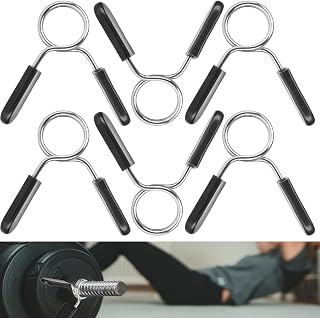
Spring collars are the cheapest, squeeze on by hand and hold well enough for moderate loads, though they weaken over years. Lock-jaw style clamps use a lever and grip harder, which is what most home lifters end up using for pressing, rowing and general training. Lever clamps are the default choice. Spring collars still cover light work.
Competition collars are heavy steel with a screw or lever and hold under anything, but they weigh 1 to 2.5 lb (0.5 to 1.1 kg) per pair, which counts towards your loaded total. Quick-release plastic clamps sit between spring and lock-jaw on both grip and price. Weight counts towards your total load. Competition collars survive anything.
Change Speed, Durability and Drops
Change speed matters more than people expect during drop sets and circuits. Lever clamps open in a second per side; spring collars need two hands and a squeeze; screw collars are slowest of all. If your training changes weight frequently, that difference adds up quickly. Speed matters most during drop sets.
Durability is mostly about drops. Plastic lever clamps crack when dropped on concrete, spring collars bend and lose tension, and steel competition collars survive almost anything. Matting under the loading area protects all of them, which is worth more than paying extra for a tougher clamp. Concrete is what kills plastic bodies.
Top Picks: Collars by Type
The six below cover each design plus the standard-size option people forget to check. Buy for your sleeve size first and your training style second. Each entry names a genuine drawback, since every design here trades grip, speed or weight against the others. Buy the best barbell clamps by sleeve size.
| Clamp | Type | Sleeve | Best for |
|---|---|---|---|
| Lock-Jaw Pro 2 | Lever | 2 in | All-round pick |
| Gymreapers Collars | Lever | 2 in | Heavy pulls |
| ProsourceFit Clamps | Quick-release | 2 in | Budget lever |
| CAP Spring Collars | Spring | 2 in | Cheapest option |
| Titan Competition | Steel screw | 2 in | Heavy loading |
| Yes4All Spinlock | Screw | 1 in | Standard bars |
Lock-Jaw Pro 2
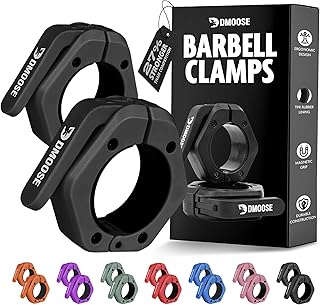
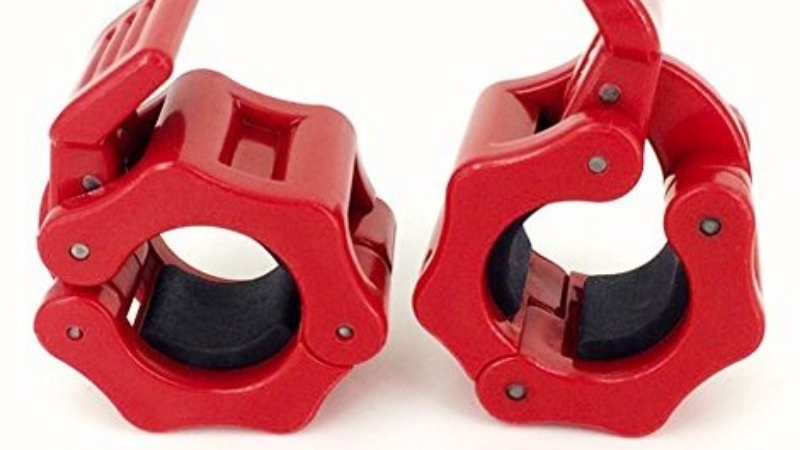
The Lock-Jaw is the default lever clamp for home lifters: it opens in about a second, grips harder than any spring collar and does not creep on a tipped bar. For pressing, rowing and general training it is the sensible answer for most people. One second per side is the appeal. It grips harder than any spring collar.
The body is plastic, so a drop onto concrete can crack it, and the lever eventually loosens with heavy use. Matting under the loading area solves most of that. Check you are ordering the 2 in (50 mm) version rather than the standard-bar size. Matting protects the plastic body. Order the 2 in version rather than standard.
Gymreapers Barbell Collars
Gymreapers collars sit slightly above the budget levers on materials, with a firmer lever action that holds on heavy deadlifts where lighter clamps sometimes creep. If your training involves loaded pulls rather than machine work, that extra grip is the difference worth paying for. Heavy pulls are where creep shows.
They cost more than the basic lever clamps and overlap with them at moderate loads, where you will notice no difference at all. As with any lever design, they are not drop-proof. Buy them for heavy training rather than for general use. Moderate loads feel identical to cheaper levers. Heavy pulls justify the difference.
ProsourceFit Muscle Clamps
The budget lever option does the same job as the branded clamps for noticeably less, and for a home setup training at moderate loads that is often enough. They open quickly, grip adequately and cost little enough that replacing a cracked one is trivial. Price is the argument in its favour. Replacing one costs very little.
Plastic quality is a step below, the lever action feels looser and they crack more readily when dropped. Expect a shorter service life. Treat them as a consumable rather than a purchase you expect to keep for a decade of regular training. Treat them as a wear item. Plastic quality is where the saving shows.
CAP Spring Collars
Spring collars remain the cheapest way to stop plates sliding, and for a bar that stays flat during a set they are entirely adequate. They also weigh almost nothing, take no sleeve space and survive being dropped, which no plastic clamp manages. They also take no sleeve space. Springs survive drops that crack plastic.
They need two hands and a firm squeeze to move, which slows down weight changes, and they lose tension over years. On a heavily tipped bar they can creep. Buy them as a backup pair or a first purchase rather than as your main collars. Tension fades over several years. Keep a pair as spares regardless.
Titan Competition Collars
Steel competition collars hold under anything and last effectively forever, which is why they are the choice for heavy pulls and pressing near capacity. Nothing creeps, nothing cracks and nothing needs replacing after a year of use. Steel is the best barbell clamps option for heavy work. Nothing on them cracks or creeps.
They weigh 1 to 2.5 lb (0.5 to 1.1 kg) per pair, which counts towards your total load and matters if you track weights closely. They are also slow to change and expensive to buy outright. Use them for the heaviest training rather than for circuits, since the extra weight is the honest trade you are making here.
Yes4All Spinlock Collars
Standard 1 in (25 mm) bars need their own collars, and this is the size people order incorrectly. Spinlock collars screw down firmly and hold well on a standard bar, which is what most budget home sets and adjustable dumbbell handles actually use. Standard bars need their own collars. Adjustable dumbbell handles use the same size.
Screwing them on and off is slow, and they work loose if not tightened properly, which is worth checking between sets. They will not fit an Olympic bar at all. Check your sleeve diameter before ordering, since this is the most common return in the category. Check the diameter before ordering. Screwing them on and off is slow.
Frequently Asked Questions
Four questions cover what people ask before buying collars. They are about fit, holding force and speed, which are the three things that decide whether a pair of clamps stays on the bar or ends up in a drawer after a fortnight. Fit answers most of them. Sleeve size is the best barbell clamps starting point.
Which size of barbell clamps do I need?
Measure the sleeve. Olympic bars take 2 in (50 mm) collars and standard bars take 1 in (25 mm) ones, and they are not interchangeable. Buying the wrong size is by far the most common mistake, and the listings rarely make the difference obvious. Measure the sleeve rather than guessing. Listings bury the figure regularly.
Do I need collars at all?
For anything where the bar can tip, yes. Bench pressing alone without collars is the classic argument against them, since sliding plates can save a failed rep, but for rows, pulls, squats and overhead work they prevent an unbalanced bar mid-set. Bench pressing alone is the exception. Everything else benefits from collars.
Are the best barbell clamps levers or spring collars?
They grip harder and change faster, which matters on heavy or frequently changed loads. Spring collars are lighter, cheaper and survive drops. Many home setups keep both: levers for working sets, springs as spares or for light accessory work. Levers grip harder on tipped bars. Many home setups end up owning both types.
Why do my clamps slip?
Usually because the sleeve is dirty or the clamp is worn. Wipe the sleeve, check the lever tension and replace anything cracked. If a lever clamp has been dropped on concrete, inspect the body carefully, since a hairline crack destroys the holding force. Dirty sleeves cause most slipping. Inspect a dropped clamp before trusting it again.
See More:
Final Thoughts
The best barbell clamps for you come down to sleeve size first and training style second: levers for speed, steel for heavy loading, springs as cheap spares. Check the diameter before ordering, and keep matting under the loading area so a dropped clamp survives it. Then load the bar and forget them.


Write Your Review
No reviews yet. Be the first to share your experience!