
Key takeaways
What's inside
Best medicine ball workouts depend as much on the ball as on the moves. A slam ball, a soft wall ball, and a dual-grip ball each unlock different circuits. This guide covers how to match the ball to your training and six picks that power full-body sessions at home, with honest notes on where each falls short.
As an Amazon Associate we earn from qualifying purchases at no extra cost to you. Product prices and availability are accurate as of the date shown and are subject to change.
By Chris Parker
As an Amazon Associate we earn from qualifying purchases at no extra cost to you. Product prices and availability are accurate as of the date shown and are subject to change.





🛒 Best Price Today on Amazon
Prime members get fast, free shipping on everything above, plus member-only deals. New members get a 30-day free trial — cancel anytime.
Start 30-Day Prime Free Trial →See Today’s Amazon DealsHow to Choose a Medicine Ball
The right ball depends on the movements you want to do. Weight, bounce, grip, and storage decide whether the best medicine ball workouts flow smoothly or stall on gear that does not fit the exercise.
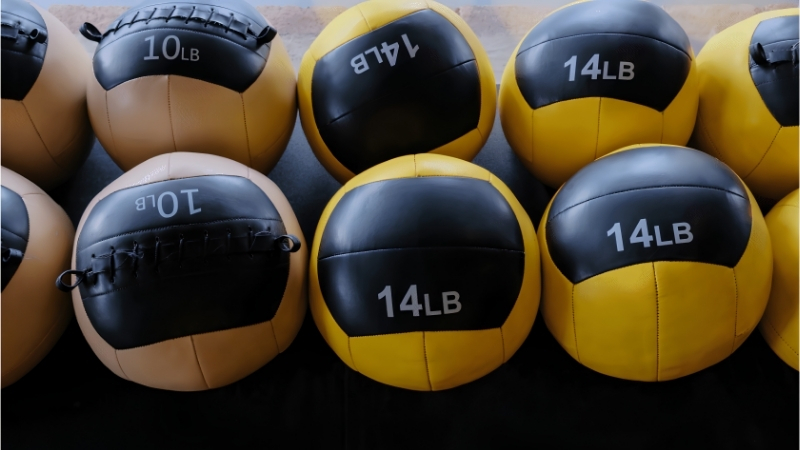
Get those right and a single ball unlocks dozens of drills.
Weight for Your Movements
Explosive slams and throws suit lighter balls of 6 to 15 lb (3 to 7 kg), while heavy carries and squats can use more. Starting too heavy wrecks form and speed on power moves.
Pick a weight you can move fast with control for dynamic work. Many home gyms end up with a light and a medium ball to cover most workouts.
Err lighter if you are unsure, since speed matters more than load on power moves.
Bounce or No Bounce
Slam balls have a dead, no-bounce feel built for slamming into the floor, while wall balls and rubber med balls bounce for partner throws and rebounds. The wrong bounce ruins certain drills.
If you slam, buy a no-bounce slam ball so it does not fly back at you. For wall throws and catches, a bouncy or soft wall ball is safer.
Check the product description for no-bounce or dead-bounce before buying for slams.
Grip and Durability
A textured rubber shell grips sweaty hands, while soft wall balls are easier to catch against the body. Dual-grip balls add handles for twists and swings, expanding your exercise options.
Reinforced seams matter most for slam balls that hit the floor hard. A tough shell keeps the ball round and usable through months of abuse.
Wipe the shell after sweaty sessions so the texture keeps its grip.
Storage Footprint and Where to Train
A single ball takes only about 1 sq ft (0.09 sq m), but slams and wall throws need clearance and a sturdy surface or wall. Measure your ceiling height and floor space before big movements.
Train slams on rubber flooring to protect the slab and the ball. The best medicine ball workouts still need a clear, solid area to move safely.
Top Picks: Six Medicine Balls
These six cover slams, wall throws, and grip work. The table lines up type and standout trait, then the notes below add the honest trade-offs behind each ball.
All six are home-friendly; bounce and grip decide which fits your moves.
All six are home-friendly; bounce and durability set them apart.
| Ball | Type | Bounce | Best for |
|---|---|---|---|
| Rep Fitness Slam Ball | Slam | None | Slams and throws |
| Dynamax Wall Ball | Wall | Soft | Wall throws |
| SPRI Dual-Grip | Dual-grip | Low | Twists and swings |
| Titan Slam Ball | Slam | None | Budget slams |
| AmazonBasics Medicine Ball | Rubber | Moderate | All-round value |
| TRX Slam Ball | Slam | None | Durable shell |
Rep Fitness Slam Ball: Best for Slams
Rep’s slam ball has a dead no-bounce feel and a tough shell built for repeated floor slams, making it a core piece for explosive circuits. It grips well even when hands sweat.
It is not made for wall throws that need bounce, and heavier sizes are a lift to move. For power slams and throws, it anchors the best medicine ball workouts.
It is the workhorse behind many slam-based circuits at home.
Dynamax Wall Ball: Best for Wall Throws
The soft, large Dynamax is designed for wall throws and catches, cushioning the hands while you build power and conditioning. It is a CrossFit and conditioning staple.
The forgiving surface is easy on the wrists during long sets.
The soft shell is not for hard floor slams and the large size stores bigger. For wall-throw workouts, it is the classic choice.
Mark a target height on the wall to standardize your throws.
SPRI Dual-Grip: Best for Twists and Swings
Handles on the SPRI open up Russian twists, swings, and chops that a plain ball cannot do as comfortably. It broadens your exercise menu at home.
Its handles make it beginner-friendly for learning twists safely.
The handles limit slamming and wall work, so it is a complement rather than a do-everything ball. For rotational and grip work, it is excellent.
Keep it for rotational days and pair it with a slam ball for power work.
Titan Slam Ball: Best Budget Slams
Titan’s slam ball brings no-bounce durability to a tight budget, letting you slam and throw without overspending. It is a common entry into power training.
The shell and seams are less refined than premium balls, so inspect it on arrival. For budget slams, it delivers solid value.
Inspect the seams on arrival and it will handle regular slams fine.
AmazonBasics Medicine Ball: Best All-Round Value
This rubber med ball offers moderate bounce and a grippy texture at a low price, covering throws, carries, and core work. It is a versatile first ball for most homes.
The moderate bounce makes it less ideal for dedicated floor slams. As an affordable all-rounder, it is a smart starting pick.
Its versatility makes it a great first ball before you specialize.
It stores easily in a corner between sessions.
TRX Slam Ball: Best Durable Shell
The TRX slam ball uses a rugged shell and reinforced seams to survive heavy, repeated slams, holding its shape over time. It grips sweaty hands well.
It costs more than budget slam balls and, like all slam balls, will not bounce. For long-term slam durability, it is a dependable pick.
The tough shell holds its round shape through heavy, repeated slams.
It is worth the extra cost if you slam daily.
Frequently Asked Questions
A few questions come up whenever people plan the best medicine ball workouts. Here are short, practical answers before you buy.
What weight should I start with?
For explosive slams and throws, many start around 6 to 12 lb (3 to 5 kg) and add weight as control improves. Heavier balls suit carries and squats, not fast power moves.
Lighter, faster reps are the heart of the best medicine ball workouts for power.
Slam ball or wall ball?
Use a no-bounce slam ball for floor slams and a soft wall ball for wall throws and catches. They serve different movements, so many owners keep both.
A slam ball is the more versatile first buy for most home gyms.
Beginners often add a wall ball later for throws.
Two balls, a slam and a wall or dual-grip, cover almost every routine.
Do I need a lot of space?
A ball stores small, but slams and throws need floor clearance and a sturdy surface or wall. Check your ceiling height and train on rubber flooring.
Clear a few feet around you so the best medicine ball workouts stay safe.
Even a garage bay or driveway works well for slams and throws.
Can one ball do everything?
A moderate rubber med ball covers many exercises but is not ideal for hard slams. For a full range, a slam ball plus a wall or dual-grip ball works best.
Adding a dual-grip ball later expands your rotational options.
See More:
- best ab roller wheel
- best curl barbell
- best home gym rubber flooring
- best ankle straps for cable machine
- What is the best rowing machine
Final Thoughts
The best medicine ball workouts come from matching the ball to the movement: a no-bounce slam ball for slams, a soft wall ball for throws, and a dual-grip ball for twists. The Rep and TRX slam balls lead on durability, the Dynamax on wall work, and the AmazonBasics on value. Pick the weight you can move fast, clear a safe space, and a med ball becomes one of the most versatile tools you own.



Write Your Review
No reviews yet. Be the first to share your experience!