
Comparing a women’s Olympic barbell vs alternatives starts with the feature you need most. A 15 kg bar with a 25 mm shaft gives you a lighter start and a narrower grip. A 20 kg bar can give you more sleeve space, while a compact bar, technique bar, or dumbbells can solve a tighter room or lower starting-load requirement.
Women’s Olympic barbell vs alternatives at a glance
Choose the 15 kg women’s Olympic format if a narrow grip and a roughly 79-inch straight bar suit your rack and plate setup. The most useful alternatives preserve the part of the lift you care about while changing the space, starting load, or grip demands. Compare each option using the movement you perform most often.
| Equipment | Choose it when | What changes |
|---|---|---|
| 15 kg women’s Olympic bar | You want a 25 mm grip and straight-bar training | Starting weight and sleeve space differ from many 20 kg bars |
| 20 kg general-purpose Olympic bar | You need longer sleeves or prefer a thicker grip | Higher empty weight and more loading length in the room |
| 20 kg power bar | You mainly squat, bench, and deadlift with power-bar handling | Typically a thicker, more rigid shaft and stronger grip texture |
| 10 kg training bar | You need to practice under a 15 kg starting load | Less starting weight and usually a shorter working stack |
| Compact Olympic bar | Walls, storage, or plate loading demand a shorter bar | Starting weight, grip, and rack spacing vary by model |
| Adjustable dumbbells | You want independent loads or easy storage without a rack | Weight changes happen per hand and movement mechanics differ |
| Trap bar | You want neutral-grip pulls with your hands at your sides | The frame, handle height, and available lifts change |
| Landmine | You want angled pressing or rowing in a pivoting setup | The bar follows an arc and needs a suitable base and clearance |
If more than one option appeals, look at whether you want the same movement or a new one. A lower-mass straight bar can preserve the setup for barbell presses. Dumbbells may better suit the independent-arm work you want to do next. A trap bar can support heavy pulling while changing where the handles and load sit relative to the lifter.
Compare a women’s Olympic barbell vs alternatives in straight bars
A straight bar keeps both hands on the same implement and can be chosen around grip, mass, and sleeve length. A 15 kg women’s bar often gives enough room for rack work and a lighter first set. The alternatives become attractive when you need more loading room, a firmer grip, or a much lower starting load.
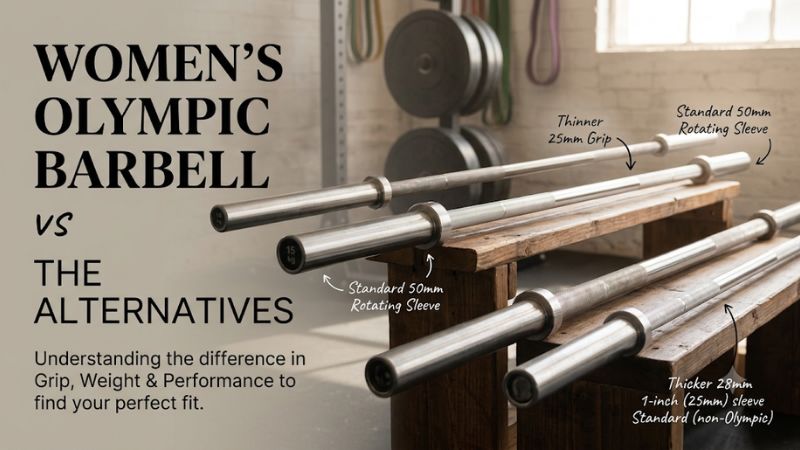
Full-length 20 kg Olympic bar for longer sleeve capacity
A typical general-purpose 20 kg bar is longer and starts about 11 pounds heavier than a 15 kg bar. Compare the published sleeve length if you use broad bumpers. Rogue lists 16.4 loadable inches on the Ohio Bar and 13 inches on the Bella. Those dimensions show where extra overall length can benefit a heavy setup.
If your plates and collar take 14 inches per side, the 20 kg example fits the stack on paper and the Bella does not. On a smaller load where the stack uses nine inches, both have room, so starting weight and grip feel can matter more. Some buyers can keep the 15 kg bar and use a thinner approved plate mix. Compare the cost of that change against buying a separate bar.
Room clearance can reverse the decision. A bar approximately 87 inches long can occupy about four inches more per end than one about 79 inches long when both are centered. A few inches may be valuable beside a garage cabinet. Trace how the largest plate passes onto the sleeve before treating the longer bar as a better use of the space.
20 kg power bar for squat, bench, and deadlift specificity
A power bar is designed around controlled strength lifts. Common features include a thicker shaft, a more pronounced grip texture, and center knurling on many models. These can be useful if most of your work is on a rack and you like strong contact under your hands or against your shirt during back squats.
Compare an actual power bar to a 25 mm model at a load you can handle comfortably. The 20 kg bar makes sense if you like the grip and shaft response for your training and have room for it. A 15 kg women’s-format utility bar with a center knurl offers another setup when you want the back-squat contact and prefer the narrower shaft or lighter warm-up load.
If you enter a meet, check the rules and the bars provided by the organizer. The equipment used for Olympic weightlifting and powerlifting can differ even when the sleeves accept compatible plates. You can train many strength movements with a 15 kg bar at home and plan sport-specific sessions with the expected setup as needed.
10 kg technique bar when 15 kg is above your first working load
A 10 kg training bar gives you roughly five kilograms of additional room at the bottom of the progression. A model such as the Rogue 10 KG Training Bar also keeps a 25 mm shaft. It can be a practical choice when you are learning bench or overhead positions, or sharing the gym with someone whose first sessions need a lower load.
The Rogue model illustrates the geometric trade-off. Its 66.8-inch overall length frees space in a tight room, and the 6.625-inch sleeves give it less plate room than standard women’s bars. That matters when you use lightweight full-size training plates that take considerable sleeve length for their mass. Check how the first few suitable sets stack up and how quickly heavier work could outgrow it.
A training bar may complement the main bar. If you have room to store both, one serves technique work and the other serves heavier sessions. If you are buying one and expect to stay below 15 kg on key movements for a while, prioritize the minimum useful load and the manufacturer’s intended use for the technique model.
Compact Olympic bar when loading clearance is the hard limit
A compact Olympic bar can maintain a familiar rack span by shortening the sleeves or preserve more plate space by shortening the shaft. Some models use a 25 mm grip, while others use thicker shafts. Compare overall length, shoulder span, and sleeve length individually before using the term compact to choose one.
One example is the Valor 68-inch Shorty with a 25 mm shaft, a listed empty weight of 25 pounds, and seven-inch sleeves. Compared with a 79.13-inch, 15 kg bar, it gains about 5.6 inches of room per end in a symmetric layout. It gives up both bar mass and sleeve capacity, so you may need extra weight plates to reach the same working load using less sleeve space.
Choose the compact bar when that short geometry makes your normal training possible and the intended stacks fit. Keep the standard 15 kg format if the model can already be loaded in the room and you want more flexibility with plates. Measure from the location where you stand to attach plates, since the usable working space drives the decision.
Compare the 15 kg straight bar with other training implements
Some alternatives make sense because they change the exercise. Dumbbells let you load the hands independently. A trap bar puts handles alongside the lifter. A landmine adds a fixed pivot. Match the change to the reason you are shopping, especially if you want to keep tracking a specific lift across different rooms or programs.
Adjustable dumbbells for independent pressing and rows
Adjustable dumbbells can consolidate many weights into a compact pair and support independent-arm presses, rows, split squats, and carries. That helps in a room where setting up a rack or carrying plates to both ends of a bar is difficult. Their usefulness depends on the usable weight range, increments, and dimensions of each handle.
Compare the same type of movement with both tools. In a dumbbell press, each arm controls its own implement and independently gets it to the starting position. With a straight bar, the hands share a fixed grip and an appropriate rack can support the initial setup and safeties. If straight-bar bench progress is central to your goal, the 15 kg bar keeps that format.
Use the top load and progression steps for your hardest dumbbell lift when comparing costs. A compact pair that easily covers rows and split squats can be better value than buying a rack. A pair that tops out before the desired load can be more limiting than a barbell and a suitable plate kit. Also check whether the dumbbell body gets longer at higher settings and interferes with your range of motion.
Trap bar for neutral-grip pulls and a different starting position
A trap bar uses handles at the sides of the lifter, with handle height and spacing defined by the design. Some models offer high and low handles. This can suit a program that includes neutral-grip pulls or carries. The extra frame changes the floor footprint, storage needs, and the way you enter and leave the implement.
Measure both the frame and the sleeve tips if the bar is going into a small gym. A model with ample room for plates can need more front-to-back floor space than a straight bar. A trap bar can also be awkward to carry down a narrow hallway or hang from storage designed for a regular bar. Confirm the complete storage route if you move it often.
Choose a straight 15 kg bar when you want your hands and load in front during pulls and also expect to use it for presses and squats. Buy the trap bar if its pulling or carry configuration drives the purchase and the starting weight works. Compare the actual handles and unloaded mass because trap bar designs vary.
Landmine for angled lifting in a small training area
A landmine holds one end of a compatible bar near the floor. The other travels in an arc for angled presses, rows, and related movements. This can make better use of a room where a standing overhead bar path is restricted or where angled training is already part of the program. It needs a suitable pivot and clearance.
Test the complete path of the loaded end. A low starting height can make the setup fit under a beam until you press or row through the arc. A plate can also hit a nearby rack upright as the bar rotates sideways. A shorter bar changes the geometry and the leverage at the hands, so check the intended bar length and interface before buying the attachment.
If you already own a 15 kg Olympic bar, a compatible landmine can add a movement option at lower cost than another bar. If your goal is a conventional press or squat with a freely moving straight bar, keep the setup that lets you practice it. The landmine earns a place when the pivoting motion itself solves the training problem.
One-inch bar when you already own compatible plates
A standard one-inch bar can serve some home gym routines when you already have a compatible plate set and collars. Check the actual empty weight, shaft span, and intended loading limits. A short standard bar can occupy less space and still use plates you already own if its geometry supports the required lifts.
If your plates are Olympic size, a 15 kg Olympic bar is a more direct fit. Sharing equipment across two systems can mean buying extra collars and keeping separate stacks. Compare a complete working set of plates for both formats if you are choosing from scratch. Include the next small weight increment and the largest load the setup needs to handle.
A small cost advantage on a standard bar can be worthwhile for a deliberate light-strength setup. If you expect to build around Olympic plates, a rack, and compatible attachments, price the full system over the lifts you anticipate training. The cheapest first item can become the more expensive route once you replace the plates.
Choose by the training problem you actually have
A direct comparison gets clearer when you identify the first limitation in the setup. That could be the starting weight, the sleeve stack, a rack that already fits the room, or an exercise you want to perform differently. Use the cases below to decide whether your purchase should keep the same lift or change the training format.
You need an easier first working set
Begin by writing down your lightest working load and first few planned warm-up weights. A 15 kg bar works when those sessions can start at or above 15 kg. If your main lift needs to begin closer to 10 kg, a compatible technique bar opens options that a regular women’s bar or 20 kg Olympic bar cannot provide.
When practicing a floor movement at those loads, include the bar’s starting height. A full-diameter technique plate can help retain the height you want from the floor without the mass of a heavier bumper. Check the plate manufacturer’s intended use and give the collar enough room to engage on a short technique sleeve.
If independence matters more than practicing the same bar path, adjustable dumbbells can give a lighter load per hand. Compare that change to the exercise goal rather than assuming that two dumbbells at the same total weight will feel like one bar. They can both serve the program in different ways.
You want to preserve squat and bench in a narrow room
A 15 kg rackable women’s bar usually belongs at the top of the list when it preserves your preferred grip and leaves enough room to load from both ends. If it is still too long, compare a compact rackable design on its actual shoulder span and sleeve length. Use the installed J-cups and safeties for the comparison.
Work through one bench and one squat session. Check how many plates and collars you need on each end. Identify the spot where you would stand to load each one. A short design is attractive when it solves end clearance and still carries the thickest working stack. A standard-length 15 kg bar makes more sense when both load easily and you need the longer sleeves.
A dumbbell setup can take up less permanent space if you are happy removing or foregoing the rack. A change to dumbbells also changes the exercise and your progression. If keeping straight-bar bench and squat is the main goal, put energy into the right rack fit and loading path before changing equipment formats.
You are running out of sleeve space during heavy sessions
Measure the exact stack for your heaviest and thickest sets. If you need more than 13 inches per side, a longer 20 kg bar may carry the load more easily when the room permits it. If the problem comes from a single thick plate pair, a thinner compatible pair may recover enough space to keep your preferred grip.
A different bar weight can affect the plate arrangement you need. To reach 75 kg with a 15 kg bar requires 30 kg per sleeve before collars. With a 20 kg bar it takes 27.5 kg on each end. The size of the individual plates you own determines how much sleeve room either load consumes.
For lifters who want both a narrow grip and heavy loading, start by looking at plate dimensions and the published maximum use of the bar. For lifters who prefer a 20 kg bar as lifts get heavier, solve the room and storage questions before moving to a longer model. Each option works best when it addresses a load you actually plan to use.
You want training that transfers to a club or meet
Find out what the club or meet uses for bar mass, shaft diameter, grip marks, plates, and collars. If you compete with a 15 kg bar, choosing that same mass and grip diameter at home can help keep training familiar. A dedicated weightlifting model can bring the setup closer if sleeve behavior and event specifications also matter.
A compact 25 mm bar can preserve the grip diameter and take care of a tight room. Its different mass and sleeve geometry can affect how training feels, even when you load both bars to the same total mass. If you need exact practice under event conditions, plan regular sessions on the correct equipment and use the home bar for compatible workouts.
For general home strength, the equipment you can use consistently may be more useful than exact event dimensions. Decide how much of your weekly program needs to replicate the outside setup and whether the rest can progress with a lighter, shorter, or different implement.
Conclusion
Choose a 15 kg women’s Olympic barbell when a 25 mm grip, lighter warm-up load, and straight-bar mechanics suit your program. A 20 kg bar offers more sleeve space, a technique bar lowers the starting load, and a compact bar helps in tight loading zones. Use dumbbells, a trap bar, or a landmine when the movement those tools provide is what you want to train.
More from Amazon
Programs that pair well with the guide above. Offers and eligibility are set by Amazon and may change.
Free shipping on eligible items, Prime Video and more. Eligible new members can start with a free trial.
Start a Prime free trialA Prime membership for ages 18-24 with a trial period. Eligibility is set by Amazon.
See Prime for Young AdultsAudiobooks and podcasts to listen to on the go. Eligible new members can start with a free trial.
Try Audible freeAd-free music streaming. Eligible new subscribers can start with a free trial.
Try Music Unlimited freeAs an Amazon Associate we earn from qualifying purchases.
Write Your Review
No reviews yet. Be the first to share your experience!