
Key takeaways
- Seat height: at the bottom of the pedal stroke, your knee should be slightly bent, not locked.
- Seat position: with pedals level, your front knee should sit roughly over the pedal.
- Handlebars: high enough that you can ride without straining your lower back.
- Resistance: start lighter than you think and increase gradually.
A stationary bike is one of the easiest pieces of home cardio equipment to use consistently: low impact on the joints, quiet enough for an apartment and simple to start. The challenge is knowing what to do once you sit on it. Below are practical bike workouts for beginners and experienced riders, plus how to set up the bike correctly and choose the right type if you are still shopping.
Set up the bike first
- Seat height: at the bottom of the pedal stroke, your knee should be slightly bent, not locked.
- Seat position: with pedals level, your front knee should sit roughly over the pedal.
- Handlebars: high enough that you can ride without straining your lower back.
- Resistance: start lighter than you think and increase gradually.
If you have heart, joint or other health conditions, check with a doctor before starting a new exercise program.
Workouts to try
| Workout | Time | Structure | Good for |
|---|---|---|---|
| Beginner steady ride | 20 min | 5 min easy, 10 min moderate, 5 min easy | Building a habit |
| Simple intervals | 25 min | 5 min warm-up, 8 rounds of 1 min hard / 1 min easy, 4 min cool-down | Fitness and calorie burn |
| Hill climb | 30 min | Increase resistance every 3 minutes, then return gradually | Leg strength |
| Long endurance ride | 45 to 60 min | Steady moderate pace, conversation possible | Endurance, recovery days |
| Tabata-style sprints | 15 min | Warm-up, then 20 s all-out / 10 s rest for 4 minutes, cool-down | Experienced riders, short time |
How hard is hard?
Without a heart rate monitor, use effort level on a 1 to 10 scale. Easy is about 3 to 4, where you can talk comfortably. Moderate is 5 to 6, where you can talk in short sentences. Hard is 7 to 9, where speaking is difficult. A heart rate strap or fitness tracker makes intervals more precise and shows progress over weeks.
Choosing a bike for home
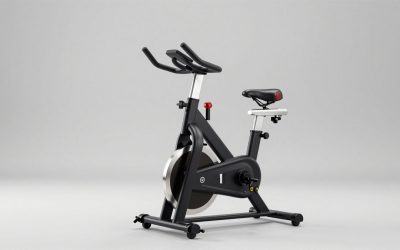
Upright bikes feel like a road bike and suit most people. Recumbent bikes have a reclined seat with back support, which is easier on the lower back and good for older riders or those with joint issues. Indoor cycling (spin) bikes have a heavy flywheel and a more aggressive position for intense classes. Folding bikes save space in apartments. Magnetic resistance is quieter than friction pads. Compare magnetic exercise bikes for home.
Comfort upgrades
A gel seat cover helps if the saddle feels hard. Padded cycling shorts make longer rides far more comfortable. A floor mat protects floors and reduces noise, and a small fan keeps you cool during intervals. A tablet holder lets you follow online classes. See exercise bike mats and seat cushions.
A simple weekly plan
Beginners can start with three 20-minute steady rides a week. After a few weeks, swap one ride for intervals and lengthen another. Experienced riders can mix two interval sessions, one hill climb and one long ride, with rest days between hard sessions.
Common mistakes to avoid
- A seat set too low, which strains the knees.
- Pedaling fast with no resistance, which bounces you and builds little fitness.
- Doing hard intervals every day without recovery.
- Gripping the handlebars tightly and hunching the shoulders.
FAQ
How long should I ride a stationary bike for exercise?
Beginners can start with 20 minutes a few times a week and build up gradually.
Is a stationary bike good for weight loss?
It can be part of a plan alongside diet and other activity; consistency matters most.
Which is better, upright or recumbent?
Upright bikes suit most people; recumbent bikes are easier on the back and joints.
Can I do intervals on any exercise bike?
Yes, as long as you can change resistance or speed.





Write Your Review
No reviews yet. Be the first to share your experience!