
Our Top Picks
The best chest strap heart rate monitors for accurate training data are the Polar H10 for maximum ECG reliability, Garmin HRM-Pro Plus for Garmin users who want running dynamics, and Wahoo TRACKR HEART RATE for a rechargeable, multi-platform option. Chest straps generally measure the heart’s electrical activity more directly than wrist optical sensors, but the right choice depends on device compatibility, comfort, battery preferences, and how often you train.
Quick comparison: best chest strap heart rate monitors
| Model | Measurement | Connections | Battery and runtime | Water resistance | Approx. weight | Best for |
|---|---|---|---|---|---|---|
| Polar H10 | ECG electrical signal | Bluetooth, ANT+, 5 kHz gym equipment | CR2025 coin cell; up to 400 hours | 30 m | 60 g with Pro strap | Accuracy, intervals, testing, broad compatibility |
| Garmin HRM-Pro Plus | ECG electrical signal | Bluetooth, ANT+ | CR2032 coin cell; approximately 12 months | 5 ATM | About 59 g with strap | Garmin running metrics and watch-free activity storage |
| Wahoo TRACKR HEART RATE | ECG electrical signal | Bluetooth, ANT+ | Rechargeable battery; up to 100 hours | IPX7 | About 39 g | Frequent training and avoiding coin-cell batteries |
| Garmin HRM-Dual | ECG electrical signal | Bluetooth, ANT+ | CR2032 coin cell; approximately 3.5 years at typical use | 1 ATM | About 54 g with strap | Simple heart-rate broadcasting to watches and apps |
| Coospo H808S | ECG electrical signal | Bluetooth, ANT+ | CR2032 coin cell; roughly 300 hours | IP67 | About 47 g | Lower-cost indoor and outdoor training |
Published weight can vary with strap size and whether the manufacturer counts the transmitter alone or the complete unit. Battery life also depends on transmission frequency, storage temperature, and use of extra features.
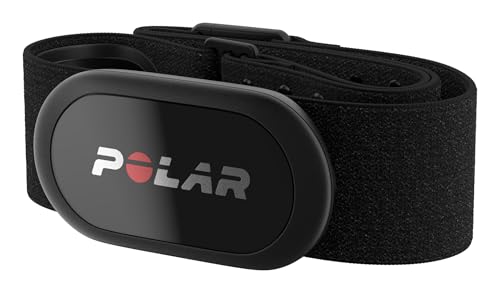
Polar H10 Heart Rate Monitor Chest Strap - ANT + Bluetooth, Waterproof HR Sensor for Men and Women, Black, M-XXL
Chosen because it specifies ANT + Bluetooth and Waterproof HR Sensor for Men and Women.
View on Amazon
Garmin HRM 600, Premium Heart Rate Monitor, M-XL
Chosen because it specifies Premium Heart Rate Monitor and M-XL.
View on Amazon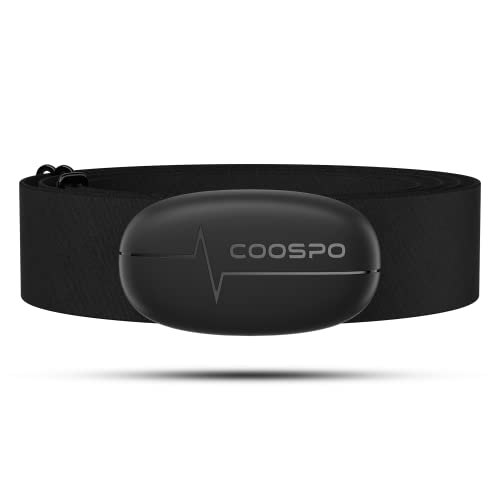
COOSPO H6 Heart Rate Monitor Chest Strap Bluetooth 4.0 ANT+ IP67 Chest Heart Rate Sensor for Peloton Polar DDP Yoga Map My Ride Garmin Sports Watches
Picked as a relevant option in this category.
View on Amazon
Our picks by training situation
| Your situation | Best fit | Why |
|---|---|---|
| You want the most dependable general-purpose data | Polar H10 | Strong ECG reputation, dual Bluetooth connections, ANT+, and gym-equipment support |
| You use a Garmin watch and run seriously | Garmin HRM-Pro Plus | Adds running dynamics and can store activity data when the watch is not worn |
| You train several times a week and prefer rechargeable gear | Wahoo TRACKR HEART RATE | USB charging removes regular coin-cell replacement |
| You need basic ANT+ and Bluetooth at a lower price | Garmin HRM-Dual or Coospo H808S | Both focus on reliable heart-rate broadcasting without advanced metrics |
| You swim regularly with the sensor | Polar H10 or Garmin HRM-Pro Plus | Both offer substantially stronger stated water resistance than basic HRM-Dual models |
Polar H10: the accuracy-first choice
The Polar H10 is the safest recommendation when your priority is a clean heart-rate signal during intervals, cycling, rowing, and laboratory-style training comparisons. It uses ECG sensing through electrodes in the strap, supports ANT+ and Bluetooth, and can connect to compatible 5 kHz gym equipment. It also supports two simultaneous Bluetooth connections, which is useful when recording to a phone while broadcasting to a watch or tablet.
The Pro strap is soft, adjustable, and available in multiple size ranges. Its silicone dots help keep the strap from sliding, although the contact area can feel more noticeable than a very light, minimalist strap. The replaceable CR2025 battery lasts up to 400 hours, making it practical for athletes who do not want to charge after every few sessions.
Choose the H10 if accuracy and compatibility matter more than onboard running metrics. It does not provide the Garmin-specific running-dynamics feature set, and its battery compartment requires a coin cell rather than USB charging.
Garmin HRM-Pro Plus: best for Garmin running ecosystems
The HRM-Pro Plus is more than a heart-rate transmitter. With a compatible Garmin watch, it can contribute running dynamics such as ground contact time, vertical oscillation, and stride-related information. It can also store activity data temporarily, allowing some running information to be synchronized later when the watch is not being worn.
It broadcasts over ANT+ and Bluetooth and uses a replaceable CR2032 battery. The approximately one-year battery interval is convenient for regular users, while the 5 ATM rating makes it a stronger choice for wet training than the HRM-Dual. The strap is machine-washable according to Garmin’s care guidance, but the transmitter should be removed first.
This is the best pick for a Garmin owner who will actually use those additional metrics. If you only need heart rate for a spin bike or phone workout, the extra cost and features may not add much.
Wahoo TRACKR HEART RATE: best rechargeable option
The Wahoo TRACKR HEART RATE suits athletes who dislike opening a battery compartment. Its rechargeable battery provides up to 100 hours of operation, and the sensor charges through USB. It supports ANT+ and Bluetooth, so it can feed data to cycling computers, watches, phones, and compatible fitness applications.
At roughly 39 grams, it is lighter than many complete transmitter-and-strap combinations. Its IPX7 rating protects it against temporary water exposure, sweat, and rain, but it should not be treated as a dedicated swim sensor. Rechargeable batteries also have a finite service life: after years of charging cycles, runtime will eventually decline, and replacing the entire sensor may be necessary.
TRACKR is a strong choice for frequent cyclists, indoor trainers, and multisport users who would rather charge once every several weeks than keep replacement coin cells available.
Garmin HRM-Dual and Coospo H808S: sensible basic choices
The Garmin HRM-Dual provides straightforward ECG heart-rate broadcasting over ANT+ and Bluetooth. It is useful when you already own a compatible watch, phone app, or exercise machine and do not need running dynamics or internal activity storage. Its replaceable CR2032 battery offers long service life, but its 1 ATM water-resistance rating makes it less suitable for swimming or prolonged submersion.
The Coospo H808S is a budget-oriented alternative with ANT+, Bluetooth, a replaceable CR2032 battery, and an IP67 rating. It can be appealing for indoor cycling, gym sessions, and general cardio training. Before buying, verify that your particular app supports the required Bluetooth profile and that your gym equipment accepts the connection type you plan to use.
What matters more than the headline accuracy claim?
ECG signal quality
Chest straps measure electrical activity through skin-contact electrodes. They usually respond quickly to sudden intensity changes, making them useful for short intervals and heart-rate-zone work. Poor contact, a loose strap, dry skin, or heavy static from synthetic clothing can still create spikes or dropouts. No strap eliminates the need for a secure fit.
ANT+ versus Bluetooth
ANT+ is common in cycling computers, sports watches, and gym equipment. Bluetooth is common in phones, tablets, and training applications. If you need to connect to two devices at once, check the model’s simultaneous-connection limits. A sensor that supports both standards is usually the most flexible long-term purchase.
Comfort and sizing
Measure around your chest immediately below the pectoral muscles, keeping the tape level and snug without pulling it tight. For example, if your measurement is 92 cm and a strap range is 70–110 cm, you have 18 cm of adjustment remaining before reaching either end. That gives room for normal breathing and clothing changes; a strap near its maximum extension is more likely to shift.
The transmitter should sit centered or slightly left of center, with the electrodes fully against the skin. Moisten the electrode areas before starting, especially in cold or dry conditions. If the strap rides upward during running, shorten it slightly rather than tightening it aggressively.
Ownership costs and maintenance
A battery-powered strap typically costs about $50–$130, while rechargeable models commonly sit around $80–$130. Consider cost per use rather than purchase price alone. If a $90 strap lasts three years and you use it four times per week, that is approximately 624 sessions, or about $0.14 per session before battery or replacement-strap costs.
- Rinse the strap with clean water after sweaty sessions.
- Wash it according to the manufacturer’s instructions; do not machine-wash the transmitter.
- Hang it to dry rather than storing it damp in a gym bag.
- Unclip or remove the transmitter when the strap is not in use to reduce accidental battery drain.
- Inspect the snap connectors, elastic, and electrode areas first when readings become erratic.
The strap is usually the first part to wear out. Elastic can lose tension, snaps can corrode, and electrode material can stop making consistent contact. Replacing the strap while keeping the transmitter is often cheaper than replacing the whole monitor, provided the connector design is compatible.
Bottom line
Buy the Polar H10 for the strongest all-around accuracy and compatibility. Choose the Garmin HRM-Pro Plus if Garmin running dynamics and watch-free activity storage matter. Pick the Wahoo TRACKR HEART RATE if rechargeable power and low weight are priorities. For uncomplicated heart-rate broadcasting, the Garmin HRM-Dual and Coospo H808S cover the essential features at lower cost.
These devices are training tools, not diagnostic instruments. If you experience chest pain, fainting, unusual shortness of breath, or unexplained palpitations during exercise, stop training and seek advice from a qualified healthcare professional.

Write Your Review
No reviews yet. Be the first to share your experience!