
Key takeaways
- Table of Contents 7 sections 9 min read 1 Quick Verdict 2 Side by Side 3 Where Rubber Wins 4 Where Neoprene Dumbbells Wins 5 Cost Over 5 Years 6 Which One for Your Home 6.1 Small Apartment 6.2 Family…
What's inside
Choosing between rubber and neoprene dumbbells is less about which material is universally “better” and more about how your home, workouts, and budget actually work. Both options are widely available in weights from about 1 to 25 pounds per dumbbell, and both can support strength training, cardio circuits, mobility work, and general fitness. The real decision comes down to what happens after the workout: where the weights will live, how often they will be dropped, how much noise they make, and whether your hands prefer a soft or firm grip.
Rubber dumbbells are typically the more durable, gym-like choice. They tolerate frequent use and offer better protection against ordinary scuffs and impacts, although they can have a noticeable odor when new. Neoprene dumbbells are softer, quieter, and more comfortable for many beginners, but the coating can wear, stain, or tear sooner if the weights are dragged or stored carelessly. Here is how the two materials compare for a home gym in 2026.
As an Amazon Associate we earn from qualifying purchases at no extra cost to you. Product prices and availability are accurate as of the date shown and are subject to change.


Quick Verdict
Choose rubber dumbbells if you want the longest-lasting option, plan to train several times per week, need weights heavier than about 15 pounds, or expect the dumbbells to see demanding use. Rubber is also the better fit for people who want a dense, professional-gym feel and do not mind paying more or using a mat.
Choose neoprene dumbbells if comfort, low noise, easy handling, and a friendly appearance matter most. They are especially practical for beginners, apartment workouts, light strength training, physical therapy-style exercises, and routines that involve moving weights frequently rather than setting them down hard.
Side by Side
| Feature | Rubber Dumbbells | Neoprene Dumbbells |
|---|---|---|
| Comfort | Firm, secure grip; may feel less forgiving during long sets | Soft, warm-to-the-touch coating; comfortable for lighter workouts |
| Durability | Excellent for frequent use; resists ordinary impacts and abrasion | Good for normal indoor use, but coating can scuff, peel, or tear |
| Price range | About $10–$80 per dumbbell, depending on weight and finish | About $6–$35 per dumbbell; sets commonly cost $40–$180 |
| Maintenance | Wipe clean; may need airing out for initial odor | Wipe clean gently; avoid harsh cleaners and prolonged moisture |
| Space needed | Usually compact, but heavier pairs need a sturdy rack or floor mat | Compact and easy to store in a basket, cabinet, or small rack |
| Look | Traditional black or dark finish with a commercial-gym appearance | Often available in bright colors and coordinated weight markings |
| Resale | Typically holds value better when the coating remains intact | Resale value is more affected by stains, fading, and surface wear |
| Noise and floors | Quieter than bare metal, but can thump on hard floors | Quietest option for careful indoor use and shared spaces |
| Best for | Frequent training, progressive overload, and heavier lifting | Beginners, apartment workouts, classes, and light-to-moderate exercise |
Where Rubber Wins
Rubber is the stronger choice for repeated, demanding use. A quality rubber dumbbell generally has a solid metal core surrounded by a thick rubber coating. That coating helps protect the weight, the floor, and nearby furniture from minor contact. It is not a guarantee against damage: dropping a 30-pound dumbbell onto hardwood can still dent the floor, crack a tile, or damage the dumbbell. A rubber mat remains a smart purchase.
Rubber also tends to feel more stable at heavier weights. The handle is commonly chrome-plated or textured steel, and the heads have enough density to keep the dumbbell balanced during rows, presses, lunges, and carries. For progressive strength training, where you may move from 10-pound weights to 15, 20, or 25 pounds, rubber dumbbells usually offer more size and weight options than neoprene.
Another advantage is long-term resilience. Rubber can develop surface marks and may become slightly tacky with age, but it generally withstands more handling than a fabric-like neoprene finish. That matters if several people use the same equipment or if the dumbbells will be moved between rooms. It also makes rubber easier to sell later, provided the handles are not rusty and the coating has no major cracks.
Expect a new-rubber smell, particularly with inexpensive products. The odor often fades after several days or weeks of ventilation. Do not store rubber weights in a hot, enclosed closet immediately after opening; placing them on a washable mat in a ventilated room can help. A 1/8-inch rubber sheet pad, such as a 12-by-12-inch pad priced around $9.54, can also serve as a small protective surface under a pair of weights, though heavier training may call for a thicker, larger mat.
Where Neoprene Dumbbells Wins
Neoprene wins on approachability and everyday comfort. The coating has a soft, slightly grippy texture that feels pleasant during lateral raises, curls, kickbacks, and other movements using lighter weights. It is also less likely than bare metal to feel cold in an unheated room. For someone starting with 2-, 3-, 5-, or 8-pound dumbbells, that comfort can make regular exercise feel less intimidating.
Neoprene is also a strong choice for noise-sensitive homes. Setting a neoprene dumbbell down carefully produces less clatter than placing metal or hard rubber on a wood, laminate, or tile floor. This does not make it appropriate to drop weights, but it is useful in an upstairs apartment, bedroom workout area, or household where another person is working nearby.
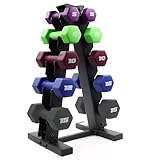
Color coding is another practical benefit. Many neoprene sets use a different color for each weight, making it easy to grab the correct pair without reading a small label. A single 10-pound pair can cost roughly $20–$35; for example, an Amazon Basics 10-pound pair is listed at $25.19. A larger set costs more upfront but can be convenient: a 100-pound CAP Barbell set with 5-, 8-, 10-, 12-, and 15-pound pairs plus a rack is listed at $139.99.
The tradeoff is that neoprene requires gentler treatment. Avoid dragging the dumbbells across the floor, storing them while damp, or placing them against rough concrete. Sweat should be wiped away after use with a soft, slightly damp cloth, followed by air drying. Do not assume every household cleaner is safe for the coating. Over time, neoprene can show discoloration, compression marks, or peeling, especially when exposed to sunlight, heat, or sharp edges.
Cost Over 5 Years
Upfront price favors neoprene, but the five-year cost depends on how much equipment you buy and whether you replace worn pairs. A basic neoprene starter setup with 3-, 5-, 8-, and 10-pound pairs may cost approximately $50–$120. A broader set with a rack may run $120–$180. If the coating remains intact, that can be all you spend for five years.
Rubber dumbbells commonly cost more: a small 5- to 25-pound collection may total about $150–$450, while a heavier full set can exceed $600. Add roughly $30–$100 for a floor mat or compact rack if you do not already have one. However, rubber is less likely to need replacement when used regularly, so the five-year ownership cost may be similar to neoprene for a frequent exerciser.
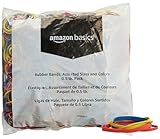
For perspective, inexpensive accessories do not necessarily solve the storage problem. A $6.39 assortment of Amazon Basics rubber bands can be useful for office or general household tasks, but it should not be used to bundle, suspend, or secure dumbbells. Store weights on a stable, purpose-built surface instead. The right calculation is not simply the purchase price; it is the cost of a complete, safe setup and the likelihood that you will outgrow the weights.
Which One for Your Home
Small Apartment
Choose neoprene if your workouts are mostly light strength training, barre, Pilates-style conditioning, or cardio circuits. A 3- to 10-pound range is easy to store in a cabinet or under a sofa, and the softer finish reduces incidental noise. Choose rubber if you need heavier weights, but place them on a mat and keep them away from shared walls and delicate flooring.
Family With Kids or Pets
Rubber is usually the better long-term material because it handles frequent moving and accidental bumps more effectively. Neoprene can work well if adults return the weights to a closed cabinet after each session. Neither type should be left where a child or pet can pick it up, chew the coating, or pull it from a shelf. A low, stable rack is safer than a high storage point.
Rental
Neoprene is the gentlest option for a rental when the weights stay below about 15 pounds and are placed down carefully. For rubber dumbbells, use a dense exercise mat or rubber flooring tile to reduce impact and protect against scuffs. Check the floor regularly; even coated weights can damage vinyl, laminate, and wood if dropped repeatedly.
Long-Term Home
Rubber makes more sense for a dedicated workout area or a household that expects to train for years. Buy pairs in sensible increments, such as 5, 10, 15, and 20 pounds, rather than purchasing every possible weight immediately. Neoprene remains useful for warmups and high-repetition exercises, so a mixed setup can be more versatile than choosing only one material.
FAQ
Are rubber or neoprene dumbbells better for beginners?
Neoprene is often better for beginners because it is comfortable, quiet, and easy to identify by color. Rubber is preferable if the beginner expects to progress quickly into heavier strength training or wants equipment that will tolerate years of frequent use.
Do neoprene dumbbells damage floors?
They are less likely to scuff or make noise than bare metal, but they can still damage flooring if dropped. Use a mat, lift the weights rather than dragging them, and avoid dropping any dumbbell onto tile, hardwood, or laminate.
Do rubber dumbbells smell?
Many new rubber dumbbells have a noticeable odor caused by the coating and packaging. Ventilation usually reduces it over time. If the smell is a major concern, neoprene generally offers a milder first-use experience, though it can still retain sweat odors if not cleaned.
Can rubber and neoprene dumbbells get wet?
Neither material should be soaked or left damp. Wipe both with a soft cloth after sweaty workouts and let them dry fully before storage. Keep the metal handles dry to reduce the risk of corrosion, and follow the manufacturer’s cleaning instructions for the coating.


Write Your Review
No reviews yet. Be the first to share your experience!