
Key takeaways
- Table of Contents 7 sections 9 min read 1 Quick Verdict 2 Side by Side 3 Where Adjustable Wins 4 Where Fixed Dumbbells Wins 5 Cost Over 5 Years 6 Which One for Your Home 6.1 Small apartment 6.2 Family…
What's inside
Choosing between adjustable vs fixed dumbbells is less about which type is “better” and more about how you train, where you store your equipment, and how much convenience you expect from each workout. A single adjustable pair can replace several sets of fixed weights, which is valuable in a small home gym. Fixed dumbbells, however, are faster to pick up, easier to identify, and often more comfortable during high-repetition workouts.
The real decision is whether you would rather pay for flexibility or simplicity. Adjustable dumbbells typically cost more upfront but can cover a broad weight range in one compact package. Fixed dumbbells require more individual purchases as your strength increases, but they offer instant weight changes and fewer moving parts. The best choice for your home depends on your available floor space, training style, and tolerance for equipment that needs occasional adjustment.
As an Amazon Associate we earn from qualifying purchases at no extra cost to you. Product prices and availability are accurate as of the date shown and are subject to change.


Quick Verdict
Choose adjustable dumbbells if you have limited space, follow progressive strength training, or want one set that can serve beginners and experienced lifters. A 45-pound adjustable set, for example, may provide multiple weight settings without requiring a full rack.
Choose fixed dumbbells if you value speed, durability, and a consistent feel. They are especially practical for circuits, group workouts, and exercises where you change weights repeatedly. A pair of 12-pound dumbbells may be all you need for a general fitness routine, while heavier fixed pairs can anchor a dedicated home gym.
For many households, a hybrid setup works best: adjustable dumbbells for heavier progressive lifts and a few fixed pairs for warmups, cardio circuits, and lighter exercises.
Side by Side
| Factor | Adjustable Dumbbells | Fixed Dumbbells |
|---|---|---|
| Comfort | Handles and plates can feel longer or less balanced, especially at lighter settings. | Usually compact and balanced, with a consistent grip and shape. |
| Durability | Depends on collars, locking mechanisms, and plate construction; more parts can mean more wear. | Generally highly durable because the weight is permanently attached. |
| Price range | About $50 to $500 or more per set, depending on weight capacity and adjustment system. | About $15 to $150 per pair, with commercial sets costing considerably more. |
| Maintenance | Threads, pins, or selector mechanisms may need cleaning and inspection. | Usually limited to wiping down handles and coating. |
| Space needed | Often one tray or pair measuring roughly 14 to 18 inches long per dumbbell. | One pair for every weight; a full 5- to 50-pound set can require a rack and several square feet. |
| Look | Modern and compact, though some designs look mechanical or bulky. | Traditional gym appearance with clean, uniform shapes when displayed on a rack. |
| Resale | Can retain value if the adjustment system remains supported and complete. | Easy to sell individually or in pairs because buyers know exactly what they are getting. |
| Best for | Small spaces, progressive training, and users who need several weight options. | Fast workouts, shared home gyms, beginners, and users prioritizing simplicity. |
Where Adjustable Wins
The biggest advantage of adjustable dumbbells is space efficiency. Instead of storing 10 or more pairs, you may be able to keep one pair and a compact base or tray. A typical adjustable set can cover weights from approximately 5 to 45 pounds per dumbbell, although some systems start at 10 pounds or reach 50, 70, or more pounds.
That range supports common movements such as curls, shoulder presses, rows, goblet squats, and floor presses. It also makes progressive overload easier. You can begin with 10 pounds, move to 12.5 pounds, and continue increasing in small increments rather than buying a new pair every time you get stronger.
Adjustable sets are particularly useful in apartments, bedrooms, and multipurpose rooms. A pair that is roughly 14 to 18 inches long can replace a lineup of fixed dumbbells that might occupy a rack 3 to 5 feet wide. The exact footprint varies, so measure both the storage tray and the space needed to lift safely.
They can also be economical over time. The FDS1 adjustable dumbbell set listed at $67.99 illustrates why this category attracts budget-conscious shoppers: one purchase can provide multiple weight options and, depending on the included components, support configurations such as a barbell, kettlebell, or push-up stand. Multifunction equipment can be useful when every square foot matters, though it may not feel as specialized or polished as dedicated equipment.
The tradeoff is adjustment time. Screw collars may take several seconds per side, while selector systems are faster but usually more expensive. You must also confirm that plates or pins are locked before lifting. Adjustable dumbbells may feel awkward for exercises where the ends extend well beyond your hands, particularly chest presses or movements performed close to the body.
Where Fixed Dumbbells Wins
Fixed dumbbells win on immediate usability. Pick up a pair and start training; there are no collars to tighten, plates to align, or selector settings to verify. This matters during timed circuits, supersets, and classes in which you may change weights every 30 to 60 seconds.
They also tend to feel more balanced. A fixed hex dumbbell may be around 7 to 12 inches long in lighter sizes, with larger weights becoming longer and wider. The compact shape keeps the center of mass predictable, which can make curls, lateral raises, and high-repetition work feel more natural.
Durability is another advantage. A one-piece dumbbell has fewer components that can loosen or break. Rubber-coated or urethane models can also be quieter than bare cast iron when placed on the floor. Hex ends prevent rolling and can support exercises such as renegade rows, although the coating and floor surface still determine how much noise or marking occurs.
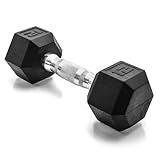
Fixed dumbbells are easy to understand when multiple people use the same gym. A 12-pound dumbbell is always a 12-pound dumbbell, and pairs can be organized by size on a rack. The CAP 12lb Rubber Coated Hex Dumbbell, priced at $15.97 for a single, is an example of the relatively accessible entry point for adding one specific weight. The CAP Barbell 30 LB Coated Hex Dumbbell at $39.97 shows how the price rises as the weight increases.
The downside is accumulation. Buying pairs at 5-pound increments from 5 to 50 pounds could mean 10 pairs, and the total cost can easily reach several hundred dollars before adding a rack. You can limit the expense by buying only the weights you use most often, but fixed dumbbells become less space-efficient as your program expands.
Cost Over 5 Years
Upfront price does not tell the whole story. A basic adjustable set may cost approximately $60 to $150, while a heavier or premium system can cost $300 to $600 or more. If you buy one set and keep it in good condition, the five-year equipment cost may be relatively low.
Fixed dumbbells have a lower entry price. One pair may cost about $15 to $40 for common home-gym weights, while heavier pairs often range from $50 to $150. However, a useful collection adds up quickly. Six pairs averaging $30 each cost about $180; 10 pairs averaging $45 each cost $450, before storage.
Consider your actual weight needs. If you only use 10-, 15-, and 20-pound pairs, fixed dumbbells can be the better value. If you need 10 different settings, adjustable dumbbells usually win on total cost and floor space. Over five years, also consider replacement parts, damaged coatings, and the cost of a rack. A basic dumbbell rack may add roughly $50 to $200.
Do not confuse similarly named household products while shopping. The $17.99 WORKPRO 2-Piece Adjustable Wrench Set is a tool set, not exercise equipment or an alternative to adjustable dumbbells.
Which One for Your Home
Small apartment
Adjustable dumbbells are usually the practical choice. Look for a set with a compact base, clearly marked settings, and a total weight range that matches your routine. Store it on a stable surface rather than in a walkway, and allow at least 2 feet of clearance around your lifting area. If noise is a concern, choose rubber-coated equipment and use a 6- to 12-millimeter exercise mat.
Family with kids or pets
Fixed dumbbells have fewer removable parts, but neither type should be left accessible. Store weights in a locked room, cabinet, or stable rack that cannot tip. Adjustable models require extra attention because loose plates, collars, or selector pieces can become hazards. Hex-shaped fixed dumbbells are less likely to roll across the floor, but they are still heavy objects that need secure storage.
Rental
Choose equipment that protects floors and limits noise. Rubber-coated fixed dumbbells are straightforward if you need only a few pairs. For a broader range, adjustable dumbbells reduce the number of impacts and storage points. Avoid dropping either style, and use a dense mat designed for weights rather than a thin yoga mat. Check the lease before installing a wall-mounted rack.
Long-term home
A fixed set makes sense if you have a dedicated workout room, train frequently, and enjoy fast transitions. A rack with 5-pound increments creates an efficient, professional setup. If your training interests may change, start with adjustables and add fixed pairs for your most-used weights. This approach spreads spending over time without filling the room immediately.
FAQ
Are adjustable dumbbells better for beginners?
They can be, especially when a beginner is unsure which weights to buy. One set offers several starting points and allows gradual increases. The user must learn to adjust and lock the mechanism correctly before every set.
Do adjustable dumbbells break easily?
Quality varies. Systems with threaded collars, locking pins, or selector mechanisms have more potential wear points than fixed dumbbells. Keep them dry, avoid dropping them, do not exceed the stated capacity, and inspect the locking parts regularly.
Can adjustable dumbbells replace a full fixed set?
For most home workouts, yes. They can cover presses, rows, squats, lunges, and arm exercises across multiple weights. Fixed dumbbells remain more convenient when you need rapid changes or want two different weights ready at the same time.
What weight range should I buy?
Choose a range that includes your current working weight and leaves room for progress. Many general users can begin with a set reaching 40 to 50 pounds per dumbbell, while strength-focused lifters may need 70 pounds or more. If the set is shared, prioritize a broad range and small adjustment increments.


Write Your Review
No reviews yet. Be the first to share your experience!