
Compare a dumbbell rack vs alternatives by looking at how many pairs you use and how often you reach for them. A dedicated rack makes multiple fixed pairs easy to find and return. A floor cradle, a suitable shelf, or an adjustable stand can serve better when you own fewer weights or need more flexibility.
Quick comparison of a dumbbell rack vs alternatives
A dedicated rack makes the most sense when several fixed pairs need repeatable positions and easy retrieval. A few weights may fit a lower-cost floor setup, while a mixed equipment collection can benefit from appropriate shelving. Choose by the use and load the support is actually designed to handle.
| Option | Best use | Main advantage | Main limitation |
|---|---|---|---|
| Dedicated dumbbell rack | Several fixed pairs used often | Supports common lifting and return paths | Occupies permanent space and needs shape-specific fit |
| Low cradle or protected floor position | One or two pairs in a clear area | Low cost and close to the training floor | Every added pair occupies more floor, and round weights need restraint |
| Rated utility shelving | Mixed equipment with verified support | Reuses a suitable existing shelf and organizes several items | Distributed load ratings, shelf construction, and retrieval require checks |
| Gym-specific mixed-equipment storage | Dumbbells, kettlebells, and plates in one unit | Dedicated support for different shapes in one area | Per-shelf or per-post limits can govern the arrangement |
| Compatible adjustable-dumbbell stand | One adjustable pair with multiple settings | Holds the intended bases at a convenient height | Model and expansion weight determine compatibility |
| Purpose-built wall-mounted storage | Floor clearance with a verified mounting location | Keeps equipment off the floor | Substrate, approved hardware, load limits, and access need confirmation |
The choice changes if you switch often between weights. Four fixed pairs on a rack can be ready at once. Two adjustable handles can cover several settings within a smaller hardware footprint, with time and space required to change loads. A low floor cradle preserves that fixed-weight readiness for one pair at a much smaller scale.
Compare access and load using the actual support
An alternative can fit the room and still handle the equipment differently. Compare where the weight touches, whether it can move in storage, and how you pick up the heaviest piece. Carry the dimensions and weight limits from the exact model into the comparison instead of relying on the storage category alone.
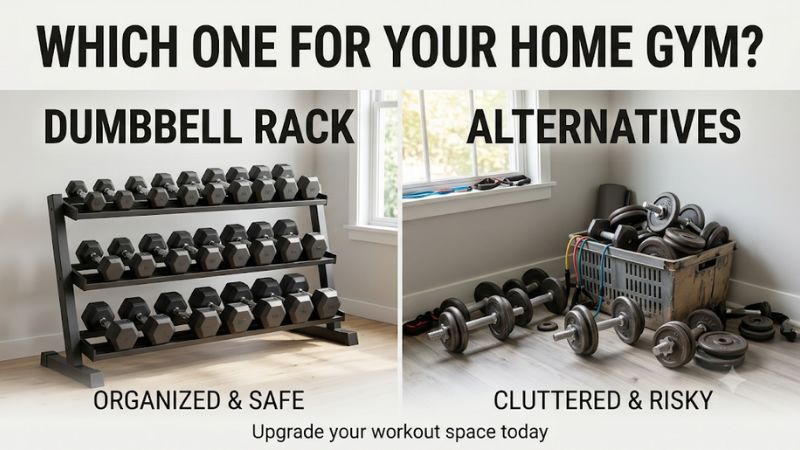
Dedicated racks make several fixed pairs easier to retrieve
A purpose-built rack makes repeated weight changes easier to plan. Angled rails, shelves, or saddles give the pairs regular parking positions with visible labels and predictable access. The support still needs to match the head shape and dimensions, and heavy rows must follow the maker’s loading guidance.
For a standard set from 5 to 50 lb in 5 lb increments, the dumbbells alone weigh 550 lb. A dedicated rack designed for that set can organize the load into several rows. Some racks publish the usable shelf span, which helps when you mix brands or replace two weights with wider versions. A frame rating alone does not tell you how many pieces can be retrieved easily.
If you train with the same three pairs several times a week, the rack’s value comes from shorter transitions and fewer pieces underfoot. A lifter who uses one pair once a week may gain little from a tall, full-width stand. Consider your actual routine before paying for positions and space you are unlikely to use.
Floor positions work well for a few weights in a clear area
A pair of faceted dumbbells can rest in a dedicated protected floor position when the surface and placement are suitable. Round heads need an appropriate cradle or another approved way to restrain them. This approach is attractive for one or two pairs close to the training area, where retrieval requires little carrying.
Take one 25 lb pair used for rows and floor presses. A low resting position keeps the setup small and avoids paying for unused shelves. Space for your hand and an unobstructed route matter. Keep the weights out of a door swing, walkway, and anywhere they can roll, shift, or become accessible to small children.
The value changes as the collection grows. Five pairs on the floor need ten reachable positions, and the line can start to intrude into exercise space. A rack then helps by moving multiple rows into a narrower zone. Count the actual floor positions you use today, and check what happens when you add the next regular pair.
Utility shelves need verification for the way dumbbells apply weight
A shelf rating may be based on an evenly distributed load. Dumbbells contact the shelf through small areas at their heads or supports. Check the maker’s guidance for the actual load pattern, shelf surface, and anchors. Ensure that each weight sits securely and that you can retrieve it without a long reach.
One example is Edsal’s 48 by 24 in MuscleRack Z-BEAM shelving with laminate decking. The specification lists an 800 lb shelf capacity and a 4,000 lb total unit capacity for evenly distributed weight. Those figures illustrate why the rating needs to be read with its conditions. They do not qualify a given row of dumbbells or specify how it should be stored.
If you already own suitable shelving, verify approved use, contact support, and restraint before assigning it to weights. Place the load only within the shelf maker’s published limits and instructions. A shelf lip or cradle needs to work with the feet or heads you have. If the product documentation does not address your use, a gym rack with named compatibility is easier to evaluate.
Mixed-equipment storage can avoid buying multiple racks
A gym storage system with distinct trays, rails, and posts can consolidate dumbbells, kettlebells, and plates if each piece sits on the appropriate support. Measure the total loaded footprint and the access routes around the sides. A stand that appears compact empty can project far into the room after plates are added.
The CAP three-tier combination rack identified for kettlebells, dumbbells, and Olympic plates illustrates local limits. The checked listing states 200 lb for the kettlebell rack, 200 lb per dumbbell tube level, 100 lb per plate post, and 1,000 lb overall. Each specified area has conditions relevant to its intended equipment.
Draw the complete setup before comparing it with a dedicated dumbbell rack plus a separate plate tree. A side post can require space to slide a plate off without having to reach over the dumbbells. If the option needs access on both ends, estimate its working width with the plates installed. The combined system is useful when it organizes the room you have.
An adjustable stand serves the selection mechanism
An adjustable-dumbbell stand supports one pair at the height and orientation intended for changing weights or returning them to their bases. Check the maker’s compatibility list and the maximum per dumbbell or per stand. Include any later expansion kit, as it can change the required support and pickup path.
PowerBlock’s Large Compact Stand is listed for compatible PowerBlock sets through 90 lb per dumbbell. The maker names compatible models including Pro 50 and Elite EXP. Check the exact system and use instructions. A tray that appears large enough for an adjustable base may lack the restraint or access that the mechanism requires.
One adjustable pair can reduce the number of fixed dumbbells you need to store. It changes how you train if your session alternates loads frequently or involves two people. A fixed accessory pair can stay ready near the stand, while the adjustables cover other settings. This can be a better space trade than buying a full rack for weights you rarely use.
Wall-mounted storage trades floor space for mounting requirements
Purpose-built wall storage can open floor space when the mount and equipment are designed for the intended weights. Check the allowed configuration, support structure, mounting instructions, and hardware before assigning loads. Also check how high you will lift a bell when returning it and whether furniture remains clear below it.
Wall mounting moves the storage load into the supporting structure through the attachment system. That is a different requirement from setting a freestanding rack on a suitable floor. Verify installer guidance for the wall and the exact weight storage product. Household floating shelves and unspecified anchors should not be treated as substitutes for a documented heavy-load setup.
Consider the handling position as well as the area below the shelf. A low mounted unit can preserve floor clearance under the equipment. A high unit can make heavy weights awkward to lift into place. A wall-mounted product is worth comparing when the wall and use can be verified and you have enough room to guide the bells properly.
Choose by routine, room, and number of people
Think about a typical workout from the first pickup to the last return. Count how often you change load and whether you need several pairs available at once. The right choice for one user in a spare bedroom can differ from the right choice for two people sharing a garage gym with heavier equipment.
One pair or two useful loads in a small room
A low cradle, safe floor position, or compact manufacturer-approved stand can cover a small collection. Use the exact head shape and the intended surface to choose between them. If the only problem is a round pair moving around, a restraint sized for that pair can solve it without purchasing space for ten bells.
In an apartment, keep the weights out of the path between the door, seating, and workout area. Compare the amount of space needed when you pick up the pair, rather than only the crate or rack footprint. Check that you can return the weights and reset the room without moving several unrelated pieces of furniture.
If you use two differently shaped models, give each a stable position. A light faceted pair could be stored separately, while heavier round weights need a validated cradle. A single frame only makes sense if it fits both comfortably and brings enough convenience to offset the extra money or floor space.
Several fixed pairs and quick changes during workouts
A dedicated rack becomes more valuable when pairs are used in quick sequence and need visible, accessible parking. A short horizontal rack can hold the frequent weights together and let you approach from the front. An approved A-frame works for compatible light sets where both sides can remain clear in use.
Take a workout that uses a 15 lb pair for raises, 25s for presses, and 40s for rows. A suitable rack keeps each load ready without adjustment. Plan the rows by placing the weights you use most where the instructions and ratings allow easy access. Keep the landing area clear so the weights can be returned under control even near the end of the session.
A generic shelf can serve if you have verified its actual use and can reach the weights easily. If changing loads involves moving a bin or reaching through another rack, the cost savings should be weighed against repeated inconvenience. A purpose-built unit earns its price when it removes those steps each time you train.
Several weight settings with little permanent storage
An adjustable pair and compatible stand work when the gym needs more weight settings than the room can hold in separate pairs. Check the adjustable range, useful increments, and the place you will use when selecting or docking each side. The footprint needs to include those movements as well as the stored pair.
A buyer may prefer a 5–50 lb adjustable range plus one fixed light pair for frequent accessory movements. Keep the fixed weights in a suitable protected location rather than automatically adding a second rack. If the room becomes a shared circuit space, several dedicated fixed pairs could still be more convenient.
Measure the stand with the heaviest approved expansion in mind. Additional plates or a larger base may change what the same stand can support. Record the stand model and approved configuration as you add weights. This keeps the advantages of reducing equipment count without assuming every variation fits the original setup.
Two lifters with plates, kettlebells, and fixed dumbbells
A mixed-equipment station may save space when several pieces need designated positions and the loaded system fits along one wall. Alternatively, a short dumbbell rack and a separate plate tree can be easier to use if teammates need both areas at once. Leave room to collect each piece without crossing an active lifting area.
Start with the equipment two people use at the same time. A shelf holding commonly shared pressing weights is more useful where both lifters can approach it easily than where it blocks the plate posts. If one individual needs a plate while the other returns dumbbells, consider separate access paths or map a setup that avoids the conflict.
Compare the layout when the equipment is in use as well as when it is stored. The bench can move into the space needed to remove plates. Kettlebells sitting in front of a rail can obstruct the lowest pair. Put frequently used pieces where they remain reachable throughout the typical session.
Compare real cost and the ability to expand
Price the complete setup and the next realistic change. One stand can cost less than several smaller supports if you will use all its positions. Existing utility shelving can save money where its instructions and design apply. A mixed system or adjustable pair changes the economics if it replaces multiple planned purchases.
Use two scenarios before choosing the cheapest setup
Suppose you have one round pair and can buy a compatible cradle for $35. A $150 rack adds $115 in this hypothetical comparison before freight or other changes. If only that pair needs storage, the cradle may serve the actual job. Add the cost of setup and check whether the planned room layout keeps it easy to use.
Now suppose you intend to keep four fixed pairs and each needs a separately purchased $35 storage support. The total would be $140 before delivery. If the $150 rack fits every pair and works by the bench, its higher cost is only $10. Run the comparison using the items you actually need, including whether some existing storage can be reused.
Consider the cost of reversing a bad fit
The wrong rack can be expensive to return or move, especially if it uses freight shipping or installation hardware. Confirm whether you can change a shelf, buy another approved support, or expand the original system if you add a pair. A configurable rack can save money when it can be adapted within its ratings.
A buyer who owns compact light pairs can plan a simpler option as long as the next sizes fit. For a large fixed collection, get the relevant dimensions and layout instructions in advance. If the storage will likely move within the year, consider what needs to be unloaded or disassembled and whether the new room can accept it.
Frequently asked questions
The best alternative depends on which part of a rack you are trying to replace. A few weights need a safe resting position. A full set needs load distribution, several accessible positions, and useful handling space. Judge each option against the same equipment layout and the habits of the people who will use it.
Do I need a rack for two pairs of dumbbells?
A stable protected position or rated low cradle can work if each pair stays put, the path is clear, and you can reach both comfortably. A dedicated rack may earn its space where repeated floor pickups are inconvenient or where people regularly use the same area. Compare the exact loaded dimensions and access.
Can I store weights on a garage shelf I already own?
Only if you can verify that the shelf, load pattern, and setup are suitable for your exact use. Check instructions for how loads must be distributed, what the deck supports, and whether the unit requires anchoring. Round heads also need an appropriate retention method. A high advertised capacity does not resolve those fit questions.
Is a kettlebell rack interchangeable with a dumbbell rack?
Sometimes a gym-specific system has approved options for both. A flat-bottom kettlebell and a handled weight with two heads can require different supports. Verify the intended gear, rail spacing or tray dimensions, and local load rating before mixing them. Check that putting one item away leaves enough room to handle the next.
Can I keep adjustable dumbbells on a regular rack?
Choose a support expressly suited to the bases and loads, with the change mechanism accessible as directed. Generic dumbbell rails may support fixed heads yet leave an adjustable base poorly seated. If the model needs a stand, check the compatible version and maximum setting, including any planned expansion kit.
Conclusion
Choose a dedicated rack when several fixed pairs need ready access. Use a compatible cradle for a few weights, verified shelving for suitable equipment, or a matching stand for adjustables. Compare the loaded footprint, retrieval path, and local load limits before paying for any storage option.
More from Amazon
Programs that pair well with the guide above. Offers and eligibility are set by Amazon and may change.
Free shipping on eligible items, Prime Video and more. Eligible new members can start with a free trial.
Start a Prime free trialA Prime membership for ages 18-24 with a trial period. Eligibility is set by Amazon.
See Prime for Young AdultsAudiobooks and podcasts to listen to on the go. Eligible new members can start with a free trial.
Try Audible freeAd-free music streaming. Eligible new subscribers can start with a free trial.
Try Music Unlimited freeAs an Amazon Associate we earn from qualifying purchases.
Write Your Review
No reviews yet. Be the first to share your experience!