
A budget short Olympic barbell can save money when its sleeve length and rack fit match the equipment you already own. A five-foot bar often costs less for floor lifts, while a rackable six-footer can make more sense for benching and squatting. Compare the delivered cost and the weights you can actually load.
Budget short Olympic barbell picks by price and use
The CAP OB-60B offers a low entry price for floor training. The Philosophy Gym 72-inch model is the first rack candidate to check near $140. The Bells of Steel costs more and earns a place here when a documented rack-oriented span in a 69-inch bar can spare you from changing the rest of your equipment.
| Model | U.S. reference price | Overall length | Empty weight | Best fit |
|---|---|---|---|---|
| CAP Barbell OB-60B | $57.99 | 60 in | Confirm exact listing | Low-cost floor work |
| Sunny Health & Fitness SF-OB04-60 | $99.99 | 60 in | 26.5 lb | Five-foot chrome bar with published starting weight |
| RitFit 6 Ft Olympic Barbell | $135.99 | 71.6 in | 30 lb | Floor use with longer sleeves |
| Philosophy Gym FIT-BAR-S628 | $139.99 | 72 in | 15 kg | Value rack candidate after fit verification |
| Body-Solid OB72B | $197.00 | 72 in | 40 lb | Floor work with a thicker shaft |
| Bells of Steel Short Rackable Barbell | $216.99 | 69 in | 29 lb | Rack use where overall length is tight |
These are reference prices from U.S. listings, before applicable tax and any additional shipping, for the identified models or variants. Price and availability can change. Check the model number, variant, and final cart total before buying, especially on a listing that offers several bar lengths or mixes Olympic and standard sizes.
How we selected a budget short Olympic barbell
We compared the geometry each bar gives you for its price. An inexpensive floor bar and an inexpensive rack bar solve different purchase problems. Published dimensions, plate compatibility, empty weight, and the information you can verify before paying were more helpful than comparing one advertised load rating to another.
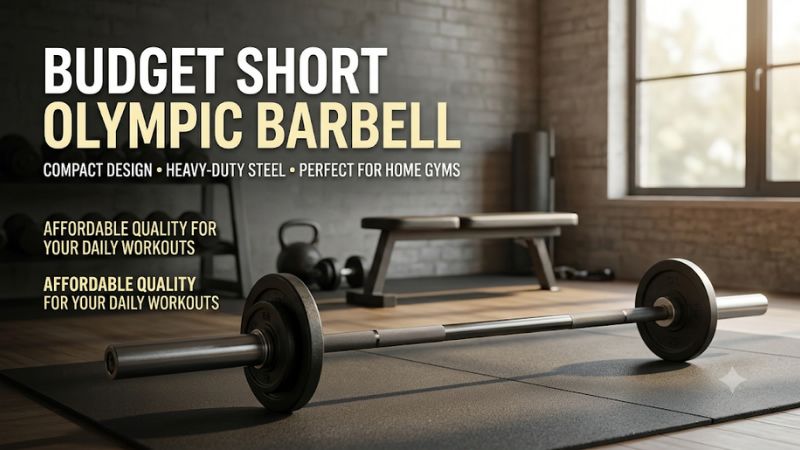
Why a low purchase price can be real value
An affordable short bar is a sensible buy when it can do all the work you expect with the equipment you already own. If you mainly perform deadlifts and rows from the floor, extra shaft width for a power rack may offer little benefit. A narrow bar can leave you with more money for plates, collars, and appropriate flooring.
The same purchase can cost more in a rack-based gym. A model with 37 inches of shaft between its sleeves cannot cover a 49-inch support span. Returning it, ordering a second bar, or trying to rework an otherwise suitable rack gives the first purchase a poor total cost. Match the essential lift first, then compare bars in that group by delivered price.
Value also depends on progression. You may start with one pair of 25-pound plates and have space for years of planned work, or use thick plates that fill the sleeves as soon as you add a few pairs. List the thickest planned load arrangement before deciding that the cheapest option provides all the capacity you need.
Set the budget for a complete working setup
A bar’s price is one line item. Add delivery, tax, compatible collars, any plates you need to reach your first working load, and any equipment required for your intended setup. Where the listing is unclear, also check the return terms so you can price the consequences if a sizing claim turns out to be incomplete.
Suppose Bar A costs $80 delivered and needs $20 collars plus $85 of replacement plates to work in the space you have. That is $185. Bar B costs $150 delivered and works with the plates and collars you already own. That is $150 before any other shared costs. The example applies when compatibility is confirmed. If both models need new collars, include the same cost once per option and keep the comparison even.
If you are choosing a bar with no plates yet, price a specific first training kit for each model. One might work well with a pair of bumpers and smaller change plates, while another suits a narrow iron stack. Any rack, floor, and manufacturer requirements for that combination remain part of the decision.
The best budget short Olympic barbells by use case
The first three picks prioritize useful floor geometry at lower prices. The remaining picks cover a rack candidate at around $140, an Olympic bar with a thicker shaft, and a short rackable model. Look at the trade-offs for your main lift and the alternative cost if you have to replace existing hardware or plates.
CAP Barbell OB-60B for the lowest entry cost
The CAP OB-60B is a 60-inch Olympic bar with a 37-inch shaft area, a 28 mm grip, and 9.75 inches of listed loadable sleeve per side. The size allocation helps explain its value. A compact floor-training bar can hold a useful plate stack while leaving out the long rack interface needed for conventional squat stands.
At the $57.99 reference price, it is the first pick for a floor-based home gym that already has compatible plates. It can suit controlled rows, deadlifts, and similar work when the user’s grip fits the available shaft and the intended loading follows the maker’s instructions. A straightforward bushing arrangement fits that use. The 9.75-inch figure should be compared against the stack and collar you plan to install.
Skip it if benching and squatting from a conventional-width rack are core requirements. A full stack can also get awkward if you take an unusually wide grip with a short shaft. At checkout, match the OB-60B code and Olympic sleeves. Retailers often group similar black and chrome bars together, and another variant can have a different usable span.
Sunny Health & Fitness SF-OB04-60 for a known 26.5-pound start
The Sunny SF-OB04-60 is 60 inches long, has a 28 mm grip, and weighs 26.5 pounds according to the manufacturer. Its chrome finish and Olympic plate fit make it an accessible floor-training option. The published empty weight helps buyers plan small increments and warm-ups during the first weeks of training.
At the $99.99 reference price, the case for buying it is a defined starting mass on a compact bar you can use with a compatible two-inch plate kit. For a session programmed in pounds, 26.5 pounds plus a 10-pound plate per side gives a 46.5-pound setup before collars. That starting point can matter more than an advertised upper limit if your lifts are still progressing through low loads.
Check the usable sleeve and inside-shoulder length with the manufacturer if either dimension is close to your requirements. Treat this as a floor-first purchase. Avoid assuming a similarly named five-foot Sunny bar uses the same equipment. The model code here identifies the Olympic bar, and the catalog includes another line of shorter bars.
RitFit 6 Ft Olympic Barbell for more floor-lift sleeve room
RitFit lists its six-foot Olympic model at 71.6 inches overall, with a 48-inch shaft, 10.4-inch sleeves, and a 30-pound empty weight. That mix is useful when you want more hand room than a typical five-footer offers and need enough sleeve length for plates beyond what several compact rack-oriented bars provide.
The U.S. retailer snapshot put the six-foot variant at $135.99. It works best for buyers who have measured a roughly six-foot working area and want floor lifts as the main use. Run your thickest side stack against the 10.4-inch listed sleeve figure, and confirm the end-to-end usable surface if your result is close. A shorter bar can take up less floor space and still cost more to operate if you must replace plates to make the stack fit.
The listed shaft length is 48 inches. That makes a big difference if you saw the length described as “six foot” and assumed it would work with a 49-inch support span. Buy it as a floor bar unless the manufacturer approves your specific narrower setup and the measured hardware leaves sufficient clearance. Select the six-foot variant when checking price and specifications.
Philosophy Gym FIT-BAR-S628 for a value rack candidate
The Philosophy Gym 72-inch Olympic bar weighs 15 kg and uses a 28 mm grip with chrome sleeves. Retailer specifications describe a 52-inch bar section and nine-inch sleeves. At the $139.99 reference price, the model is a plausible value choice for someone who wants a short bar for a rack and has room to verify fit first.
The 52-inch description gives you a geometry to check. Ask whether it represents the clear shoulder-to-shoulder distance and compare the answer with the outside span of your installed J-cups. If you are buying online without a manufacturer fit confirmation, check the seller’s return conditions before treating it as a match. Also verify how much of the listed nine-inch sleeve is usable behind the collar.
The listing describes needle bearings. That may interest users who value rotation for their movements, although the hardware description does not establish drop suitability or long-term performance. Buy when the fit and return terms are clear and the 15 kg starting load works. The lower price loses its advantage when the rack or plates need replacement to make the bar usable.
Body-Solid OB72B for a thicker grip and longer sleeves
The Body-Solid OB72B is 72 inches overall, weighs 40 pounds, and lists a 30 mm shaft, 46 inches between sleeves, and 11.25-inch sleeves. Its proportions suit floor training with a comfortable grip for buyers who prefer a thicker bar. The 46-inch shoulder span calls for careful measurement wherever you plan to support it.
At the $197 reference price, its case for value is specific. If you want the feel of a 30 mm shaft and can use the sleeve length for plates you already own, it can meet two needs in one purchase. If you prefer a thin grip or need a lighter empty load for presses, other bars in the list cover that better. The 40-pound empty mass is also a meaningful difference from a 15 kg bar when recording your total loads.
Choose it for its actual geometry. A conventional-width rack that fits a 72-inch rack-oriented bar might miss the usable shaft on this 72-inch model. Consider another option when the intended workout always starts on a wider rack. Model numbers matter because Body-Solid sells multiple bars with close names and different dimensions.
Bells of Steel Short Rackable Barbell for a compact rack on a budget
The Bells of Steel Short Rackable Barbell measures 69 inches overall and weighs around 29 pounds. Its span between the shoulders is around 51.6 inches, and each sleeve offers 7⅞ inches of loadable space. This bar is worth comparing when the rack must stay in your setup and a few inches of overall length matter.
At the $216.99 reference price, it costs more than the floor-first picks. It can still be the less expensive project if it keeps you from replacing a rack or reconfiguring a shared room. Compare its grip area and actual J-cup clearance against a 72-inch alternative and use a mock-up to decide whether the difference helps enough to justify the purchase.
The major constraint is plate width. If your bumpers already take more than the available sleeve length with the collar, the money saved by keeping the rack could go into replacement plates. Ask about the current center texture if it affects your purchase. Buy it when its shorter body and rack geometry both solve specific fit problems.
How to spend less without giving up usable capacity
Start by calculating the available sleeve space after attaching the collar. The result helps you compare a cheap short bar that works with your plates with a more expensive bar that lets you keep the entire kit. It also reveals whether buying one pair of different plates would open several affordable options.
Calculate the cost of reaching your working weight
Pick a meaningful target for one lift and list all the pieces needed to reach it on each candidate. Subtract the bar weight and divide the remaining plate weight between the sleeves. Check the thickness of those plates and the collar. A cheaper model must reach the load with acceptable geometry and manufacturer limits.
For example, a planned 200-pound load with a 30-pound bar requires 85 pounds of plates per side before accounting for collars. With a 40-pound bar, the target needs 80 pounds per side. Those are close totals, but the plates in your collection may combine to reach one more conveniently. If you own 45s, 25s, 10s, and 5s, the 85-pound side can use all four. The 80-pound side can use three. The change affects sleeve use and time to load.
If you prefer small progressions, start by pricing one or two useful pairs of change plates. Check their fit and where they sit on the bar. Buying several fractionals in advance makes less sense if one repeatable increment is all you currently need.
Compare used bars with new bars by condition and fit
A used bar can beat a new entry-level price if the exact model is identifiable and it fits your equipment. Ask for the empty weight, shoulder span, and usable sleeve length. Inspect the shaft, shoulders, finish, sleeves, and retaining hardware before counting a secondhand deal as equivalent to the same model new.
Check the shaft for a bend and damage at the shoulders, then turn the sleeves by hand to assess noticeable binding or excessive play. Inspect the sleeve ends, collars, and bearing or bushing retaining hardware for obvious alterations or damage. A cosmetic scrape can be acceptable for many users, while a compromised shaft or missing hardware warrants walking away. Confirm approved uses and any warranty transfer terms separately.
Used equipment is especially attractive if you can bring a plate and collar to confirm fit before paying. If the seller provides only overall length, ask for a picture of a tape between the inner shoulder faces and a separate measurement of both loadable sleeves. That reduces the chance of paying for a bar with the wrong proportions.
Check the price of a second bar against replacing plates
Some buyers already have a full-length rack bar and want a compact floor bar for a second room or for conditioning. In that case, an inexpensive five-footer can serve a distinct role and use the same Olympic plates where the stacks fit. Total cost also includes having a secure place to store an additional bar.
For a single compact rack, compare the premium you would pay for additional sleeve length with the cost of the few plates that create the problem. If changing one thick pair recovers enough space and the new plate suits your training, the cheaper compatible bar can work. If you would need to replace most of a matching bumper set, a different bar geometry may cost less overall.
Reloading several plates between two training areas also takes time. A second bar offers less convenience when you must carry the whole plate set back and forth. If the bar and all plates stay in the same room, the additional bar might make sense only if it meaningfully improves a lift or lets two people alternate exercises.
Frequently asked questions about budget short barbells
The affordable end of the market includes similar-looking products with different plate interfaces, empty weights, and usable sleeve lengths. A short Olympic bar can be a good budget buy when the details are available and the intended lifts are clear. Three questions usually settle the choice before you place an order.
What is a reasonable budget for a short Olympic barbell?
The models compared here span roughly $58 to $217 before tax and any added shipping. A floor-first bar can meet the lowest budget. A rack-oriented model often needs a higher allowance, especially if you want specified shoulder spacing or an unusually compact overall length and a return policy you can use.
Look at the final cart total for the exact variant. A used bar or promotion can move a higher-tier model into your range, and heavy or oversized shipping can move a low-price model out of it. Price the collars and plates you would have to buy as well.
Are advertised weight capacities comparable across brands?
Capacity numbers help screen a purchase when the testing conditions and intended use are described. They can refer to different methods and design limits across brands. For the final decision, check the maker’s instructions, confirm the plates physically fit, and consider how you intend to load and set down the bar.
A bar with a high published number and short sleeves may never hold that much in your existing bumpers. A lower figure may still suit every planned working set. Fit and documented intended use will tell you more about the actual purchase than the biggest number in the listing.
Which inexpensive short bar should I choose for a rack?
Start with a model whose shoulder span exceeds the true outside support width with enough room to handle the bar as instructed. The Philosophy Gym 72-inch model is a lower-priced candidate to verify. The Bells of Steel is an option when its published geometry and shorter overall length help a tight room.
Measure both rack supports with the hooks at your training height and confirm your installed configuration with the bar seller when clearance is limited. If the listing cannot confirm the usable span at all, a model with a drawing and a clear return process may save money even at a higher initial price.
Conclusion
Choose the CAP OB-60B for a low-cost floor setup, the RitFit six-footer for more sleeve room, or the Philosophy Gym 72-inch bar if you can confirm a rack fit at its price. The Bells of Steel is worth the extra cost when its 69-inch layout makes your rack usable in a tight room. Compare delivered prices with every plate and collar you need to train.
More from Amazon
Programs that pair well with the guide above. Offers and eligibility are set by Amazon and may change.
Free shipping on eligible items, Prime Video and more. Eligible new members can start with a free trial.
Start a Prime free trialA Prime membership for ages 18-24 with a trial period. Eligibility is set by Amazon.
See Prime for Young AdultsAudiobooks and podcasts to listen to on the go. Eligible new members can start with a free trial.
Try Audible freeAd-free music streaming. Eligible new subscribers can start with a free trial.
Try Music Unlimited freeAs an Amazon Associate we earn from qualifying purchases.
Write Your Review
No reviews yet. Be the first to share your experience!