
Our Top Picks


As an Amazon Associate we earn from qualifying purchases.
Disclosure: This article contains affiliate links. If you buy through these links, we may earn a commission at no extra cost to you.
Our top pick: Retrospec Revolve Steel Macebell. Runner-up: Yes4All Steel Mace Bell.
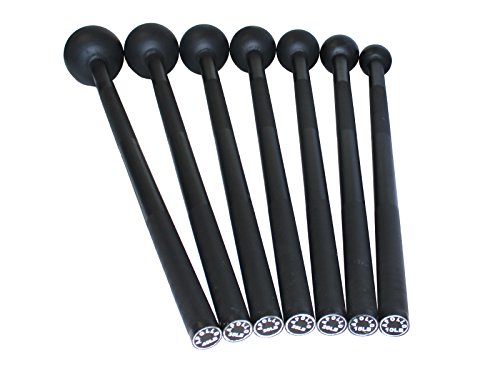
A steel mace looks like a medieval weapon because that is exactly what it descends from. The modern training version, often called a macebell, pairs a long steel handle with a heavy, round head welded to one end. Almost all of the load sits far from your hands, and that offset is the whole point. When you swing a mace in a 360 around your head, pull it over in a 10-to-2, or press it from a racked position, your shoulders, grip, forearms, lats and trunk have to control a lever that keeps trying to rotate away from you. Few tools build rotational strength, shoulder stability and grip endurance in quite the same way.
One distinction matters before you buy anything. A steel mace is not a steel club. A clubbell is a shorter, bowling-pin-shaped tool, usually swung one-handed in arcs close to the body, with its mass spread along a tapered body. A mace is much longer, with a distinct spherical head at the end of an extended handle, and it is normally driven with both hands through big circular patterns. The two tools train overlapping qualities, but the leverage, technique and loading feel completely different. Every pick below is a true long-lever mace with a weighted head, not a clubbell.
This guide compares five steel maces across the details that change how they swing: total weight, overall length, handle diameter and knurling, head shape and weld quality, and finish.
How to Choose a Steel Mace
Weight comes first, and lighter is smarter than you think. Because the head sits at the end of a long lever, a 10 lb mace can feel dramatically heavier in motion than a 10 lb dumbbell. Most beginners do well beginning at 7 to 10 lb, even if they are strong in conventional lifts. Experienced mace users train mostly in the 15 to 25 lb range, and 30 lb and above is advanced territory for lifters with well-grooved technique. Jumping too heavy too soon usually shows up as elbow and shoulder irritation, so earn your way up.
Length is leverage. Longer maces, around 40 inches and up, create a bigger swing arc and more momentum to control, which is what makes 360s and 10-to-2s so demanding. Shorter maces near 30 inches are easier to manage in low-ceiling rooms, but they give up some of that long pendulum character. Match the length to your space as much as to your strength: a mace you cannot swing without ducking under a ceiling fan will not get used.
Grip decides how secure the swing feels. Look for genuine knurling rather than a smooth painted shaft. Diamond-pattern knurling bites back when your hands get sweaty mid-set. Handle diameter matters too. Slimmer handles around 1.1 to 1.3 inches suit smaller hands and make hand transitions easier, while thick handles near 1.6 inches turn every rep into extra grip and forearm work. Some maces split the knurling into two zones, which helps you find consistent hand placement.
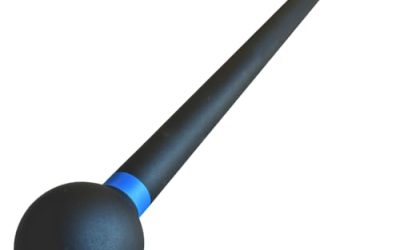
Head design and the weld are safety items. The head should be a solid, evenly weighted sphere, fully welded to the handle in a single robust joint. A mace head travels fast, close to your head and shoulders, so this is no place for a loose or purely cosmetic connection. Fully welded, one-piece steel construction is the standard to look for.
Finish affects grip and upkeep. Powder coat and gloss finishes protect the steel from sweat and light rust. A slightly textured coat adds friction; a very smooth gloss finish can feel slick and may push you toward chalk.
Retrospec Revolve Steel Macebell — 10 lb

Specs
- Weight: 10 lb (line runs 5 to 30 lb)
- Handle diameter: 1.1 inches
- Grip: knurled handle for a secure hold
- Head: rounded steel head, fully welded to the stem
- Construction: all-steel build
- Finish: matte black
The Retrospec Revolve is the mace many people buy first, and the 10 lb version is the sweet spot for learning technique. The slim 1.1-inch handle is noticeably friendlier than the thick shafts on heavier-duty maces, which makes the hand-to-hand transitions in a 360 easier to learn and lets smaller-handed lifters wrap their fingers fully around the bar. The knurling keeps the handle planted when your palms sweat, and the rounded head is fully welded to the stem, so there is no rattle or play at the joint.
At 10 lb, this mace is heavy enough to teach real timing and trunk bracing, yet light enough that a sloppy rep stays a learning moment instead of a shoulder strain. It suits 360s, 10-to-2s, paddle swings and gravediggers, and it doubles as a warm-up tool on days when you train heavier implements afterward. The matte black finish is plain but practical. If you are new to mace training and want one tool that will still be useful after you progress, this is the sensible place to begin.
Yes4All Steel Mace Bell — 15 lb
Specs
- Weight: 15 lb (line runs 5 to 30 lb)
- Overall length: 41.73 inches
- Material: alloy steel
- Grip: knurled handle with defined grip zones
- Finish: black powder coat
- Model: RRSA
The Yes4All Steel Mace Bell in the 15 lb size is a natural step up once a 10 lb mace feels like a warm-up weight. At just under 42 inches long, it delivers the full long-lever swing that defines mace training, with enough momentum on the back swing to demand honest lat engagement and a braced trunk. The alloy steel build feels dense and solid, and the welds at the head are clean for a mace in this class.
Yes4All cuts its knurling into sections along the handle, which gives your hands clear landmarks when you slide between the high and low grip positions used in presses, rows and uppercuts. The powder coat finish adds a little extra friction of its own and protects the steel from corrosion in garage gyms. For lifters building a small mace collection on a sensible budget, this is the mid-weight workhorse of the group.
POWER GUIDANCE Steel Mace — 7 lb
Specs
- Weight: 7 lb (line runs 7 to 25 lb)
- Overall length: 30.1 inches (76.5 cm)
- Material: alloy steel
- Head: round ball head, welded to the handle with a steel end cap
- Grip: knurled center section with extended thread anti-slip design
- Finish: matte
Not every training space can handle a 42-inch mace, and that is exactly the problem the POWER GUIDANCE 7 lb model solves. At just over 30 inches overall, it is the shortest mace in this roundup by a wide margin, which makes it a realistic option for basement gyms, garages with low beams and anyone who trains in a spare room. The shorter lever also shortens the learning curve: the head stays closer to your body and remains easier to track through the full arc of a 360.
Seven pounds sounds trivial until the offset head begins moving, and for pure technique work, shoulder prehab and high-rep conditioning flows, this weight is genuinely useful. The head is welded to the handle rather than pressed on, the butt end is capped in steel, and the knurled center section combined with the extended thread texture gives sweaty hands something to hold onto. Stronger lifters will outgrow it as a primary strength tool, but as a first mace or a dedicated mobility tool, it fills a niche the longer maces cannot.
ProsourceFit Steel Macebell — 20 lb
Specs
- Weight: 20 lb (line runs 5 to 30 lb)
- Overall length: 41.25 inches
- Handle diameter: 1.3 inches
- Head: rounded steel head on a solid stem
- Construction: forged high-grade steel
- Grip: non-slip textured grip
- Model: ps-5100-smb-20
At 20 lb, the ProsourceFit Steel Macebell moves out of learning territory and into real strength work. The forged steel build and rounded head give it a dense, balanced feel through the swing, and the 41.25-inch length produces the long, heavy pendulum that makes heavy 360s and 10-to-2s such a demanding trunk and shoulder exercise. This is a mace for lifters who already own their technique and want the load to prove it.
The 1.3-inch handle sits in a useful middle ground: thick enough to tax your grip and forearms across a long set, slim enough that hand transitions stay crisp. The textured, non-slip grip treatment helps when chalk is not an option, such as in shared gym spaces. Choose this one when your 15 lb mace has stopped challenging your presses, rows and rotational work and you are ready for the next honest jump.
Apollo Athletics M-Bell Macebell — 35 lb
Specs
- Weight: 35 lb (line runs 10 to 40 lb in 5 lb steps)
- Overall length: 42.5 inches
- Head: completely spherical, evenly weighted, 6-inch diameter
- Handle: 37-inch handle, 1.63-inch diameter
- Grip: dual knurled safety grip zones, 9.75 inches each
- Construction: single piece of welded steel
- Finish: chip-resistant black gloss
- Detail: weight stamped on the base of the handle
The Apollo Athletics M-Bell is the heavy end of this roundup, built for experienced mace lifters and commercial gym floors. The 35 lb model stretches 42.5 inches overall with a full 6-inch spherical head, and that head is completely round with no flat spot, so it rolls through the swing with even, predictable momentum. Apollo builds each M-Bell from a single piece of welded steel, and the result feels like one solid implement rather than an assembly.
Two details set it apart. The handle is a thick 1.63 inches, which turns every swing into serious grip work, and the knurling is laid out in two deliberate 9.75-inch safety grip zones, one from the base and one from the middle toward the head, so your hands land in texture wherever the movement puts them. The weight is stamped into the base of the handle for quick identification in a rack of maces. This is not a beginner tool; it is the mace you graduate to.
Comparison Summary
All five picks are true long-lever maces with spherical heads, separating mainly on weight, length and handle character. The POWER GUIDANCE 7 lb is the shortest at 30.1 inches and suits small spaces and learning. The Retrospec 10 lb pairs a slim 1.1-inch knurled handle with a fully welded head for beginners. The Yes4All 15 lb offers full 41.73-inch leverage and sectioned knurling as a mid-weight step up. The ProsourceFit 20 lb brings forged steel and a 1.3-inch handle to heavier strength work. The Apollo M-Bell 35 lb tops the range with a 6-inch spherical head, a thick 1.63-inch handle and dual knurled grip zones for advanced lifters. Pick by the weight you can control with clean technique today, not the weight you hope to swing later.
FAQ
What weight steel mace should a beginner choose first?
Most beginners should begin with 7 to 10 lb. The offset head multiplies the felt load, so a light mace still challenges your shoulders and grip while you learn the 360 and 10-to-2 patterns safely. Move up in 5 lb steps only when your technique stays smooth for full sets.
What is the difference between a steel mace and a steel club?
A steel mace is a long handle, typically 30 to 43 inches, with a distinct round head welded at the end, swung mostly with two hands in large circular patterns. A steel club is shorter and tapered like a bowling pin, with its mass spread along the body, and is usually swung one-handed. They are different tools with different technique.
How much ceiling clearance do you need for mace training?
Plan on at least a foot of clearance above the highest point of your swing arc, and more for taller lifters. A mace around 40 inches long swung overhead needs generous vertical room. If your ceiling is low, a shorter mace near 30 inches, like the POWER GUIDANCE above, is the safer choice.
Can steel mace training build real strength or is it just conditioning?
It builds both. Heavy maces in the 20 to 35 lb range load presses, rows, squats and rotational patterns hard enough to drive genuine strength gains, especially in the grip, shoulders and trunk. Lighter maces shine for high-rep flows that build muscular endurance and cardiovascular conditioning in the same session.
Conclusion
The best steel mace is the one whose weight and length match your current skill and your training space. Begin with the Retrospec 10 lb or the compact POWER GUIDANCE 7 lb if you are learning, step to the Yes4All 15 lb or ProsourceFit 20 lb as your swing sharpens, and save the Apollo M-Bell 35 lb for the day your technique is beyond question. Buy the mace you can control today, train the patterns consistently, and the rotational strength will follow.
FAQ
What weight steel mace should a beginner choose first?
What is the difference between a steel mace and a steel club?
How much ceiling clearance do you need for mace training?
Can steel mace training build real strength or is it just conditioning?
More from Amazon
Programs that pair well with the guide above. Offers and eligibility are set by Amazon and may change.
Free shipping on eligible items, Prime Video and more. Eligible new members can start with a free trial.
Start a Prime free trialA Prime membership for ages 18-24 with a trial period. Eligibility is set by Amazon.
See Prime for Young AdultsAudiobooks and podcasts to listen to on the go. Eligible new members can start with a free trial.
Try Audible freeAd-free music streaming. Eligible new subscribers can start with a free trial.
Try Music Unlimited freeAs an Amazon Associate we earn from qualifying purchases.
Write Your Review
No reviews yet. Be the first to share your experience!