
The best Olympic barbell for ost home gyms is a 20 kg multipurpose bar with enough sleeve length for your plates and a grip you can use across several lifts. The right choice changes when you mostly squat, need a lighter empty bar, or train the snatch and clean and jerk often enough to want a dedicated weightlifting bar.
Quick verdict
The Rogue Ohio Bar E-Coat is the best overall choice for a home gym that needs one bar for several kinds of lifting. The 45 lb Ohio Power Bar fits a squat, bench, and deadlift routine. Choose the Bella Bar 2.0 if you need a lighter starting load or a narrower grip, and consider the Eleiko if Olympic weightlifting is your main sport.
The REP Colorado 20 kg is the strongest alternative to the Ohio for buyers who put a premium on smooth sleeves. The hard-chrome American Barbell Performance Training Bar fills a different role. It has the dimensions and grip markings of a 20 kg weightlifting bar and uses composite bushings. That makes it worth a look for lifters who want dedicated weightlifting geometry with a bushing system.
Best Olympic barbell quick comparison
Compare empty weight, grip diameter, and loadable sleeve length before comparing coatings or steel ratings. The figures below apply to the specific versions listed. Loadable sleeve length is the space available on each side for plates and a compatible collar, so measure the space taken up by both before planning a heavy stack.
| Barbell | Best for | Empty weight and shaft | Loadable sleeve per side | Main trade-off |
|---|---|---|---|---|
| Rogue Ohio Bar E-Coat | One-bar home gym | 20 kg, 28.5 mm | 16.40 in | Smooth center gives less purchase on a squat shirt |
| REP Colorado Bar 20 kg | Mixed lifting with smooth sleeves | 20 kg, 28.5 mm | 16.1 in | Finish options vary, and the center is smooth |
| Rogue Ohio Power Bar Bare Steel | Squat, bench, and deadlift | 45 lb, 29 mm | 16.25 in | Aggressive grip and bare steel call for more upkeep |
| Rogue Bella Bar 2.0 Black Zinc | Lighter starts and a narrower grip | 15 kg, 25 mm | 13 in | Thick plate stacks reach the sleeve limit sooner |
| American Barbell Performance Training Bar 20 kg | Hard-chrome, bushing-based weightlifting training | 20 kg, 28 mm | 16.34 in | Weightlifting marks only and a smooth center |
| Eleiko IWF Weightlifting Training Bar 20 kg | Dedicated weightlifting practice | 20 kg, 28 mm | 415 mm, about 16.34 in | Specialized features carry a premium |
How we selected these Olympic barbells
We compared manufacturer specifications for identifiable models, including shaft diameter, knurl placement, sleeve mechanism, finish, and usable plate space. We then matched those details to the lifts that justify each purchase. The recommendations reflect documented specifications and their practical implications for home training.
A familiar coating name tells you something about the finish. A known sleeve length tells you whether the bar can take the plates you own. We gave the second detail more weight because a change in paint color rarely determines whether a training session works. On the other hand, a thick set of bumpers can hit the end of a 13-inch sleeve even when the shaft has ample strength for the intended load.
We treated the 15 kg Bella as a distinct pick because the 5 kg difference in empty weight can change a lifter’s first working set. We included both a bushing-based and bearing-based dedicated weightlifting option because grip geometry and sleeve rotation are separate decisions. Our performance judgments describe how the designs suit the listed lifts. We did not measure spin, sound, bending, or finish wear in a controlled test.
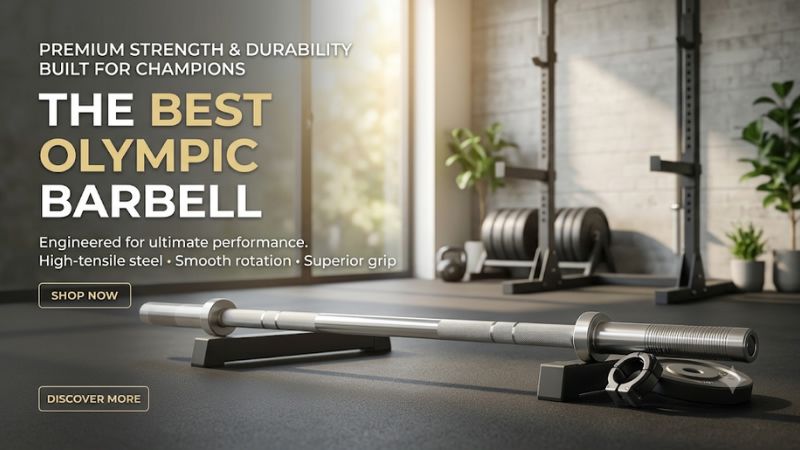
The best Olympic barbells for different training styles
A household can get more use from a single versatile bar than from a specialty model that suits only one person’s program. If you train one discipline repeatedly, the smaller details matter more. Check the grip and sleeve requirements of the lifts you do every week, then use the individual picks below to choose a bar.
Rogue Ohio Bar E-Coat for a one-bar home gym
The Ohio Bar E-Coat combines a 28.5 mm shaft with dual grip marks, bronze bushings, and 16.40 inches of loadable sleeve on each side. Its 20 kg starting weight suits buyers who already train with a full-size bar. The center is smooth, which helps if you repeatedly bring the bar into a front rack.
Best for the home lifter who squats and benches at the rack, deadlifts from the floor, and occasionally adds cleans or other mixed training. Its advantage is balance. The same bar has enough sleeve space to accommodate a variety of plate profiles, two sets of hand-position reference marks, and knurling intended for repeated use across several movements.
The bushing system gives the plates a way to rotate during a clean, and the dual marks let you set up consistently for different lifts. That combination is easier to justify on a first bar than paying for a specialty sleeve system before you know whether frequent weightlifting will be part of your week. The shaft’s E-coat and the bright-zinc sleeves are a specific finish combination. Other Ohio variants may use different materials or coatings.
Advantages include a useful 51⅞-inch shaft span between sleeves, a generous loadable sleeve, and one grip layout that works across a mixed program. Trade-offs include the absence of a center knurl for squat traction and an 86.75-inch overall length that needs a real loading aisle on both sides. Choose it if you have room for a full-size bar and share it across different lifts. Choose a power bar if rear-center grip is a priority on most training days.
REP Colorado Bar 20 kg for smooth-sleeve mixed training
The Colorado pairs a 28.5 mm shaft with composite bushings, smooth sleeves, and medium volcano knurling. REP lists 16.1 inches of loadable space per side. It suits a buyer who changes plates frequently and wants dual grip marks for both strength and weightlifting movements without a knurled center.
Best for mixed home training where the bar is routinely unloaded and reloaded. Feel matters here. If you routinely slide snug-fitting iron plates on and off, a smooth sleeve can make the process more straightforward. The bore finish and tolerance of the plate still affect how smoothly it goes on, so a sleeve design by itself cannot tell you how every brand of plate will feel.
The 20 kg version gives you the same general shaft diameter as the Ohio, with a slightly shorter published loadable area. A difference of 0.30 inches is small on paper. If your heaviest stack already ends near a lock collar, it can decide whether a change plate fits. Inspect the actual thickness of your bumper labels, molded rims, and collar body before counting the advertised sleeve length as usable weight capacity.
Advantages include dual marks, a smooth sleeve surface, and a knurl pattern intended for general work. Trade-offs include a smooth center for back squats and separate finish options that deserve a SKU-level check. Choose the Colorado if sleeve feel is a priority and your plate stack clears 16.1 inches. Compare the Ohio if you need the extra fraction of an inch or want bronze bushings specifically.
Rogue 45 lb Ohio Power Bar Bare Steel for the big three
The bare-steel Ohio Power Bar pairs a 29 mm shaft with a center knurl and powerlifting grip marks. Rogue lists 16.25 inches of loadable sleeve per side. Those features matter most to lifters who want a consistent squat setup and a firmer grip during heavy attempts at the bench or on the floor.
Best for programs centered on squatting, bench pressing, and deadlifting. The center knurl contacts the shirt during a back squat, while the outer knurl gives the hands a stronger purchase. A lifter who resets their grip for every heavy bench attempt may value that texture. For repeated cleans or long sets with the bar close to the throat, an abrasive center can become a drawback.
Bare steel gives the buyer direct contact with the machined knurl. It also calls for regular care when humidity, chalk, or sweat builds up. A garage that gets damp overnight changes the ownership experience, especially if the bar will be left on an open rack. Factor in wiping down the shaft and following Rogue’s maintenance directions before choosing it over a coated version.
Advantages include center traction, a thicker 29 mm shaft, and a 45 lb base weight that simplifies arithmetic with pound plates. Trade-offs are the maintenance demands and a specialized grip that can feel sharp during high-rep mixed training. Choose this model if the big three dominate your calendar. Buy the Ohio or Colorado instead if different household members need a less aggressive bar for general training.
Rogue Bella Bar 2.0 Black Zinc for lighter starting loads
The Bella Bar 2.0 starts at 15 kg, measures 79.13 inches end to end, and has a 25 mm shaft. Its 13-inch sleeves hold Olympic plates, and its dual marks and smooth center suit mixed training. This bar stands out when a 20 kg empty bar is already near the load a buyer wants to practice with.
Best for lifters who want a lighter empty bar, those who find a narrower grip easier to hold, or households where a full-length 20 kg bar is awkward to maneuver. The lighter starting weight gives you useful room below 44 lb before any plates go on. That matters for overhead practice or when two people share the same bar and work at different loads.
The 25 mm shaft and the sleeve diameter answer different questions. Your hands touch the 25 mm shaft. Your plates go on Olympic-size sleeves. An existing set of compatible Olympic plates therefore remains useful when you step down from a 20 kg model. The main change is the number of thick plates that fit outside the sleeve shoulders. Check how much of the 13 inches is left once your collars are installed.
Advantages include the 15 kg start, narrower grip, and shorter end-to-end dimensions. Trade-offs include the shorter loading area and a grip diameter that differs from common 28 to 29 mm bars. Choose the Bella when the empty weight and the grip matter every session. A full-length 20 kg multipurpose bar is the better match if several thick bumper pairs have to fit on each sleeve.
American Barbell Performance Training Bar for hard-chrome weightlifting practice
The 20 kg Performance Training Bar uses a 28 mm shaft, Olympic weightlifting grip marks, composite bushings, and hard chrome on the shaft and sleeves. American Barbell lists roughly 16.34 inches of loadable sleeve. It fits buyers who want dedicated weightlifting geometry and prefer a bushing-based design.
Best for lifters who plan most workouts around the snatch, clean and jerk, and related pulls. The 28 mm shaft and dedicated grip markings give you familiar setup references across those movements. A smooth center limits the amount of knurl directly under the throat or against the shirt in front-rack work. Hard chrome is available on both the shaft and sleeve surfaces of this configuration.
Composite bushings allow sleeve rotation without requiring the buyer to choose a bearing design. Under the bar, changes in turnover are influenced by load, bar speed, grip, and sleeve construction. The product’s published construction is enough to categorize its intended use. It leaves the exact feel under your training loads for you to assess.
Advantages include precise published dimensions, a long loading area, and dedicated markings. Trade-offs include fewer grip references for someone switching between powerlifting and Olympic lifts, a smooth center for back squats, and a 20 kg starting load. Choose it if you want a weightlifting-first bar. A dual-marked bushing bar covers more shared use if other lifters mainly bench and squat.
Eleiko IWF Weightlifting Training Bar for sport-specific training
The 20 kg Eleiko IWF Weightlifting Training Bar has a 28 mm shaft, needle bearings, weightlifting marks, and 415 mm of loading room per side. Eleiko identifies the current model as IWF-certified for training. This is the specialist choice for lifters who regularly practice the competition lifts and value that documented configuration.
Best for athletes whose routines center on the snatch and clean and jerk, especially when they want familiar weightlifting dimensions and dedicated bearing sleeves at home. The relevant combination is training knurl, grip reference, and a sleeve mechanism designed for the demands of fast turnover. The value comes from using those features often. A garage program built around basic pressing and squatting is unlikely to benefit from them to the same extent.
Budget for the environment that lets you use the bar. If your space permits only controlled lowering because of the floor, downstairs neighbors, or noise restrictions, a specialist bar alone cannot make regular full-height weightlifting drops appropriate. Check the brand’s use and flooring guidance for the exact model before setting up a platform or buying a full set of bumpers.
Advantages include sport-specific construction, clear sleeve dimensions, and IWF training certification. Trade-offs include the specialist price and fewer features geared specifically to the big three. Choose it if weightlifting is the main reason you own a barbell. If your programming changes from month to month, a multipurpose bar and a better plate selection can be a more useful overall purchase.
What to measure before buying a barbell
The width of the room, the location of the J-cups, and the thickness of the plates answer three different questions. Check each one before comparing product scores or steel grades. A bar can sit correctly on your rack and still leave too little space at the wall to change plates with both hands.
Rack contact and plate-loading clearance
Measure the outside edges of the installed J-cup contact surfaces, then compare that width with the bar’s distance between the inside sleeve shoulders. Center the bar in your calculation so you can see the clearance on each side. Also allow for small side-to-side shifts during a normal unrack or rerack.
Consider a rack with 48 inches across the installed J-cups and a bar with 51⅞ inches between the shoulders. Centered, the difference leaves about 1.94 inches per side as a geometry estimate. Cup shape and other parts of the rack still matter. Safeties need to sit where they will catch the shaft as intended, and both ends need room to slide a plate onto the sleeve. If your rack has extended attachments or nearby storage pegs, take the measurement again with them in place.
Sleeve space at your heaviest planned load
Add the actual thickness of the plates you want on one sleeve and the space your collar takes up when installed. Include small change plates or fractional plates that you use for progression. The number printed on the outside of a bumper tells you its weight. The thickness of its rim and hub determines the room it uses.
For example, three hypothetical 3.5-inch bumpers, a 0.75-inch change plate, and a 1.5-inch collar occupy 12.75 inches. A 13-inch sleeve leaves just 0.25 inches on paper. A 16.40-inch sleeve leaves 3.65 inches with the same stack. Use the exercise to decide whether you need a longer sleeve or thinner plates. Never count an overhanging collar as usable loading room.
Grip, rotation, and starting weight
Look at shaft diameter and knurl placement together. A thick shaft with a center knurl suits some heavy squat routines, while a smaller shaft and smooth center can suit light starts or frequent front-rack repetitions. Rotating sleeves matter most when the shaft turns quickly relative to the plates.
If you have never evaluated the grip in person, compare the closest available gym bar. Note which part of the knurl your hands actually touch, and see how you feel during a warm-up and a normal working set. A bar that feels reassuring for one heavy deadlift can be less comfortable through several rounds of cleans. For a shared gym, run the same check for the lightest lifter. The ability to start with an empty bar can matter more than any upgrade to the sleeves.
Frequently asked questions
The word “Olympic” appears on general-purpose bars, power bars, and dedicated weightlifting models. Once you have narrowed the list by training style, a few details can still change the purchase. Finish choice, the actual empty weight, and the rules for plate sets matter during everyday ownership.
Does an Olympic barbell always weigh 45 lb?
A 20 kg bar weighs about 44.1 lb, and some U.S. power bars are explicitly built to weigh 45 lb. A 15 kg bar weighs about 33.1 lb. Record the labeled empty weight of your exact bar in your training log, especially if you compare sessions across different gyms or alternate between kg and lb equipment.
For example, an empty 20 kg bar with a 45 lb plate on each end has a nominal load of about 134.1 lb before collars. A 45 lb bar with the same plates gives you 135 lb. Either convention works for consistent tracking when you know what is on the bar.
Are bearing sleeves worth paying for?
They are worth considering when most of your sessions include fast turnovers in the snatch or clean. Compare the whole bar, including shaft diameter and grip markings, because a quality bushing bar also offers sleeve rotation. The bearing count alone gives you little information about how a loaded bar will feel.
For a basic squat, bench, deadlift, and row routine, a good bushing bar can be the better place to start. Spend more on bearings when you have a specific training reason and a bar designed for the loads and handling your program involves.
Do color and coating change how a bar feels?
The coating sits over, or is part of, the surface you grip and maintain. Knurl cut, finish thickness, and the material underneath can all influence how sharp a grip feels. Compare the shaft and sleeve finishes separately because a model can use one coating where you grip it and another where the plates slide.
In a humid garage, choose a finish you are prepared to maintain and check the manufacturer’s care guidance. Steel can still show wear on high-contact surfaces. For a buyer with a dry indoor gym, hand feel may be the deciding factor.
Can I use one plate set across these bars?
All six picks use Olympic-size sleeves. A compatible Olympic plate set can serve across multiple bars as long as the center bores fit and each bar has enough usable sleeve length. If a plate binds, check the bore and sleeve for damage, dirt, or dimensional differences before forcing it into place.
Test your thickest planned stack on paper for the bar with the shortest sleeves. If you can load it and fully seat a compatible collar, the other models will generally give you more room for that same stack.
Conclusion
Choose the Rogue Ohio Bar E-Coat if you want one 20 kg bar for mixed training, or the REP Colorado if you prefer its smooth sleeves. Pick the Ohio Power Bar for frequent big-three work, the Bella for a lighter start, and the American Barbell or Eleiko when weightlifting-specific features will earn their cost.
More from Amazon
Programs that pair well with the guide above. Offers and eligibility are set by Amazon and may change.
Free shipping on eligible items, Prime Video and more. Eligible new members can start with a free trial.
Start a Prime free trialA Prime membership for ages 18-24 with a trial period. Eligibility is set by Amazon.
See Prime for Young AdultsAudiobooks and podcasts to listen to on the go. Eligible new members can start with a free trial.
Try Audible freeAd-free music streaming. Eligible new subscribers can start with a free trial.
Try Music Unlimited freeAs an Amazon Associate we earn from qualifying purchases.
Write Your Review
No reviews yet. Be the first to share your experience!