
Our Top Picks
The best Pilates chair for most home workouts is a stable, padded chair with adjustable springs, a footprint around 24–30 inches wide and 22–30 inches deep, and enough clearance to move the pedal without striking nearby furniture.
A Pilates chair is not simply a small reformer. Its pedal produces resistance through springs, while your hands, feet, and body often share a relatively small platform. That makes footprint, spring setup, and stability more important than a long list of exercises. The right choice depends on whether you need a compact occasional-use chair, a professional-style split-pedal model, or a foldable option for a multipurpose room.

PAETA Pilates Chair,Pilates Combo Chair,Wunda Chair with Resistance Bands, Handles, and Split Pedals, Professional Yoga Chair Pilates Machine for Home and Studio Use, Extra Large
Chosen because it specifies Pilates Combo Chair and Wunda Chair with Resistance Bands.
View on Amazon
VEVOR Pilates Chair, Split-Pedal Stability Combo Chairs with Handles, Rubber Wood Frame Yoga Fitness Trainer, Exercise Reformer, Pilates Resistance-Workout Equipment, for Home Gym Studio Workout
Chosen because it specifies Split-Pedal Stability Combo Chairs with Handles and Rubber Wood Frame Yoga Fitness Trainer.
View on Amazon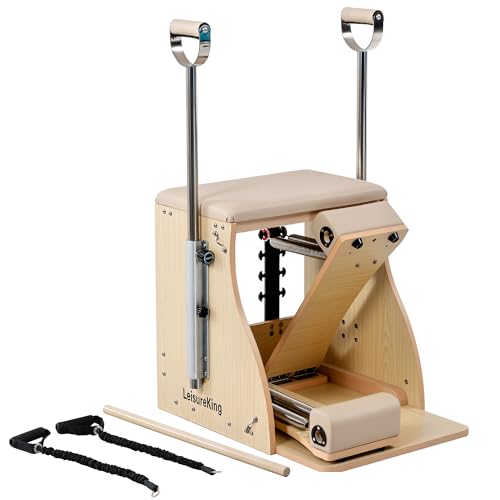
LeisureKing Pilates Combo Chair for Home Workouts, Wunda Chair with 5-Level Handles, Split Pedals, Resistance Bands, for Studio, Gym, Pilates Workout, Rehabilitation Exercises, Easy Assembly, Beige
Chosen because it specifies Wunda Chair with 5-Level Handles and Split Pedals.
View on Amazon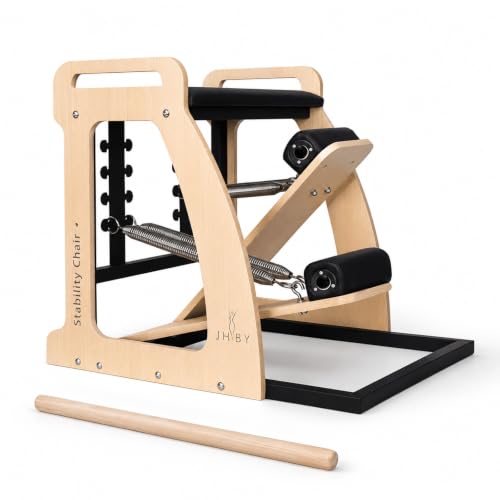
JHBYBMG Pilates Chair, Pilates Chair for Home Workouts, Sturdy Metal Frame, Pilates Stability Chair, Yoga Fitness Trainer, Pilates Reformer Machine (Black) (26.5*30 inch)
Chosen because it specifies Pilates Chair for Home Workouts and Sturdy Metal Frame.
View on AmazonBest Pilates chairs by home-workout situation
| Home situation | Best chair type | What to prioritize | Typical budget |
|---|---|---|---|
| Small room or shared living space | Compact, foldable or stackable chair | Under 25 in wide, transport wheels or carry handles, secure locking system | $400–$900 |
| New to Pilates equipment | Single-pedal stability chair | Wide base, moderate spring options, thick seat padding, simple adjustments | $500–$1,000 |
| Frequent home practice | Professional split-pedal chair | Independent pedals, multiple spring positions, replaceable upholstery and springs | $900–$2,000+ |
| Advanced exercises and varied users | Studio-style chair with handles or tower compatibility | High frame rigidity, adjustable pedal height, broad resistance range | $1,200–$3,000+ |
Head-to-head: the main Pilates chair designs
Professional split-pedal chairs
Split-pedal chairs, including models such as the Balanced Body Combo Chair and Peak Pilates MVe-style chairs, allow the left and right pedals to move independently. That is useful for asymmetric movements, balance work, and more advanced choreography. Some models can also lock the pedals together for traditional chair exercises.
The trade-off is size and setup complexity. A split-pedal chair commonly occupies about 24–30 inches in width and 24–30 inches in depth, then needs additional clearance on both sides for the pedals and the user’s legs. Its springs may be mounted in several positions, so resistance can be tuned more precisely than on a basic fitness chair.
Single-pedal stability chairs
A single pedal moves as one unit and is usually easier to understand during a first session. Chairs in the Merrithew Stability Chair category are designed around this more controlled format, with a padded seat, a sturdy frame, and resistance that can be changed by moving springs between anchor points.
This design is often the better choice for a household where several people will use the equipment. There are fewer moving parts, the pedal is easier to keep level, and the chair generally feels predictable when stepping on. It is less versatile for independent-leg exercises, however.
Compact and foldable chairs
Compact chairs make sense when equipment must be stored after every session. They may be lighter than studio chairs and can fit under a bed or against a wall, but light weight can become a stability problem. Check the published maximum user weight, base dimensions, and whether the chair must be anchored or placed on a particular surface.
A folding mechanism is another wear point. Inspect the hinge, locking pins, and spring attachment before every workout. A chair that folds easily but shifts during a standing exercise is a poor bargain for regular use.
Comparison of representative home-chair specifications
| Chair category | Approximate footprint | Typical chair weight | Pedal design | Spring adjustment | Best fit |
|---|---|---|---|---|---|
| Compact folding chair | 22–25 in W × 20–24 in D | 25–40 lb | Usually single pedal | 2–4 anchor positions | Occasional use and tight rooms |
| Home stability chair | 25–30 in W × 24–30 in D | 35–55 lb | Single or linked pedal | 3–6 positions | Beginners and regular home practice |
| Studio split-pedal chair | 24–30 in W × 24–30 in D | 45–70 lb | Independent or lockable split pedal | 4–8 positions | Experienced users and multiple routines |
| Chair with handles or tower | 28–36 in W × 28–36 in D | 55–100+ lb | Split or single pedal | Broad range, sometimes dual springs | Dedicated home studios |
These are useful planning ranges rather than universal specifications. Exact dimensions, user-weight limits, spring colors, and included accessories vary by model and revision. Confirm the manufacturer’s current manual before buying.
What matters most when comparing the best Pilates chairs
Footprint and usable floor space
Measure more than the frame. A 26-inch-wide chair may require 36–48 inches of clear width once you account for lateral leg movement, hand placement, and safe mounting. For a practical home setup, allow at least 18 inches of unobstructed space on each side and 24 inches in front of the pedal. Advanced exercises may require more.
Also consider the storage route. A 60-pound chair that fits the workout area but cannot pass through a narrow doorway may remain unused. Casters are convenient, but they should not replace a heavy, non-sliding base during exercise.
Pedal resistance and spring adjustability
Resistance is not determined by spring color alone. The spring’s rate, its attachment point, pedal travel, and the user’s leverage all affect difficulty. More spring tension is not automatically better: excessive resistance can make the pedal abrupt, while too little may allow it to rise unexpectedly.
For a first chair, look for at least three practical resistance settings. Frequent users should consider four or more anchor positions, clearly marked settings, and springs that can be replaced individually. Independent pedals are valuable only if you expect to use exercises that require them.
Padding and upholstery
A seat around 2–3 inches thick usually provides a useful balance between comfort and stability. Very soft foam can feel pleasant while seated but makes balance work less precise. Look for dense foam, a non-slip surface, reinforced seams, and upholstery that can be wiped clean without absorbing sweat.
Vinyl or polyurethane upholstery is common because it tolerates routine cleaning. Avoid abrasive cleaners and excess water around spring hardware. A removable seat cover is convenient, but confirm that it cannot shift during kneeling or standing movements.
Stability and construction
Prioritize a rigid frame, broad feet, non-marking levelers, and a clearly stated maximum user weight. A chair can meet its weight rating yet still feel unstable if its base is narrow, the floor is uneven, or the user climbs on from the side.
For carpet, use a firm equipment mat rather than placing the chair directly on plush flooring. On hard floors, rubber feet should grip without leaving marks. Keep the chair away from loose rugs and inspect fasteners periodically; repeated pedal movement can loosen hardware over time.
Ceiling and clearance calculations for a home studio
A chair often needs more ceiling clearance than its seat height suggests. During standing work, your head and arms may rise 24–36 inches above the seat. As a planning example:
- Chair seat height: 24 inches
- User height: 68 inches
- Arm reach above the head: approximately 10 inches
- Recommended overhead buffer: 4–6 inches
The estimated clearance is 24 + (68 − 24) + 10 + 6 = 84 inches, or 7 feet. A taller user, overhead bar, or ceiling fan requires more. For a room with an 8-foot ceiling, leave the chair away from fans, light fixtures, and low beams rather than assuming the room is automatically suitable.
For floor space, a 28 × 28-inch chair has a frame area of 784 square inches, or about 5.4 square feet. With an 18-inch movement margin on three sides, the working zone becomes roughly 64 × 64 inches—about 28.4 square feet. This is why a compact chair can still need a substantial clear area.
Ownership realities: what wears first
- Springs: Replace them if coils are distorted, rusty, or no longer return smoothly. Do not mix incompatible spring types.
- Pedal hinges and bushings: Listen for grinding or side-to-side movement. Follow the manual for lubrication; some parts should remain dry.
- Upholstery: Wipe after sweaty sessions and avoid storing the chair in direct sunlight, which can accelerate cracking.
- Fasteners: Check bolts and spring clips monthly if the chair is used several times a week.
- Floor protection: A dense mat can prevent sliding and protect wood floors, but it should remain flat and free of curled edges.
A common mistake is changing several springs at once and then losing track of the setup. Photograph the original configuration, change one variable at a time, and begin every new setting with slow pedal movements while holding a stable support.
Bottom line
Choose a compact folding chair if storage is the deciding factor, a padded single-pedal stability chair if ease and predictability matter most, and a split-pedal professional chair if you practice frequently or need a wider exercise vocabulary. For any of the best Pilates chairs, verify the full working footprint, ceiling clearance, spring range, user-weight rating, replacement-parts availability, and cleaning requirements before focusing on appearance or accessories.
Pilates equipment can support general exercise, but it is not a substitute for individualized instruction. If you are returning after an injury, managing pain, pregnant, or unsure whether a movement is appropriate, ask a qualified health or movement professional for guidance.




Write Your Review
No reviews yet. Be the first to share your experience!