
Key takeaways
What's inside
Best full-body kettlebell exercises are a short library of movements that train the whole body from one bell: the swing, goblet squat, clean, press, snatch and Turkish get-up. Learning them well starts with the right bell, so this guide pairs each movement pattern with the kettlebells that make it easiest to master.
As an Amazon Associate we earn from qualifying purchases at no extra cost to you. Product prices and availability are accurate as of the date shown and are subject to change.
By Chris Parker
🛒 Best Price Today on Amazon
Prime members get fast, free shipping on everything above, plus member-only deals. New members get a 30-day free trial — cancel anytime.
Start 30-Day Prime Free Trial →See Today’s Amazon DealsHow to Choose Bells for the Best Full-Body Kettlebell Exercises
Learning the movements asks for a forgiving weight, a comfortable handle and a stable base, not the widest range. The best full-body kettlebell exercises are easiest to groove when your first bell is sized to teach the pattern, not to test your strength.
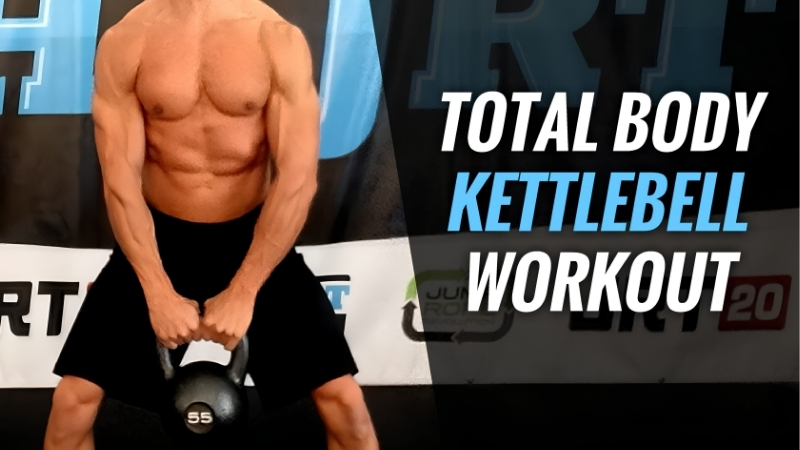
Weight for Learning the Movements
Start where form holds. Many beginners learn the swing and goblet squat with 18 to 35 lb (8 to 16 kg) and the press, snatch and get-up lighter still. Too heavy and the pattern breaks down; too light and the swing loses the hinge that teaches it.
A single mid-weight bell teaches most of the library, then a lighter bell helps with overhead skills like the snatch and get-up. Once the movements are solid, a heavier bell keeps the swing and squat challenging as you progress.
Progression looks different per movement. The swing and goblet squat tolerate weight quickly, so they outgrow a learning bell first, while the press, snatch and Turkish get-up reward patience with a lighter load until the pattern is automatic. A practical path is to groove everything with one forgiving bell, add a second lighter bell for overhead skills, then bring in a heavier bell for swings and squats once your technique holds under fatigue.
Handle Width and Diameter for Grip
The handle matters more when you are learning. A roughly 35 mm diameter suits most hands, and a window wide enough for both hands makes two-handed swings comfortable while you build grip endurance on high-rep sets.
A smooth, chip-free powder coat protects your palms during cleans and snatches, where a rough seam tears skin. For get-ups and presses, consistent handle shape helps the bell settle cleanly into the rack position against your forearm.
Cast Iron Versus Vinyl for the Exercises
Solid cast iron grips chalk and settles predictably in the rack for cleans, presses and get-ups, which is why most coaches teach on it. Vinyl or sand-filled bells are softer and quieter, kinder to floors during learning drops, but bulkier and less precise.
For skill work like the snatch and get-up, a stable, consistent cast-iron bell is easier to control. For apartment learning where a dropped bell must not mark the floor, a soft bell is the safer trade. Choose by your space and the movements you focus on.
The rack position is where the difference shows most. On a clean or press, the bell must settle against your forearm in the same spot every rep; a consistent cast-iron shape makes that predictable, while a softer, less uniform bell can shift and bruise as you learn. If your focus is swings and squats rather than cleans and presses, that consistency matters less, and a quiet soft bell becomes the more sensible first choice for a shared home.
Footprint, Overhead Space and Budget
Overhead exercises change the space you need: the snatch, press and get-up all put the bell above your head, so check ceiling height and keep the area clear. Two or three fixed bells also need floor or shelf space. Measure your actual space before ordering.
On the market, one quality fixed bell teaches the whole library cheaply, and a wide-range adjustable adds progression without a rack of iron. For context, the WHO physical activity guidelines suggest about two muscle-strengthening sessions a week, and the best full-body kettlebell exercises cover the major patterns in one. Check with a doctor or certified coach on form before loading heavy, especially overhead or with your back.
Top Kettlebell Picks for the Best Full-Body Kettlebell Exercises
These six bells make the best full-body kettlebell exercises easiest to learn and progress, from a forgiving first cast-iron bell to a wide-range adjustable. Match the weight to your skill level and the build to your space. All are widely available on Amazon.
| Bell | Type | Range | Best for |
|---|---|---|---|
| Yes4All Cast Iron | Cast iron | 5-65 lb (2-30 kg) | Learning on iron |
| CAP Cast Iron | Cast iron | Graduated | Durable first bell |
| Amazon Basics Cast Iron | Cast iron | Graduated | Simple value |
| REP Adjustable | Adjustable | 20-40 lb (9-18 kg) | Progression, real feel |
| Kettlebell Kings Adjustable | Adjustable | 26-70 lb (12-32 kg) | Wide skill range |
| Signature Fitness Soft | Sand-filled | Color-coded | Apartment learning |
Yes4All Cast Iron Kettlebell
An ideal first teaching bell: single weights across 5 to 65 lb (2.3 to 29.5 kg) with a wide grip handle and flat bottom, so you can pick the exact load to groove swings, goblet squats and cleans on solid, chalk-friendly iron.
Handle finish varies a little between weights and you buy each separately, adding cost as you progress. For learning the movements on real iron, it is the practical pick. Best for beginners grooving the core patterns.
CAP Cast Iron Kettlebell
A durable enamel or powder-coated cast-iron bell with a flat base and graduated weights, CAP is a hard-wearing first bell that settles cleanly into the rack for presses and get-ups and takes chalk for high-rep swings.
Casting seams and handle smoothness vary between weights, so inspect each, and there is no adjustable option. Best for a durable, no-frills learning bell.
Amazon Basics Cast Iron Kettlebell
A straightforward painted cast-iron bell with a flat base in graduated weights, easy to add to as your skills grow. Widely stocked and simple, it is a low-risk way to start learning the movements on iron.
The painted finish grips best when new and wears with heavy chalk use, and like any fixed bell the set grows in footprint. Best for a simple, value first bell.
REP Fitness Adjustable Kettlebell
A cast-iron-shelled adjustable with a powder-coated near-35 mm handle that feels close to a fixed bell, offered around 20 to 40 lb (9 to 18 kg). Because the weight sits inside, the bell keeps a consistent size and rack feel as you add load to a movement.
The dial and base include plastic you cannot drop, and one bell means one weight at a time. As a progression tool that still feels like real iron for skill work, it stands out. Best for learners who want to add weight without buying more bells.
Kettlebell Kings Adjustable Competition
A wide 26 to 70 lb (12 to 32 kg) range across seven plates with a 1.38 in (35 mm) handle, this adjustable lets a movement grow from a light learning load to a heavy swing in one unit — useful once your patterns are solid and you want to progress.
Plate changes are slower than a dial and the wide range makes a bigger bell, so it is more than a first-timer needs. Best for lifters progressing the movements across a wide range.
Signature Fitness Soft Kettlebells
Sand-filled, vinyl-covered, color-coded bells with a cushioned base, the safest choice for learning in an apartment where an early dropped rep must not mark the floor or disturb neighbours below.
The soft build feels less precise than cast iron for skill work, and higher weights get bulky. For quiet, floor-safe learning, it is the sensible pick. Best for apartment beginners.
Frequently Asked Questions
Common questions when picking bells for the best full-body kettlebell exercises.
What are the essential full-body kettlebell exercises?
A compact library covers the body: the two-handed swing, goblet squat, clean, overhead press, snatch and Turkish get-up. Between them they train the hinge, squat, press and carry patterns, which is why they anchor most kettlebell training and why mastering just these six gives you a complete full-body routine from a single bell.
What weight should a beginner start with?
Many beginners learn swings and squats with 18 to 35 lb (8 to 16 kg) and overhead skills lighter, choosing a load that keeps clean form for every rep. Skill before load — groove the pattern first, then add weight, because rushing to a heavier bell almost always makes the movement messier rather than stronger.
Is one kettlebell enough to learn the movements?
Yes. A single mid-weight bell teaches most of the library, and a lighter one helps with the snatch and get-up. Add a heavier bell once the patterns are solid, or use an adjustable to progress without buying more, since the goal early on is clean repetition rather than heavy loading that rushes your technique.
Cast iron or soft bells for learning?
Cast iron settles predictably in the rack and grips chalk, which most coaches prefer for skill work. Soft, sand-filled bells are quieter and floor-friendly for apartment learning. Choose by your space and how much overhead work you plan, and lean toward cast iron if cleans, presses and get-ups are a big part of your practice.
See More:
- Best flooring for home gym over concrete
- Best collapsible exercise bike
- Best fold away exercise bike
- Best exercise bike folding
- Best home upright exercise bike
Final Thoughts
The best full-body kettlebell exercises are a small set of movements that train everything, and the right first bell makes them far easier to master: a forgiving weight, a comfortable 35 mm handle and a stable base. Learn on a fixed bell or progress with an adjustable, mind your overhead space, and the best full-body kettlebell exercises will build strength and skill together.
As an Amazon Associate we earn from qualifying purchases at no extra cost to you. Product prices and availability are accurate as of the date shown and are subject to change.



Write Your Review
No reviews yet. Be the first to share your experience!