
The best EZ curl bar fits your hands, starts at a weight you can control, and gives your plates and collars enough room. A short Olympic model works for most home arm sessions. A rackable bar can make setup easier from hooks, while a bar with built-in locks can be useful when you change plates often.
Quick verdict
The Rogue Curl Bar is the best overall choice if a 30 lb empty bar suits your warm-up and you want generous sleeve room without buying a rack-length bar. The XMARK Crowbar is the better starting point for a tighter gym or a lighter empty weight. It weighs 21 lb and measures 47 inches end to end.
If you already plan to use a power rack, compare the Rogue and REP rackable models by shoulder spacing and grip diameter. The REP Curl Bar in hard chrome is a short alternative with a fuller 30 mm grip. Gungnir’s Curler is the specialist pick for built-in plate locks, provided your working stack fits with the locks engaged.
Best EZ curl bar comparison
Compare the weight you lift before adding plates, the space your hands have on the bends, and the room left for plates after you account for the collar. All six models below accept compatible Olympic-size plates. The exact sleeve diameter, locking system, and supported rack position can still differ between them.
| EZ curl bar | Best for | Empty weight | Overall length | Grip diameter | Published usable sleeve space per side |
|---|---|---|---|---|---|
| Rogue Curl Bar | General use with thick plates | 30 lb | 54.5 in | 28.5 mm | 10.5 in before external collar |
| XMARK Crowbar EZ Curl Barbell | Compact setup and lighter starts | 21 lb | 47 in | 28 mm | 6.25 in before external collar |
| REP Curl Bar, Hard Chrome | Fuller grip in a short format | 30 lb | 55 in | 30 mm | 10 in before external collar |
| Rogue Rackable Curl Bar | Rack setup with a 28.5 mm grip | 35 lb | 74.75 in | 28.5 mm | 10.5 in before external collar |
| REP Rackable Curl Bar, Hard Chrome | Rack setup with a fuller grip | 35 lb | 74 in | 30 mm | 10 in before external collar |
| Gungnir The Curler | Built-in plate locks | 24.25 lb | About 53.15 in | 28 mm | 7.08 in with lock in place |
How we selected these bars
We compared manufacturer specifications for identifiable models and configurations. The criteria were grip diameter and texture, starting weight, useful sleeve length, rack geometry, and the effort required to change plates. These details show how each bar fits a particular buyer, even when several models look similar.
Extra sleeve room earned weight in the ranking because many home gyms already have Olympic bumpers or thick rubber-coated plates. A bar with room for four slim iron plates may have room for only one or two wide bumpers of the same nominal weight. We also treated empty weight as a fundamental fit decision. The 14 lb difference between the Crowbar and the rackable models changes the entire working range.
We used documented construction to distinguish sleeve mechanisms and finishes. The recommendations describe likely practical consequences, such as how much room an existing collar takes up or which grip diameter may suit a buyer. They are based on product research, with no hands-on comparison of sleeve spin, knurl wear, or comfort across lifters.
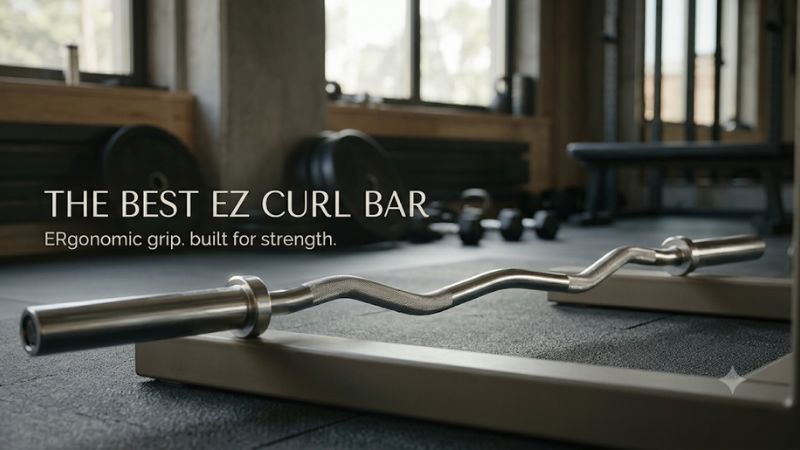
Six EZ curl bars worth comparing
The right purchase starts with an ordinary training session. Think about where you pick up the bar, which bends you hold, how often you change plates, and where the bar goes afterward. The six picks favor different answers, from a light plate-loaded bar to a rack-length model that starts directly on J-cups.
Rogue Curl Bar for most home arm workouts
The Rogue Curl Bar is 54.5 inches long, weighs 30 lb, and has a 28.5 mm shaft. It gives you 10.5 inches of loadable sleeve on each side and uses bronze bushings. Its knurling extends toward the inner grip area, which is useful if close-grip curls and lying triceps extensions share the same bar.
It is the best fit for a homeowner who trains in a clear floor area or has a purpose-built stand for a short curl bar. The main advantage over many compact models is sleeve room. If three plates use 8 inches and the collar takes 1.5 inches, a 10.5-inch sleeve leaves one inch of nominal room. A 6.25-inch model requires a different combination of plates for that same load. That is a decision you will notice whenever you change weights.
The 31.5-inch space between the sleeve shoulders is the important limit. The short Rogue is designed for use away from a conventional power rack. If you have been picking up a loaded straight bar from J-cups, work out how you will start and finish your EZ-bar sets before switching. The unloaded bar is also heavier than several common commercial curl bars.
Buy it if you want Olympic sleeves with room for thick plates, a 28.5 mm grip, and texture through the close-grip area. Choose a lighter bar if your easiest sets start below 30 lb or you need to carry the bar between rooms for every workout.
XMARK Crowbar for a lighter and shorter setup
The Crowbar measures 47 inches overall, weighs 21 lb, and uses a 28 mm shaft with brass bushings. It has 6.25 inches of loadable sleeve per side and about 33 inches between the sleeves. That combination suits buyers who want a compact Olympic bar for standing curls and triceps work outside a full-size rack.
The lighter start gives you a different range. With a pair of 5 lb plates, the Crowbar reaches 31 lb before collars. The 30 lb Rogue reaches 40 lb with the same pair. That matters if your lighter curls need a 30-to-35 lb setup, if you use the bar for higher-repetition extensions, or if two people share the same equipment. You can also carry the empty bar to the bench with considerably less weight in your hands.
The 6.25-inch sleeves can be the real limit in a gym that owns thick plates. The product lists a longer total sleeve dimension, so use the separate loadable figure when calculating the stack. A collar that needs an inch of full engagement leaves 5.25 inches of plate room in a simplified calculation. Confirm that with the exact collar and sleeve geometry.
Buy it if a 21 lb empty bar and a 47-inch footprint are more important to you than stacking several thick bumpers. Choose a long-sleeve model if sleeve space already limits the exercises you want to do.
REP Curl Bar for a fuller hand grip
The hard-chrome REP Curl Bar has a 30 mm shaft, a 30 lb empty weight, and 10 inches of loadable space per side. The specification table lists 55 inches overall and 33.4 inches between sleeves. Each sleeve uses a bushing and a needle bearing, and the bar is designed for use outside a conventional power rack.
The 30 mm grip is its strongest reason to make the shortlist. A buyer who prefers more surface under the palms during curls or extensions may like the way a fuller shaft sits in the hands. Someone who already finds a 28.5 mm straight bar thick will want to test a comparable grip first. Shaft diameter and grip angle work together, so the most useful mockup is one that reproduces both.
REP offers multiple finishes in the product family. This recommendation refers to the hard-chrome version. Compare the selected SKU at checkout, especially when pricing a different finish for a humid garage. A finish choice has practical value when it changes the cleaning routine or surface feel. It cannot make a grip angle or diameter fit your hands.
Buy it if you want a fuller 30 mm grip and need roughly 10 inches of sleeve space without a long bar. Choose the Rogue compact or the Crowbar if you prefer a narrower grip. If your reason for shopping is easier loading from hooks, consider the rackable REP instead.
Rogue Rackable Curl Bar for loading at the rack
The Rogue Rackable Curl Bar is 74.75 inches long and weighs 35 lb. It retains a 28.5 mm shaft and 10.5-inch loadable sleeves. Its 51.8125-inch span between the sleeves is the feature that changes how you train. Suitable rack supports can hold the shaft while you load plates and set up the next exercise.
That extra length earns its place if you train from an appropriate rack several times a week. For example, you can set approved hooks to a convenient height for standing curls without first lifting the loaded bar from the floor. The longer bar also needs clearance beyond both sleeve tips, especially when your rack sits between walls or close to plate storage.
Measure the actual installed contact span. If the outside edges of your J-cup contact surfaces are 49 inches apart, the centered geometric difference is about 1.41 inches per side. That is a screening calculation. Check that the cambered shaft sits securely on the intended contact surfaces and that there is still room for ordinary lateral movement during reracking. Follow the rack and bar makers’ setup instructions.
Buy it if you have compatible supports, prefer a 28.5 mm grip, and will use the rack to load or start sets. Choose the short Rogue if you mainly train away from the rack. Both have 10.5-inch loadable sleeves, so the main gain from the longer model is the span between the shoulders.
REP Rackable Curl Bar for a 30 mm rack setup
REP’s rackable hard-chrome model is 74 inches long, with 51 inches between sleeves, a 35 lb empty weight, and a 30 mm grip. It offers 10 inches of loadable space per side. This is the direct comparison for a buyer who wants to load in a power rack and prefers a larger grip diameter.
The difference in shoulder spacing from the Rogue is just over 0.8 inches overall. In a generous rack, the difference may have little practical effect. In a tight rack, it changes side clearance by about four-tenths of an inch at each end when centered. Compare the actual J-cups and the shaft contact points, especially if the cups have wide sidewalls. Check the intended position with the empty bar before loading.
REP uses the same hybrid sleeve idea found in its compact curl bar. If you are choosing between the two REP models, the important differences are the rack interface, the 5 lb difference in starting weight, and more than a foot of added overall length. Look at the exercises where loading at the rack would change your routine. For a buyer who often changes plates at waist height, that design choice has consistent value.
Buy it if the intended rack contact and the fuller grip suit you. Choose another bar if your J-cups leave too little margin or you prefer a light start and have a workable floor setup.
Gungnir The Curler for integrated plate locks
The Curler has a stainless-steel 28 mm shaft, bronze bushings, and a published weight of 11 kg, or about 24.25 lb. It measures about 53.15 inches overall. Gungnir lists 7.08 inches of loading length with its built-in lock in place, the figure to use for your real plate capacity.
This pick suits someone who changes plates among several movements or lifters and values keeping the locks attached to the bar. The mechanism changes the setup routine. You load the plates and secure them through the built-in system according to the manufacturer’s instructions. During shopping, check each plate’s bore and the shape of its outer hub so the locking component seats as intended.
The difference between the nominal sleeve and the locked stack is important. The maker also advertises a sleeve length of about 9.05 inches, but the locked figure is shorter. If your heaviest stack is around 7 inches of rubber and iron per side, confirm the exact fit before buying. This bar has more usable loading room than some compact designs and less than the Rogue or REP long-sleeve examples.
Buy it if built-in locks, a stainless shaft, and an intermediate empty weight are worth the price to you. Choose a simpler Olympic bar if you already have matching collars and need several more inches of room on each sleeve.
How to choose among the six models
Choose the group that fits your lightest set and the space where you train. Then compare your preferred hand position and heaviest real stack. Once those requirements are satisfied, features such as finish and sleeve mechanism can help you decide between two bars that already work for your particular setup.
Match grip angle to hand placement
A cambered bar offers more than one place to put your hands. Compare the angle, distance between grip segments, and how far the knurl extends across each bend. A deep bend can provide the hand position you want for one curl variation but place the textured section farther from your preferred extension grip.
Use a front-view product image or an on-site comparison to identify the parts of the grip that you will actually use. For a close grip, note whether the inner sloped section is long enough for the full width of each hand. For a wider curl, check whether both hands sit on corresponding knurled sections. If you plan both exercises, check each separately before ordering.
Build the lightest and heaviest sets on paper
For the lightest set, add the bar’s empty weight to the pair of plates you plan to use. If your target is 35 lb, a 35 lb rackable bar starts there before plates or collars. A 21 lb bar gives you room to move below and above that figure. Choose from the range you can use during a regular week.
For the heaviest set, compare the usable sleeve with one plate stack and the full collar. Suppose two plates take 3.2 inches each and a change plate takes 0.6 inches. The plates total 7 inches per side. Add a 1.2-inch collar on a conventional sleeve, and you need 8.2 inches per side. This simple calculation explains why the same 30 lb bar might work beautifully with one plate collection and struggle with another.
Check the floor, bench, and rack positions
Draw the bar in the place where you will load it and in the positions it will reach during curls or extensions. An EZ curl bar used over a bench needs clear space near the bench and beyond the path of the plates. A bar in a rack needs room on either side to slide plates past the tips.
Check how you get into position, especially when the floor is the starting point. A long-sleeve short bar can be convenient for loading, but you still need a controlled way to begin and finish a set. A rackable bar can simplify the pickup and return where the supports, movement, and available space allow it.
Frequently asked questions
The label “EZ curl bar” describes the cambered shaft. It can appear on several kinds of sleeves, and empty weight varies by model. Check those figures before using a remembered gym-bar weight, and verify how your plates and collars fit if you are moving a bar between home and a shared training space.
Are all EZ curl bars the same weight?
The six examples here range from 21 to 35 lb, and other versions start lighter. Use the empty weight for the exact model in your log. If you train with two different bars at home and at a gym, record their names so the plate totals stay meaningful.
Should I pay extra for bearing sleeves?
Bearing construction is worth comparing when you have a clear preference for the feel of a particular bar. Controlled curls and extensions involve a different kind of movement from fast turnover in an Olympic lift. Grip layout, secure collars, and useful sleeve space typically determine more of the day-to-day experience.
Will adjustable dumbbell plates fit an Olympic curl bar?
Check the bore. Loose plates from a 1-inch system need a matching standard bar. Some plate-loaded dumbbells share Olympic plates, while selectorized dumbbells use their own weight mechanism. Confirm the inside diameter and total sleeve space even when the pieces come from the same brand.
Can a short EZ bar be stored on a regular barbell rack?
A storage hanger and a set of power-rack J-cups serve different purposes. Check the holder’s dimensions, weight limits, and approved bar types. A short cambered shaft may need a different support location from a long straight bar, and sleeves or grips can interfere with the storage slot.
Conclusion
Choose the Rogue Curl Bar for a generous Olympic sleeve and a 28.5 mm grip, or XMARK for a lighter, shorter setup. Pick the compact REP for a 30 mm grip, a rackable Rogue or REP when you need compatible hooks, and Gungnir when built-in locks fit your plate stack and loading routine.
More from Amazon
Programs that pair well with the guide above. Offers and eligibility are set by Amazon and may change.
Free shipping on eligible items, Prime Video and more. Eligible new members can start with a free trial.
Start a Prime free trialA Prime membership for ages 18-24 with a trial period. Eligibility is set by Amazon.
See Prime for Young AdultsAudiobooks and podcasts to listen to on the go. Eligible new members can start with a free trial.
Try Audible freeAd-free music streaming. Eligible new subscribers can start with a free trial.
Try Music Unlimited freeAs an Amazon Associate we earn from qualifying purchases.

Write Your Review
No reviews yet. Be the first to share your experience!