
Choosing a short Olympic barbell vs alternatives starts with the lift you value most and the room available to do it. A compact straight bar can preserve your squat or bench setup. A full-length bar gives you more sleeve room, while dumbbells, a trap bar, and a landmine each solve a different training problem.
Short Olympic barbell vs alternatives at a glance
Start with the movement you want to keep. A short rackable straight bar makes sense when you want to keep bilateral straight-bar squats and presses in a smaller room. If the main lift is a deadlift, you have more room to choose a short floor bar, a trap bar, or a different way to load the movement completely.
| Equipment | Best reason to choose it | What to verify |
|---|---|---|
| Short rackable Olympic bar | Keep straight-bar rack lifts with less end overhang | J-cup span, sleeve room, plate access |
| Short floor-oriented Olympic bar | Keep a straight pull and prioritize plate space in a compact bar | Available grip width, intended load, setup height |
| Full-length Olympic bar | Load more plates and keep familiar full-size dimensions | Clear loading room at both ends |
| Light training bar | Start lighter and practice with a slimmer grip if needed | Starting weight, sleeve capacity, rack fit |
| Trap bar | Pull with handles at your sides | Handle height, frame size, plate-loading clearance |
| Adjustable dumbbells | Train one or both arms with a compact equipment pair | Weight range, change increments, block length |
| Landmine setup | Perform angled presses, rows, and other pivot-based lifts | Approved pivot, bar fit, arc, clearance |
| One-inch standard bar | Use an existing compatible standard plate collection | Plate and collar interface, rack and load fit |
Most of these purchases can support strength training. The difference is which movement you can reproduce and how the equipment behaves while loading it. A narrow room with an established rack leads to a different choice from an open room where the only goal is progressive floor pulling.
Compare the short bar with other straight barbells
A compact Olympic bar retains the relationship between both hands on a straight shaft. This is valuable if you want a familiar bench grip, a bar across your back, or a straight-bar deadlift in a small room. The meaningful adjustments are where the bar starts, how it fits your supports, and how many plates each end can hold.
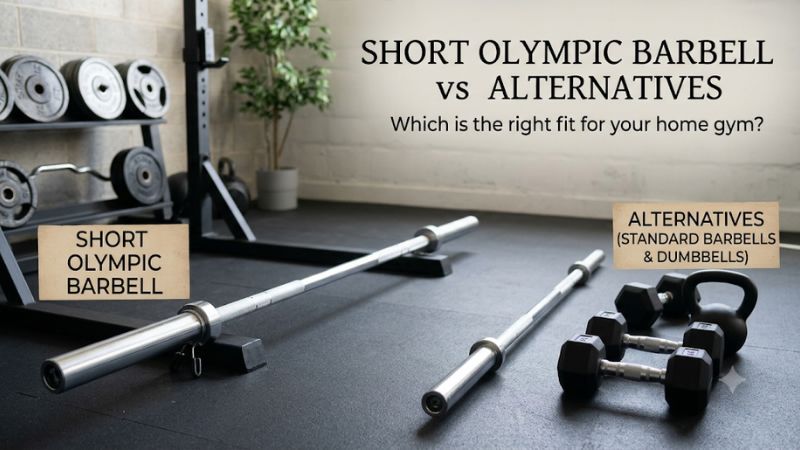
Full-length Olympic barbell for more loading room
A full-length general-purpose bar typically gives more loadable sleeve room than short rackable models. For example, Rogue lists 16.4 inches of loadable sleeve per side on the Ohio Bar, while the Rogue C-70S offers 8.875 inches. That difference is useful when you already own bumpers that fill space quickly.
A lifter who can fit three thick plates and a collar on the full-size sleeve may be able to add another pair when progressing. The short bar may lose that option even if the total weight is within its intended use. Measure your most demanding stack, including the collar, before deciding whether the room saved is worth the sleeve capacity given up.
Consider the usable length of the room as well. With an 86.6-inch bar centered in a 108-inch opening, about 10.7 inches remain beyond each tip. A 72-inch bar leaves 18 inches beyond each end. If both layouts let you load the largest plates comfortably, the full-length bar earns the extra length for a heavy progression. If only the short bar leaves a workable plate path, rack fit and loadable sleeve space decide whether it can take over.
Full-length lighter bar when grip or starting mass comes first
Some buyers want a slimmer grip and lower empty weight while keeping the sleeve length to progress with their existing plates. A full-length 15 kg model can make sense if the room has the required loading access. The full-length REP 15 kg Colorado bar, for example, has a 25 mm shaft and longer sleeves than the Colorado Short.
The distinction matters when you expect “15 kg” to describe both feel and dimensions. The REP Colorado Short also weighs 15 kg, while using a 28.5 mm shaft and 8.9-inch loadable sleeves. Two bars with the same starting load can feel different during a pull and hold very different plate arrangements. Compare measured shaft diameter and sleeve length before ranking the lighter designs.
If a family member needs the same minimum load as this example and wants the smaller shaft, the full-length lighter bar can serve them when the room accommodates it. If the room only fits a short bar at loading height, check a lighter compact training bar or a short model with the grip they prefer. Start with the smallest load you actually intend to use.
Short floor bar for longer sleeves without rack width
A short floor-oriented bar can save room between the shoulders and use the recovered length for plates. Rogue’s C-70 is about 69 inches long with a 43-inch span between sleeves and 12 loadable inches per side. This geometry works for lifters who want the straight-bar feel and room for plates without using a standard power rack.
If floor pulls drive the purchase, 12 inches of sleeve room can be more valuable than keeping a barbell shaft about 52 inches wide. The trade-off shows up when you try to bench or squat from conventional supports, or when you want an unusually wide grip for a floor movement. Measure the available space between your hands and the innermost plates on both sides.
Check whether a floor-first choice leaves other exercises in your program without a practical setup. If squats and bench presses are already covered by a different bar, the floor model can serve a focused role. If this will be your only straight bar, a short rackable option may support more of the weekly work even with less room for plates.
Lighter training bar for a lower first working weight
A 10 kg training bar lowers the empty load by roughly 11 pounds compared with a 15 kg bar. The difference matters when teaching a lift, warming up, or sharing a rack with someone who needs a lighter starting point. A 25 mm grip can also be useful for someone who finds it easier to wrap their hand around a slim shaft.
This option has its own progression limits. A short 10 kg model can have roughly six to seven inches of loadable space, depending on the product. If the goal is to practice technique first and then move gradually into heavier work, plan to measure the first few plate combinations. A larger plate diameter or an approved raised starting surface may matter for pulls from the floor.
Where the program uses both a light warm-up bar and a heavier strength bar, keeping two bars can make sense if you have storage. For a single-bar setup, choose the starting mass and sleeve space that serve the largest part of your regular sessions. A light bar that only one person can use well may still be the right choice when that person otherwise loses the ability to practice.
Compare a short Olympic barbell vs alternatives for specific lifts
Specialty equipment can make part of a workout easier to set up or more comfortable to perform. A trap bar changes handle position. Dumbbells allow the arms to move independently. A landmine creates a pivoting arc. Choose which matters based on the exercise you do most often and the movement you want to keep training.
Trap bar for pulls with handles at your sides
A trap bar puts the lifter inside or near an open frame with the handles at the sides, depending on the design. Raised handles can shorten the distance to the floor, while lower handles can retain more pulling range. Handle spacing, bar mass, overall width, and access to the sleeves all vary across products.
Choose a trap bar when you want to train that pulling configuration and have space for the frame. It can be useful for people who like a neutral hand position. A short straight bar makes sense when you want to practice pulling the bar in front of the shins, reproduce a straight-bar deadlift from another gym, or use the same bar for rack presses and squats.
Measure a trap bar before calling it a compact option. Its frame needs room front to back and may be harder to store or carry through a doorway than a slim straight bar. A short Olympic bar can sit close to the wall in a suitable holder. A trap bar needs storage that supports its shape and weight, with enough room for entry to the frame during training.
Adjustable dumbbells for independent loading and compact storage
Adjustable dumbbells store a range of weights in one pair of bodies. They can support unilateral rows, independent-arm presses, split squats, and home training where a rack will not fit. Their footprint can remain small as you add working weights, because the selector or plate system consolidates several loads.
Use the movement itself as the deciding factor. A dumbbell bench press lets each hand follow its own path and requires each side to bring its weight into position. A straight-bar bench press shares the load across a fixed grip, starts from hooks, and can use rack safeties in an appropriate setup. If your goal is specifically to progress the straight-bar bench press, the compact rack bar preserves what you are tracking.
For dumbbells, verify the top load per hand, minimum load, adjustment steps, and handle or block length at the weights you use. If a short bar supports a total load you cannot approach with the dumbbells under consideration, compare what that means for your lower-body training. If the available dumbbell loads handle your progression and clear your movement path, the lack of rack space becomes less important.
Landmine setup for a pivoting press or row
A landmine holds one end of a bar near a pivot while the other travels through an arc. That can suit angled presses and rows in a room where standing overhead pressing is limited. It still needs an approved attachment, space for the loaded end to swing, and a bar length and sleeve diameter that match the pivot.
A shorter straight bar changes the distance from the pivot to the hands and plates. That can change both the movement path and the resistance felt at a given angle. If you are choosing a bar for a landmine, check whether the manufacturer approves that length and sleeve fit, and test the arc across your planned standing or kneeling position.
A landmine is a strong option when the pivoting movement is part of your routine. Choose a rackable straight bar when you want a free-standing overhead path, a conventional bench press, or regular rack squats. If you plan to use the same bar for both, confirm that its collars and sleeves work with the landmine and that your rack geometry still works at the other station.
One-inch standard bar for an existing plate kit
A standard one-inch bar can make financial sense when you own a compatible set of plates and collars and the bar meets your intended lifting requirements. Many standard bars are available in short lengths. Verify the shaft span before planning rack use, and check the correct collar type when the sleeves use threads.
A two-inch Olympic compact bar is the more direct purchase when you already have Olympic bumpers or other plates in that format. Switching one part of the setup can force you to replace the collars and the entire plate collection. If you are starting from zero, compare the price and fit of a working plate kit in each system, including your next expected weight increment.
The best decision is often driven by the plates you will use over the next year. A narrowly specialized standard bar can work well for lighter controlled home lifts within its instructions. A short Olympic bar can let you use a wider selection of compatible gym equipment if the exact plates and collars you choose fit the sleeves and the capacity of the bar.
Decide by the setup you will use every week
Compare total room, equipment cost, and transfer to the exercise you care about. Focus on the full session, from loading the first warm-up plate to putting everything away. A small footprint can be outweighed by awkward setup, while a longer bar can be easy to use if it fits the one wall you have available.
Home bench and squat program on one rack
A short rackable Olympic bar works when it preserves the straight-bar movement, fits the actual J-cups, and has room for working plates. That lets you use one rack for warm-ups and heavier sets. Compare it with a full-length bar only after testing loading access at both bench and squat heights in the room.
If the short and full bars both fit the rack, measure the loaded sleeve. Say your bench sets take 6.5 inches of plates plus a 1.5-inch collar per side. An 8.9-inch sleeve gives some nominal room for the load. If your squat stack needs 10 inches, that same bar cannot serve the whole program with the same plate arrangement. Choose a longer bar, a suitable thinner plate mix, or a different compatible short bar based on what the room lets you do.
If a bench and rack are already installed and useful, calculate the cost of keeping them. Switching to dumbbells can free space if you remove the rack, but it changes how you train the movements and can require a different bench or a set of handles with higher per-hand loads. Use the weekly program and replacement costs in the comparison.
Floor pulling in a shared garage or spare room
A short floor bar is a logical first choice if you want a straight-bar pull and need the ends to clear a shared area. A trap bar makes sense if its handle arrangement suits your program and the frame fits the floor plan. Check set-down height, floor protection, and the route for installing the largest plate.
If both options fit, compare which bar can achieve the planned loads with plates you already have. A trap bar might have generous plate room and an entry design you like, while its price and storage size could exceed the cost of a compact straight bar. Conversely, a narrow shaft could constrain the grip you want even when the plates fit. Use your actual stance and hand positions to decide.
Also consider the time it takes to move the bar in and out. If a trap bar can stay in a suitable spot, the frame may cause little inconvenience. If every session starts with carrying it through a doorway, measure that path. A short straight bar often has the simpler storage geometry for equipment that has to move frequently.
No permanent rack and general strength goals
Adjustable dumbbells are often a better use of floor space when you need to put every piece of equipment away between workouts and want to train each side independently. A short Olympic bar works well in the same situation if floor-based pulls are your priority and you can store the plates and bar securely nearby.
List the movements you already do and which one would run out of usable loading first. If a lower-body lift needs more than your proposed dumbbells provide, a short bar may cover that exercise efficiently. If most of your routine uses adjustable loads on rows, split squats, and presses with little room to handle plates near each end of a bar, dumbbells may serve more of the work.
The space required for storage and for use can point in different directions. A bar can take little room on a wall and require a large lateral loading zone. Dumbbells can take little standing space and still need a strong place to rest or a clear floor area for setup. Compare both footprints in the exact room.
Transfer to the equipment used outside your home
If practicing the same format as another gym or event matters, find out the exact bar and loads you need to reproduce. A short bar can train many of the same patterns and may differ in empty weight, grip, rotation, or sleeve geometry. Decide how much of your weekly practice needs to match the outside setup.
For example, someone who uses a 20 kg bar at a commercial gym can log a 15 kg short bar at home and adjust the plates to reproduce a given external mass. The balance and handling may still feel different. A full-length version fits better if regular practice with the expected bar is the most important outcome and the home room can support it.
When your main goal is ordinary strength work, exact equipment matching may carry less weight than having a setup ready when you want to train. Choose the shape and loading method you can use consistently. If that changes an important lift, decide whether you want to track the new movement as its own exercise or keep the original movement elsewhere.
Conclusion
Choose a short rackable Olympic barbell when you want to keep straight-bar squats and presses in a tight room. Use a full-length bar for extra sleeve room, a floor-oriented short bar or trap bar for your preferred pulling setup, and adjustable dumbbells for independent loading with compact storage. A landmine fits when you want its pivoting movement and have room for the arc.
More from Amazon
Programs that pair well with the guide above. Offers and eligibility are set by Amazon and may change.
Free shipping on eligible items, Prime Video and more. Eligible new members can start with a free trial.
Start a Prime free trialA Prime membership for ages 18-24 with a trial period. Eligibility is set by Amazon.
See Prime for Young AdultsAudiobooks and podcasts to listen to on the go. Eligible new members can start with a free trial.
Try Audible freeAd-free music streaming. Eligible new subscribers can start with a free trial.
Try Music Unlimited freeAs an Amazon Associate we earn from qualifying purchases.
Write Your Review
No reviews yet. Be the first to share your experience!