
Our Top Picks
 Mdeam Leg Press Hack Squat Machine77.1 x 36.4 x 52.3"77.1 x 36.4 x 52.3 inches142.4 PoundsCheck on Amazon
Pros & cons
- Combines leg press and hack squat in one machine
- Adjustable safety shield offers three lockout positions
- Leather-wrapped cushions add padded comfort during reps
- At 385 pounds it needs a dedicated gym space
- Guide rods are sized for users from 5 to 6 feet
The best hack squat machines for home gyms are the Titan Fitness Hack Squat for maximum loading value, the Powertec Leverage Squat for smaller rooms and moderate training, and the Body-Solid Pro Clubline Leverage Squat for buyers who want a more polished, long-term setup.
A hack squat is not simply a leg press with shoulder pads. Its footprint, rail angle, sled travel, loading position, and maintenance requirements determine whether it feels stable and useful—or becomes an expensive machine that is difficult to move, load, or keep aligned. The right choice depends as much on your room and training frequency as on the machine’s headline weight capacity.
Mdeam Leg Press Hack Squat Machine,Leg Press Machine with Linear Bearing
Chosen because it specifies Leg Press Machine with Linear Bearing.
View on Amazon
RitFit Leg Press Hack Squat Machine with Linear Bearing, 1200LB Capacity
Chosen because it specifies 1200LB Capacity.
View on Amazon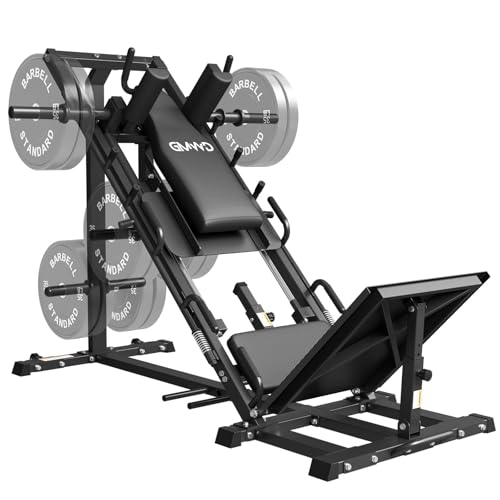
GMWD Leg Press Hack Squat Machine, Super Bearing, Heavy-Duty Alloy Steel
Chosen because it specifies Super Bearing and Heavy-Duty Alloy Steel.
View on Amazon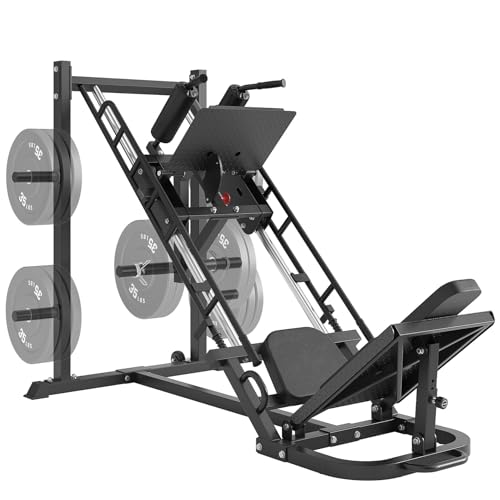
Dripex Leg Press Machine, Hack Squat Machine, Professional Leg Press Machines for Home Gym with 4 Weight Plate Storage Holders, Transport Wheels for Full Lower Body Workout-Weight Plates Not Included
Chosen because it specifies Hack Squat Machine.
View on AmazonBest hack squat machines at a glance
| Machine | Approx. footprint | Rated capacity | Loading style | Best for | Typical market range |
|---|---|---|---|---|---|
| Titan Fitness Hack Squat Machine | About 84 × 54 in | About 1,000 lb | Olympic plates on side horns | High-load training on a budget | $1,000–$1,500 |
| Powertec Leverage Squat | About 67 × 50 in | About 500 lb | Olympic plates on integrated storage/loading points | Smaller home gyms | $1,300–$1,800 |
| Body-Solid Pro Clubline Leverage Squat | About 78 × 52 in | About 1,000 lb | Olympic plates | Frequent use and commercial-style construction | $2,000–$3,000 |
| 45-degree leg press/hack squat combination | About 80–95 × 60–80 in | About 1,000–1,500 lb | Olympic plates, usually four or more horns | Shared gyms and maximum exercise variety | $2,000–$4,000 |
Dimensions and capacities vary by revision and seller, so treat these as planning figures rather than installation drawings. Measure the assembled machine, plate-storage clearance, and the full sled path before ordering.
Our picks by home-gym situation
| Your situation | Most suitable choice | Why | Main compromise |
|---|---|---|---|
| Limited floor space | Powertec Leverage Squat | Shorter overall footprint and straightforward plate loading | Lower capacity and less commercial-grade hardware |
| Heavy squatting several times per week | Titan Fitness Hack Squat | High stated capacity and comparatively low cost per pound of capacity | Large footprint and more hands-on setup |
| Two or more users, frequent training | Body-Solid Pro Clubline | Heavier frame, durable upholstery, and better suited to repeated use | Higher purchase price and more floor area |
| One machine for legs and pressing | Leg press/hack squat combination | Combines hack squat, leg press, and sometimes calf work | Deep footprint, high total cost, and more parts to maintain |
| Beginner who trains once weekly | Compact leverage squat | Enough capacity without paying for a commercial frame | May be outgrown sooner by an experienced lifter |
Titan Fitness Hack Squat: best value for heavy loading
The Titan Fitness Hack Squat is the most compelling choice when the priority is a conventional 45-degree hack-squat pattern, substantial plate capacity, and a manageable purchase price. Its long rails and shoulder carriage require a large footprint, but that space buys a comparatively generous sled path and room for progressive loading.
Its Olympic-plate loading horns are simple and inexpensive to maintain. You do not need a cable, selectorized weight stack, or proprietary plates. The disadvantage is that the effective load grows quickly: several hundred pounds of plates can occupy significant wall and walking space, and loading both sides evenly takes time.
Expect to spend additional time during assembly checking rail alignment and tightening hardware after the first few sessions. A machine in this price category may also have less refined upholstery, finish, and bearing protection than commercial equipment. It is a strong budget choice if you are comfortable inspecting bolts and lubricating moving parts.
Powertec Leverage Squat: best for a tighter room
The Powertec Leverage Squat suits a lifter who wants a dedicated squat machine without giving an entire garage bay to a long commercial sled. Its leverage design is more compact than many 45-degree hack squats, and its moderate capacity is sufficient for most home users who are not specifically pursuing very high machine numbers.
Compactness does not mean it can be placed anywhere. You still need overhead clearance for the shoulder carriage, space to step into the starting position, and enough room to load plates without hitting a wall. A practical installation zone is often at least 10 inches wider and 18–24 inches longer than the listed frame dimensions.
The trade-off is a smaller loading ceiling and a leverage curve that may feel different from a commercial 45-degree sled. That is not automatically worse; it simply means you should judge the machine by footplate stability, range of motion, and comfort rather than comparing loaded plate totals with another design.
Body-Solid Pro Clubline Leverage Squat: best for frequent use
The Body-Solid Pro Clubline Leverage Squat is aimed at buyers who expect repeated use and want a heavier-duty frame than a basic home machine. It is a sensible middle ground between an inexpensive plate-loaded unit and a full commercial hack-squat/leg-press station.
Its value appears over years rather than in the first session. A stiffer frame can reduce movement under load, while better pads and handles are more likely to remain comfortable when several people use the machine. The higher price makes less sense for occasional training, but it can be justified in a household where two people train legs two or three times each week.
Before buying, confirm the precise version and dimensions. Body-Solid uses similar names across product lines, and the required ceiling height, starting position, and accessory layout can differ between models.
When a combination leg press is the better buy
A 45-degree leg press/hack squat combination wins on exercise coverage. It can provide hack squats, horizontal or angled leg presses, calf raises, and sometimes a sled with adjustable starting stops. That versatility can replace multiple lower-body machines in a shared gym.
It is rarely the best space-saving option. The back-and-forth travel of a long leg-press carriage needs clear space, while the frame may extend well beyond the nominal footprint. Combination units also have more wear points: extra rollers, stops, pads, handles, and locking mechanisms.
Choose one when multiple users will benefit from the additional exercises. If you only want hack squats, a dedicated machine usually delivers a simpler ownership experience for less money.
How to compare sled travel and loading capacity
Capacity alone can be misleading. A stated 1,000-pound rating may include the sled, and it does not describe how smoothly the machine moves at the bottom of the range. Compare these four details:
- Sled travel: More travel can allow a deeper squat, but only if your ankle, hip, and knee positions remain comfortable and controlled.
- Starting height: A high starting position may be convenient for tall users but intimidating or awkward for shorter lifters.
- Load distribution: Side-by-side plate horns should allow symmetrical loading and leave room for collars.
- Stops and safety locks: Multiple lock positions are more useful than a high capacity if they let you set a reliable depth and exit position.
For most home users, a 500-pound machine capacity is ample. If your current hack-squat load is 300 pounds and you add 25 pounds per side every six weeks, the simple progression reaches 500 pounds in roughly 24 weeks. That makes a 1,000-pound frame unnecessary unless you expect multiple users, unusually long-term progression, or frequent high-volume sessions.
Maintenance and ownership costs
Plate-loaded machines are mechanically simple, but they are not maintenance-free. The parts most likely to need attention are guide bearings or rollers, pivot bushings, safety stops, upholstery, and hardware at high-stress joints.
- Wipe sweat from pads and painted rails after training; moisture accelerates upholstery damage and corrosion.
- Inspect bolts, frame joints, and safety catches monthly during the first three months, then at least quarterly.
- Lubricate guide surfaces only with the product recommended by the manufacturer. Grease can attract grit, while the wrong lubricant can damage polymer wheels or bushings.
- Check that the sled remains level and moves evenly. Uneven movement can indicate loose hardware, contamination, or misalignment.
- Use collars and load both sides gradually. Dropping plates onto one horn can twist the carriage and stress the frame.
- Replace torn upholstery promptly. Exposed foam absorbs sweat and deteriorates much faster than intact vinyl.
A useful budgeting rule is to reserve about 3–8% of the purchase price each year for consumables, replacement hardware, delivery-related damage, and occasional upholstery or roller work. A $1,500 machine therefore deserves a rough $45–$120 annual maintenance allowance, excluding major repairs.
Final buying recommendation
Choose the Titan Fitness Hack Squat if you have the floor space and want the most loading headroom per dollar. Choose the Powertec Leverage Squat when compactness and simpler home use matter more than maximum capacity. Choose the Body-Solid Pro Clubline when the machine will serve several users frequently and durability justifies the higher budget. Select a leg press/hack squat combination only when its extra exercises will replace other equipment rather than merely add another large station.
Whichever model you choose, measure the complete operating area—not just the frame—and prioritize stable safeties, comfortable shoulder positioning, smooth full-range travel, and accessible maintenance over an impressive maximum-load number.


Write Your Review
No reviews yet. Be the first to share your experience!