
Our Top Picks
Best Glute Ham Developers for Home Gyms
The best glute ham developer for most home gyms is a compact, adjustable model with a long enough roller-to-footplate range for every user, a broad hip pad, and a stable steel frame; choose a full-size commercial-style GHD if several people will use it or training frequency is high.
GHDs vary more in fit and floor space than their similar-looking designs suggest. Before buying, measure the room, check the adjustment range against the shortest and tallest users, and account for the space needed to get on and off—not just the machine’s footprint. The comparison below uses representative product specifications; manufacturers may revise dimensions or configurations, so verify the current listing before ordering.

Titan Fitness Glute and Ham Developer, Adjustable GHD Machine, Comfortable Padding, Durable Steel Build, Workout Equipment for Commercial and Home Gym
Chosen because it specifies Adjustable GHD Machine and Comfortable Padding.
View on Amazon
FAGUS H Adjustable Glute Ham Developer Machine(GHD), Hyperextension Machine with Band Pegs, Leg Machine Home Gym for 3"x3" Power Cage, Red
Chosen because it specifies Hyperextension Machine with Band Pegs and Leg Machine Home Gym for 3"x3" Power Cage.
View on Amazon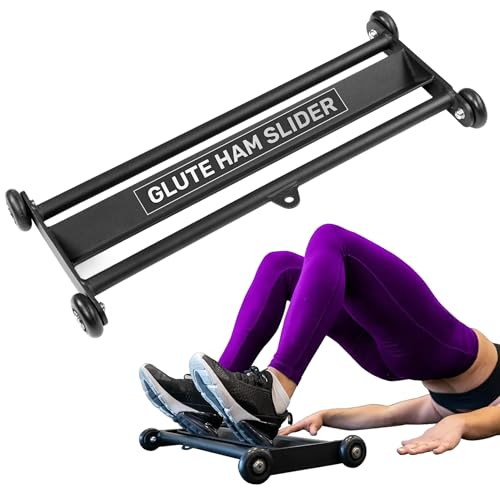
Ab Glider Machine Bells of Steel - Glute Ham Developer for Home Gym
Chosen because it specifies Glute Ham Developer for Home Gym.
View on Amazon
Fitness First Glute Ham Developer - Unisex Adult - Black - 63 x 40 x 45 inches
Chosen because it specifies Unisex Adult and Black.
View on AmazonQuick comparison
| Option | Approx. footprint | Approx. weight | Capacity | Best suited to |
|---|---|---|---|---|
| Rogue Abram GHD 2.0 | 78 × 35 in | 265 lb | 1,000 lb | Frequent, heavy use and a dedicated training area |
| REP Fitness GHD | About 70 × 34 in | About 200 lb | Listed capacity varies by version | Home gyms seeking a substantial, adjustable unit |
| Titan Fitness GHD | About 67 × 31 in | About 160 lb | Listed capacity varies by version | Budget-conscious buyers with room for a full-size frame |
| Compact folding GHD | Model-dependent; often around 50 × 30 in when set up | Model-dependent | Model-dependent | Occasional use where storage matters more than commercial-level rigidity |
Dimensions and weights are approximate reference points, not a guarantee that every current revision matches. “Capacity” is not directly comparable across brands: confirm whether a stated limit covers the user’s body weight, added load, or both. Folding models also vary widely, so evaluate the exact unit rather than assuming all foldable GHDs share the same fit or stability.
Choose by your garage-gym situation
| Your situation | What to prioritize | Likely fit |
|---|---|---|
| You train several times a week and have a permanent station | Heavy frame, wide base, secure adjustments, replaceable pads | Rogue Abram GHD 2.0 or another commercial-style unit |
| You want regular training without paying for premium construction | Useful roller adjustment, firm footplate, clear assembly instructions | REP Fitness or Titan Fitness full-size GHD; compare the current versions |
| You share the machine with users of different heights | Long adjustment range and quick, repeatable locking points | A full-size adjustable model; avoid buying on footprint alone |
| You have limited floor space and use it occasionally | Foldability, manageable storage weight, and adequate frame bracing | A folding or compact model, after checking its dimensions in use |
| You are new to GHD movements | Stable entry and exit, simple adjustments, and conservative progression | A sturdy adjustable model that fits you well—not necessarily the cheapest or smallest |
What matters more than the brand name
Adjustment range and fit
The footplate and roller positions determine whether the machine fits your body. A short adjustment range can leave a shorter user unable to secure the feet properly or a taller user cramped at the hip pad. Check the number and spacing of adjustment positions, not just whether the listing says “adjustable.” If multiple people will use it, compare the manufacturer’s fit guidance with each person’s height and inseam. When that information is missing, ask the seller for the usable range before purchase.
Look for adjustment hardware that locks firmly and can be changed without wrestling the frame. A pin that is hard to reach is a nuisance in a solo home gym, especially when users switch between settings. After adjustment, confirm the pin is fully seated before getting on.
Pad dimensions and comfort
A longer, wider hip pad gives more room to position the pelvis and can feel more forgiving across different body sizes. A narrow pad may still work, but it makes precise positioning more important. Check the pad’s actual dimensions and whether its covering and foam are replaceable. A firm pad should support you without shifting; overly soft foam can compress and make positioning inconsistent.
Footprint, access, and stability
Measure the complete frame and leave clearance behind and beside it for mounting, dismounting, and handling plates or other equipment. A practical rule is to allow roughly 24 inches of usable access space around the working side where possible. That adds about 4 square feet to a 78-by-35-inch machine’s nominal footprint: the frame itself occupies about 19 square feet, while the access zone brings the working area to roughly 23 square feet.
Weight and base width are useful clues to stability, but they are not substitutes for bracing and secure contact with the floor. On a sloped or slick garage surface, a heavy GHD can still rock or slide. Check for levelers or plan to use appropriate non-slip flooring. Avoid improvising unstable shims.
Assembly and moving it
Expect a heavy GHD to arrive in multiple pieces and require a second person to position safely. Before assembly, sort the hardware, identify the frame orientation, and leave the fasteners slightly loose until the frame is squared; then tighten them in sequence. This reduces the chance of binding holes or a twisted base. Recheck the fasteners after the first few sessions. A compact unit may be easier to store but still awkward to lift, so distinguish “folds” from “easy to move.”
Model-by-model guidance
Rogue Abram GHD 2.0: for a permanent, high-use station
This is the strongest match when space and budget allow a substantial, fixed machine. Its roughly 78-by-35-inch footprint and 265-pound listed weight make it a poor choice for a gym that must be cleared after every session, but that mass is an advantage for a dedicated station. Check delivery access and assembly space as well as the spot where it will live.
REP Fitness GHD: for a versatile home-gym centerpiece
REP’s full-size GHD is worth comparing for buyers who want an adjustable, substantial machine without automatically choosing the largest premium option. Verify the exact version’s dimensions, capacity, and included adjustment features: product details can change, and similarly named configurations should not be assumed identical. It is most appropriate when the machine can remain assembled and users need a broad range of settings.
Titan Fitness GHD: for value in a dedicated space
Titan’s full-size GHD is a budget-oriented option for people who have room for a permanent frame and are willing to inspect fit and assembly details carefully. Compare the current model’s pad size, adjustment positions, frame weight, and warranty terms with alternatives. A lower price is less compelling if the roller range does not fit the main user or the machine is difficult to adjust between household members.
Compact or folding GHD: for occasional use and storage constraints
Choose this category when reclaiming floor space is essential, not simply because the listed footprint looks smaller. Confirm the setup dimensions, folded dimensions, locking mechanism, and user-weight limit. A lighter frame may move more during forceful repetitions, and folding adds hinges or locks that need periodic inspection. If you train frequently or plan to add load, a heavier fixed frame is generally the safer long-term bet.
Ownership checks that prevent common problems
- Inspect contact points: Check footplate fasteners, adjustment pins, welds, and frame joints periodically, especially after moving the unit.
- Keep pads clean and dry: Wipe sweat off after sessions with a mild cleaner compatible with the upholstery. Avoid harsh solvents that can crack or dry the covering.
- Watch for foam compression: Flattened or torn padding can change positioning. Ask whether replacement pads are available before buying.
- Protect the floor: Use a stable, level surface and suitable flooring to reduce sliding and damage. Do not let a mat conceal an uneven or rocking frame.
- Progress gradually: GHD movements can be demanding. Start with a range and difficulty you can control; if you have an injury, persistent pain, or uncertainty about technique, consult a qualified fitness or health professional.
Bottom line
For a dedicated garage gym and frequent use, prioritize a heavy, well-braced GHD such as the Rogue Abram GHD 2.0. For a more value-focused full-size choice, compare current REP Fitness and Titan Fitness specifications against your fit and capacity needs. Choose a compact model only when storage is the deciding constraint—and verify that its adjustment range and stability suit the people who will actually use it. The best GHD is the one that fits your body, stays steady on your floor, and can remain accessible enough to use consistently.



Write Your Review
No reviews yet. Be the first to share your experience!