
Key takeaways
What's inside
Battle ropes best suited to home training are decided by three numbers rather than by brand: rope length, rope diameter and the amount of clear floor you can give them. This guide covers all three in ft, m, in and mm, plus the anchor question that most listings quietly skip over entirely. Anchor first.
As an Amazon Associate we earn from qualifying purchases at no extra cost to you. Product prices and availability are accurate as of the date shown and are subject to change.
As an Amazon Associate we earn from qualifying purchases at no extra cost to you. Product prices and availability are accurate as of the date shown and are subject to change.



By Chris Parker
🛒 Best Price Today on Amazon
Prime members get fast, free shipping on everything above, plus member-only deals. New members get a 30-day free trial — cancel anytime.
Start 30-Day Prime Free Trial →See Today’s Amazon DealsHow to Choose the Battle Ropes Best for Home Training
A battle rope is a simple product with three variables that change everything: length, diameter and the sleeve that protects it. Get the length wrong and half the rope lies dead on the floor. Get the diameter wrong and your grip fails in twenty seconds. Neither mistake is cheap to undo afterwards. Both are simple to check.
Length, Diameter and Rope Weight
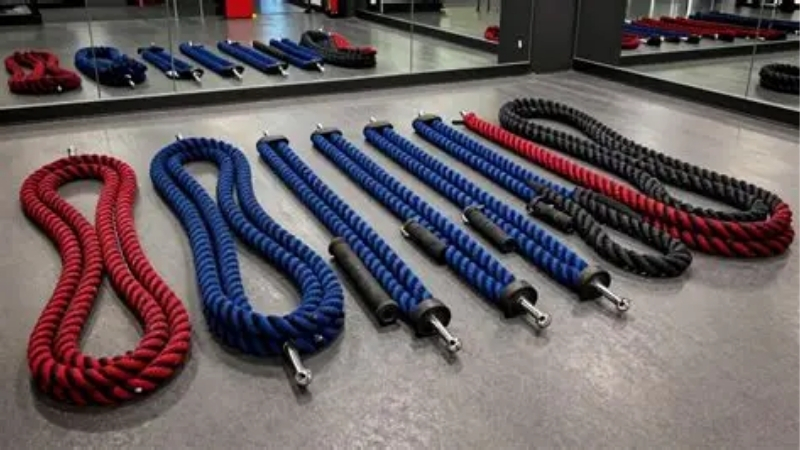
Standard lengths are 30 ft (9 m), 40 ft (12 m) and 50 ft (15 m), and the rope is used folded in half, so a 30 ft rope gives you roughly 15 ft of working distance. Longer ropes are heavier at the same diameter, which is why length and difficulty are linked rather than separate. Most homes stop at 30 ft.
Diameter is the other lever: 1.5 in (38 mm) suits most home users, while 2 in (50 mm) is a genuine grip test and taxes the forearms long before the shoulders. A 1.5 in by 30 ft rope typically lands near 18 to 20 lb (8 to 9 kg), and a 2 in by 50 ft rope is several times that. Grip fails before the lungs.
Footprint, Anchor Points and Floor Space
Footprint is the first filter when you look for the battle ropes best matched to a home gym. Fold the rope in half and you need at least that distance plus room to move: about 16 to 18 ft (5 m) of clear length for a 30 ft rope, with a couple of feet either side for the waves. Length rules out most rooms.
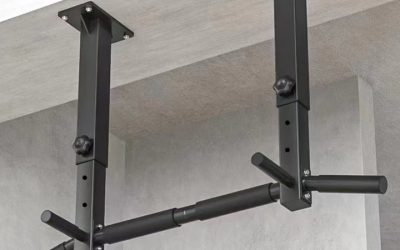
The anchor decides where that space has to be. A wall or floor anchor is the tidiest option, a squat rack upright works, and a loaded kettlebell only holds for lighter work. Measure the run from the anchor point to where you will stand before ordering, since ropes cannot be shortened without ruining them.
Sleeves, Materials and Where Ropes Fail
Poly dacron is the standard material because it holds up outdoors and sheds less than nylon. Ropes fail from abrasion, not from load: the first 3 ft (1 m) at the anchor and the section dragging on the ground wear first, which is exactly what a protective sleeve prevents. Abrasion is the only real enemy here.
Buy the sleeve version if you will use the rope on concrete, gravel or a rack upright, because bare rope on rough ground frays within months of regular use. Indoors on rubber matting, a bare rope lasts far longer. Shedding fibres in the first few weeks are normal and settle down with use. Matting keeps a bare rope alive.
Top Picks: Battle Ropes for a Home Setup
The battle ropes best shortlist runs from budget poly dacron to sleeved ropes and the anchor hardware that makes them usable indoors. Fewer than one in four US adults meets both the aerobic and muscle-strengthening guidelines (CDC, 2020), and a rope is one of the cheapest ways to cover conditioning at home.
| Product | Type | Sizes | Best for |
|---|---|---|---|
| POWER GUIDANCE Battle Rope | Poly dacron | 1.5 and 2 in | All-round pick |
| Yes4All Battle Rope | Poly dacron | 30 to 50 ft | Budget start |
| Garage Fit Battle Rope | Sleeved option | 1.5 and 2 in | Outdoor use |
| Perantlb Battle Rope | Poly dacron | 30 to 50 ft | Longer ropes |
| Profect Sports Rope | Poly dacron | 1.5 in mainly | Beginners |
| Yes4All Anchor Strap | Anchor kit | Universal | Fixing the rope |
POWER GUIDANCE Battle Rope
This is the battle ropes best all-round pick: poly dacron, heat-shrink end caps and both common diameters across the usual three lengths. Most buyers should take the 1.5 in by 30 ft version, which is heavy enough to be genuinely hard without needing a warehouse to swing it in. It is the safest first buy.
The end caps are the weak point over years of heavy use, and the bare version wears quickly on concrete. It ships tightly coiled and takes a few sessions to hang straight. Order the sleeved version if the rope will ever live outside or run over a rack upright between sets. Sleeves pay outdoors on rough ground.
Yes4All Battle Rope
Yes4All is the budget entry that still ships in every standard size, so you can buy the exact length your room allows rather than settling for whatever is cheapest. For someone unsure whether rope work will stay in the programme, it answers that question without a large outlay. Sizes cover most rooms.
Finish quality is a step below the mid-range ropes, particularly at the caps, and the bare version needs matting under it indoors. There is no meaningful warranty to fall back on. Treat it as a two to three year rope rather than something you buy once and keep for a decade. It is a starter, not a keeper.
Garage Fit Battle Rope
Garage Fit sells the sleeved version that matters if your rope will live outside or run across a rack. The nylon sleeve takes the abrasion instead of the rope itself, which is the single biggest factor in how long a battle rope survives regular outdoor use on a rough surface. Outdoors it is the value option.
Sleeves add weight and cost, and they change the feel slightly where the rope passes through your hands. Indoors on rubber matting the sleeve earns nothing at all. Buy it for the surface you actually train on rather than for the specification list on the product page itself. Indoors the sleeve adds nothing.
Perantlb Poly Dacron Battle Rope
Perantlb covers the longer end well, which matters if you have a garage or a garden run and want the 40 or 50 ft options. Longer ropes give a heavier wave at the same diameter, so they suit anyone who has outgrown a 30 ft rope rather than beginners buying their first one. Longer means heavier at any diameter.
Weight is the trade-off: a 2 in by 50 ft rope is a serious lift to move into position, and it needs a fixed anchor rather than a kettlebell. Check your run length twice before ordering, since a long rope in a short room is wasted money and hard to store. Anchors matter more at this length than anywhere.
Profect Sports Battle Rope
Profect Sports focuses on the 1.5 in ropes that most home users should actually be buying, with an anchor strap included in several of the bundles. That combination removes the usual second purchase, since a rope without an anchor is only half a setup in a room with no rack. Bundles suit first-timers.
The bundled strap is basic rather than heavy-duty, and the range of lengths is narrower than the bigger sellers offer. If you already own a rack or a wall anchor, you are paying for hardware you will not use, so compare the bundle price against a bare rope first. Check what hardware you already own at home.
Yes4All Battle Rope Anchor Strap
An anchor strap is the cheapest fix for the most common problem: nowhere solid to tie the rope. It wraps a rack upright, a post or a tree, and it keeps the wear on the strap rather than on the rope, which is a far cheaper part to replace later. Anchoring is where most battle ropes best plans fall down.
Straps are not a substitute for a properly rated wall anchor under heavy slams, and cheap hardware stretches over time. Check the stitching and the D-ring periodically, and never anchor to something you have not tested with a hard pull before you start a full session on it. Inspect the stitching often.
Frequently Asked Questions
Four questions cover most of what people ask before buying a rope. They are all about size, anchoring and durability, because the rope itself is the simple part and the room plus the fixing point are what actually decide whether the purchase gets used or stored in a cupboard. Space answers most of them.
What length battle rope should I buy?
A 30 ft (9 m) rope suits most homes, since it needs roughly 16 to 18 ft (5 m) of clear run once folded in half. Choose 40 or 50 ft only if you have a garage, a garden or a long hall and want a heavier wave at the same diameter. Measure the clear run first, then pick the battle ropes best matched to it.
Is 1.5 in or 2 in better for beginners?
The 1.5 in (38 mm) rope is the beginner choice by a wide margin, because grip is the first thing to fail on a 2 in rope. Most people never need the thicker option, and those who do usually add it as a second rope rather than as a replacement. Thickness is rarely the first upgrade worth making at home.
Can I use battle ropes without an anchor point?
You can loop the rope around a rack upright, a heavy post or a properly rated anchor strap, but a loose kettlebell only holds for lighter waves. Whatever you use, test it with a hard pull first, and keep the wear on a sleeve or strap rather than the rope. Never anchor to anything you have not pull-tested.
How much rope work should I do in a week?
Public guidance suggests 150 to 300 minutes of moderate activity per week plus two muscle-strengthening days (WHO, 2020). Rope intervals cover the conditioning side rather than replacing strength work. Speak to a doctor before starting a new programme, especially with shoulder, elbow or heart concerns.
See More:
Final Thoughts
The battle ropes best suited to your setup are the ones that match your clear run and your anchor, not the heaviest ones on the listing page. Take 1.5 in by 30 ft unless you have real space, buy the sleeve if you train outdoors, and measure the room before you order. Then anchor it properly and train.




Write Your Review
No reviews yet. Be the first to share your experience!