
Comparing rubber bumper plates vs alternatives starts with how you train. Full-size bumpers suit barbell lifts that start from the floor or involve permitted drops. Cast iron maximizes sleeve space, rubber-coated iron suits controlled lifts, and change plates give you smaller steps without another bulky disc.
Quick comparison table
The biggest differences are what touches the floor, how much room the plates take on the sleeve, and the loads you can build. Start with the most demanding use in your program. A lifter who trains cleans from the floor has different equipment priorities from someone who mainly squats and benches inside a rack.
| Plate type | Main advantage | Main compromise | Best use |
|---|---|---|---|
| Dense rubber bumper | Full-size floor contact with many available training weights | Uses more sleeve room than many iron plates | Floor pulls and general barbell work, including permitted drops |
| Crumb rubber bumper | Recycled rubber option with a different contact and rebound profile | Thick stacks and possible rebound differences | A matched bumper collection on a suitable surface |
| Bare cast iron | High load in a narrow stack | Direct metal contact and model-specific diameters | Controlled strength work and limited sleeve space |
| Rubber-coated iron | Covered contact surfaces with a dense iron core | Coating alone does not establish drop suitability | Rack-based lifting and controlled floor work |
| Urethane bumper | A full-size design with thin options and clear color coding | Premium price and model-specific light-plate instructions | Buyers who value consistent handling and dimensions |
| Change or technique plates | Finer loading steps or a lighter floor-height setup | Each serves a limited role within the complete system | Small increases or purpose-built light practice |
Compare the same weight at the same stage of a workout
A 45 lb plate has the same nominal mass across these categories. Its outside diameter, thickness, and construction can change bar height and handling. Compare the exact plates at the load and exercise you use. Then check what happens as several discs go onto each sleeve.
For example, Rogue lists one of its 45 lb USA Olympic cast-iron plates at about 0.89 in thick and 450 mm in diameter. Its 45 lb Echo V2 rubber bumper is 2.40 in thick with the same nominal diameter. Hi-Temp’s 45 is 3.75 in thick at 445 mm. These are three physically different ways to load the same nominal weight.
Three 45s per side amount to 270 lb in plates. Their individual sleeve stacks are roughly 2.67 in in this cast-iron example, 7.20 in with Echo, and 11.25 in with Hi-Temp. Count any collars and additional plates separately. This comparison illustrates the storage and sleeve difference without assuming the same use conditions for every plate.
A shopper with room for all three configurations can make the purchase on intended use. A shopper who has only 8 in of available plate space may have to rule out a particular build before considering rebound, material preference, or finish.
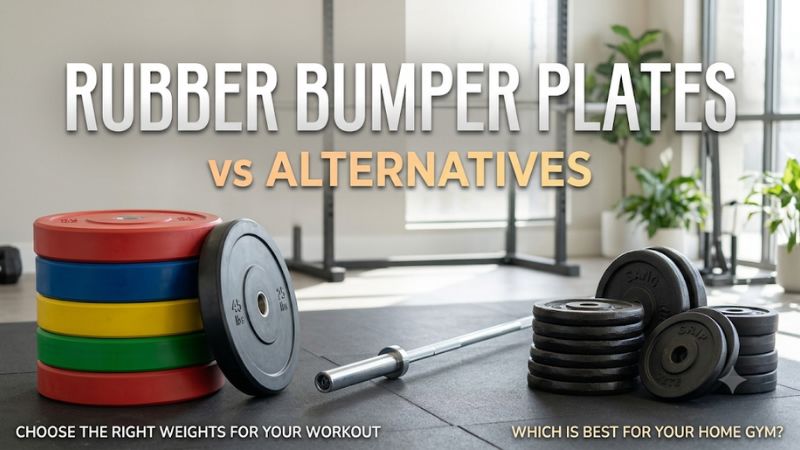
Rubber bumper plates vs cast iron plates
Both types can provide full-size options and the same nominal loads. The practical differences show up in plate thickness, contact with the floor, and the construction of the disc. Choose based on how you load the bar and how you expect to return it after each lift.
Cast iron puts more weight on shorter sleeves
A solid cast-iron plate can be much thinner than a rubber bumper. It gives you more room for additional heavy discs and change plates. This is useful for controlled squats, presses, and heavy pulls where the sleeve is already crowded or where you want more compact storage.
Use the same calculation for storage pegs. Three thin 45s can sit much closer to the rack than three thick crumb rubber discs. A buyer with a small training area may appreciate the change even if the bar itself can fit either set.
Bare iron can also be a simple starting choice when all training is controlled and floor height already suits the program. Check the plate’s diameter rather than assuming every iron 45 is smaller than a bumper. Some models share the 450 mm diameter.
Rubber bumpers suit floor starts and manufacturer-permitted drops
A rubber bumper gives a full-size landing surface when its outer diameter and construction suit the lift. Compared with bare iron, the rubber outer body changes the contact with the floor. Follow the manufacturer and facility instructions for when and how the bar may be returned.
The advantage is greatest when a lift starts or ends on the floor. A light full-size bumper can place the bar at a useful start height before a heavy iron disc would be appropriate. Choose a weight-specific model approved for the intended use, since the lightest plate may have a separate instruction.
The compromise is bulk. If you are repeatedly loading several 45s per side and training mostly under control, you may prefer thinner iron for those sessions. A smaller bumper collection can retain its own role for floor-start drills and other supported uses.
Match floor-contact diameter when combining plates
Both kinds of plates can fit an Olympic bar and still contact the floor differently. If the rubber bumper is larger than the iron, the bumper will generally reach the ground first. That concentrates the landing force at fewer contact points. Check the maker’s guidance before combining types in dropped work.
The same issue exists within rubber bumpers. A 445 mm Hi-Temp and a 450 mm Echo can sit on one sleeve while only the larger disc reaches a flat floor first. In a controlled setup where mixed plates are permitted, check fit, collar engagement, and the amount of load carried by the intended contact surface.
Rubber bumper plates vs rubber-coated iron
Both options can look like a rubber plate in a photo. The construction differs. A typical bumper uses a large outer rubber body and a steel insert or center assembly. A rubber-coated iron plate uses a metal disc with an outer coating and can have grip holes or a different diameter.
Coated iron can suit controlled handling and easy gripping
A coated iron plate can combine compact mass with a less exposed contact surface. Grip holes can make a plate easier to carry or slide onto the sleeve. These features are useful in a rack-based strength program where plates are regularly moved by hand and the bar is returned under control.
Check what the coating covers and where the disc will make contact. The presence of rubber does not tell you whether the plate is designed to land from a drop. Verify the product instructions, especially when a retailer uses “rubber plate” and “bumper” inconsistently in a listing.
A coated 45 may offer the grip positions you want and occupy less width than a bumper. It may also have a smaller outside diameter. That can affect a floor pull or load sharing with other plates. Look at both values before treating one as a direct substitution.
A full-size bumper is the better fit when floor geometry matters
If you use a consistent bar height for pulls or Olympic lifting technique, choose a plate with the intended diameter and handling approval. A rubber bumper can maintain a floor-start height at several loads if the line keeps those sizes close to the same diameter.
A 25 lb full-size bumper can be much larger than a 25 lb coated grip plate. It may take more room in a small gym and give a higher start position. Decide whether height consistency is part of your exercise instead of allowing the retail category to choose it for you.
A mixed home gym can use coated iron for rack lifts and approved bumpers for a floor station. Price a combined setup only if both uses occur regularly enough to justify keeping separate weights and storage.
Rubber bumper plates vs urethane bumpers
Urethane bumpers can serve many of the same floor-based training needs when approved for the intended use. Their value depends on the exact thickness, markings, edge shape, and price. Compare a particular urethane bumper with a particular rubber bumper at the same weight.
Urethane can offer a compact, durable-looking training profile
Rogue lists its 45 lb Urethane LB bumper at 53 mm, about 2.09 in, with a 450 mm outside diameter. The 45 lb Echo V2 is 2.40 in thick. Four per side save roughly 1.25 in with this urethane example. That difference can matter on a heavily loaded bar.
Some rubber training plates are close to the same width. Rogue Black Training LB lists its 45 at 55 mm, leaving only about 2 mm of difference per disc against the Rogue urethane example. If thickness is your main goal, compare the numbers. The material choice alone doesn’t settle it.
Color and edge design can also affect daily handling. Clear markings help when plates are shared or stored upright. Choose by the features you will use, especially when a urethane pair carries a substantial price premium.
Light-plate limits still depend on the model
A premium material does not guarantee approval for repeated drops on a light pair alone. Rogue’s urethane product page specifically restricts that use for its 10 lb plate. Read the exact directions for the weight you will use before evaluating whether a premium set serves a beginner or technique program.
A buyer who mainly trains at 45 lb and up can prioritize thin dimensions and grip. A buyer who uses the light pair most often may get better value from a less costly rubber model with more appropriate use guidance. Match the feature to the program.
Choose by the verified operating conditions, not appearance
Look at where the seller specifies compatibility, handling, and maintenance. A shinier surface or brighter color does not establish a more predictable landing. Check the floor and use the same care during set-downs regardless of which bumper body you choose.
For most home buyers, a less expensive rubber bumper covers the relevant exercises if the diameter, thickness, and allowed use fit. Urethane earns the premium when measurable dimensions, markings, or other model-specific features solve a recurring problem.
Dense rubber vs crumb rubber bumpers
A crumb bumper is itself a rubber bumper. The comparison is between constructions. Recycled crumb rubber examples can be thicker at the same weight, and a different hardness can change how they feel on the floor. Both construction and landing conditions inform the choice.
Choose a thinner dense rubber plate when space is limited
A relatively slim dense rubber line can reduce sleeve and storage depth while retaining the kind of full-size ring contact expected from a bumper. This is especially helpful with compact bars or when three or four 45s already take up much of the usable sleeve.
Check dimensions across the complete set. A thick 10 or 15 lb plate can consume noticeable space even alongside two thin 45s. When you know the target load, calculate the whole stack instead of making the purchase based on the 45 lb specification alone.
Choose a matched crumb-rubber set if you want that construction
Hi-Temp is a documented example of recycled vulcanized crumb rubber. Its 445 mm diameter and 3.75 in width at 45 lb matter as much as its material. It makes sense when your room, bar, and storage can handle the bulk and you want a matched set for that lifting station.
Consider a gym that owns 450 mm dense plates already. Adding a 445 mm line gives you more total load, while the two sizes generally do not share the floor contact evenly. If the program calls for dropped work, buy or arrange a compatible set based on manufacturer guidance and intended landing diameter.
Compare rebound on a similar surface
Rogue publishes different Shore A figures for Echo and Hi-Temp. These describe hardness rather than a controlled result for every possible landing. An uneven return, different bar weight, or different floor can change what happens. Use spacing and a suitable surface irrespective of the chosen plate.
If minimizing noise is an important reason to buy, check the room and floor before making a material decision. Rubber can reduce direct metal contact, but impact and vibration also involve the bar, supporting structure, and how you lower it.
Rubber bumper plates vs change and technique plates
Change plates and technique plates solve two distinct problems. Small change plates create finer increments. Technique plates can help establish a light floor start where the model is designed for it. Both can make a bumper collection more useful without replacing every full-size training disc.
Change plates fill the steps between bumper loads
A pair of 2.5 lb discs adds 5 lb, and a pair of 5 lb discs adds 10 lb. These increments can be more appropriate for pressing, strength progression, or warm-ups than adding a full pair of 10 lb bumpers. Their smaller diameter and low thickness generally help conserve space.
Use the proper sleeve and load them symmetrically. For dropped work, follow the manufacturer’s guidance for the whole combination and keep approved full-size plates as the intended floor contact. Change plates are useful for load adjustment rather than for establishing floor-start height.
Technique plates can provide a lighter floor start
A purpose-built technique disc can bring the bar to a useful height at less total weight than many standard bumpers. This can make sense when learning positions or practicing with a lighter bar. Verify the specific material, size, and use instructions for the model.
A plastic training plate and a rubber light bumper can have different instructions, even when their weights and diameters look similar. Use the documented lift and landing conditions. Price the light setup separately if it is central to your program.
Pair the smallest useful inventory with the right main plate
A matched full-size pair can establish height. Compatible change plates can build the progression around it. Heavier matched pairs add working load when the program requires it. This approach can fit more useful combinations into a small room than buying a broad collection of full-size discs in every available size.
For a rack-focused lifter, thin iron and change plates may cover nearly all sessions. For a floor-lifting program, add approved full-size weights near the loads you use often. The best combination reflects what you actually load and unload each week.
Frequently asked questions
The final choice often comes down to two practical questions: what contacts the floor and how much room remains on the sleeve. These answers explain the cases where a cheaper or thinner alternative can work and where a purpose-built bumper still serves a different role.
Are rubber-coated grip plates the same as bumper plates?
A rubber-coated grip plate commonly has a dense iron body with a protective outer layer. A bumper generally uses a different outer body and is designed for specified floor-contact conditions. Check the exact construction and manufacturer-approved use.
Do I need bumpers if I mainly bench and squat?
If the plates fit the bar and rack, you can choose based on space, price, and handling. Iron or rubber-coated iron often works for controlled rack-based lifts. Full-size bumpers become more useful when your training adds floor starts or approved dropped work.
Can a rubber bumper and an iron plate have the same diameter?
Yes. Some 45 lb iron plates and many bumpers are nominally 450 mm. The same diameter does not establish identical rebound or approved use. Confirm the whole combination before using it on the floor.
Are urethane bumpers always thinner?
No. Some are thin, and some steel-center rubber training plates have similar widths. Compare the exact thickness at the same weight and calculate the full stack. A small per-disc difference matters most when several plates sit on each sleeve.
What should I buy first for a mixed home program?
Choose the plates that support your recurring floor or rack movements, then add compatible change plates for progression. If you use both controlled strength work and approved dropped lifts, choose equipment that satisfies the more demanding floor-use conditions before filling out the rest of your collection.
Conclusion
Choose rubber bumpers for consistent floor starts and manufacturer-permitted drops. Choose thin cast iron for load density, rubber-coated iron for controlled handling, or a documented urethane model when its geometry and markings justify the price. Use change plates for smaller steps and technique plates for an appropriate light floor start. Compare the complete build at the weights and exercises you use most.
More from Amazon
Programs that pair well with the guide above. Offers and eligibility are set by Amazon and may change.
Free shipping on eligible items, Prime Video and more. Eligible new members can start with a free trial.
Start a Prime free trialA Prime membership for ages 18-24 with a trial period. Eligibility is set by Amazon.
See Prime for Young AdultsAudiobooks and podcasts to listen to on the go. Eligible new members can start with a free trial.
Try Audible freeAd-free music streaming. Eligible new subscribers can start with a free trial.
Try Music Unlimited freeAs an Amazon Associate we earn from qualifying purchases.


Write Your Review
No reviews yet. Be the first to share your experience!