
Key takeaways
- Best for a home gym that needs full-size rubber plates for general barbell work.
- Why it stands out is the comparatively thin 45 lb profile at a mainstream price.
- What to check is the exact weight selection, package quantity, and light-plate use guidance.
- Trade-off is that the black design relies on markings rather than full plate colors for identification.
The best rubber bumper plates fit your sleeves, match the height you need, and suit how you return the bar to the floor. Rogue Echo V2 is a strong all-around choice. Choose a different plate if you train with light loads from the floor, need a thinner stack, or prefer a thicker recycled rubber design.
Quick picks by training need
Rogue Echo V2 is the best all-around pick here for buyers who want a 450 mm bumper with a relatively thin 45 lb profile. Fringe Sport makes the most sense when you practice with just a pair of 10 lb bumpers and need a model with explicit manufacturer guidance for that use.
Choose REP Black Bumper Plates if you want several set configurations and clear guidance on using matching plates. Giant Contrast works for a shared gym where colored markings make sizes easier to distinguish. Rogue Hi-Temp is the recycled crumb-rubber option. Rogue Black Training LB is the premium choice if every inch on the sleeve matters.
Compare the best rubber bumper plates
A plate’s diameter determines how high it holds the bar above the floor. Thickness determines how many plates can fit on the sleeve after you reserve space for the collar. Both measurements can change across a product line, especially between a light training disc and a 45 lb plate.
| Plate | Published diameter | Published thickness of one 45 lb plate | Best for | Main trade-off |
|---|---|---|---|---|
| Rogue Echo Bumper Plates V2 | 450 mm nominal | 2.40 in | A relatively thin, general-purpose black bumper | Confirm light-plate instructions for the loads you use |
| Fringe Sport Black Bumper Plates | 445 mm at 10 lb, 450 mm nominal for most other sizes | 2.90 in | Light barbell practice involving the 10 lb pair | Thicker 45s and a slightly lower start on the 10s alone |
| REP Black Bumper Plates | Confirm the diameter for your selected variant if mixing plates | Confirm the exact 45 lb thickness with REP if sleeve space is tight | A set whose pair breakdown matches your progression | Separate warranty terms for light and heavier plates |
| Giant Lifting Contrast Bumper Plates | 445 mm at 10 and 15 lb, 450 mm at 25, 35, and 45 lb | 2.81 in | Easy identification in a shared gym | Light plates sit lower when used alone |
| Rogue Bumper Plates by Hi-Temp | 445 mm | 3.75 in | Buyers who want recycled crumb rubber | Takes substantial sleeve and storage space |
| Rogue Black Training LB Plates | 450 mm | 55 mm, about 2.17 in | A premium, thin rubber training plate | Higher cost and a heavier starting pair within this line |
How the plates were selected
We used published manufacturer specifications and operating guidance. We gave particular weight to plate diameter, 45 lb thickness, purchase quantity, and what each brand says about light plates. The recommendations discuss how those published differences affect loading and storage.
The comparison keeps material hardness separate from actual rebound. Shore A is a measure of hardness. A published number can help explain why plates in the same broadly comparable category may behave differently, but it cannot predict how high a particular bar will bounce on your floor. The plate, load, landing, and surface all matter.
We also distinguish a competition-style diameter from approval for a specific competition. A pound plate can be 450 mm in diameter and work well for home practice. That measurement alone does not make it an approved kilogram competition disc. Verify the listed equipment rules when that distinction matters to your training.
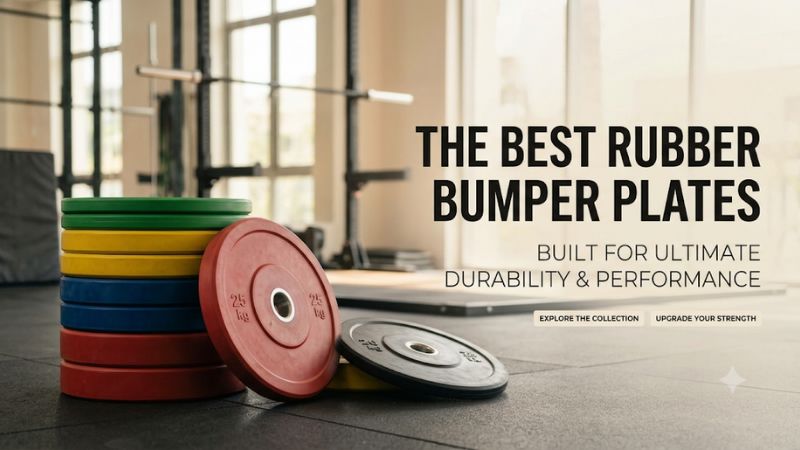
The six rubber bumper plate picks
Choose the plate around your normal sessions. A compact 45 is valuable if you routinely use several heavy pairs. A light pair with documented handling instructions may deserve priority if you spend more time practicing from the floor with a light bar. The best purchase solves your recurring loading problem.
Rogue Echo Bumper Plates V2 — best all-around pick
Echo V2 pairs a nominal 450 mm diameter with a 2.40 in thickness at 45 lb. Rogue specifies virgin rubber, a stainless steel insert, and a stated weight tolerance of 1%. The line is available as matched pairs and in sets, so you can buy the sizes that fit your program.
- Best for a home gym that needs full-size rubber plates for general barbell work.
- Why it stands out is the comparatively thin 45 lb profile at a mainstream price.
- What to check is the exact weight selection, package quantity, and light-plate use guidance.
- Trade-off is that the black design relies on markings rather than full plate colors for identification.
Three 45s per side use 7.20 in of plate space before collars or smaller plates. The same three 45s from a 3 in line use 9 in. The difference gives you more room for a change plate or for a fourth heavy disc. If you use only one heavy pair, the advantage may show up more in storage than on the bar.
Rogue’s 160 lb set has a pair each of 10, 25, and 45 lb. Those sizes can support a range of floor pulls and heavier work. Add suitable smaller plates when your program calls for increments below the 20 lb change that comes from adding two 10s.
Buy if you want a versatile 450 mm line and appreciate a shorter heavy stack. Look elsewhere if your main requirement is explicit permission to use a single light pair during drops or a particular competition-approved disc.
Fringe Sport Black Bumper Plates — best for light technique work
Fringe Sport expressly addresses dropping its 10 lb black bumpers in its product guidance. It also lists the 10 lb model at 445 mm and about 1.05 in thick. That combination makes this a useful pick for buyers who deliberately train with a light bar and a single light pair.
- Best for light floor practice with a compatible bar and a suitable surface.
- Why it stands out is the manufacturer’s specific guidance for the 10 lb model.
- What to check is the current instructions for the selected plate and your actual landing setup.
- Trade-off is the 2.90 in thickness of each 45 and the slightly smaller 10 lb diameter.
A 445 mm plate holds the bar center about 2.5 mm lower than a 450 mm plate on a rigid, level surface. That difference is small in ordinary home lifting, but it affects ground contact when sizes are mixed. The larger discs generally touch first. Use a consistent landing diameter and observe the guidance for the full stack.
The light pair is the reason to buy this line if you regularly practice cleans with limited external load. For a lifter who works mainly with multiple 45 lb pairs, compare how three or four of Fringe’s heavier plates fit the usable sleeves.
Buy if the 10 lb pair’s stated use matches your practice. Look elsewhere if your program is aimed at the most compact stack of six or eight heavy plates.
REP Black Bumper Plates — best for choosing a set by its contents
REP offers several defined sets, including 160 lb with pairs of 10, 25, and 45 lb, and 190 lb with an additional 15 lb pair. It specifies an approximately 1 in thick 10 lb bumper and states a 1% weight tolerance for the line. Buyers can select a practical progression without inferring bundle contents from the total.
- Best for buyers who want a clearly listed combination of weights.
- Why it stands out is the range of set breakdowns and published guidance on mixed diameters.
- What to check is the thickness for your exact heavy variant and the applicable care and warranty terms.
- Trade-off is that the lighter sizes carry different warranty terms from the heavier discs.
A 190 lb mix can be useful if the 15s provide a standalone working load or a bridge between other configurations. A 250 lb bundle with more 45s can better serve someone who already trains heavy and uses the smaller sizes mainly for warm-ups. Choose the pair breakdown, then compare the total.
REP advises against mixing plates whose different diameters concentrate the landing load. It also specifically addresses mixing its bumpers with smaller-diameter Hi-Temps in its warranty guidance. That matters if the purchase will extend a set you already own.
Buy if one of the published bundles directly matches your working loads. Look elsewhere if your main priority is a verified ultra-thin 45 or an existing 445 mm collection you intend to use as the main landing stack.
Giant Lifting Contrast Bumper Plates — best for quick weight identification
Giant’s Contrast line uses colored weight markings on a rubber body. The 45 lb disc is listed at 2.81 in thick. Giant lists the 25, 35, and 45 lb discs at 450 mm and the 10 and 15 lb discs at 445 mm, which is relevant when the lighter pairs are used without heavier ones.
- Best for buyers who share a gym or often switch among several plate sizes.
- Why it stands out is the combination of visible markings and clearly documented dimensions.
- What to check is the weight-specific diameter and handling guidance for the light sizes.
- Trade-off is the 2.81 in heavy profile compared with thinner training plates.
Color-coded markings can help separate 25s and 35s on a rack, particularly when they sit together at low height. Verify the printed numbers whenever you load the bar. Colors are also used in kilogram systems, and similar colors across two brands can represent different nominal loads.
The step in diameter is deliberate in this line. When larger plates are loaded alongside smaller ones, the larger discs will generally meet the floor first. That can be useful within the maker’s intended setup. It also means the light pair alone starts the bar at a slightly different height.
Buy if easy identification and published size-specific measurements improve your setup. Look elsewhere if you want every light and heavy plate to share the same nominal outer diameter.
Rogue Bumper Plates by Hi-Temp — best for a matched crumb-rubber setup
These Hi-Temp plates use recycled vulcanized crumb rubber and a stainless steel insert. Rogue lists them at 445 mm in diameter and publishes a Shore A hardness of 75. The 45 lb plate is 3.75 in thick, a meaningful constraint for dense plate storage and heavy sleeve loading.
- Best for buyers who want a matched recycled-rubber collection.
- Why it stands out is the distinct recycled construction and common 445 mm diameter across the listed series.
- What to check is sleeve length, peg depth, and the way the bar behaves on your intended surface.
- Trade-off is a larger stack and potentially more rebound under some conditions.
Three 45s per side require 11.25 in before collars, while four need 15 in. That can matter on a full-size bar and is especially relevant on a short-sleeve bar. Measure the pegs on your storage rack too. A wide stack can stick into a walkway even when the rack’s footprint appears small.
Keep the landing behavior in mind if you already own 450 mm plates. The Hi-Temp plates can load onto compatible Olympic sleeves but generally sit higher off the floor when a larger pair carries the bar. Use compatible, matching landing discs for any permitted dropped work.
Buy if the construction, matching diameter, and available sleeve room suit your training. Look elsewhere if compact storage or short sleeves are more important than the material choice.
Rogue Black Training LB Plates — best for a thinner premium stack
Rogue lists the 45 lb Black Training plate at 55 mm thick, approximately 2.17 in. The 450 mm plate uses a large chrome-plated steel disc insert and a shaped rim. It makes the most sense for a buyer who regularly approaches the practical length limit of a bumper-loaded sleeve.
- Best for heavy barbell work where a thinner rubber bumper is useful.
- Why it stands out is the short heavy profile and published training-plate dimensions.
- What to check is whether the saved space and handling features justify the price.
- Trade-off is that the range begins heavier than many beginner-focused bumper lines.
Four 45s on one sleeve occupy about 8.66 in using the metric thickness, compared with 9.60 in for four Echo V2 45s or 15 in for four Hi-Temp 45s. The gain over Echo is under one inch. The gain over thicker crumb rubber is much larger. The useful comparison depends on what you are replacing.
This line can also make storage shallower. If the only constraint is an occasional need for one more pair, check whether your current plates and smaller change discs already fit the bar. The upgrade earns its cost if the difference affects recurring sessions.
Buy if your sleeve or storage limitation is real and the heavier available sizes fit your routine. Look elsewhere if most sessions depend on a light starting pair or a lower total purchase cost.
Check the bar, floor, and purchase quantity before ordering
Verify the diameter for any plates that will make contact with the floor. Then confirm sleeve length, collar engagement, and model-specific guidance for the lightest load. Calculate prices for a matched pair or complete set so the cheapest listing corresponds to a usable purchase.
Measure each side of the sleeve
Use the bar’s loadable sleeve length and add the actual thickness of the planned stack. Leave the room required for the exact collar to engage. The whole stack must also stay within all bar and equipment limits, regardless of how many discs fit physically.
For example, five Echo 45s require 12 in per sleeve. That is 450 lb of plates across both sides before the bar. If you add small plates, check their thickness too. A physical fit calculation alone does not establish that the load is suitable for your bar, floor, or training.
Read the light-plate guidance for the exact model
A light full-size disc can be thin compared with a heavier one. Flex at the insert and rim depends on construction and how it is used. Check whether the manufacturer allows the lightest pair to support the bar alone, and separately check whether it approves dropping that arrangement.
For a light floor start, a supported technique plate and a lighter bar can be more useful than another pair of heavy bumpers. Make that decision before choosing a large starter bundle whose lightest pair cannot be used as intended in your program.
Treat the landing surface as part of the setup
A rubber bumper changes floor contact and rebound, while the landing surface and supporting structure still matter. Use the plate, bar, collars, and lifting surface in approved conditions. Plan clearance for the bar after landing and keep people and nearby equipment clear of its path.
If the room is intended only for controlled set-downs, compare what you gain from a 450 mm disc with what you lose in sleeve and storage space. You can choose bumpers for height or handling even without using drops.
Frequently asked questions
The following questions address common differences between products that appear interchangeable. Check the selected variant for all three details that matter most: its actual weight, the diameter at that weight, and the way the manufacturer says it can be used.
Do all bumper plates have a 450 mm diameter?
No. Many general-purpose lines have 450 mm heavy discs. Some light plates are smaller, and Hi-Temp lists its series at 445 mm. Check size by weight before mixing brands or using a light pair to establish your floor-start height.
Can I use a pair of 10 lb bumpers for beginner lifts?
Yes if the exact plate and bar are approved for that use. Check separately whether the manufacturer allows them to be dropped with no other plates on the bar. A heavier bar with a light pair may still be too heavy for your intended practice.
Is a 160 lb set enough for a home gym?
A 160 lb set adds up to 205 lb with a 45 lb bar before collars. It can be a good starting inventory when its pairs cover your working loads. Add change plates for smaller increases, or choose another bundle if you need more heavy pairs or a different warm-up sequence.
Can thicker bumpers protect the floor better?
Thickness along the sleeve tells you how much horizontal space a plate takes. It does not establish floor protection. Plate construction, material hardness, bar load, landing, and the supporting floor all contribute. Use a suitable surface and follow the equipment instructions.
Conclusion
Rogue Echo V2 is the most broadly useful pick here for a relatively thin 450 mm bumper. Choose Fringe Sport if the 10 lb pair’s documented use supports your technique work, REP for the right bundle breakdown, or Giant for identifiable markings and published size differences. Hi-Temp fits a matched recycled-rubber setup, and Rogue Black Training offers a thinner heavy stack. Confirm the sleeve and light-plate rules before buying the full set.
More from Amazon
Programs that pair well with the guide above. Offers and eligibility are set by Amazon and may change.
Free shipping on eligible items, Prime Video and more. Eligible new members can start with a free trial.
Start a Prime free trialA Prime membership for ages 18-24 with a trial period. Eligibility is set by Amazon.
See Prime for Young AdultsAudiobooks and podcasts to listen to on the go. Eligible new members can start with a free trial.
Try Audible freeAd-free music streaming. Eligible new subscribers can start with a free trial.
Try Music Unlimited freeAs an Amazon Associate we earn from qualifying purchases.


Write Your Review
No reviews yet. Be the first to share your experience!