
This loadable dumbbell handles buying guide starts with a plate inventory and a target working weight. Measure the sleeves, reserve the space required by each collar, and check the assembled length and the largest plate diameter. Those measurements tell you whether training at your target load will be practical.
Write down a buying specification before comparing models
A useful handle works with your intended plates and exercises at both ends of its range. Record the lightest load you need, the heaviest load you already use, and the movements with the least clearance. Then determine how many matching plates you have available for two handles at once.
| What to check | Measurement to record | Why it matters |
|---|---|---|
| Plate system | Hole diameter and the specific plate family | Determines which sleeves can accept the existing plates |
| Lightest complete build | One handle plus the hardware used at that setting | Reveals whether light accessories are practical |
| Target load | Required weight per dumbbell | Determines the plates needed on each end |
| Sleeve fit | Usable length and required collar engagement | Establishes how thick a stack can fit |
| Exercise geometry | Overall length, plate diameter, and grip dimensions | Shows whether the handle clears your body, rack, and bench |
| Progression | The smallest set of matching plates you can add to all four ends | Defines the smallest balanced increase for a pair |
Choose the plate system based on what you can actually reuse
A nominal 2-inch Olympic sleeve fits compatible Olympic plates. Standard dumbbell handles commonly use 1-inch plates, and some aftermarket systems use a slightly larger standard size. Measure your actual plates or confirm the model before ordering. Similar-looking plates can have different openings.
The fit must work across the entire sleeve used for loading. A raised sleeve feature, plate insert, or damaged edge can affect movement even when the nominal diameter seems right. Check compatibility instructions for both components and avoid forcing a plate onto a sleeve. Use a confirmed matching system where uncertainty remains.
If you have plates in more than one standard, choose the family that covers the most useful dumbbell loads. A large Olympic bumper collection may serve a barbell well while offering few small-diameter discs for presses and curls. A smaller standard collection might provide better options for those lifts even when its total weight is lower.
Use exercise-specific targets instead of chasing a maximum
Record a light load, the most common load, and the heaviest load that belongs in the program. Include an exercise beside each number. A handle with a 12 lb bare weight may fit a 45 lb row and miss an 8 lb accessory movement entirely. Its maximum rating cannot solve that starting-weight mismatch.
At the heavy end, think about what happens when you start and finish the lift. A heavy loaded dumbbell can fit the sleeve and still be awkward to place before a press or return to the floor afterward. Choose a handle that lets you realistically manage the equipment at the load your program calls for.
Decide whether both hands need the highest weight. A lifter who only rows heavy one arm at a time can buy one heavier-capacity handle or use a single existing fixed dumbbell for that job. Bilateral pressing needs two matching builds. The distinction affects handle quantity, plate inventory, and budget.
Calculate the weight and fit of your intended build
The handle’s capacity is only one check. The sleeves must accept the planned plates and allow approved collars to engage as instructed. Weight calculations also need to include the handle and hardware. Working from a real plate list prevents a nominal target from hiding a fit problem.
Calculate the weight per dumbbell first
The assembled weight is the handle weight plus both collars and all installed plates. If the handle is 10 lb bare, each collar weighs 0.5 lb, and each end carries 10 lb in plates, that hypothetical dumbbell weighs 31 lb. Two identical assemblies provide 62 lb combined for a bilateral exercise.
Be careful with models named by their assembled weight. Rogue’s DB25-10 is listed at 9 lb unloaded and 10 lb with a pair of specified OSO collars installed. If your training log assumes a 10 lb base, verify that the actual collar setup matches. When changing hardware, weigh the assembly if precise tracking matters.
Hold the load symmetric unless the manufacturer specifically permits the configuration and your exercise calls for a different arrangement. Even if two unequal stacks add up to the desired number, they change the position of the mass around the grip. Symmetric loading is the straightforward default for ordinary dumbbell exercises.
Calculate how many small plates you need for progression
The smallest balanced step is twice the weight of the plate you add to each end. Adding a 1.25 lb plate to each end increases one dumbbell by 2.5 lb. In a two-dumbbell exercise, you need four 1.25 lb plates to make the same increase on both handles, and the combined load rises by 5 lb.
The smallest plate in a collection can therefore have a significant effect on usable progression. If your smallest plate is 5 lb, the basic symmetric increase is 10 lb per dumbbell. You may be able to build intermediate loads by reorganizing other plate combinations, but the changes take longer and the inventory needs to support four matching stacks.
Sample three target weights before ordering. List the plate recipe for one sleeve at each load, then count the pieces for all four sleeves. This makes it much easier to see whether the existing plate set covers the program or whether you need extra small plates or another collar pair.
Compare thickness at the hub with the usable sleeve
The plate’s outside width may be the wrong measurement if it has a raised hub or concave face. When plates touch, the stack uses the distance between the actual contact points. Use manufacturer thickness for your exact model where available and confirm unusual plate shapes against the proposed sleeve.
For example, one Rogue USA Olympic 10 lb plate is listed at 0.80 in thick and a 2.5 lb model at 0.45 in. Two 10s and one 2.5 use a nominal 2.05 in on one end and add 22.5 lb at that end. The corresponding symmetrical build adds 45 lb in plates per dumbbell. Add the weight of the handle and collars separately.
Compare the stack with the usable length of the sleeve after accounting for the collar. A 3.75 in measurement and a 2.05 in stack leave a nominal 1.70 in. Check whether that is enough to meet the exact collar engagement requirement, including any section of the sleeve that the model indicates should remain clear.
Check the capacity statement for the exact configuration
Look up whether the manufacturer describes a limit per handle, per pair, or for another variant. A capacity claim provides an upper equipment limit under the maker’s conditions. The load you can assemble depends on compatible plates and retention. The load you can handle also depends on the individual exercise and setup.
If a listing groups a 14 and 24 in model or multiple sleeve finishes, check which specifications apply to the selected version. A rating may appear in a family-wide description without saying how plate fit changes by length. Where the exact capacity or usable sleeve details are unclear, confirm them with the manufacturer before planning the top load.
Choose grip and handle geometry for the exercises
Three dimensions determine most of the handling. Grip diameter affects hand closure, clear grip length affects hand placement, and the outer assembly dimensions determine what contacts your body or furniture. Compare all three with the plates installed at the weights you actually use.
Compare grip diameter and clear grip length independently
A 25 mm grip will feel different from a 28.5 mm grip even when the total handle length is the same. For example, the Rogue DB25-10 and PRx both have a 14.5 in overall length, but Rogue lists a 25 mm grip and PRx lists 28.5 mm. Use a handle you know as a reference for which size suits you.
A buyer with larger hands can prefer a longer clear grip without wanting a thicker diameter. Check the distance between structures that can contact the hand, including the inner sleeve shoulders and plate faces. Your hand should have room to hold the grip without fighting adjacent hardware as the dumbbell changes position.
Knurl and finish form a separate consideration. A covered standard handle can feel softer and thicker. A bare knurled shaft offers a different contact surface. Evaluate it in the hand positions your exercises use, especially if gloves or a long hold change your preference.
Measure the plate diameter along the exercise path
The biggest plate dictates how far the loaded head extends from the center of the grip. A large plate can hit the thigh during a curl, meet a bench support at the bottom of a row, or contact the floor early. A smaller diameter can give the movement a more familiar dumbbell feel even at an equivalent load.
For presses, calculate the clearance of both handles at once. Long inside ends can approach each other even before the plates touch. For unilateral work, think about the side nearest your body and how the outer plate approaches nearby equipment. A handle that works on an open row can be cumbersome in a narrow two-hand press.
The best choice for several exercises is often a compromise. A shorter handle may work with thin iron discs while a longer handle accommodates thick plates at higher loads. Select the model that fits the exercises you actually plan to perform with it, and use a different piece of equipment for any specific movement it cannot comfortably support.
Check retention hardware, handling, and storage
Collars are part of the load-bearing setup. A compatible pair must fit the sleeves and keep plates in the position indicated by the manufacturer. Verify package contents early so the purchase includes the parts required to assemble both dumbbells at your intended loads.
Match the collar to the exact sleeve
Threaded sleeves use matching threaded hardware. Olympic sleeves use compatible collars suited to the diameter and intended application. Check the product’s instructions for placement, closure, and any limits. A collar that fits a barbell loosely or only partially engages is a poor candidate for a dumbbell that changes orientation.
If the maker supplies a particular ring collar or recommends a particular model, start there. Some collar designs need more axial space than others. Compare that space with the planned stack and check all four ends. A compatibility check for the brand alone is less informative than one for the selected sleeve and collar combination.
Inspect the equipment before use and recheck it as directed between sets. If a collar slips or a plate shifts, place the dumbbell down safely and stop using it until you identify and resolve the problem. Apply the maker’s instructions for cleaning, inspection, and replacement.
Choose a loading workflow that fits your workouts
Load both ends on a stable surface and work through the required checks before lifting. If you change weight often, count the operation across all four collars. A small change can involve removing four collars, placing four plates, and resecuring the assembly. That takes time when paired exercises use different loads.
If your routine moves from heavy rows to light raises with little rest, use a dedicated light pair or consider a selector system for those sessions. If you train one exercise at a time and rest between changes, the manual workflow can be easy to manage and gives greater control over the plates used.
Think through storage after training. A loaded pair occupies different space than bare bars and loose plates. Store collars with the appropriate handles so you can identify them later, especially if you use standard and Olympic equipment in the same room.
Check condition and recall status before buying used
Ask for the exact model, clear photos of the loaded surfaces, and a complete hardware list. Look for damaged threads, warped shoulders, loose sleeves, and collars that do not match the specified design. A low used price leaves little value if correct parts are unavailable.
Check the CPSC for model-specific notices. The OBB-20 Fitness Gear recall concerned collars that could slip off their intended position. For affected units, follow the official remedy and verify that replacement hardware has been supplied before use. Examine actual condition even when the exact model is outside a recall.
Frequently asked questions
A few final checks can prevent mismatched plates or an unusable weight step. Use the exact weights, sleeves, and hardware you plan to buy when applying the answers. Product families can share a label while offering different dimensions and included parts.
Does a longer sleeve always provide more usable weight?
It provides more room for plate thickness if the plates and collars are compatible. The equipment rating, plate geometry, and the exercise impose other limits. A shorter sleeve with compact plates can sometimes provide a more practical build at the working weight you need.
Can I put a 2-inch plate on a 1-inch handle with a sleeve adapter?
Use an adapter only where the manufacturer supports the entire combination for that purpose, including retention and loading. A spacer that fills the gap in diameter does not establish that the collar will fit or that the assembly is suitable through the range of motion.
How do I compare a threaded set with an Olympic one if I own both?
Build the same target loads on paper for each. Compare sleeve space, plate diameter, grip, the cost of missing collars, and how you will change weights. The more useful system is the one that handles your most frequent exercises and makes good use of your existing plates.
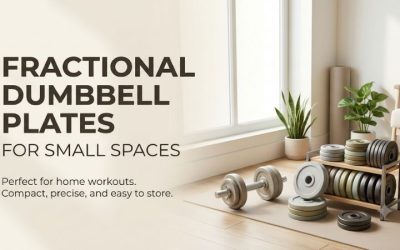
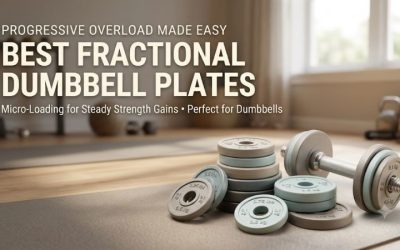
Can I use fractional plates to make smaller jumps?
Yes if they fit the intended sleeves, can be secured, and follow the handle maker’s requirements. Confirm the center hole. Some products marketed as dumbbell add-on weights attach to the grip or head and are designed for a different interface.
What should I check when the package arrives?
Verify the exact model, the number of handles and collars, and the compatibility of the plates. Start on a stable surface and confirm that the collars seat correctly before trying the intended loading sequence. Contact the seller or maker if a part is loose, damaged, or inconsistent with the instructions.
Conclusion
Buy loadable dumbbell handles by starting with the plate family you can reuse and the weights your exercises require. Calculate each stack, leave the required room for the collars, and check the grip and outer dimensions. A handle that fits existing plates and can be assembled and handled consistently will serve you better than one chosen mainly for a large published capacity.
More from Amazon
Programs that pair well with the guide above. Offers and eligibility are set by Amazon and may change.
Free shipping on eligible items, Prime Video and more. Eligible new members can start with a free trial.
Start a Prime free trialA Prime membership for ages 18-24 with a trial period. Eligibility is set by Amazon.
See Prime for Young AdultsAudiobooks and podcasts to listen to on the go. Eligible new members can start with a free trial.
Try Audible freeAd-free music streaming. Eligible new subscribers can start with a free trial.
Try Music Unlimited freeAs an Amazon Associate we earn from qualifying purchases.
Write Your Review
No reviews yet. Be the first to share your experience!