
Key takeaways
- Bumper plates: best for dropping, quieter, and gentler on floors, but larger and pricier.
- Cast iron: compact and economical, perfect for benching and controlled lifts.
- Grip plates: handle cut-outs make loading and carrying much easier.
What's inside
Choosing the right weight plates is a surprisingly consequential decision for a home gym, affecting everything from how you lift to how much noise and floor damage you create. Plates come in different diameters, materials, and hole sizes, and mixing the wrong type with your barbell leads to frustration. In 2026, home lifters have more choices than ever, from budget cast iron to premium rubber bumper sets.
This guide explains how to match plates to your barbell and training style, covering the crucial difference between Olympic and standard bars, when to choose bumpers over iron, and how to build a sensible plate collection. We reference real options like the CAP Economy Olympic Bumper sets and Amazon Basics Olympic Grip plates to ground the advice.
As an Amazon Associate we earn from qualifying purchases at no extra cost to you. Product prices and availability are accurate as of the date shown and are subject to change.




⚡ Save on Your Next PC — Amazon Prime
Prime members get fast free shipping on the systems above, plus early access to Prime Day & Black Friday PC deals. New members get a 30-day free trial.
Watch: How to Select the Right Weight Plate for Your Barbell — Video Review
Olympic vs. Standard Plates
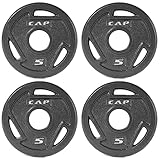
The first thing to confirm is your bar’s sleeve diameter. Olympic bars use a 2-inch sleeve, so you need plates with a 2-inch hole like the Amazon Basics 2-inch Olympic Grip Weight Plates. Standard bars use a 1-inch sleeve and require plates such as the Amazon Basics 1-Inch Grip Weight Plates. Buying the wrong hole size is the single most common mistake, so measure your bar before ordering anything.
Bumper Plates vs. Cast Iron
Material choice hinges on how you train. Rubber bumper plates, like the CAP 260lb Economy Olympic Bumper set, are designed to be dropped safely from overhead, protecting your floor and the bar during Olympic lifts and deadlifts. Cast iron plates such as the CAP Barbell 45 LB Cast Iron plate are more compact and cheaper per pound, ideal for pressing and slow strength work where you rack the weight rather than drop it.
- Bumper plates: best for dropping, quieter, and gentler on floors, but larger and pricier.
- Cast iron: compact and economical, perfect for benching and controlled lifts.
- Grip plates: handle cut-outs make loading and carrying much easier.
Building a Sensible Plate Set
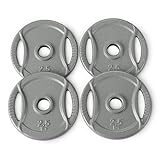
Start with the increments you will actually use. A practical beginner set pairs two 45-pound plates with 25s, 10s, 5s, and a pair of 2.5-pound plates like the Amazon Basics 2.5lb Olympic plates for fine progression. A pre-packaged set such as the CAP 100lb Economy Bumper set gives you a balanced starting spread. Add micro plates later once you are making smaller jumps between sessions.
Matching Plates to Your Goals
If you plan to do power cleans, snatches, or drop deadlifts, invest in bumpers from the start; a high-bounce set like the AMGYM Bumper Plate Set holds up to repeated drops. If your training is mostly bench, squat, and overhead press without dropping, cast iron saves money and space. Many home gyms end up with a hybrid: bumpers for the big lifts and iron for the smaller increments.
Tips
- Measure your barbell sleeve before buying to confirm Olympic or standard fit.
- Buy a pair of 2.5-pound plates for the smallest possible progression jumps.
- Choose bumpers if you lift on a hard floor or upstairs to reduce noise and damage.
- Always load plates evenly and use collars to keep them secure.
Frequently Asked Questions
How do I know if I need Olympic or standard plates?
Measure the loadable sleeve of your barbell. A 2-inch sleeve needs Olympic plates, while a thinner 1-inch sleeve needs standard plates.
Are bumper plates worth the extra cost?
If you deadlift heavy or perform Olympic lifts, bumpers are worth it for safe dropping and floor protection. For pressing-focused training, cast iron is more economical.
What plates should a beginner buy first?
Start with a pair each of 45, 25, 10, and 5-pound plates, then add 2.5-pound plates for smaller jumps as your strength progresses.
Can I mix bumper and iron plates?
Yes, many lifters use bumpers for the main load and iron for small increments. Just avoid dropping the bar when iron plates are on it.
Conclusion
Selecting the right weight plates comes down to matching the hole size to your barbell, choosing bumpers or cast iron based on whether you drop the weight, and building a set with sensible increments. Confirm your sleeve diameter, prioritize the plates your lifts actually demand, and add micro plates for steady progression. Get these basics right and your plate collection will serve you through years of training.



Write Your Review
No reviews yet. Be the first to share your experience!