
Key takeaways
- Grip support: Your back will outgrow your grip on heavy rows, quality lifting straps let you keep pulling once your hands give out, directly enabling more back stimulus.
- Bar type: A true Olympic barbell handles heavy loading and spins smoothly; standard bars suit lighter, higher-rep work and smaller plates.
- Loadable dumbbells: Adjustable dumbbell handles let you dial the exact weight for single-arm rows without a full rack.
- Wrist security: Wrist hooks and wraps stabilize the joint under load, useful for lifters with grip or wrist limitations.
- Progression room: Choose equipment with headroom to add weight for months, back growth comes from progressive overload over time.
What's inside
Ask ten lifters whether dumbbell rows or barbell rows build more back muscle and you’ll get a heated debate. The honest answer: both are elite back builders, and the winner depends on your goals. Barbell rows let you move the most total weight for raw thickness and strength, while dumbbell rows deliver a longer range of motion, better unilateral balance, and a deeper stretch on the lats. The smartest programs use both.
Rather than crown one exercise, this guide focuses on the gear that makes both variations more effective, the straps, handles, and bars that let you row heavier, safer, and with better form. Below are our essential picks for a back-building setup, followed by a framework for deciding how to program dumbbell and barbell rows for maximum growth.
As an Amazon Associate we earn from qualifying purchases at no extra cost to you. Product prices and availability are accurate as of the date shown and are subject to change.



⚡ Save on Your Next PC — Amazon Prime
Prime members get fast free shipping on the systems above, plus early access to Prime Day & Black Friday PC deals. New members get a 30-day free trial.
Watch: Dumbbell Rows vs. Barbell Rows: Which Builds More Back Muscle? — Video Review
How to Choose
- Grip support: Your back will outgrow your grip on heavy rows, quality lifting straps let you keep pulling once your hands give out, directly enabling more back stimulus.
- Bar type: A true Olympic barbell handles heavy loading and spins smoothly; standard bars suit lighter, higher-rep work and smaller plates.
- Loadable dumbbells: Adjustable dumbbell handles let you dial the exact weight for single-arm rows without a full rack.
- Wrist security: Wrist hooks and wraps stabilize the joint under load, useful for lifters with grip or wrist limitations.
- Progression room: Choose equipment with headroom to add weight for months, back growth comes from progressive overload over time.
The Best Picks Reviewed
DMoose Lifting Straps (4mm Neoprene Padded)
At around $14, these padded neoprene wrist straps are the single most cost-effective way to row heavier. Once your forearms fatigue, straps let your lats keep working to failure, the muscles you’re actually trying to grow. Essential for both barbell and heavy dumbbell rows.
CAP The Boss 7ft Olympic Barbell (1,500 lb Capacity)
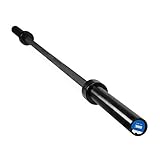
The centerpiece for barbell rows at about $200. A proper 7-foot Olympic bar with a 1,500-pound capacity and smooth sleeves means you can load it heavy for years of progressive overload. If you’re serious about barbell rows for back thickness, this is the foundation to build on.
CAP Barbell 28lb 6ft Olympic Barbell
A lighter, more manageable $60 Olympic bar for lifters with less space or those building up. Its 6-foot length suits tighter home gyms while still accepting Olympic plates, a practical entry point for barbell rows before stepping up to a full power bar.
CAP Barbell Solid Olympic Dumbbell Handle
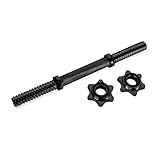
Around $33, this loadable Olympic dumbbell handle turns your plates into a heavy single-arm row tool. Dumbbell rows shine for their range of motion and fixing left-right imbalances, and an adjustable handle lets you chase that exact weight without owning a rack of fixed dumbbells.
Fabater Wrist Hooks for Lifting
At about $19, these neoprene-padded wrist hooks take grip out of the equation entirely on the heaviest pulls. For lifters whose grip fails long before their back, hooks let you keep loading rows to overload the target muscles. A useful complement to straps.
Frequently Asked Questions
Which builds more back muscle, dumbbell or barbell rows?
Barbell rows allow more total load for thickness and strength; dumbbell rows offer a greater range of motion, deeper lat stretch, and better unilateral balance. For maximum growth, program both rather than choosing one.
Do lifting straps make my grip weaker?
Not if used strategically. Use straps on your heaviest back sets to overload the lats, and train grip separately with dead hangs or farmer’s carries. This way your back grows without your grip becoming the limiting factor.
Are dumbbell rows better for fixing muscle imbalances?
Yes. Because each arm works independently, dumbbell rows expose and correct left-right strength differences that a barbell can mask. They’re excellent for balanced back development.
What’s the ideal rep range for back growth with rows?
For hypertrophy, 8 to 12 reps with challenging weight works well. Go heavier (5 to 8) on barbell rows for strength and thickness, and use higher reps (10 to 15) on dumbbell rows for the stretch and pump.
Final Thoughts
The dumbbell-versus-barbell debate has no single loser, both are back-building staples that complement each other. Barbell rows load the most weight for thickness; dumbbell rows deliver range of motion and balance. The real key to a bigger back is progressive overload, and that’s where the gear matters: straps and hooks to keep your lats working past grip fatigue, and quality bars and handles with room to keep adding weight. Equip both movements well, and your back will grow faster than picking sides ever could.



Write Your Review
No reviews yet. Be the first to share your experience!